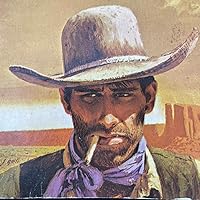
“I’m in a business where people come to me with troubles. Big troubles, little troubles, but always troubles they don’t want to take to the cops.” That’s Raymond Chandler’s Philip Marlowe, succinctly setting out our image of the private eye. A no-nonsense loner, working on the margins of society, working in the darkness to shine a little light.
The reality is a little different—but no less fascinating. In The Legendary Detective , John Walton offers a sweeping history of the American private detective in reality and myth, from the earliest agencies to the hard-boiled heights of the 1930s and ’40s. Drawing on previously untapped archival accounts of actual detective work, Walton traces both the growth of major private detective agencies like Pinkerton, which became powerful bulwarks against social and labor unrest, and the motley, unglamorous work of small-time operatives. He then goes on to show us how writers like Dashiell Hammett and editors of sensational pulp magazines like Black Mask embellished on actual experiences and fashioned an image of the PI as a compelling, even admirable, necessary evil, doing society’s dirty work while adhering to a self-imposed moral code. Scandals, public investigations, and regulations brought the boom years of private agencies to an end in the late 1930s, Walton explains, in the process fully cementing the shift from reality to fantasy.
Today, as the private detective has long since given way to security services and armed guards, the myth of the lone PI remains as potent as ever. No fan of crime fiction or American history will want to miss The Legendary Detective .
John Walton is an award-winning journalist who specializes in transport, aviation, airlines, and the passenger experience. John grew up on three continents and likes to joke that he was raised by cabin crew! His lifelong interest in aviation was sparked during a life of shuttling around the world on Boeing 747-100 and -200 aircraft, and he remembers with fondness the days when bored pilots and cabin crew didn’t mind an inquisitive teenager hanging around in cockpits and galleys asking questions.
This should be required reading for anyone who writes fiction with detectives. This well-researched book provides the seed for many a new noir. Academic John Walton provides a history of the American detective agencies and their dark history of union busting and industrial espionage. The agencies themselves wrote detective stories about their own exploits, editing, and spinning agents' field reports to make their services seem necessary, moral, and superlative. This fascinating book uncovers true stories of investigation at a time when police forces had no investigative capacity and when clients did not want to involve the police. Train robberies, employee theft, and love gone bad all play a role in the development of private investigators, both male and female.
A fascinating book is filled with wonderful anecdotes, including how undercover "lady detectives" of bygone eras reported sexual harassment and inequitable pay even when hired to spy on employees.
This is a great reference for those who want to write "their detectives" right in the historic eye.
A nonfiction almost-reference book about the history of real detectives, labelled "The Legendary Detective: The Private Eye in Fact and Fiction," Walton's research digs into the origins of detective work in 1827 with the creation of the real-world detective agency idea by a Frenchman named Vidocq. Vidocq was a classic underworld bad guy who made his fortune recovering stolen goods and debt collection. Edgar Allen Poe wrote the first detective story in 1841 "The Murders in the Rue Morgue" with Vidocq in mind as his protagonist.
I'm a big fan of detective fiction and thought this book would be kind of a history of the detective fiction genre, and it did begin with commentary on Dashiell Hammett's experience working with the Pinkerton detective agency in 1920-1922 before writing "Red Harvest" and popularizing the hardboiled private eye subgenre in 1929.
But this book is not a well-paced or interesting read. It read to me mostly as details on how detective agencies in the early 1900's were employed for sometimes good but sometimes nefarious reasons, strikebreaking, union-busting, corporate espionage, blackmail; it is mostly a boring though well-researched relation of facts of specific cases.
Verdict: "Legendary Detective" is a pretty dry and textbookish read. I gave it up on page 110 (of 192) for lack of interest.
Jeff's Rating: 1 / 5 (Bad) movie rating if made into a movie: PG