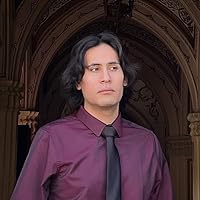
LA extensa obra de Adonis (Siria, 1930) a sus 17 libros de poemas habría que añadir 13 volúmenes de ensayos y estudios críticos representa en su conjunto una de las experiencias más densas y fértiles de la literatura árabe contem porá no en vano, en los últimos años su nombre suena siempre en los rumores que corren sobre los candidatos al Premio Nobel de Literatura. Pero con Nobel o sin él, nadie puede arrebatar a Adonis ese empeño en la reconstrucción de un lenguaje poético radicalmente nuevo que, sin embargo, extrae en buena parte su fuerza expresiva del legado clásico árabe. La gran aventura de Adonis y la de otros autores árabes a partir de los años cincuenta del pasado siglo consiste en introducir la poesía árabe en la con temporaneidad, llevar a cabo en su literatura una revolución paralela a la realizada en Europa con la aparición de los parnasianos y el simbolismo francés. La magnitud de la ruptura que provoca en la tradición poética árabe sólo puede entenderse si pensamos que las experiencias ajenas que ha de incorporar no se reducen a ese gran salto adelante de la poesía europea de fines del siglo XIX, sino que comprenden también las riquísimas consecuencias que produjo en el primer ercio del siglo XX, como la poesía vanguardista o experimental y el surrealismo. Aventura del poeta Adonis, del ciudadano del mundo Ali Áhmed Saíd Ésber, que se refleja con voz personal e inconfundible en poemas que van y vienen de la poesía occidental contemporánea a la poesía árabe clásica, pasando por la oscura herencia del sufismo, la literatura mística musulmana.
Adonis was born Ali Ahmed Said in the village of Al Qassabin in Syria, in 1930, to a family of farmers, the oldest of six children. At the age of nineteen, he adopted the name Adonis (also spelled Adunis), after the Greek god of fertility, with the hopes that the new name would result in newspaper publication of his poems.
Although his family could not afford to send Adonis to school, his father taught him to read poetry and the Qu'ran, and memorize poems while he worked in the fields. When he was fourteen, Adonis read a poem to the president of Syria who was visiting a nearby town. The impressed president offered to grant a request, to which the young Adonis responded that he wanted to attend school. The president quickly made arrangements for Adonis to attend a French-run high school, after which he studied philosophy at Damascus University.
In 1956, after a year-long imprisonment for political activities, Adonis fled Syria for Beirut, Lebanon. He joined a vibrant community of artists, writers, and exiles in Beirut, and co-founded and edited Sh'ir, and later Muwaqaf, both progressive journals of poetry and politics. He studied at St. Joseph University in Beirut and obtained his Doctorat d'Etat in 1973.
Considered one of the Arab world's greatest living poets, Adonis is the author of numerous collections, including Mihyar of Damascus (BOA Editions, 2008), A Time Between Ashes and Roses (Syracuse University Press, 2004); If Only the Sea Could Sleep (2003); The Pages of Day and Night (2001); Transformations of the Lover (1982); The Book of the Five Poems (1980); The Blood of Adonis (1971), winner of the Syria-Lebanon Award of the International Poetry Forum; Songs of Mihyar the Damascene (1961), Leaves in the Wind (1958), and First Poems (1957). He is also an essayist, an editor of anthologies, a theoretician of poetics, and the translator of several works from French into Arabic.
Over the course of his career, Adonis has fearlessly experimented with form and content, pioneering the prose poem in Arabic, and taking a influential, and sometimes controversial role in Arab modernism. In a 2002 interview in the New York Times, Adonis declared: '"There is no more culture in the Arab world. It's finished. Culturally speaking, we are a part of Western culture, but only as consumers, not as creators."
Adonis's awards and honors include the first ever International Nâzim Hikmet Poetry Award, the Syria-Lebanon Best Poet Award, and the Highest Award of the International Poem Biennial in Brussels. He was elected as Stephen Mallarme Academy Member in Paris in 1983. He has taught at the Lebanese University as a professor of Arabic literature, at Damascus University, and at the Sorbonne. He has been a Lebanese citizen since 1961 and currently lives in Paris. - See more at: http://www.poets.org/poet.php/prmPID/...
Los temas abordados por Adonis en sus poemas son complejos, y muchas veces pueden resultar tediosos al querer abarcar demasiado, pero estoy seguro que al encontrar un poema de tu agrado lo recordarás por siempre. Las imágenes aquí descritas van desde lo suave a lo desgarrador, de lo sublime a lo profano y de lo erótico a lo religioso. Es difícil de creer que una sola persona pueda demostrar esa gran variedad de capas en su obra.