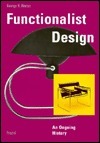
In this copiously illustrated volume, George H. Marcus presents a corrective history of functionalism, the aesthetic that defined the course of progressive design in this century, and his work is particularly illuminating with regard to the use of color in architecture and design. Tracing the development of functionalism from Victorian times, Marcus establishes its basis as socially beneficial and without allegiance to style, material, or context. All that changed as the definition of functionalism narrowed and became closely identified with metal furniture, industrial materials, and austerity in the 1930s and was subsequently redefined simply as a modernist style. With the advent of postmodernism, functionalism has been overshadowed, but its classic designs - the metal furniture of Mies van der Rohe, Le Corbusier, and Marcel Breuer - are now becoming broadly accessible, fulfilling social goals promoted over a century ago. The profileration of these designs today, however, belies the difficulties of bringing them into production. Based on his archival research, Marcus documents the history of their manufacture and sheds new light on the creation and dissemination of some of the most important examples of modern design.
Breathes new meaning into understanding Sullivan’s “form follows function” as faith to the nature of the material, and not just man reflected in an object’s structure (as if that alone were not fascinating enough). This definition gives functionalism a higher capacity for our liberation from temporal “styles”— and why calling functionalism a sort of “design” might even be paradoxical: each piece of furniture is just nature perfected or realized, not altered. In this sense, functionalism becomes true, or truer, than other “styles” or “-isms.” Author provides an interesting historical account of how and why that understanding gained (and consequently lost) traction among architects and designers.
A new edition that addresses the mundanity and thoughtlessness of 21st-century ornamentalism and referentialist design would be interesting (i.e. today’s “interior designers” who style houses out of catalogues). Much of their furniture seems to use functionalist design as a benchmark before quickly leaving it behind. Our homes have changed much since this book’s publication in 1995.
11/73 Functionalist design by George H Marcus reads more like a competent historical survey than a book that wants to argue with you. If you already know the broad Bauhaus story, much of this will feel familiar in outline and intention. Marcus spends a lot of time on names, dates, institutions, and formal developments, which makes the book reliable but rarely surprising. The emphasis is on what happened and who did what, not on building a strong theoretical lens for why functionalism mattered beyond its moment. As a result, the book explains functionalist design as a historical tendency rather than interrogating it as an ongoing intellectual position. That approach makes it easy to read but also limits how much you can take from it conceptually. Overall, it is a serviceable reference and context-setter, but not a book that reshapes how one thinks about design or modernism.