Imbued with a sense of light-hearted cynicism, literary crictic Jules Janin (1804-1874) penned a vast number of eccentric and sometimes improvised fantastic and horror stories, now mostly forgotten. This first-ever American collection gathers a sampler of his unusual talent, as exemplified by the tale of THE MAGNETIZED CORPSE about a dead man kept alive by magnetism, published several months before Poe's "The Facts in the Case of M. Valdemar" (1845). Other tales gathered here include fake folk legends, paradoxical ghost stories in the vein of ETA Hoffmann, and surreal reflections on the supernatural nature of music. "Janin was probably closer to Poe in spirit, although his ambition took him in a different direction." Brian Stableford.
Gabriel-Jules Janin était un écrivain et critique dramatique français.
Gabriel-Jules Janin was a French writer and critic. Born in Saint-Étienne (Loire), Janin's father was a lawyer, and he was educated first at St. Étienne, and then at the lycée Louis-le-Grand in Paris. He involved himself in journalism from an early date, and worked on the Figaro and the Quotidienne, among others, until in 1830 he became dramatic critic of the Journal des Débats. Long before, however, he had made a literary reputation for himself, publishing novels such as L'Âne mort et la Femme guillotinée ("The Dead Donkey and the Guillotined Woman") (1829). La Confession (1830) followed, and then in Barnave (1831), he attacked the Orléans family. From the day, however, when Janin became the theatrical critic of the Débats, though he continued to write books, he was most notable in France as a dramatic critic. Janin authored the text for the song Le Chant des chemins de fer by Hector Berlioz, a fellow critic at the Débats. After many years of feuilleton writing he collected some of his articles in the work called Histoire de la littérature dramatique en France (1853-1858). In 1865 he made his first attempt upon the Academy, but was not successful till five years later. Meanwhile, he had not been content with his feuilletons, written persistently about all manner of things. No one was more in request with the Paris publishers for prefaces, letterpress to illustrated books and suchlike. He was accused of taking bribes for favourable reviews, reputedly earning 6,000 to 8,000 francs from fearful playwrights on a premier. Janin traveled (picking up in one of his journeys a country house at Lucca in a lottery), and wrote accounts of his travels; he wrote numerous tales and novels, and composed many other works, including Fin d'un monde et du neveu de Rameau (1861), in which, under the guise of a sequel to Diderot's work, he showed his familiarity with the late 18th century. He married in 1841. In the early part of his career he had many quarrels, notably one with Felix Pyat (1810-1889), whom he prosecuted successfully for defamation of character. For the most part his work was improvisation, noted for its light and vivid style. His Œuvres choisies (12 vols., 1875-1878) were edited by Albert Patin de La Fizelière. A study on Janin with a bibliography was published by Auguste Piédagnel in 1874. See also Sainte-Beuve, Causeries du lundi, ii. and v., and Gustave Planche, Portraits littéraires.
Jules Janin (1804-1874) - French author and critic. To say Janin put his own decidedly individual stamp on the short fiction he penned would be understatement. He absolutely refused to follow any established format or write the type of fiction fashionable in his day. In a word, Janin desired to be as different from others writers as humanly possible. Brian Stapleford’s informative twelve page introduction provides the historical, cultural and literary context to appreciate Janin and his place in the world of French literature.
What I found especially appealing in this remarkable collection published by Black Coat Press is how a number of stories feature the transformative power of painting for artists and music for musicians. As by way of example, here is a quote from a tale entitled The Green Man: "How admirably he played! What heavenly chords! What harmonious plaints the stranger drew from my violin! One might have thought that an invisible soul, concealed in that sonorous wood, had suddenly been woken up by a ray from on high. Never, no, never, even in my summer dreams, had I dreamed of that ideal! Yes, for sure, it was an invisible and charming spirit that sang in my violin, obedient to the fingers of the green man." And, yes, a number of stories have an element of folk tale and mythology mixed in. To provide a more specific taste of what a reader will encounter, below are my observations on four Janin tales:
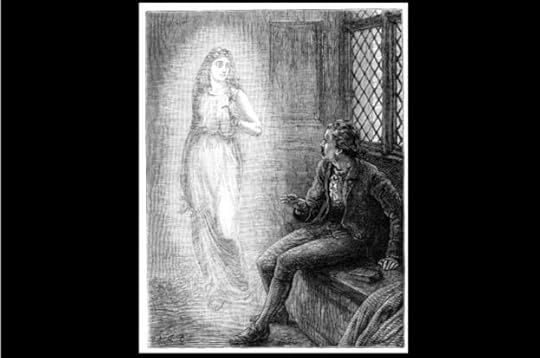
A Ghost Story Guy Du Maupassant frequently employed the convention of a story within a story and Jules Janin does so here. One evening a group of writers and artists, mostly Frenchmen, exchange views on such topics as poetry, art and love when the conversation turns to ghosts. A stiff upper lip Englishman relates how he knew a man who was the friend of someone who had, in fact, seen a ghost. All present insist the Englishman tell the story. He’s more than happy to oblige and proceeds to relate how an honest, rich, thirty-year-old gentleman by the name of Lord Milford Littleton kept a young, beautify, passionate mistress for the past five years.
One day, taking time out from reading a French novel about a hero embracing the cadaver of his mistress, the lord coolly tells her he loves her no longer and she must leave. The mistress, Fanny by name, departs as instructed but reappears in front of Lord Littleton at the stroke of midnight, reappears, that is, as her shade. She takes a seat in her usual chair, facing him. “Good night, Milford,” Fanny said. “Here I am, dead, killed by you. You’re free – take advantage of it, Milford! In a week’s time, at the same hour, midnight next Friday, you’ll be one of us.” Fanny stands up and promptly leaves.
Does Lord Littleton have trouble falling asleep? He certainly does. Is Lord Littleton shaken the next day when, having pulled her out of the Themes, the authorities bring him Fanny’s disfigured corpse? He most certainly is. Does Lord Littleton spend all day at the gravesite and the next several days in a state of perpetual terror? Emphatically yes. The fateful day arrives. Lord Littleton is so haggard and distraught he can barely speak but eventually repeats Fanny’s pronouncement to family and friends. In an effort to save Littleton's life, they all arrange to secretly set his clocks and watches forward half an hour.
The midnight hour strikes. Ha! I’m still alive, Lord Littleton thinks, and he begins walking the length of his chamber with a jaunty bouncing step as if in excellent health and the full flush of youth. His appetite has returned and he looks over at a bowl of fruit and bottle of wine. At this point the Englishman cuts off his story to drink some champagne. His audience implores him: And what happens to Lord Littleton?! The Englishman answers but you will have to read for yourself to discover there is good reason the tales of Jules Janin are termed paradoxical.
The Rendezvous Awaiting his lover’s arrival at the foot of Notre Dame one balmy evening, the narrator beholds the cathedral’s monumental beauty and poetic vastness and quite unexpectedly has an exhilarating aesthetic experience that carries his soul upwards to float in the clouds above the spires, above any possible regret or disappointment concerning his amorous meeting. At one point he reflects: "I considered, attentively, the beautiful face of the Virgin sculpted on the door: a celestial woman that some poor artist had buried in obscure wood. The door has suffered the dire effects of time! All color is lost; numerous cracks furrow the beautiful body. However, it has a real beauty, an ineffable grace, like everything that is spontaneous in the arts." The narrator echoes what author Jules Janin supremely valued above all else in any creative endeavor: spontaneity.
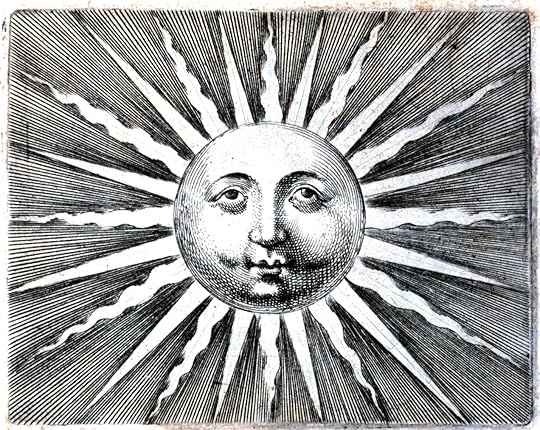
The Eclipse Our narrator relates a story he heard from a doctor who specialized in disorders of the mind, a tale of a most peculiar kind of madness: the doctor’s patient, a young, fair lass, imagined she was the fiancée of the sun. Then one day, the sky a sparkling clear blue, the young madwoman became the sun’s bride. For ten long years, the doctor went on, she basked in the joy, delight and splendor of her blessed husband. “The higher the sun rose in the sky, the greater that poetic enthusiasm became. It was scarcely possible to persuade the madwoman to take her meals every day, so obsessed was she with her celestial passion; and even then, to make her eat, it was necessary to tell her that her divine spouse had gilded the fruits, had yellowed the wheat, had ripened the grapes; thus, she had the right to sit down at the immense table that the sun charged with foodstuffs in his course.”
True, she had to endure long grey winters but the radiance of spring always followed. I’ll not say any more so as to spoil, but I can assure you this tale has the seal of Jules Janin’s unique literary voice. What I also find intriguing is how the story is energized by the fact that for many generations in times preceding written history we humans have had a special direct relationship with the sun.
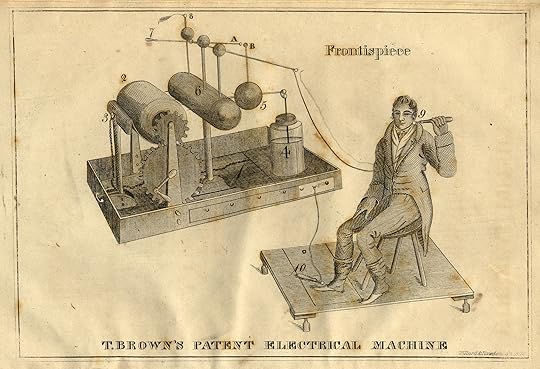
The Magnetized Corpse In the period when Janin wrote this tale, esoteric psychic practices such as séances, channeling and mesmerism (what we term hypnosis nowadays) were employed to directly contact realms beyond the material. As Brian Stapleford notes in his Introduction, Edger Allan Poe published a similar tale in 1845, several months after Janin’s, but it is highly unlikely Poe knew about the Frenchman’s work; rather these two tales are a matter of cultural confluence rather than influence. And, unlike Poe, Janin doesn’t have the patient in his story detail experiences in an otherworldly realm; quite the contrary, after the scientist administers a treatment of magnetic fluid to his friend, Charles Belfort by name, the magnetized corpse becomes psychically attached to the magnetizer!
Indeed, the day following the procedure, upon returning to Belfort's home, with its capacity of speech somehow still intact, the corpse relates exactly what his friend, the man of science, did the previous day – where he dined, the theater is attended, the novel he read in his study. Not exactly the result expected by either the magnetizer or the magnetized. And to top it off, the corpse is critical of his friend’s each and every move. Events proceed in a manner that become progressively more disturbing for the poor magnetizer. The way the tale crescendos must have shocked Janin’s French readers at the time. Even today this tale packs a surprising punch.