Jump to ratings and reviews
Rate this book

The Owl's Insomnia

Rate this book
Elegies, remembrances, and thoughts of loss and exile are recorded in this collection of fifty works by the distinguished poet

141 pages, Paperback

First published January 1, 1973

Loading...
Loading...

About the author

Mark Strand

181 books269 followers
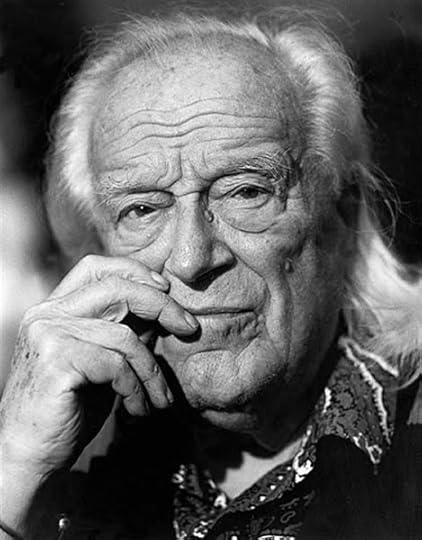
Mark Strand was a Pulitzer Prize-winning American poet, essayist, and translator. He was appointed Poet Laureate Consultant in Poetry to the Library of Congress in 1990. He was a professor of English at Columbia University and also taught at numerous other colleges and universities.

Strand also wrote children's books and art criticism, helped edit several poetry anthologies and translated Spanish poet Rafael Alberti.

He is survived by a son, a daughter and a sister.

Ratings & Reviews

What do you think?
Rate this book

Friends & Following

Create a free account to discover what your friends think of this book!

Community Reviews

5 stars
10 (35%)
4 stars
9 (32%)
3 stars
8 (28%)
2 stars
1 (3%)
1 star
0 (0%)
Displaying 1 - 9 of 9 reviews
Profile Image for Edita.
1,592 reviews598 followers
May 21, 2022
The Coming Back of Love in
Bright Landscapes

We believe, my love, that those landscapes
have remained asleep or dead with whatever we were
in the times, in the days, when we inhabited them;
we believe that trees lose their memory
and that nights pass, giving to oblivion
what made them beautiful and maybe immortal.

But the slightest trembling of a leaf
or the sudden breathing of a faded star is enough
for us to have the same joys those places
filled us with and gave us together.
And so today, my love, you waken at my side
among the currants and hidden strawberries
sheltered by the constant heart of the woods.

There is the damp caress of dew,
the delicate grasses that cool your bed,
the charmed sylphs that adorn your long hair
and the high mysterious squirrels that rain
the small green of branches upon your sleep.

Leaf, be happy always; you that have brought me
with your slight trembling
the aroma of such blind luminous days,
may you never know autumn.
And you, smallest of lost stars that opens for me
the intimate windows of my earliest nights,
never shut off your light
over, all the bedrooms we slept in till dawn,
nor in the moonlit library,
nor over those books in sweet disorder,
nor over the mountains outside awake and singing to us.
Profile Image for Steve.
442 reviews592 followers
Read
January 2, 2015


For decades I have had hints that Rafael Alberti Merello (1902 – 1999) was a poet I would love, but I was reluctant to read more than a few poems in translation until my grasp of Spanish was up to the task of appreciating his work. But time passed and passed. So, although my Spanish is still not quite good enough, I took up this bilingual edition with translations en face by the excellent American poet, Mark Strand.

Alberti had an extremely long life, and he wrote during most of it, producing thousands of poems, a few plays, at least one screenplay, and a multivolume autobiography/memoir, La arboleda perdida . Over this great span of time he changed his poetic style several times, not always for the better. Indeed, after writing Sobre los angeles in the late 20's (which is widely considered to be his best work), he became a committed communist and cranked out reams of party-line verse in the 30's. After the defeat of the Spanish Republic at the hands of Europe's fascists (as a warm up for the Second World War's festivities), Alberti went into exile and dropped the socialist poetics. But this is only one example of many to indicate that Alberti was, over time, many poets.

From thousands of poems Strand has selected 50 to translate, primarily from early and late in Alberti's career. As Strand writes in his introduction, his selection "was to be made up strictly of elegies, remembrances, and poems of loss and exile," though some of the poems in the selection do give one a taste of Alberti's humor. Given the wide range of poems even in this limited collection, no poem can be representative. With this in mind, here is a short, beautiful poem from this book followed by Strand's translation. If you know how Spanish sounds, let Alberti's words roll over your tongue, even if you don't understand the meaning; if you do understand the meaning, you'll see that Strand makes a good try, but leaves some of the poem behind - not just meaning but also rhythm and verbal energy.


El ángel de arena

Seriamente, en tus ojos era la mar dos niños que me espiaban,
temerosos de lazos y palabras duras.
Dos niños de la noche, terribles, expulsados del cielo,
cuya infancia era un robo de barcos y un crimen de soles y de lunas.
Duérmete. Ciérralos.

Vi que el mar verdadero era un muchacho que saltaba desnudo,
invitándome a un plato de estrellas y a un reposo de algas.
¡Sí, sí! Ya mi vida iba a ser, ya lo era, litoral desprendido.
Pero tú, despertando, me hundiste en tus ojos.


The Angel of the Sands

It is true, in your eyes the sea was two boys staring at me,
afraid of harsh words and of being trapped,
two terrible boys of the night, thrown out of heaven,
whose childhoods were a robbing of boats and crimes of suns and moons.
Close your eyes and try to sleep.

I saw that the real sea was a boy who leaped naked,
inviting me in for a dish of stars and a nap of seaweed.
Yes. Yes. My life was going to be, and already was, a shore set adrift.
But when you woke up, you drowned me in your eyes.


5 stars for Alberti, 3 for Strand.

Note: If you care to know what star rating I give this book, please see my blog at


http://leopard.booklikes.com/blog
Profile Image for Keith Taylor.
Author 20 books96 followers
August 23, 2020
Rightly or wrongly, whenever I approach a collection of poems by anyone from the "Generation of 1927" in Spain, I expect short poems, visually vibrant, that twist on connections that are just a little bit odd, slightly shaped by surrealism. I know that is a complete limitation (think how little that goes to describing Lorca, for instance).

And in the book, that's where we start and end. Out of all the thousands of poems Alberti has written, these short image poems rise up. And, yes, I liked them. I also liked the Angel poems from 1929 -- "Sobre Las Angeles." Maybe I was less impressed with some of the more surrealist poems from the later 30s and 40s. They seemed bitter, in an easy way. And the poems to the great comics, they didn't do much for me either. I did like the "Retournos" poems, but probably because they took me back to Spanish writers I knew-- Lorca, Aleixandre, Jimenez.

This is the second book of translations by Mark Strand I've read in a row, and I have to say that his translations read very easily. I trust them, even if Alberti does end up sounding a bit like Drummond de Andrade.

But how can you fault lines like this, from "The Good Angel":

Bells!

The air spins faster.
The world, being the world,
fits in a child's hand.

Bells!

An angel brought down orders from heaven.
Profile Image for Mike.
1,452 reviews56 followers
October 2, 2024
A mostly strong collection of lyric poetry that strikes a nice balance between relatable sentimentality and eccentric imagery that so typifies Spanish poetry of the early 20th century. The early songs are a bit simplistic, and the poems about silent film stars are almost absurdly out of place in this collection, but the remaining poems, many of which are about angels real (Lorca) and imagined, hit just the right note. “Facing the Spanish Coast” is one of the most gorgeous meditations on Spain and exile that I’ve read so far in my deep dive into Iberian literature translated into English.
Profile Image for George.
189 reviews22 followers
December 7, 2007
This gathering and translation of Alberti's The Owl's Insomnia is one of his best of Alberti's books available in English. Alberti's early "Angel" poems are a particular delight.
34 reviews
January 15, 2018
Alice,
why do you love me with that sad crocodile air
and the deep pain of a quadratic equation?
Displaying 1 - 9 of 9 reviews