Palestine 1920s. Working as a land agent for one of the richest men in the world, Polish-Jewish immigrant Lev Sela stumbles upon a strategic area of land that doesn’t exist on any map. The resultant struggle for ownership involves Lev both in disputes and a love affair. The Land Agent is the third title in J. David Simons' Glasgow to Galilee trilogy which includes The Credit Draper and The Liberation of Celia Kahn.
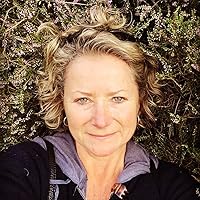
J. David Simons (born 27 August 1953) is a Scottish novelist and short story writer. His novels include The Credit Draper (2008), The Liberation of Celia Kahn (2011), An Exquisite Sense of What is Beautiful (2013), The Land Agent (2014) and A Woman of Integrity’(2017) and are all published by Saraband. His latest novel – The Responsibility of Love – will be available as an ebook as well as a special limited edition from 1stMay 2021 and will be published commercially by BackPage Press in Autumn 2021.
Simons has been awarded several grants from Creative Scotland and the Society of Authors, his work has been shortlisted for the McKitterickl Prize and in 2012 he was a recipient of a prestigious Robert Louis Stevenson Fellowship. Apart from his fiction writing, he is also an editor with the Blue Pencil Literary Agency and a media journalist for global technology research firm, Omdia.
A surprisingly riveting tale of early Jewish settlers arriving in British-controlled Palestine after the first world war. The story centres around Lev Gottleib, who re-names himself Lev Sela (heart of stone) when he leaves his native Poland to chase his first true love Sarah, all the way to Palestine, to find a very different life, a very different set of problems, to the ones he expected to encounter.
I must admit, I didn't expect to enjoy this anything like as much as I did. The cover is uninspiring; the blurb made it sound dryer than the Golan dust - and in less skilled hands, it could have been. The exceptional writing, the engaging plot which constantly surprises, the beautifully sketched characters - Lev himself of course, and Celia, his love; Lev's erratic brother Amshel; the gloriously theatrical Madame Blum; the Bedouins Zayed and Ibrahim; clever, kindly Sammy; the sinister engineer Sverdlov - all the characters, the smallest to the greatest, are perfectly formed, all working together to tell this tightly woven tale: a wonderful tapestry of one small point on the map and its place in history.
I'm sorry to say I'd never even heard of J David Simons before. Such a wonderful writer! The Land Agent is the third tale in a trilogy but I didn't know that until I reached the notes at the end; it stands easily alone, but I will now go and find the others in the series - and everything else JDS has written: if they're even half as good as The Land Agent, I can't wait to read them.
Oh, J David Simons, where have you been all my life? Oh, thank-you for the review copy which gave me the opportunity to read this new (to me) author.
Lev, a young Pole, emigrates to Palestine in the 1920s with nine like-minded friends. He is motivated by his unrequited passion for Sarah, one of his friends, but unlike the other migrants he has skill in typing and on arrival in Haifa, abandons the group and is employed initially as a clerk by PICA, a Jewish land colonisation agency. Working for the high-minded Sammy, he is sent to a kibbutz near Galilee on the banks of the Jordan. There he makes two discoveries: Celia Kahn, a young (and attractive) Scottish Jew working on the kibbutz and secondly an area of land not marked on the maps but which could be vital in the survival of the kibbutz. This land is useful to others too: as traditional grazing land for a tribe of Bedouin; as symbolic Arab land; but also it is attractive to investors and business men as the possible site of a hydro-electric scheme.
Lev’s relationships with Celia, with Sammy who tries to work in the interests of both Jew and Arab, with his fellow lodger Mickey, a Manchester Jew with secrets of his own, with his elder brother are cleverly and movingly drawn. I was persuaded of the hardships of the times with life on the kibbutz not far removed from the pioneering Wild West. I learned of the divisions between and among the Jewish colonists, many of whom distrusted and disapproved of the militant Zionists. I learned of the complexity of relationship between Jew and Arab, Jew and Bedouin, Jew and Jew. I enjoyed following a train journey from Haifa to Damascus, via the Golan and Deraa, a route impossible to take by train today. Most of all I enjoyed some excellent writing and a clever, thoughtful plot which left me wanting to read more, much more, by J David Simons.
The confident voice, the sweep of the narrative and the muscular prose all remind me of writers like Pat Barker, Graham Greene, John Le Carre. It is very clear that the author has lived on that land, has worked it, has connected with its people so that they can be introduced to the reader, fully formed. I cared about all the characters from sweet, sweaty, idealistic Sammy to Madame Blum, his lover, to Celia and Ashmel and of course, Lev. They feel real to me even though they lived in a time and place completely foreign to my own. I’m only sad that now I’ve read the third book in the trilogy instead of reading them in order although the reviews all say they can be read independently. So it goes without saying that I look forward to reading more of this author’s work and visiting more of his worlds.
A tenuous love story about the Jewish diaspora, of love and loss, and the muddle of stakeholders in 1920s Palestine. When young Lev Sela leaves Poland for Palestine, everything changes. I like the pacing of this saga and will look for the rest of J David Simons' Glasgow to Galilee trilogy. I hadn't realized this is the 3rd in a series, but it read just fine as a stand-alone.
I really enjoyed the tale of the unlikely Land Agent learning the ropes at a time of great upheaval. I did think, however, that the story rather limped over the finishing line.
A very well constructed story, using very sympathetic characters (on the whole) and interesting settings. Palestine between the wars was a very troubled place - it still is and we are still seeing the consequences of that period. I found the end of the story unsatisfactory - it was more than a bit vague and could/should have been tightened up, especially for the 2 main characters. That said, I enjoyed "the Credit Draper" and am now looking forward to "the Liberation of Celia Khan". 6/10
Interesting place and time. Made me think a lot of The Promise (TV series, and book? not sure) which I thought was better...not sure I really cared for any of the characters in this story.