

What do you think?

The Oxford Book of Modern Science Writing
Boasting almost one hundred pieces, The Oxford Book of Modern Science Writing is a breathtaking celebration of the finest writing by scientists--the best such collection in print--packed with scintillating essays on everything from "The Discovery of Lucy" to "The Terror and Vastness of the Universe."
Edited by best-selling author and renowned scientist Richard Dawkins, this sterling collection brings together exhilarating pieces by a who's who of scientists and science writers, including Stephen Pinker, Stephen Jay Gould, Martin Gardner, Albert Einstein, Julian Huxley, and many dozens more. Readers will find excerpts from bestsellers such as Douglas R. Hofstadter's Gödel, Escher, Bach, Francis Crick's Life Itself, Loren Eiseley's The Immense Journey, Daniel Dennett's Darwin's Dangerous Idea, and Rachel Carson's The Sea Around Us. There are classic essays ranging from J.B.S. Haldane's "On Being the Right Size" and Garrett Hardin's "The Tragedy of the Commons" to Alan Turing's "Computing Machinery and Intelligence" and Albert Einstein's famed New York Times article on "Relativity." And readers will also discover lesser-known but engaging pieces such as Lewis Thomas's "Seven Wonders of Science," J. Robert Oppenheimer on "War and Physicists," and Freeman Dyson's memoir of studying under Hans Bethe.
A must-read volume for all science buffs, The Oxford Book of Modern Science Writing is a rich and vibrant anthology that captures the poetry and excitement of scientific thought and discovery.
One of New Scientist's Editor's Picks for 2008.
Edited by best-selling author and renowned scientist Richard Dawkins, this sterling collection brings together exhilarating pieces by a who's who of scientists and science writers, including Stephen Pinker, Stephen Jay Gould, Martin Gardner, Albert Einstein, Julian Huxley, and many dozens more. Readers will find excerpts from bestsellers such as Douglas R. Hofstadter's Gödel, Escher, Bach, Francis Crick's Life Itself, Loren Eiseley's The Immense Journey, Daniel Dennett's Darwin's Dangerous Idea, and Rachel Carson's The Sea Around Us. There are classic essays ranging from J.B.S. Haldane's "On Being the Right Size" and Garrett Hardin's "The Tragedy of the Commons" to Alan Turing's "Computing Machinery and Intelligence" and Albert Einstein's famed New York Times article on "Relativity." And readers will also discover lesser-known but engaging pieces such as Lewis Thomas's "Seven Wonders of Science," J. Robert Oppenheimer on "War and Physicists," and Freeman Dyson's memoir of studying under Hans Bethe.
A must-read volume for all science buffs, The Oxford Book of Modern Science Writing is a rich and vibrant anthology that captures the poetry and excitement of scientific thought and discovery.
One of New Scientist's Editor's Picks for 2008.
419 pages, Hardcover
First published March 13, 2008
Ratings & Reviews
Friends & Following
Create a free account to discover what your friends think of this book!
Community Reviews
Displaying 1 - 30 of 116 reviews

November 16, 2008
I saw this in a Zurich bookstore about two weeks ago. It took me about 10 seconds to conclude that "this is my kind of book". I was not disappointed -- Richard Dawkins has hit a real home run here.
This volume is chock-full of some of the most interesting, well-written and thought-provoking essays and articles you find find anywhere, written by some of the best minds of the 20th and early 21st century. There are articles by biologists, physicists, chemists, psychologists and cosmologists (among many others). Some of these authors and writings will likely be familiar to readers who have read some of the numerous semi-popular books recently written by modern scientists -- e.g., writings by Steven Hawkings and Carl Sagan will be familiar to many. But others caught me, for one, by surprise.
For instance, the volume includes an astonishing but little-known essay by Albert Einstein on what he calls the "cosmic religious feeling", a feeling shared by many who have probed the depths of the elegant laws of the universe: "Only one who has devoted his life to similar ends can have a vivid realization of what has inspired these men and given them the strength to remain true to their purpose in spite of countless failures. It is cosmic religious feeling that gives a man such strength."
Other articles express well the great humility that comes to many scientists when they grasp how small our place is in the universe, and the huge amount that remains to be learned.
There are some weak spots. For example, I thought that the excerpt from Richard Feynman failed to grasp the cleverness of this great thinker. I also wished that a few other authors had been included.
But all in all, this is one great book. Highly recommended!
This volume is chock-full of some of the most interesting, well-written and thought-provoking essays and articles you find find anywhere, written by some of the best minds of the 20th and early 21st century. There are articles by biologists, physicists, chemists, psychologists and cosmologists (among many others). Some of these authors and writings will likely be familiar to readers who have read some of the numerous semi-popular books recently written by modern scientists -- e.g., writings by Steven Hawkings and Carl Sagan will be familiar to many. But others caught me, for one, by surprise.
For instance, the volume includes an astonishing but little-known essay by Albert Einstein on what he calls the "cosmic religious feeling", a feeling shared by many who have probed the depths of the elegant laws of the universe: "Only one who has devoted his life to similar ends can have a vivid realization of what has inspired these men and given them the strength to remain true to their purpose in spite of countless failures. It is cosmic religious feeling that gives a man such strength."
Other articles express well the great humility that comes to many scientists when they grasp how small our place is in the universe, and the huge amount that remains to be learned.
There are some weak spots. For example, I thought that the excerpt from Richard Feynman failed to grasp the cleverness of this great thinker. I also wished that a few other authors had been included.
But all in all, this is one great book. Highly recommended!

March 23, 2014
ربما التعليق الأنسب على الكتاب هو مقولة دوكنز في كتابه(The magic of reality):
"There's real poetry in the real world. Science is the poetry of reality"
القراءة لثانية للكتاب (بفارق زمني 3 أعوام) ولم تزيد قراءته إلا متعة..
فيديو Pale blue Dot
https://www.youtube.com/watch?v=GO5Fw...

March 29, 2011
How do you pick the best science writing of the twentieth century? Really it all comes down to a matter of opinion, which almost always results in the complaint and special pleading for authors and works left on the cutting room floor (I mean no geology! Come on can’t we get just a little respect). Richard Dawkins never the less makes the noble and very worthwhile attempt to collect some of the very best that science has to offer from the scientist themselves.
The book itself is a collection of over a hundred short passages, excerpts, essays, and even a few poems taken from the likes of Albert Einstein, Stephen Hawking, Francis Crick, Stephen Gould, Brian Greene, Jared Diamond, Alan Turning, Richard Feynman, Carl Sagan, Primo Levi, the list goes on and on. Just this alone would make a great collection, but Dawkins also includes the men and women that contributed so much to the worlds of astronomy, oceanography, evolution, particle physics, and genetics that most and certainly I have never had the pleasure of coming across before. Dawkins introduces each and every essay with a humbling and often personal anecdote informing the reader on not just who the author is but why they are important and why they deserve to be included with the ranks of the very best.
The book is organized into four distinct groups “What Scientists Study,” “Who Scientists Are,” “What Scientists Think,” and “What Scientists Delight in” providing a unify theme that serves as a backdrop of the often awe inspiring essays that follow. At times the essays can be a bit dry, but Dawkins tries to reveal the whole spectrum that science has to offer. It’s also not a light fluffy affair; some science literacy is needed because Dawkins does not shy away from the technical here. I found myself doing something I love with really great non-fiction works: further research. Not being so well versed in some of the genetics and higher mathematics/physics I was required to independent research and information gathering to grasp the full meaning of that particular essay. I learned so much more than I ever expected.
The excerpts and short passages could be so tantalizing that I was sometimes left wishing for more. Couple that with the exposure to works by scientist I would have never come across before has caused my wishlist to implode. I only wish there were more collections like this one by different editors to really show off the diversity of that science has to offer.
The book itself is a collection of over a hundred short passages, excerpts, essays, and even a few poems taken from the likes of Albert Einstein, Stephen Hawking, Francis Crick, Stephen Gould, Brian Greene, Jared Diamond, Alan Turning, Richard Feynman, Carl Sagan, Primo Levi, the list goes on and on. Just this alone would make a great collection, but Dawkins also includes the men and women that contributed so much to the worlds of astronomy, oceanography, evolution, particle physics, and genetics that most and certainly I have never had the pleasure of coming across before. Dawkins introduces each and every essay with a humbling and often personal anecdote informing the reader on not just who the author is but why they are important and why they deserve to be included with the ranks of the very best.
The book is organized into four distinct groups “What Scientists Study,” “Who Scientists Are,” “What Scientists Think,” and “What Scientists Delight in” providing a unify theme that serves as a backdrop of the often awe inspiring essays that follow. At times the essays can be a bit dry, but Dawkins tries to reveal the whole spectrum that science has to offer. It’s also not a light fluffy affair; some science literacy is needed because Dawkins does not shy away from the technical here. I found myself doing something I love with really great non-fiction works: further research. Not being so well versed in some of the genetics and higher mathematics/physics I was required to independent research and information gathering to grasp the full meaning of that particular essay. I learned so much more than I ever expected.
The excerpts and short passages could be so tantalizing that I was sometimes left wishing for more. Couple that with the exposure to works by scientist I would have never come across before has caused my wishlist to implode. I only wish there were more collections like this one by different editors to really show off the diversity of that science has to offer.

September 8, 2015
طب هو لازم لازم نفرق بين الكتاب الاصلي والكتاب ده المترجم او النسخة المترجمة !
الكتاب الاصلي متقسم ل 4 اجزاء ، واكتر من 83 فصل و 440 صفحة
الكتاب ده 21 فصل بس و 190 صفحة
الكتاب ده بقى ...
المترجم كتب ف المقدمة ان هو اختار كذا فصل من الكتاب الاصلي ليهم اكثر تأثير في تاريخ العلوم وترجمهم ف الكتاب ده ،
المترجم هو الي كتب مقدمات كل فصل ، وكتير كان بيكتب "ويقول ريتشارد داوكنز .." الي المفروض هو مترجم كلامه !
كتابة المترجم شوية ف الهامش ف اخر الصفحة وشوية ف نص الصفحة !
يعني الافضل اقرأ الكتاب الاصلي ومعاك القاموس الي هو The Oxford book of modern science
المهم دلوقتي ،
جمعلي اكتر فصول عجبتك من الكتب العلمية ف البيولوجي والفيزياء والكيميا ورياضة .. إلخ ، هو ده الكتاب باختصار ، ريتشارد داوكنز مجمع اكتر فصول رائعة في الكتب العلمية في رأيه لعلماء مشهورين وعلماء مجهولين بس ليهم اعمال عظيمة ، بعد كده المترجم انتقى منهم اجمل فصول ..
يعني لو حاولت تقتبس من الكتاب اقتبس الكتاب كله :D !
الكتاب معظمه بيولوجي وهيحببك فيها لو كنت بتكرها زيي ، فيه معلومات رائعه ومدهشة ، ده غير فصل عجائب الدنيا السبع ل الدكتور لويس توماس ، كلام رائع فعلا
وفصل البحر من حولنا ل راتشيل كراسون ، الي فكرني وعيشني كل تفصيلة ف فيلم نيمو ♡
ولا فصل داروين عن الدود وتأثيره في تكوين التربة
والرقة والجمال في فصل كيف غيرت الازهار العالم ل لورين إيزلي ^^
وعالم العلماء الي دخلك فيه في جماله وكل حاجه حلوه فيه والسياسة فيه .
بجد كتاب رائع لازم تقرأوه !
وهيفتح الشهية في قراءة المزيد من المعلومات ف الفصول دي .
الكتاب الاصلي متقسم ل 4 اجزاء ، واكتر من 83 فصل و 440 صفحة
الكتاب ده 21 فصل بس و 190 صفحة
الكتاب ده بقى ...
المترجم كتب ف المقدمة ان هو اختار كذا فصل من الكتاب الاصلي ليهم اكثر تأثير في تاريخ العلوم وترجمهم ف الكتاب ده ،
المترجم هو الي كتب مقدمات كل فصل ، وكتير كان بيكتب "ويقول ريتشارد داوكنز .." الي المفروض هو مترجم كلامه !
كتابة المترجم شوية ف الهامش ف اخر الصفحة وشوية ف نص الصفحة !
يعني الافضل اقرأ الكتاب الاصلي ومعاك القاموس الي هو The Oxford book of modern science
المهم دلوقتي ،
جمعلي اكتر فصول عجبتك من الكتب العلمية ف البيولوجي والفيزياء والكيميا ورياضة .. إلخ ، هو ده الكتاب باختصار ، ريتشارد داوكنز مجمع اكتر فصول رائعة في الكتب العلمية في رأيه لعلماء مشهورين وعلماء مجهولين بس ليهم اعمال عظيمة ، بعد كده المترجم انتقى منهم اجمل فصول ..
يعني لو حاولت تقتبس من الكتاب اقتبس الكتاب كله :D !
الكتاب معظمه بيولوجي وهيحببك فيها لو كنت بتكرها زيي ، فيه معلومات رائعه ومدهشة ، ده غير فصل عجائب الدنيا السبع ل الدكتور لويس توماس ، كلام رائع فعلا
وفصل البحر من حولنا ل راتشيل كراسون ، الي فكرني وعيشني كل تفصيلة ف فيلم نيمو ♡
ولا فصل داروين عن الدود وتأثيره في تكوين التربة
والرقة والجمال في فصل كيف غيرت الازهار العالم ل لورين إيزلي ^^
وعالم العلماء الي دخلك فيه في جماله وكل حاجه حلوه فيه والسياسة فيه .
بجد كتاب رائع لازم تقرأوه !
وهيفتح الشهية في قراءة المزيد من المعلومات ف الفصول دي .

July 20, 2010
Richard Dawkins has a serious claim to be the world's greatest living science writer. This is a title for which there are presently more claimants today than at any other era in history; popular science writing, once a minor genre targeted mainly at nerdy schoolboys, has burgeoned into a successful and prolific contemporary publishing industry.
Here, Dawkins picks the cherries from the current crop, but he also casts his net back a good deal further, all the way to the beginning of the twentieth century. This allows him to include essays and meditations by the likes of Einstein, the quantum fathers and of course the leading lights of Dawkins's own field, biology. Biologists, as a group, seem to be unusually endowed with literary talent. Dawkins gives us a broad selection that includes the best of the lot: Niko Tinbergen and the subline J.B.S. Haldane.
The book consists of short excerpts from other books and essays, as well as a poem or two. One's only wish is that the pieces were longer, though that would probably have made the book unfeasibly large unless some deserving contributors were dropped. The material is generally well chosen and the order in which it appears is logical without being over-obvious.
In the popular mind, Richard Dawkins is most notorious as the author of The God Delusion and a public promoter of atheism. Although more than a couple of essays have a tangential relevance to this theme, there is little or no direct promotion of atheism in this book. For all that, it is certainly a book with an agenda. It strives to communicate not only the power but also the sheer fascination and beauty of science, to show how a truly scientific outlook can satisfy not only our desire for knowledge and power, but also our aesthetic, philosophical and spiritual cravings; and to a degree, it succeeds.
There are dozens of pieces here, each with a short introduction by Dawkins himself. These never overshadow or upstage the work they are introducing, but complement each piece beautifully.
There really isn't anything negative to say about this book, apart from noting that one wishes there were even more of it to enjoy. Highly recommended.
Here, Dawkins picks the cherries from the current crop, but he also casts his net back a good deal further, all the way to the beginning of the twentieth century. This allows him to include essays and meditations by the likes of Einstein, the quantum fathers and of course the leading lights of Dawkins's own field, biology. Biologists, as a group, seem to be unusually endowed with literary talent. Dawkins gives us a broad selection that includes the best of the lot: Niko Tinbergen and the subline J.B.S. Haldane.
The book consists of short excerpts from other books and essays, as well as a poem or two. One's only wish is that the pieces were longer, though that would probably have made the book unfeasibly large unless some deserving contributors were dropped. The material is generally well chosen and the order in which it appears is logical without being over-obvious.
In the popular mind, Richard Dawkins is most notorious as the author of The God Delusion and a public promoter of atheism. Although more than a couple of essays have a tangential relevance to this theme, there is little or no direct promotion of atheism in this book. For all that, it is certainly a book with an agenda. It strives to communicate not only the power but also the sheer fascination and beauty of science, to show how a truly scientific outlook can satisfy not only our desire for knowledge and power, but also our aesthetic, philosophical and spiritual cravings; and to a degree, it succeeds.
There are dozens of pieces here, each with a short introduction by Dawkins himself. These never overshadow or upstage the work they are introducing, but complement each piece beautifully.
There really isn't anything negative to say about this book, apart from noting that one wishes there were even more of it to enjoy. Highly recommended.

February 7, 2014
رحلة شيقة في بحر العلم .. أخذنا الكاتب ريتشارد دوكنز إليها .. فقد قام الكاتب بعرض لبعض من مقتطفات لمقالات ومؤلفات كبار العلماء .. هم الأكثر شهرة في المجتمع العلمي والأكثر عطاءاً للعِلم .. مصحوبة بنبذة بسيطة عن كل عالِم منهم.
الكتاب يعد من أمتع وأجمل الكتب التي قرأتها .. ففيه امتزج العلم بالأدب .. ليعزفا أجمل مقطوعة موسيقية على أوتار الكون الفسيح .. ليسطرا معاً كلمات تشع نوراً يهتدي به غير المتخصصين.
وجدت نفسي هائماً في حب كل من ذكر اسمهم وكلماتهم بهذا الكتاب .. فازداد حبي لمن كنت أعرف منهم ،كما تعلق قلبي بمن عرفته للمرة الأولى من خلال الكتاب .. وأجد نفسي أكثر سعادة حينما استهل الكاتب كتابه بجزء من أحد كتب كارل ( كارل ساجان ) وانتهى أيضاً بمقطوعة يمتزج فيها العلم بالأدب لنفس الكاتب ( كارل ساجان )، حيث انني احمل له الكثير من الحب لما يتميز به من أسلوب فيه من البساطة والروعة والجمال مايجعلك تستمتع بكل حرف من حروف كلماته لتجد نفسك تهيم عشقاً بالعلم والعلماء.
وهذه بعض المقاطع التي عرضها ريتشارد دوكنز من كتاب ( العالم المسكون بالأشباح ) لكارل ساجان:
"يتوق البشر إلى الحقيقة المطلقة، يتطلعون إليها، وقد يزعمون كما يزعم المنتمون إلى بعض الأديان، أنهم قد وصلو إليها. لكن تاريخ العلم، وهو أنجح وسيلة للمعرفة متاحة للإنسان، يعلمنا أن أقصى مايمكن أن نصبو إليه هو التحسين المستمر لفهمنا، وتعلّمنا من أخطائنا، والمقاربة المستقلة للكون، على شرط أن نعلم أن اليقين المطلق سيهرب منا دائما"
" إن استقلالية العلم، وعدم استعداده أحياناً لتقبل الحكمة السائدة، يجعلان من العِلم خطراً على المذاهب التي لاتمارس النقد الذاتي أو تنزع إلى اليقين"
" بعض العلوم بسيطة جداً، ولكن عندما يتعقد العلم فذلك يعود عادة لأن الكون معقد، أو لأننا بالغو التعقيد . لو ابتعدنا عن العلوم لأنها صعبة (أو لأن التعليم كان سيئاً) فإننا نتنازل عن قدرتنا على التحكم في مستقبلنا. وتتآكل ثقتنا في أنفسنا، ونفقد حريتنا.
لكننا عندما نعبر الحواجز، عندما ينفذ إلينا المنهج العلمي والإكتشافات العلمية، عندما نعرف ونضع تلك المعرفة حيز التنفيذ، فإننا سوف نحس بارتياح عميق."
الكتاب يعد من أمتع وأجمل الكتب التي قرأتها .. ففيه امتزج العلم بالأدب .. ليعزفا أجمل مقطوعة موسيقية على أوتار الكون الفسيح .. ليسطرا معاً كلمات تشع نوراً يهتدي به غير المتخصصين.
وجدت نفسي هائماً في حب كل من ذكر اسمهم وكلماتهم بهذا الكتاب .. فازداد حبي لمن كنت أعرف منهم ،كما تعلق قلبي بمن عرفته للمرة الأولى من خلال الكتاب .. وأجد نفسي أكثر سعادة حينما استهل الكاتب كتابه بجزء من أحد كتب كارل ( كارل ساجان ) وانتهى أيضاً بمقطوعة يمتزج فيها العلم بالأدب لنفس الكاتب ( كارل ساجان )، حيث انني احمل له الكثير من الحب لما يتميز به من أسلوب فيه من البساطة والروعة والجمال مايجعلك تستمتع بكل حرف من حروف كلماته لتجد نفسك تهيم عشقاً بالعلم والعلماء.
وهذه بعض المقاطع التي عرضها ريتشارد دوكنز من كتاب ( العالم المسكون بالأشباح ) لكارل ساجان:
"يتوق البشر إلى الحقيقة المطلقة، يتطلعون إليها، وقد يزعمون كما يزعم المنتمون إلى بعض الأديان، أنهم قد وصلو إليها. لكن تاريخ العلم، وهو أنجح وسيلة للمعرفة متاحة للإنسان، يعلمنا أن أقصى مايمكن أن نصبو إليه هو التحسين المستمر لفهمنا، وتعلّمنا من أخطائنا، والمقاربة المستقلة للكون، على شرط أن نعلم أن اليقين المطلق سيهرب منا دائما"
" إن استقلالية العلم، وعدم استعداده أحياناً لتقبل الحكمة السائدة، يجعلان من العِلم خطراً على المذاهب التي لاتمارس النقد الذاتي أو تنزع إلى اليقين"
" بعض العلوم بسيطة جداً، ولكن عندما يتعقد العلم فذلك يعود عادة لأن الكون معقد، أو لأننا بالغو التعقيد . لو ابتعدنا عن العلوم لأنها صعبة (أو لأن التعليم كان سيئاً) فإننا نتنازل عن قدرتنا على التحكم في مستقبلنا. وتتآكل ثقتنا في أنفسنا، ونفقد حريتنا.
لكننا عندما نعبر الحواجز، عندما ينفذ إلينا المنهج العلمي والإكتشافات العلمية، عندما نعرف ونضع تلك المعرفة حيز التنفيذ، فإننا سوف نحس بارتياح عميق."

June 26, 2015
لن اجد كلام افضل مما قاله كارل ساجان فى كتابه نقطة زرقاء باهتة
انظر إلى تلك النقطة. إنها هناك. إنها الوطن. إنها نحن. عليها يوجد كل من أحببت، كل من عرفت، كل من سمعت عنه. كل إنسان عاش وقضى. إنها ملتقى أحزانك ومعاناتك، آلاف الديانات المطمئنة، والأيدولوجيات، والمذاهب الاقتصادية. كل صائد حيوانات وبهائم في الغابات. كل بطل وكل جبان، كل بانِ ومدمر للحضارات. كل ملك وكل مزارع، كل شابين في حالة حب. كل أب وأم وكل طفل ممتلئ بالأمل. كل مخترع ومستكشف. كل معلم للأخلاث، وكل سياسي فاسد. كل إنسان مشهور، وكل قائد ملهم. كل قديس وكل عاصٍ. كل واحد من هؤلاء من بني جنسنا عاش هناك، فوق تلك الذرة من الغبار المعلقة بشعاع الشمس.
الأرض مسرح صغير جدًا في حلبة الكون الفسيحة.
فكر في أنهار الدماء التي سالت بسبب هؤلاء الجنرالات والأباطرة، حتى يصبحوا للحظة، أسياد جزء صغير من تلك النقطة.
فكر في القسوة اللانهائية التي يمارسها سكان جزء لا نكاد نراه من تلك النقطة نحو سكان آخرين في جزء آخر.
كبير هو توقهم كي يقتل بعضهم بعضًا. مشتعل هو حقدهم المتبادل.
إن تلك النقطة الشاحبة من الضوء تتحدى عجرفتنا والوهم الذي يجعلنا نحس أن لنا موقعا متميزا من هذا الكون.
إن كوكبنا هو بقعة وحيدة ضئيلة في الكون العظيم المظلم الذي يلفنا.
الأرض هي المكان الوحيد المعلوم لنا حتى الآن الذي يحتضن الحياة. لا يوجد مكان آخر، يمكن لجنسنا أن يهاجر إليه. على الأقل في المستقبل القريب.
يمكن ان نزور أماكن أخرى، لكن أن نستقر فيها، ليس بعد.
وسواء شئنا أم أبينا فالأرض، حتى الآن، هي المكان الوحيد الذي نعيش فيه. لقد قيل: إن علم الفلك هو أكثر التجارب تعليمًا للتواضع وتربية للنفوس.
ليس هناك ما هو أكثر وضوحًا على حنون وعجرفة الإنسان من تلك الصورة البعيدة لعالمنا المتناهي في الصغر. إنها بالنسبة لي، تحثنا أن نتعاطف مع بعضنا، وأن نحب تلك النقطة الزرقاء الباهتة.
إنها الوطن الوحيد الذي نملكه
انظر إلى تلك النقطة. إنها هناك. إنها الوطن. إنها نحن. عليها يوجد كل من أحببت، كل من عرفت، كل من سمعت عنه. كل إنسان عاش وقضى. إنها ملتقى أحزانك ومعاناتك، آلاف الديانات المطمئنة، والأيدولوجيات، والمذاهب الاقتصادية. كل صائد حيوانات وبهائم في الغابات. كل بطل وكل جبان، كل بانِ ومدمر للحضارات. كل ملك وكل مزارع، كل شابين في حالة حب. كل أب وأم وكل طفل ممتلئ بالأمل. كل مخترع ومستكشف. كل معلم للأخلاث، وكل سياسي فاسد. كل إنسان مشهور، وكل قائد ملهم. كل قديس وكل عاصٍ. كل واحد من هؤلاء من بني جنسنا عاش هناك، فوق تلك الذرة من الغبار المعلقة بشعاع الشمس.
الأرض مسرح صغير جدًا في حلبة الكون الفسيحة.
فكر في أنهار الدماء التي سالت بسبب هؤلاء الجنرالات والأباطرة، حتى يصبحوا للحظة، أسياد جزء صغير من تلك النقطة.
فكر في القسوة اللانهائية التي يمارسها سكان جزء لا نكاد نراه من تلك النقطة نحو سكان آخرين في جزء آخر.
كبير هو توقهم كي يقتل بعضهم بعضًا. مشتعل هو حقدهم المتبادل.
إن تلك النقطة الشاحبة من الضوء تتحدى عجرفتنا والوهم الذي يجعلنا نحس أن لنا موقعا متميزا من هذا الكون.
إن كوكبنا هو بقعة وحيدة ضئيلة في الكون العظيم المظلم الذي يلفنا.
الأرض هي المكان الوحيد المعلوم لنا حتى الآن الذي يحتضن الحياة. لا يوجد مكان آخر، يمكن لجنسنا أن يهاجر إليه. على الأقل في المستقبل القريب.
يمكن ان نزور أماكن أخرى، لكن أن نستقر فيها، ليس بعد.
وسواء شئنا أم أبينا فالأرض، حتى الآن، هي المكان الوحيد الذي نعيش فيه. لقد قيل: إن علم الفلك هو أكثر التجارب تعليمًا للتواضع وتربية للنفوس.
ليس هناك ما هو أكثر وضوحًا على حنون وعجرفة الإنسان من تلك الصورة البعيدة لعالمنا المتناهي في الصغر. إنها بالنسبة لي، تحثنا أن نتعاطف مع بعضنا، وأن نحب تلك النقطة الزرقاء الباهتة.
إنها الوطن الوحيد الذي نملكه

March 17, 2010
Dawkins's anthology of 20th-century science writing.
You get the impression some people were included just because Dawkins had some public disagreement with them, and now wants to show that there are no hard feelings, rather than because they had something interesting to say. If that's the case, I guess we should be happy he didn't include anything by Mary Midgley; but then, unlike Gould and Hoyle, she's (unfortunately) still alive.
I suppose the best way to approach an anthology like this is to regard it as a plate of appetizers to help you decide what to pick for the main course. If you do, though, be aware that at least three of the excerpted works are considerably shittier than the excerpt makes them look: Davies's "The Goldilocks Enigma", Penrose's "The Emperor's New Mind", and to a lesser extent, Hofstadter's "Gödel, Escher, Bach" (which is crap, don't get me wrong; it's just that the excerpt doesn't make it look particularly good anyway). Perhaps James Watson should be included here as well, but I don't think anyone who knows anything about Watson would mistake him for a writer worth reading anyway.
My disagreement with a handful of the inclusions shouldn't be taken as a dismissal of the whole anthology, though: most of the remaining eighty or so works are very good indeed. Some of them are a bit too short, but they'd have to be. At the very least they give the reader a place to start looking, and as a whole, they clearly illustrate what Dawkins set out to explain: how scientists think, and why science is fucking interesting.
You get the impression some people were included just because Dawkins had some public disagreement with them, and now wants to show that there are no hard feelings, rather than because they had something interesting to say. If that's the case, I guess we should be happy he didn't include anything by Mary Midgley; but then, unlike Gould and Hoyle, she's (unfortunately) still alive.
I suppose the best way to approach an anthology like this is to regard it as a plate of appetizers to help you decide what to pick for the main course. If you do, though, be aware that at least three of the excerpted works are considerably shittier than the excerpt makes them look: Davies's "The Goldilocks Enigma", Penrose's "The Emperor's New Mind", and to a lesser extent, Hofstadter's "Gödel, Escher, Bach" (which is crap, don't get me wrong; it's just that the excerpt doesn't make it look particularly good anyway). Perhaps James Watson should be included here as well, but I don't think anyone who knows anything about Watson would mistake him for a writer worth reading anyway.
My disagreement with a handful of the inclusions shouldn't be taken as a dismissal of the whole anthology, though: most of the remaining eighty or so works are very good indeed. Some of them are a bit too short, but they'd have to be. At the very least they give the reader a place to start looking, and as a whole, they clearly illustrate what Dawkins set out to explain: how scientists think, and why science is fucking interesting.

August 2, 2014
"ليس التفكير العلمى هو تفكير العلماء بالضرورة"
"العلم هو أكثر من مُجرد كمِّ من المعلومات. إنه أسلوب فى التفكير .... إننى أقول: أنه فى كل مرَّة نُمارس فيها نقد الذات. وفى كل مرَّة نختبر فيها أفكارنا مع العالم الخارجى فإننا نمارس العلم"
كتاب أكثر من رائع أو لنقل كتب أكثر من رائعه و هذا أقل ما يقال عنها.
حقاً إن العلم- والتفكير العلمى- ليس محظوراً على العلماء وطلاب الجامعات. إنه حق لكل كائن حى عاقل. وواجب لكل إنسان يسعى إلى العمق فى المعرفه. والدراية بكل ما يحدث حولنا ابتداءً من ما يحدث داخل جزيئات الذرات المكونة لأجسادنا مروراً بما يحدث فى الطبيعة من حولنا وصولاً إلى الفضاء الخارجى وما يحدث فيه من ولادة وانهيار نجوم....
أما أسلوب الكتابه العلمية- الدمج بين العلم و حقائقه فى قالب أدبى ممتع- والذى تميز به الكثير من العلماء ، أعطى الفرصه للعلماء أن يشرحوا ما توصلوا اليه بطريقة أدبية بسيطة تسمح للفرد العادى أن يدركها بكل سهوله.
هذا الكتاب هو ما إلا وجبه صغيرة بها مختلف الأصناف، تتذوق الكل ثم تختار ما يعجبك..
لقد أثار هذا الكتاب شهيتى لقراءة الكثير من الكتب المذكورة به.
"العلم هو أكثر من مُجرد كمِّ من المعلومات. إنه أسلوب فى التفكير .... إننى أقول: أنه فى كل مرَّة نُمارس فيها نقد الذات. وفى كل مرَّة نختبر فيها أفكارنا مع العالم الخارجى فإننا نمارس العلم"
كتاب أكثر من رائع أو لنقل كتب أكثر من رائعه و هذا أقل ما يقال عنها.
حقاً إن العلم- والتفكير العلمى- ليس محظوراً على العلماء وطلاب الجامعات. إنه حق لكل كائن حى عاقل. وواجب لكل إنسان يسعى إلى العمق فى المعرفه. والدراية بكل ما يحدث حولنا ابتداءً من ما يحدث داخل جزيئات الذرات المكونة لأجسادنا مروراً بما يحدث فى الطبيعة من حولنا وصولاً إلى الفضاء الخارجى وما يحدث فيه من ولادة وانهيار نجوم....
أما أسلوب الكتابه العلمية- الدمج بين العلم و حقائقه فى قالب أدبى ممتع- والذى تميز به الكثير من العلماء ، أعطى الفرصه للعلماء أن يشرحوا ما توصلوا اليه بطريقة أدبية بسيطة تسمح للفرد العادى أن يدركها بكل سهوله.
هذا الكتاب هو ما إلا وجبه صغيرة بها مختلف الأصناف، تتذوق الكل ثم تختار ما يعجبك..
لقد أثار هذا الكتاب شهيتى لقراءة الكثير من الكتب المذكورة به.

January 26, 2014
كتاب يكاد يكون بيلخص كل كتاب علمى مبسط قريته....الملاحظ ان العلماء القديرين فى مجالاتهم بيكتبوا بلغة ادبية شديدة الابداع و التعبير و الفصاحة و الصور البلاغية و كأنهم ادباء لا علماء..من الكتب القليلة ف حياتى اللى بديها الدرجة الكاملة ....

July 25, 2011
My dislike of this book can be boiled down to: it wasn't what I thought it was. Two stars, then, because if we evaluate the book on what it is doing, then it does it fairly well.
Let me explain. I picked this up becuase I thought it was going to be an anthology of the best of modern science writing. And, at the time of publication, that meant John Gribbins, Roger Penrose, Brian Greene, James Gleick, Oliver Sacks, E. O. Wilson, Feynamn, more Gribbins. I like to read variety and essentially was planning to use this to shop for a new topic and author.
So, I was expecting popular science writing: a snippet that explains a concept and brings it to life; an excerpt that entices me to pick up more. And a selection of topics. My preferences trend towards the physical sciences and those fascinating cross-disciplinary topics like neuroscience but I was open to entertained by anything. Bring on the smörgåsbord!
But this.. this has some problems.
Firstly the length of the included pieces. Each one is usually no more than 2 or 3 pages, and some are less. That isn't really enough space to cover anything in depth, unless it is very focused. However, none of these pieces have that focus, instead they feel like the material in the opening chapter of a book. The kind of writing that is meant to reassure the everyday reader and draw them in before the hard science starts. And, because of that, the pieces in the first 100 pages I read felt strangely lacking in content even when they were talking about subtle concepts.
For example, there is a section of a book by R. A. Fisher that hints at problems Darwin saw with the variability of characteristics in domesticated species that seemed to contradict his premise that variability arises from natural selection. This problem is outlined in about half a page and then just.. vanishes. The next paragraph, from the same book, instead disusses particulate inheritance (i.e. genes cause inherited traits). Now look, I could surmise that particulate inheritance contains the seeds to resolving Darwin's difficulties with domesticated variability. I could go off and do some reading elsewhere (which inevitably I did) to try and figure out why these two tiny snippets (less than a page each) were put in this book. But isn't that what the intro from Dawkins to this snippet is meant to be for?
Dawkins puts an intro out the front of every excerpt. Rather that elaborate on or provide context to the piece that follow, each just talks about Dawkins's personal relationship to it. I skipped reading them after the first dozen.
And this brings me to my next point, the unevenness of the collection.
I understand that a chocolate box anthology is going to have some pieces that appeal to me more than others. And that, with my profession, I will understand some more than others. But there is a really hard line between the pieces that are about evolutionary biology and those that are not. The line delineates both multiplicity (there are far too many genetics snippets) and detail. The pieces not explicitly about evolutionary biology felt really surface level, and, to be honest, boring. The pieces that were about evolutionary biology were either navel-gazing poetic musings or editorials that didn't really explain themselves. It's a surprisingly uneven mix.
At one point I read a snippet about trilobite eyes. How cool! They're made of CaCO3 (limestone) - did you know that? I didn't! I couldn't wait to learn more about them: how they work, what path we think led to this, what other animals have a similar eye structure. But no, the snippet spends its allotted space listing all the other things that are also made of limestone: chalk, the "frigid purity"(???) of the Seven Sisters islands, the scaglio rosso of Italian churches. And then starts quoting the Tempest. That's when I decided to call it a day.
Who is this for then?
I think if you are a professional in STEM who doesn't like reading fiction but wants a nightstand book to lull you to sleep with comforting musings, you might like this.
If you are a geneticist you might like this even more.
If you are a member of the general public who has very limited knowledge on science you might learn something new but only get a hint of it, because nothing is really explained.
I dunno, a lot of these reviews are glowing, so this one is probably just me. I'm going to go back to my Gribbins, Penrose, and dear Ed Yong for science writing rich in content.
Let me explain. I picked this up becuase I thought it was going to be an anthology of the best of modern science writing. And, at the time of publication, that meant John Gribbins, Roger Penrose, Brian Greene, James Gleick, Oliver Sacks, E. O. Wilson, Feynamn, more Gribbins. I like to read variety and essentially was planning to use this to shop for a new topic and author.
So, I was expecting popular science writing: a snippet that explains a concept and brings it to life; an excerpt that entices me to pick up more. And a selection of topics. My preferences trend towards the physical sciences and those fascinating cross-disciplinary topics like neuroscience but I was open to entertained by anything. Bring on the smörgåsbord!
But this.. this has some problems.
Firstly the length of the included pieces. Each one is usually no more than 2 or 3 pages, and some are less. That isn't really enough space to cover anything in depth, unless it is very focused. However, none of these pieces have that focus, instead they feel like the material in the opening chapter of a book. The kind of writing that is meant to reassure the everyday reader and draw them in before the hard science starts. And, because of that, the pieces in the first 100 pages I read felt strangely lacking in content even when they were talking about subtle concepts.
For example, there is a section of a book by R. A. Fisher that hints at problems Darwin saw with the variability of characteristics in domesticated species that seemed to contradict his premise that variability arises from natural selection. This problem is outlined in about half a page and then just.. vanishes. The next paragraph, from the same book, instead disusses particulate inheritance (i.e. genes cause inherited traits). Now look, I could surmise that particulate inheritance contains the seeds to resolving Darwin's difficulties with domesticated variability. I could go off and do some reading elsewhere (which inevitably I did) to try and figure out why these two tiny snippets (less than a page each) were put in this book. But isn't that what the intro from Dawkins to this snippet is meant to be for?
Dawkins puts an intro out the front of every excerpt. Rather that elaborate on or provide context to the piece that follow, each just talks about Dawkins's personal relationship to it. I skipped reading them after the first dozen.
And this brings me to my next point, the unevenness of the collection.
I understand that a chocolate box anthology is going to have some pieces that appeal to me more than others. And that, with my profession, I will understand some more than others. But there is a really hard line between the pieces that are about evolutionary biology and those that are not. The line delineates both multiplicity (there are far too many genetics snippets) and detail. The pieces not explicitly about evolutionary biology felt really surface level, and, to be honest, boring. The pieces that were about evolutionary biology were either navel-gazing poetic musings or editorials that didn't really explain themselves. It's a surprisingly uneven mix.
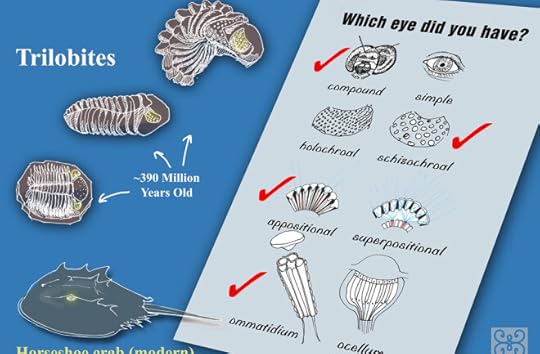
At one point I read a snippet about trilobite eyes. How cool! They're made of CaCO3 (limestone) - did you know that? I didn't! I couldn't wait to learn more about them: how they work, what path we think led to this, what other animals have a similar eye structure. But no, the snippet spends its allotted space listing all the other things that are also made of limestone: chalk, the "frigid purity"(???) of the Seven Sisters islands, the scaglio rosso of Italian churches. And then starts quoting the Tempest. That's when I decided to call it a day.
Who is this for then?
I think if you are a professional in STEM who doesn't like reading fiction but wants a nightstand book to lull you to sleep with comforting musings, you might like this.
If you are a geneticist you might like this even more.
If you are a member of the general public who has very limited knowledge on science you might learn something new but only get a hint of it, because nothing is really explained.
I dunno, a lot of these reviews are glowing, so this one is probably just me. I'm going to go back to my Gribbins, Penrose, and dear Ed Yong for science writing rich in content.

January 24, 2019
- دوكنز ما كتبش فصول دا الكتاب ، انما هو تجميع لمنتقى فصول لكتب علماء اخرين ، او مقالاتهم او محاضراتهم. ماكانش الإنتقاء على اساس (علمي) ، انما انتقاء للكتابة الشاعرية والأدبية في العلم من علماء مميزين برعوا في الكتابة العلمية لغير المتخصصين. هدف دوكنز منه بالطبع هو تغيير وجهة النظر القائلة في جمود كتابة العلماء وخلوها من الحس الرقيق -وهي مشكلة يعاني منه دوكنز نفسه حسب رايي بعدة كتب له- ويقدم لنا نماذج لعلماء جمعوا بين الكتابة العلمية والأدبية.
- الترجمة جيدة نوعاً ما ، ومقدمة المترجم ممتازة جداً ، انما اسلوبه في تشويه الكتاب الأصلي اولاً انقاصه من اكثر من 400 صفحة الى 190 صفحة باختيار بعض الفصول فقط ، عدا عن تغيير مقدمة كل فصل الي كانت بيد دوكنز ، قام غيره وعدل عليها ، اسلوب منرفز جدا.
وهنا رأيي بخصوص بعض الفصول فقط!
* من كتاب العالم المسكون بالخرافة/كارل ساجان
رغمننا ماقريتش اي شي لساجان الا اننا اقدر اقول انه كان أروع فصل من ناحية التأثير في القارئ. روعة الألفاظ والتعابير وقوة الجمل لهذا العالم الي دايما اسمع عليه. مافيش عجب ان يبدأ دوكنز كتابه بفقرات لساجان.
يتحدث عن مخاوفه من إنتشار الخرافات والعلم الزائف مؤخرا خصوصاً عند الامريكان. عن العلم وأهمية التفكير العلمي والثقافة العلمية بكلمات شاعر حر.
* من كتاب معنى التطور/جورج سمبسون
عن الخطوط العريضة لنشأة الثديات منذ انفصالها عن البرمائيات ، وتطويرها لأساليب جديدة تميزها كثديات. كالإحتفاظ بالبويضة والجنين داخل الجسم ، تطور العظام والمفاصل والأسنان وعمليات التمثيل الغدائي .. وغيرها.
(وهنا قصة حيوان خلد الماء كحيوان عابر بين البرمائيات والثديات ، خلد الماء يبيض ، ويرضع صغاره! له شعر ثديات ويعيش اغلب حياته في الماء).
* من كتاب دودة لكل العصور/ستيفان جولد
يتحدث عن داروين وضروف كتابته لآخر كتاب كتبه والي كان مخصص للديدان!
دور الديدان في تقليب التربة وتشكيل الأرض.
* من كتاب الحجم المناسب/ج.ب.س هالدين
واحد من افضل الفصول واكثر فصل افادنا وادهشنا بمعلومات جديدة لأشياء نشوفه كل يوم.
ايش دور الحجم في خصائص اي كائن حي؟ ايش علاقة الحجم بتصرفاته وقابليته للموت بالغرق او التهشّم؟
علاقة الحجم بقوانين فيزيائية اخرى كالطول والوزن والتوتر السطحي وتأثيره على الكائن؟
وليش مافيش زواحف وبرمائيات وثديات صغيرة (عدا الثعلب) في القطب الجنوبي؟
ليش عين الفيل والحوت صغيرة جداً مقارنة بحجمه؟
يقول ساخراً:"ومع أن جاليليو علمنا قوانين الحركة منذ أكثر من 300 سنة ، فإن الناس مازالوا يعتقدون ان البرغوث لو اصبح في حجم الإنسان لاستطاع أن يقفز ألف قدم في الهواء"
اي ان الإرتفاع الذي يستطيع كائن ان يقفزه متناسب مع حجمه.
* من كتاب اعادة التفكير في الجذور/ريتشارد ليكي وروجر لوين
فقرة يتحدث فيبه ريتشارد ليكي -عالم حفريات- عن اكتشاف واحدة من اهم الحفريات (Turkana boy ولد توركانا) وهي اول حفرية تكتشف للHomo erectus ، أول انسان مشى منتصباً. عمر الحفرية 1.8 مليار سنة.
* من كتاب لوسي/دونالد يوهانسون وميتلاند ايدي
زي الفصل الي قبله ، اكتشاف دونالد يوهانسون اشهر حفرية (Lucy لوسي) 3.2 مليون سنة ، في اثيوبيا.
* من كتاب كيف غيرت الأزهار العالم/لورين ايزلي
من افضل الفصول الي قريته، بسبب الأسلوب الشاعري والجذاب ، كشاعر يتغني بجمال الزهرة بأسلوب علمي لا سابق له.
اولاً عن دور النباتات في نشوء الحياة الحيوانية ، ثم وقبل 140مليون سنة ، ظهور الزهرة ، كيف كانت البدايات المتوقعة للزهرة الاولى ، كيف طورت من نفسه ومن أساليبه لاجتذاب الحشرات. ونتيجة لكذا ، حصل تفجر بيولوجي متعدد للحياة الحيوانية وتنوعه بل وظهور الثديات المتزامن مع اكتساء الأرض بهذا النوع الجديد من النباتات.
* من كتاب عجائب الدنيا السبع/لويس توماس
بعيد من عجائب الدنيا السبع الي من هندسة البشر ، يتكلم هنا عن سبع عجائب اخرى من وجهة نظره كعالم.
فصل في غاية الروعة والشاعرية يخليك تفكر كيف ان لفظة (عجيب) لا تليق بعجائب الدنيا المعروفة حالياً!
* من كتاب الجدول الدوري/بريمو ليفي
فقرة منه مخصصة للكربون، اهم عنصر على الإطلاق.
بأسلوب عجوز قاص ، ياخدك في سيناريو محتمل لرحلة ذرة الكربون منذ انفصاله عن الحفريات والبقايا المتحللة ، الى الهواء ، الى الورقة ودخوله في التمثيل الضوئي ، خروجه على شكل ثاني اكسيد الكربون ، الى رئتي طائر ، الى الهواء ، عبر الجزر والبحار ، الى شجرة ، الى دودة الأرض ، موت الدودة ، تتحلل ، وتبقى نفس ذرة الكربون لتعيد سيناريو مقارب.
* من كتاب صعود وهبوط الشبمانزي الثالث/جاريد دياموند
خلونا اقول دا الفصل نمر ون عندي.
من كان يتوقع ان لتدجين واستئناس بعض انواع الثديات له دخل في تفوق حضارة على حضارة اخرى؟ له دخل في سقوط امبراطوريات متقدمة -في وقتها- كحضارة الازتك والإنكا بسبب فشلهم ترويض الثديات الموجودة هناك ، او لعدم وجود ثديات كتلك الموجودة في اوراسيا؟ في نشوء حروب وفتح امبراطوريات وتغيير كبير على الخريطة زي الي سواه جنكيز خان؟
كيف بقيت استراليا والامريكيتن اقل تقدماً واكثر اعتماداً على عضلات الإنسان ، بينما اعتمدت حضارات العالم القديم على عضلات الحيوانات والي انتهى باكتساح الاوروبيين للعالم الجديد.
* من كتاب البحر من حولنا/راتشيل كارسون
التغيرات الفصلية تؤثر في البحر أيضاً كما في اليابسة. وكيف تنعكس هذه التغيرات على توزيع الحياة داخل البحر ، والحياة الحيوانية ، وهجرة الطيور.
فقرة عن الدور الكبير للبحار في البيئة بأسلوب بديع ومدهش يدخلك بجو تتخيل وكأنك في وثائقي عن الحياة البحرية.
- الترجمة جيدة نوعاً ما ، ومقدمة المترجم ممتازة جداً ، انما اسلوبه في تشويه الكتاب الأصلي اولاً انقاصه من اكثر من 400 صفحة الى 190 صفحة باختيار بعض الفصول فقط ، عدا عن تغيير مقدمة كل فصل الي كانت بيد دوكنز ، قام غيره وعدل عليها ، اسلوب منرفز جدا.
وهنا رأيي بخصوص بعض الفصول فقط!
* من كتاب العالم المسكون بالخرافة/كارل ساجان
رغمننا ماقريتش اي شي لساجان الا اننا اقدر اقول انه كان أروع فصل من ناحية التأثير في القارئ. روعة الألفاظ والتعابير وقوة الجمل لهذا العالم الي دايما اسمع عليه. مافيش عجب ان يبدأ دوكنز كتابه بفقرات لساجان.
يتحدث عن مخاوفه من إنتشار الخرافات والعلم الزائف مؤخرا خصوصاً عند الامريكان. عن العلم وأهمية التفكير العلمي والثقافة العلمية بكلمات شاعر حر.
* من كتاب معنى التطور/جورج سمبسون
عن الخطوط العريضة لنشأة الثديات منذ انفصالها عن البرمائيات ، وتطويرها لأساليب جديدة تميزها كثديات. كالإحتفاظ بالبويضة والجنين داخل الجسم ، تطور العظام والمفاصل والأسنان وعمليات التمثيل الغدائي .. وغيرها.
(وهنا قصة حيوان خلد الماء كحيوان عابر بين البرمائيات والثديات ، خلد الماء يبيض ، ويرضع صغاره! له شعر ثديات ويعيش اغلب حياته في الماء).
* من كتاب دودة لكل العصور/ستيفان جولد
يتحدث عن داروين وضروف كتابته لآخر كتاب كتبه والي كان مخصص للديدان!
دور الديدان في تقليب التربة وتشكيل الأرض.
* من كتاب الحجم المناسب/ج.ب.س هالدين
واحد من افضل الفصول واكثر فصل افادنا وادهشنا بمعلومات جديدة لأشياء نشوفه كل يوم.
ايش دور الحجم في خصائص اي كائن حي؟ ايش علاقة الحجم بتصرفاته وقابليته للموت بالغرق او التهشّم؟
علاقة الحجم بقوانين فيزيائية اخرى كالطول والوزن والتوتر السطحي وتأثيره على الكائن؟
وليش مافيش زواحف وبرمائيات وثديات صغيرة (عدا الثعلب) في القطب الجنوبي؟
ليش عين الفيل والحوت صغيرة جداً مقارنة بحجمه؟
يقول ساخراً:"ومع أن جاليليو علمنا قوانين الحركة منذ أكثر من 300 سنة ، فإن الناس مازالوا يعتقدون ان البرغوث لو اصبح في حجم الإنسان لاستطاع أن يقفز ألف قدم في الهواء"
اي ان الإرتفاع الذي يستطيع كائن ان يقفزه متناسب مع حجمه.
* من كتاب اعادة التفكير في الجذور/ريتشارد ليكي وروجر لوين
فقرة يتحدث فيبه ريتشارد ليكي -عالم حفريات- عن اكتشاف واحدة من اهم الحفريات (Turkana boy ولد توركانا) وهي اول حفرية تكتشف للHomo erectus ، أول انسان مشى منتصباً. عمر الحفرية 1.8 مليار سنة.
* من كتاب لوسي/دونالد يوهانسون وميتلاند ايدي
زي الفصل الي قبله ، اكتشاف دونالد يوهانسون اشهر حفرية (Lucy لوسي) 3.2 مليون سنة ، في اثيوبيا.
* من كتاب كيف غيرت الأزهار العالم/لورين ايزلي
من افضل الفصول الي قريته، بسبب الأسلوب الشاعري والجذاب ، كشاعر يتغني بجمال الزهرة بأسلوب علمي لا سابق له.
اولاً عن دور النباتات في نشوء الحياة الحيوانية ، ثم وقبل 140مليون سنة ، ظهور الزهرة ، كيف كانت البدايات المتوقعة للزهرة الاولى ، كيف طورت من نفسه ومن أساليبه لاجتذاب الحشرات. ونتيجة لكذا ، حصل تفجر بيولوجي متعدد للحياة الحيوانية وتنوعه بل وظهور الثديات المتزامن مع اكتساء الأرض بهذا النوع الجديد من النباتات.
* من كتاب عجائب الدنيا السبع/لويس توماس
بعيد من عجائب الدنيا السبع الي من هندسة البشر ، يتكلم هنا عن سبع عجائب اخرى من وجهة نظره كعالم.
فصل في غاية الروعة والشاعرية يخليك تفكر كيف ان لفظة (عجيب) لا تليق بعجائب الدنيا المعروفة حالياً!
* من كتاب الجدول الدوري/بريمو ليفي
فقرة منه مخصصة للكربون، اهم عنصر على الإطلاق.
بأسلوب عجوز قاص ، ياخدك في سيناريو محتمل لرحلة ذرة الكربون منذ انفصاله عن الحفريات والبقايا المتحللة ، الى الهواء ، الى الورقة ودخوله في التمثيل الضوئي ، خروجه على شكل ثاني اكسيد الكربون ، الى رئتي طائر ، الى الهواء ، عبر الجزر والبحار ، الى شجرة ، الى دودة الأرض ، موت الدودة ، تتحلل ، وتبقى نفس ذرة الكربون لتعيد سيناريو مقارب.
* من كتاب صعود وهبوط الشبمانزي الثالث/جاريد دياموند
خلونا اقول دا الفصل نمر ون عندي.
من كان يتوقع ان لتدجين واستئناس بعض انواع الثديات له دخل في تفوق حضارة على حضارة اخرى؟ له دخل في سقوط امبراطوريات متقدمة -في وقتها- كحضارة الازتك والإنكا بسبب فشلهم ترويض الثديات الموجودة هناك ، او لعدم وجود ثديات كتلك الموجودة في اوراسيا؟ في نشوء حروب وفتح امبراطوريات وتغيير كبير على الخريطة زي الي سواه جنكيز خان؟
كيف بقيت استراليا والامريكيتن اقل تقدماً واكثر اعتماداً على عضلات الإنسان ، بينما اعتمدت حضارات العالم القديم على عضلات الحيوانات والي انتهى باكتساح الاوروبيين للعالم الجديد.
* من كتاب البحر من حولنا/راتشيل كارسون
التغيرات الفصلية تؤثر في البحر أيضاً كما في اليابسة. وكيف تنعكس هذه التغيرات على توزيع الحياة داخل البحر ، والحياة الحيوانية ، وهجرة الطيور.
فقرة عن الدور الكبير للبحار في البيئة بأسلوب بديع ومدهش يدخلك بجو تتخيل وكأنك في وثائقي عن الحياة البحرية.

January 19, 2011
A solid collection of science writing, though not without its flaws. I have two primary complaints: the collection is organized rather arbitrarily, and it's heavily weighted towards biology. A better title might have been 'The Oxford book of Richard Dawkins' favorite science writing'.
That said, none of the selections are excessively long, and most make for a good read. Dawkins' keeps his comments to a minimum - a paragraph or two with each selection - and on the whole these are both eloquent and interesting.
There's a small subset of this book I'd recommend strongly. As a whole, it's still worth checking out.
That said, none of the selections are excessively long, and most make for a good read. Dawkins' keeps his comments to a minimum - a paragraph or two with each selection - and on the whole these are both eloquent and interesting.
There's a small subset of this book I'd recommend strongly. As a whole, it's still worth checking out.

January 27, 2012
مقدمة لعالم الكتابة " اﻷدبية العلمية" التي تبسط أعقد العلوم للقاريء غير المتخصص وتمتعهة مثل قصيدة أو رواية ، وترجم الروائي والمترجم والرسّام والمصور الفوتوغرافي المصري طارق كامل كتابين للأديب/العالم الفلكي الفرتسي ميشيل كاسيه وعنونهما بـ "فكرة السماء" وضوء سري على حافّة الزمان، وهما من أمتع ما قرأت باللغة العربية..

November 29, 2012
Dawkins explains everything that is related to science, what scientists study, what they do and what they are happily doing.

June 9, 2025
مقالات علمية مختلفه في الاحياء والفيزياء وعلم الفلك والرياضيات
مفيد لحد ما
مفيد لحد ما

July 2, 2017
This book was perfect for my level of scientific understanding as a 'layperson' with knowledge of the scientific method. Books written by non-scientists about science or scientific discoveries are fascinating to me....possibly because of the irony of dissecting and studying those who do that for a living. But books written by scientists with the linguistic skills to communicate without jargon are a real treat. “This is a collection of good writing by professional scientists, not excursions into science by professional writers," writes Dawson.
The essays were well-chosen, and each brought a brief, discrete view of a particular scientific discovery or endeavor. The tediousness of the profession becomes obvious, and the amount of devotion to microscopic or highly speculative or theoretical lines of inquiry is impressive. Yet, the simple 4-section layout provides a basic guide as to the purpose of Dawkins' choices for the anthology: What Scientists Study, Who Scientists Are, What Scientists Think and What Scientists Delight In.
One of the reasons this book attracted me was because as a University student in social sciences, a required reading was one by Dawkins on writing, and his evolution from scientist to writing teacher. He employs the rigor of science in sentence construction and deploys the precision of it to vocabulary, practically eliminating adjectives. Spare language with low word count is the goal, and he deplores parenthetical phrases and over-explanation. Forced to read convoluted theory from the 17th to 19th century at that time, this was an advancement of science I could admire!
The book was informative, inspirational and thought-provoking. It was interesting to read about the practice of science that continues to produce technology, medicine and understanding and gain a fly on the wall view. Also, it was refreshing to read of scientists who reconcile their faith with science, and whose science produces awe, wonder and joy, as so much written about science today merely pits it against religion or political agendas, so much by Dawkins is specifically anti-religious and overtly atheistic. Science is invoked so often in social media comments and memes, it's easy to forget there are real scientists and that science is a job that people do every day that makes the world a better place.
The anthology ends with Carl Sagan's The Pale Blue Dot, the classic that my and my children's generations were raised with, describing a science of awe and wonder, that did not see religion as an enemy: "A religion, old or new, that stressed the magnificence of the Universe as revealed by modern science might be able to draw forth reserves of reverence and awe hardly tapped by the conventional faiths.” Nor was science for the elite; it was the goal of Sagan's life to make it accessible on TV and in lay media, just as it is the goal of Dawkins to make it readable. He succeeded with this anthology in getting back to his roots as a practicing scientist, and appreciating the discipline, practice, and body of scholarship that science was before it was politicized, introducing us to a diverse and hard-working cast of thinkers, researchers and writers that are scientists.
The essays were well-chosen, and each brought a brief, discrete view of a particular scientific discovery or endeavor. The tediousness of the profession becomes obvious, and the amount of devotion to microscopic or highly speculative or theoretical lines of inquiry is impressive. Yet, the simple 4-section layout provides a basic guide as to the purpose of Dawkins' choices for the anthology: What Scientists Study, Who Scientists Are, What Scientists Think and What Scientists Delight In.
One of the reasons this book attracted me was because as a University student in social sciences, a required reading was one by Dawkins on writing, and his evolution from scientist to writing teacher. He employs the rigor of science in sentence construction and deploys the precision of it to vocabulary, practically eliminating adjectives. Spare language with low word count is the goal, and he deplores parenthetical phrases and over-explanation. Forced to read convoluted theory from the 17th to 19th century at that time, this was an advancement of science I could admire!
The book was informative, inspirational and thought-provoking. It was interesting to read about the practice of science that continues to produce technology, medicine and understanding and gain a fly on the wall view. Also, it was refreshing to read of scientists who reconcile their faith with science, and whose science produces awe, wonder and joy, as so much written about science today merely pits it against religion or political agendas, so much by Dawkins is specifically anti-religious and overtly atheistic. Science is invoked so often in social media comments and memes, it's easy to forget there are real scientists and that science is a job that people do every day that makes the world a better place.
The anthology ends with Carl Sagan's The Pale Blue Dot, the classic that my and my children's generations were raised with, describing a science of awe and wonder, that did not see religion as an enemy: "A religion, old or new, that stressed the magnificence of the Universe as revealed by modern science might be able to draw forth reserves of reverence and awe hardly tapped by the conventional faiths.” Nor was science for the elite; it was the goal of Sagan's life to make it accessible on TV and in lay media, just as it is the goal of Dawkins to make it readable. He succeeded with this anthology in getting back to his roots as a practicing scientist, and appreciating the discipline, practice, and body of scholarship that science was before it was politicized, introducing us to a diverse and hard-working cast of thinkers, researchers and writers that are scientists.

January 7, 2012
If you want to be inspired, either by the majesty and beauty of science, or by the passion and skill of those who write about it, pick up this book and read a few sections. It contains scores of snippets, each just a handful of pages, on dozens of different subjects, by a range of different authors, and most of them are inspirational.
When I bought the book, I didn't realize that the readings were all from popular science writing, for non-specialist audiences. Misled by the cover art and by the list of authors, I expected a collection of sparkling gems of writing from the primary literature. There are, indeed, many samples from notable scientists; if you can name a scientist from a field you don't work in, chances are he is represented here. (And the male pronoun is appropriate; female authors fill only a few percent of the pages.) But these selections are taken from their writings for the general public, post-Nobel and in the memoir-writing or science-popularization phase of their career. Nonetheless, the writing is still impressive. Although not models for good technical science writing, as I had hoped, the excerpts do a great job of conveying the enthusiasm for science and delight in discovery that is shared by every great scientist and science writer.
Another thing that caught me off guard was the emphasis on biology, and especially evolutionary biology. There are some samples here from astronomers and physicists, but as often as not they are writing outside the field that they are known for. We get Einstein's musings on religion and philosophy, Schrödinger's description of entropy for biologists, and astrophysicist Fred Hoyle's take on evolution. It's not that these are not interesting, and I can understand why Dawkins has a soft spot for writings on the biological sciences, but I expected, and would have enjoyed, a little more representation from the physical scientists.
Even with these quibbles, the books is outstanding. It's very enjoyable to read, whether you want to admire the writing or absorb some of the science. Many of the passages made me curious to read the longer works from which they were taken, several of which have already made it onto my bookshelf.
When I bought the book, I didn't realize that the readings were all from popular science writing, for non-specialist audiences. Misled by the cover art and by the list of authors, I expected a collection of sparkling gems of writing from the primary literature. There are, indeed, many samples from notable scientists; if you can name a scientist from a field you don't work in, chances are he is represented here. (And the male pronoun is appropriate; female authors fill only a few percent of the pages.) But these selections are taken from their writings for the general public, post-Nobel and in the memoir-writing or science-popularization phase of their career. Nonetheless, the writing is still impressive. Although not models for good technical science writing, as I had hoped, the excerpts do a great job of conveying the enthusiasm for science and delight in discovery that is shared by every great scientist and science writer.
Another thing that caught me off guard was the emphasis on biology, and especially evolutionary biology. There are some samples here from astronomers and physicists, but as often as not they are writing outside the field that they are known for. We get Einstein's musings on religion and philosophy, Schrödinger's description of entropy for biologists, and astrophysicist Fred Hoyle's take on evolution. It's not that these are not interesting, and I can understand why Dawkins has a soft spot for writings on the biological sciences, but I expected, and would have enjoyed, a little more representation from the physical scientists.
Even with these quibbles, the books is outstanding. It's very enjoyable to read, whether you want to admire the writing or absorb some of the science. Many of the passages made me curious to read the longer works from which they were taken, several of which have already made it onto my bookshelf.
April 27, 2011
This is an anthology of essays edited by Richard Dawkins, one of the foremost promoters of the philosophical materialist view of the world currently writing. His choices and his short introductions to these essays continue his work. Despite the title which indicates a more general science approach this book does lean more toward the biological sciences and evolutionary biology in particular. Since biology is my area of formal training and since I do have a special interest in evolution that suits me just fine and it is what you would expect from Richard Dawkins too. Nevertheless, those of you who are interested in physics, cosmology, mathematics and other branches of science will find something to your liking too. Furthermore, the essays have been chosen for their literary merit, so the writing is clear and engaging. It is quite comprehensible to the intelligent layman and provides learning possibilities to those who have never studied science too. Even the essays on mathematics are bereft of equations in favor of instructive and entertaining discussion.

February 13, 2013
Θυμάμαι τα σχολικά ανθολόγια του δημοτικού. Χοντρά βιβλία, άχαρα, που δεν τα ανοίγαμε ποτέ. Ούτε και οι δάσκαλοί μας τα χρησιμοποιούσαν ποτέ. Ήταν για τη βιβλιοθήκη (κάπου θα βρίσκονται και τα δικά μου, σε κάποια παλιά βιβλιοθήκη). Αυτά τα ανθολόγια ελληνικής λογοτεχνίας υποτίθεται ότι ήταν συλλογές από τα καλύτερα λογοτεχνικά κείμενα -πεζά και ποιήματα- που ταίριαζαν σε παιδιά του δημοτικού.
Στο The Oxford Book of Modern Science Writing ο Richard Dawkins έχει σταχυολογήσει λογοτεχνικά κείμενα επιστημονικού περιεχομένου, γραμμένα αποκλειστικά από επιστήμονες. Ή μάλλον επιστημονικά κείμενα γραμμένα με έντονη λυρική χροιά. Όπως κι αν τα δει κανείς, πρόκειται για αριστουργήματα που αποδεικνύουν ότι οι επιστήμονες είναι και καλλιτέχνες. Όσοι νομίζουν ότι επιστήμονας θα πει έλλειψη ευαισθησίας, έμπνευσης, ευαισθησίας, διορατικότητας, κοινωνικού προβληματισμού και αχαλίνωτης φαντασίας ας διαβάσει αυτό το βιβλίο. Θα εκπλαγεί.
Ένα θαυμάσιο βιβλίο που δεν είναι μόνο για τη βιβλιοθήκη.
Στο The Oxford Book of Modern Science Writing ο Richard Dawkins έχει σταχυολογήσει λογοτεχνικά κείμενα επιστημονικού περιεχομένου, γραμμένα αποκλειστικά από επιστήμονες. Ή μάλλον επιστημονικά κείμενα γραμμένα με έντονη λυρική χροιά. Όπως κι αν τα δει κανείς, πρόκειται για αριστουργήματα που αποδεικνύουν ότι οι επιστήμονες είναι και καλλιτέχνες. Όσοι νομίζουν ότι επιστήμονας θα πει έλλειψη ευαισθησίας, έμπνευσης, ευαισθησίας, διορατικότητας, κοινωνικού προβληματισμού και αχαλίνωτης φαντασίας ας διαβάσει αυτό το βιβλίο. Θα εκπλαγεί.
Ένα θαυμάσιο βιβλίο που δεν είναι μόνο για τη βιβλιοθήκη.
December 22, 2014
The charm of anthologies like this is that they expose you to writers you might not otherwise encounter. Selected by Richard Dawkins, this book is weighted heavily toward Darwinian scientists. Inevitably, the selections are uneven... Steve Jones on genetics is fascinating; a section on the mathematical classification of spirals was less captivating. The section by Douglas Hofstadter ("Godel, Escher and Bach") was especially intriguing. This is an interesting collection, but the selections are so truncated that it's like snacking on h'orderves; no substitute for the full course. A non-scientist will be left with a very limited understanding of these scientific issues. It would have been helpful to have a chapter describing the main areas of recent discovery and controversy in each scientific discipline to put these selections in better context. The short pre-ambles from Dawkins are inadequate.

May 7, 2012
I was given this as a present for defending my dissertation. Here, Dawkins selects excerpts from writings by many influential mathematicians/scientists spanning subjects from math to abstract physics to biology. It's hard to escape Dawkins' appreciation from some of the most exciting minds in our history. Their love and reverence for truth is truly inspiring and provoking. Unfortunately, I find this collection dense and difficult to read. Dawkins' commentary at the beginning of each excerpt is distracting and self-serving. The excerpts are too short for true enjoyment. Overall, I find portions of this work lovely, but the overall piece dry.

May 21, 2021
Vim a este ao engano, mas acabei por ficar. Numa pilha de escolhas que queria mais técnica no que toca à escrita científica, deparo-me com as escolhas de Dawkins, do que ele tem por boa escrita científica. Gostei muito das escolhas e temas, e fui viajando.
Ainda assim só lamento o foco em livros para as massas em vez de publicações científicas. Foi aquele croissant misto que sem contar chega à mesa e o qual já não se nega. 😋
Ainda assim só lamento o foco em livros para as massas em vez de publicações científicas. Foi aquele croissant misto que sem contar chega à mesa e o qual já não se nega. 😋

August 14, 2012
رتشارد دوكنز كالعاده رائع ف كتاباته العلميه..على الرغم ان كتاب وهم الاله مكنتش حاسه موضوعى..ولكن الكتاب ده شيق لاقصى درجه..بعد قرائتك للكتاب هتحس انك عايز تقرا حوالى 20 كتاب او اكتر..وهى الكتب التى تم استخلص المقالات منها من اكتر المقالات اللى عجبتنى ...مقال كتاب ستيفن هوكينج...وقال كتاب دراوين عن الديدان..ومقال دكتور ليفى الكربون عن الجدول الدورى..كتاب جدير انه يتواجد ف كل مكتبه وعند كل شخص مهتم بالقراءه العلميه

كتاب_مفتوح
September 10, 2012أحد الكتب الثقافة العلمية الصادرة عن مكتبة الأسرة 2012
حررها ريتشارد دوكنز ..وألفها أعظم وألمع علماء القرن العشرين.
الكتاب هو سلسلة فصول تم تجمعيها من كتب لعلماء مثل كارل ساجان..ستيفن هوكينج...داروين...بريمو ليفى..ألبرت أينشتاين..أروين شرودنجر وغيرهم فى مختلف المجالات..البيولوجى..والفلك...والفيزياء...والكيمياء مثل فصل الكربون عن كتاب الجدول الدورى لبريمو ليفى.
الكتاب غنى بكم معلوماته الشيقة وأسلوب عرضه البسيط ..تحت إطار من التفكير العلمى وتسهيل المعلومة العلمية لغير المتخصصين.
حررها ريتشارد دوكنز ..وألفها أعظم وألمع علماء القرن العشرين.
الكتاب هو سلسلة فصول تم تجمعيها من كتب لعلماء مثل كارل ساجان..ستيفن هوكينج...داروين...بريمو ليفى..ألبرت أينشتاين..أروين شرودنجر وغيرهم فى مختلف المجالات..البيولوجى..والفلك...والفيزياء...والكيمياء مثل فصل الكربون عن كتاب الجدول الدورى لبريمو ليفى.
الكتاب غنى بكم معلوماته الشيقة وأسلوب عرضه البسيط ..تحت إطار من التفكير العلمى وتسهيل المعلومة العلمية لغير المتخصصين.

January 30, 2013
A mixed bag. Some fascinating extracts from some great writing by modern scientists. But the first half of the book is almost completely dominated by the biological sciences - the selection of authors appeared significantly biased in favour of Dawkins' own interests. But in the later section the range rather spread, but still I was left feeling that the selection wasn't entirely representative. Nevertheless, some interesting and inspirational reading.

November 24, 2009
This is a compilation of essays by, and about science and scientists. I read it for a book group and it did provide the basis for a wide range of interesting discussions. It is not really a science book, but does related to the way scientists think, and what moves them. It has a spiritual sense about the grandeur of nature and the mind of man.

August 9, 2015
Replace the stars by constellations, please. What a fine compilation of texts from witty scientists; a bunch of smart people sharing thrilling breakthroughs. This may stretch your view of nature widely together with a boost on your itching curiosity. Not to mention that my reading list was generously updated.

February 17, 2012
من النادر أن تقع يدك على مثل هذا الكتاب
كتاب رائع ينتقي أفضل ما كتبه أكبر علماء القرن العشرين في مختلف المجالات
و يضعها كلها أمامك لتشكل فكرة عامة عن كل فرع
كثير منها فتح أبواب تفكير جديدة في مخي
!اختيار رائع لمكتبة الأسرة
:)
كتاب رائع ينتقي أفضل ما كتبه أكبر علماء القرن العشرين في مختلف المجالات
و يضعها كلها أمامك لتشكل فكرة عامة عن كل فرع
كثير منها فتح أبواب تفكير جديدة في مخي
!اختيار رائع لمكتبة الأسرة
:)

March 25, 2014
The other authors from the collection might get more or fewer stars individually, but the collector gets three. It's a good anthology of some good scientific essays, good being the bland, generally positive word which one uses to describe generally good things--like salads or economy cars.
Displaying 1 - 30 of 116 reviews