In The New Order and Last Orientation, Eric Voegelin explores two distinctly different yet equally important aspects of modernity. He begins by offering a vivid account of the political situation in seventeenth-century Europe after the decline of the church and the passing of the empire. Voegelin shows how the intellectual and political disorder of the period was met by such seemingly disparate responses as Grotius's theory of natural right, Hobbes's Leviathan, the role of the Fronde in the formation of the French national state, Spinoza's Tractatus Theologico-Politicus, and Locke's Second Treatise, the blueprint of a modern middle-class society. By putting these responses and the thought of Montesquieu, Hume, and others in the context of the birth pains of the national state and the emergence of a new self-understanding of man, Voegelin achieves a brilliant mixture of political history and profound philosophical analysis.
Voegelin's verdict of modernity is pronounced most powerfully in the opening part of "Last Orientation," in the chapter entitled "Phenomenalism." His discussion of the intellectual confusion underlying the modern project of scientistic phenomenalism is the most original criticism leveled against modernity to date. It is at the same time the first step toward a recovery of reality through philosophy conceived as a science of substance in the spirit of Giordano Bruno. Voegelin's first example of such an effort at recovering reality is the chapter on Schelling, one of the spiritual realists who has not been affected by the prevailing rationalist or reductionist creeds that are part of the modern disorder. Schelling's indirect yet powerful influence on Schopenhauer, Nietzsche, and Freud more than justifies Voegelin's interest in his philosophy and character, even though Voegelin would later distance himself from some of Schelling's positions.
The volume's concluding chapter, "Nietzsche and Pascal," applies the understanding gained from the study of Schelling to the thought of the most powerful critic of the age, Nietzsche. Nietzsche's self-avowed affinity with Pascal provides the key to an analysis of the strengths and weaknesses of his thought and reaffirms the connection that links the beginning of modernity with its most recent crises and the efforts to overcome them.
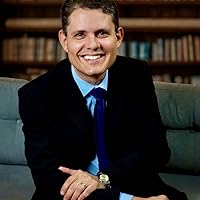
German-born American political philosopher. He taught political theory and sociology at the University of Vienna after his habilitation there in 1928. While in Austria Voegelin established the beginnings of his long lasting friendship with F. A. Hayek. In 1933 he published two books criticizing Nazi racism, and was forced to flee from Austria following the Anschluss in 1938. After a brief stay in Switzerland, he arrived in the United States and taught at a series of universities before joining Louisiana State University's Department of Government in 1942. His advisers on his dissertation were Hans Kelsen and Othmar Spann.
Voegelin remained in Baton Rouge until 1958 when he accepted an offer by Munich's Ludwig-Maximilians-Universität to fill Max Weber's former chair in political science, which had been empty since Weber's death in 1920. In Munich he founded the Institut für Politische Wissenschaft. Voegelin returned to America in 1969 to join Stanford University's Hoover Institution on War, Revolution, and Peace as Henry Salvatori Fellow where he continued his work until his death on January 19, 1985. He was a member of the Philadelphia Society.
Nesse volume, resultado de uma coleção de textos terminados em diferentes anos, Voegelin trata do período do humanismo baseado no direito natural secularizado e no ideal de ciência no século XVII ao imanentismo historicista de Nietzsche. No século XVII, entre o período de desintegração do império e a ascensão do Estado nacional, o homem restou só sem um cosmion que lhe desse sentido. O direito natural e o ideal de ciência se tornam símbolos de um novo significado. A teoria política assume vários caminhos. Grotius busca a ordem fundada em um direito natural autônomo do divino. Hobbes propõe uma reflexão realista da política fundada na natureza humana não inocente. Na Inglaterra do séc. XVII, ocorre uma revolução inglesa orientada por equilibrar o poder do Parlamento e monarca por meio de uma monarquia limitada. Na França, a tentativa de monarquia limitada fracassa. Em Espinosa, a nação toma o lugar de Deus nos sentimentos políticos dos homens. Em Locke, surge uma nova antropologia pós-medieval do puritano vitorioso que substitui a espiritualidade cristã pela paixão por propriedade privada. Para Voegelin, esses autores possibilitaram uma "ordem", mas perderam o espírito. Surgem tentativas de reafirmar o espírito. Hume funda uma sociedade política com base no sentimento de simpatia como liga e convenção das relações sociais. Montesquieu reconhece que cada povo tem sua ordem governamental singular e liberdade para agir segundo regras morais. Abre-se espaço para a relatividade histórica da ordem ocidental. Na segunda parte, Voegelin trata de um novo conjunto de ideias. Ele apresenta o "fenomenalismo" como uma interpretação das relações fenomênicas da ciência como ordem de substância das coisas. A combinação de fenomenalismos, como o biológico, econômico e psicológico, ameaça extinguir a humanidade. Nota: essa previsão de Voegelin foi escrita seis semanas antes da bomba atômica ser lançada sobre Hiroshima. Em seguida, Voegelin discute amplamente Schelling, a quem considera um grande pensador. Schelling percebeu a despiritualização e irracionalismo ocidental e a fragmentação e decadência do pensamento. Schelling propõe um novo nível de consciência crítica dentro da história cristã. Por fim, Voegelin discute sobre Pascal e Nietzsche. Esse é um capítulo muito interessante porque Voegelin procura mostrar que o imanentismo de Nietzsche se colocava como contraponto ao "tipo" de cristandade de Pascal que considerava a necessidade do movimento histórico. Mesmo partindo de percepções semelhantes a Pascal sobre a desintegração de uma ordem social desencantada, Nietzsche desenvolveu uma profunda crítica à civilização: ressentimento, niilismo e abolição da graça.
This book is more "political", and people who have a better understanding of the "past" Europe will be very happy to read it. It is very suitable for people with considerable hard knowledge reserves.
Chapter One-Nation-State: The people who watch it are frightened. A dozen pages are much more exciting than Anderson's "Imaginary Community". Good knowledge can really save paper.
The favorite part is talking about phenomenism. -Phenomenalism can gain its de facto dominance, in the final analysis, firstly because of the decline of Christian spirituality and the growth of various inner secular feelings. -A pure non-phenomenal materialism, in fact, sometimes very close to a pure non-phenomenal, spiritualism. -
This book is special to me in the following points: I met Schelling completely from the theory of war before. Should I read what Schelling wrote? I am still entangled / originally from Spinoza’s "Occultism" "It can be analyzed like this/
In addition, about Holderlin,,, go to Meow Brownshaw to talk about him, "Gnosis" Woo doesn't seem to know, Xiao He has a health problem.
Also, who wrote the English preface? It's not that much.