Lize is slowly recovering from a mysterious blood disease after almost being killed by it. The problem is that the illness took all her energy and that she now has no more strength or courage left for the recovery process. She meets wealthy businessman, Charles Ashton, who is the most distant and detached person she has ever come across. Charles chooses to become involved in the life of another person for the first time in years when he asks her to marry him in order to give her the opportunity, space and support to get better.
Reflections takes us into several aspects of Lize's life: her physical recovery, her mental re-adjustment to being healthy and independent and her realization that she cannot deal with the unusual circumstances of her marriage and, especially, with her husband's inability to express his feelings and with his unwillingness to become emotionally involved.
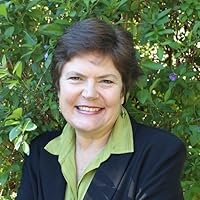
Although Baker initially studied music, she obtained her M.A. in Afrikaans (cum laude) in 1968 at the University of Pretoria. In Johannesburg she worked as a school teacher and got married to Walter Baker in 1969. Three years later her debut Wêreld sonder einde appeared, albeit that Weerkaatsings (Reflections) established her status as an important (though unfortunately often undervalued) Afrikaans author who penned 56 books in the end. Since her husband was in the diplomatic service, the couple moved from Teheran to Den Haag and from there to Montreal and Brussels before returning to South Africa to retire. Baker died of cancer at the age of 57.
She sometimes used the pseudonyms Christine le Roux and Alex Muller.
This book was my set work book in matric and I have re-read it a number of times over the years. Each time my Afrikaans is a little better than the time before and each time I enjoy it in a different way. A sweet romantic story
***When I discovered that there's an English version of the book, I wanted to read it - mainly from a "professional" point of view: I know that Eleanor Baker is an Afrikaans writer, so since she translated it herself, does it come across as a "translated text"? The answer is a resounding "no"! There were three spots (at most) where it wasn't quite colloquial, but otherwise it's still a winner!
______________________________
So do we talk about "Reflections" or "Weerkaatsings"? Looking at this, they're not the same: Neither is "Wiederspiegelung" or "ukuzindla" ... yet they are the same. Jung spoke of the "yin" and "yang", like "man" and "woman"; "Adam" and "Eve", "Sun" and "Moon" - yes, the male archetype is associated with the sun, the female with the lunar (-tic!). After having read Eleanor Baker's book for the third (?) time, I can only reflect on the fact that we're all the same. One gender has the same needs as the opposite gender, searches for the same things, suffers the same anxieties, and so the reflection goes on and on and on ... the spell may only be broken by a solar eclipse, as in Ladyhawke .
... Ha! En nou lees ek Brink het destyds soos volg oor die verhaal geskryf: "Baker maak van die storie net ’n beginpunt vir ’n fyn innige en vergaande verkenningstog binne-in mense in. Weerkaatsings is een van die subtielste prosawerke is wat lank in Afrikaans verskyn het. En een van die mooistes: vir dié leser wat ’n baie-baie lekker storie wil geniet.”. Sien? "Een van die mooistes" > ek stem saam.
Weerkaatsings is my gunstelingboek in Afrikaans. En dit sê baie, want ek lees baie. Ek het dit onlangs in 'n moeilike tyd vir omtrent die sesde of sewende maal herlees. En steeds bly dit nuut. Ek is self nie seker hoekom nie. Die taal begin al op plekke 'n bietjie verouderd klink. En eintlik is dit 'n effens onwaarskynlike liefdesverhaal. Maar albei die hoofkarakters kruip elke keer opnuut in my hart. Wat 'n geweldige verlies dat ons Eleanor Baker so vroeg moes verloor.
This book is one of my favourite romance novels and I re-read it once every few years. I think reading it as I get older I see more and more issues with some of the characters and plot BUT that does not take away from the fact that is a beautifully written romance. I think we could have had more of the story told from Charles angle, because just as Lize was struggling with her illness, he also struggled with so many things from his past. The way they meet is interesting but his instant gravitation towards her is a little strange. It borders on masculine saviour complex because he practically forced his way into her life (wouldn't we all love a multi-millionare with power to do that for all of us), but its something that she needed at that point in her life. His sudden proposal and their whirlwind contract marriage draws them closer and she heals well from her illness. She basically feels like she owes him though and it is something they discuss where he acknowledges the power imbalance, but also admits she has enriched his life in ways he did not think he needed. Absolutely hated that he allowed his cousin to mess with her, that guy is an absolute jerk. Also I think Charles needs major therapy because of his lonely childhood and subsequent lonely adulthood until Lize shows up. Its strange to me how in Lize previous engagement, her partner also offered a a way to heal by leaving everything behind and staying somewhere sunny. This similar to what Charles done by having their "honeymoon" in Italy where Lize makes a miraculous recovery. That shows they were meant for each other, and everyone else before was just a way to reach their relationship. All in all through their imperfections they are eventually able to see each other for who they are through their reflections.
This entire review has been hidden because of spoilers.
I read this book for the first time when I was in high school, and it made such a strong impression on me then that I don't know what kind of rating I would have left if this had been my first read. I usually don't leave 4-stars or 5-stars for romance fiction; it's just too predictable to be my favourite genre.
Many readers may struggle to identify with Lize. She is not a strong, assertive, self-confident 21st-century woman and her typical reaction to almost everything is to be overcome by feelings of hopelessness and cry. Because I have a lot of experience of serious illness and disability, I understand how they can wear us down to the barest minimum where mere survival is an achievement and all remnants of strength are completely exhausted. So I understand her quite well.
Charles's motivations are even harder to understand, especially the impulsive decision to marry Lize, coming from a man who had up to then exercised strong control over his emotions and actions. But his reactions through the book make more sense, since his life had been enriched in ways he always desired but never experienced.
I could not read this book very far (I did finish at least three chapters and part of the fourth before I finally decided to put it down). Normally I am a big fan of Baker's books, but this is one of a few I did not like. I have two main problems with it - first, the main character is very sick and constantly tired, frankly that made me feel tired after three chapters of reading; second, the book is written for an older era - a man who does not know about hamburgers or how to make tea is just too much for me.
This entire review has been hidden because of spoilers.