The arrival of a mysterious young stranger disrupts the lives of a wealthy, unhappy familyEver since he was a little boy, Aldo Rugani has been drawn to the world of the aristocracy. Now an art dealer with a questionable past, Aldo finds himself a regular guest at the Tuscan estate of the affluent but unstable Santini family. He also works his way into the confidence of the clan's elderly but very much alive matriarch, Violante. Tough and indomitable, the grande dame is determined to see that her troubled family has a secure future before she dies.As an outsider, Aldo can only watch as the family members mindlessly self-destruct. He pines for Lavinia, Violante's much-adored, romantically reckless widowed daughter-in-law. But on one particular weekend holiday in Tuscany, a young visitor comes to the Santini estate. A friend of Lavinia's son, Marco intends only to stop over briefly. But before he departs, everything will be different for the hapless Santinis.
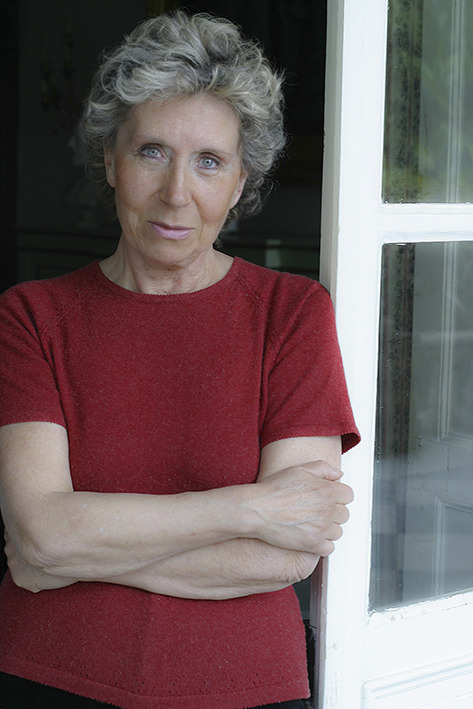
Francesca Duranti is the author of eight critically acclaimed novels and the winner of several of Italy’s most prestigious literary awards. She lives in New York City and Lucca, Italy.
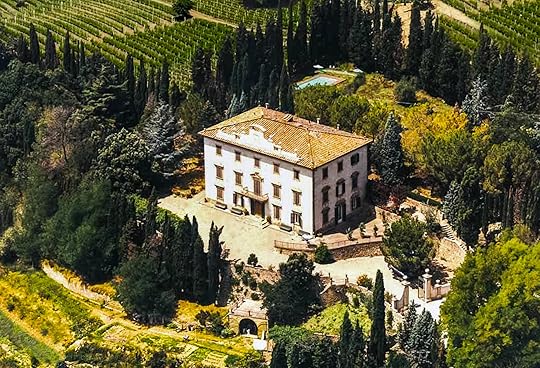
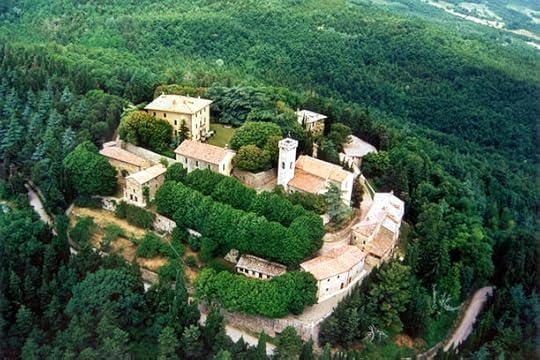
This story, set in Tuscany, revolves around a widowed matriarch who lives in the Villa Grande within a family compound of three houses. One of the other houses is occupied by her oldest son and his American wife. The American woman is still struggling to adapt to Italian culture and the stifling family life. The third house is occupied only during summers by the matriarch’s widowed daughter-in-law who otherwise lives in the city.
An adjoining house, not part of the estate, is occupied by our more-or-less main character. He’s a bachelor art expert/collector (and former art forger). He’s not related to the family by blood but he’s functionally part of it. His obsession is watching the going’s on at the family estate through binoculars, so he tells us a lot of the story through his voyeurism; he calls it his ‘secret theater.’ And he has another secret: he’s been in love with the widowed daughter-in-law for most of his life.
The matriarch, in her 70’s, feels she is approaching the end of her days and she wants to “straighten out” the family so it will continue after her death. She literally makes lists of what has to be ‘fixed’ in all the relationships as well as in the house and gardens. So what’s on the matriarch’s bucket list?
She wants her daughter-in-law to settle down and dump the abusive men she seems to attract. (Her own deceased youngest son being the first of a long list of such men.) And she wants her daughter-in-law, now 35-years old, to re-establish her almost non-existent relationship with her own son. Largely this situation was caused by the matriarch who raised the grandson herself on the estate while the mother worked in the city.
Then there’s her eldest son and his American wife. The matriarch doesn’t know “what’s wrong with those two?” (The voyeur knows the answer from watching the bedroom lights go on and off – or not – in the evenings.) The American daughter-in-law sees the estate as a way of life that’s about to end and she calls it ‘a wax museum.’ The matriarch wants them to give her a grandchild.
There’s some good writing. Here’s a description of the parents of the daughter-in-law whom they had very late in life: “As if because of her, and very much against their will, they had been compelled to tarry on this earth beyond their natural date of extinction – a delay that explained the ashen color of their skin, and the vague smell of chrysanthemum and dust that enveloped them.”
On the daughter-in-law’s current flame: “My much-esteemed sociologist is addicted to infidelity, neither more nor less than if he were a drunk or a junkie. He can’t do without it, nor does he care where he gets it.”
“…I have noticed that very often human relationships behave like broken, old radio sets which start working again after a well-placed kick…a sudden jolt manages to fix human situations that seemed absolutely beyond repair.”
“He won’t survive his youth, he will dwindle down to two little heaps of ashes at the bottom of his tennis shoes.”
[she] “…had again respected the most fundamental law of her life: she had punctually arrived too late. As usual. She had started by being born late, and from that day on had always been out of phase.”
There’s an interesting plot device: the arrival of a young stranger, supposedly a friend of the grandson, who makes everything click into place.
It’s an original story and a good read, translated from the Italian. The author is probably best known for her novel The House on Moon Lake.
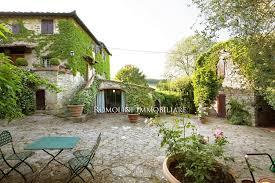
Photos of villa in Tuscany: Top from luxuryretreats.com Middle: christiesrealestate.com Bottom: tuscanyaccommodation.com Photo of the author from Goodreads
This book is very poetic, well written, literary and artistic.
For me it was a little too much of the above. It is beautifully crafted, has good character development, but is just too slow to develop and to uncover all those different layers of the different characters.
it's the kind of read you need to take your time to savor and need to think while you're reading. It's not a fast food of books.
From 1987, when I was resident in Italy, a short novel which touches on a very familiar theme of Italian writers - family relationships. This one involves three generations of well-heeled Tuscan borghesa, observed by an art forger turned critic, who has known the family since his boyhood, & is himself, almost family to them, & individual chapters from the women of the three contiguous properties on the family estate. The 'events' of the novel take place over a summer weekend in the hills near Lucca, a jewel of a historic city; this concentrates the focus nicely into a small jewel of fine writing that sees-off the usual, clumsy Americanisms of an average translation from Italian into English without serious damage. (No American ever seems to grasp the Italian passion or vocabulary for calcio! - football with a round ball that is!). A good & brisk read indeed.
This book is a treat with its languorous telling of the guardian of one heritage who does not realize that her legacy is already being assumed and protected by an improbable successor.
In this character-driven, prize-winning, international bestseller, members of an affluent Italian family must each resolve deeply ingrained personal issues. The setting is on a beautiful Tuscan belonging to matriarch, Violante. On the estate are three villas of different sizes.
Violante is getting on in years and is eager to find the perfect family member to inherit her estate and legacy. As her family gathers at the estate, she works on a plan and analysis for succession.
Lavinia, is the widow of her eldest son and mother to her only grandchild, Nicola. Violante raised Nicola when she moved to Milano to work and live.
Leopoldo is Violante’s second son who is married to an American woman named Cynthia. Their marriage is one in name only, for they are childless and their marriage is celibate.
Aldo is a family friend who lives on a neighboring estate. His entire life, he has been in love with Lavinia, despite her first marriage. Widowhood led her into several unfulfilled relationships with unworthy men.
Their lives are turned upside down when a friend of Nicola’s arrives. This quiet young man soon impacts everyone’s lives, inadvertently forcing changes in each of the characters he has interacted with.
Page by page, individual secrets are revealed as each character is faced with life-changing choices. Written with gentle wisdom and flowing prose, this brief novel is enchanting and engrossing. It is a story about individual choices in life that leaves the reader with a hopeful, satisfying ending. It is profound, lush, and a thought-provoking read. Very highly recommended.
I was approved of an ARC copy of this novel in exchange for an honest review. This review in its entirety was originally posted at caffeinatedlife.net: http://www.caffeinatedlife.net/blog/2...
Happy Ending is essentially a quiet family drama and how a stranger redirects the lives of a number of characters from a state of unhappiness and (hopefully) on a road to happiness. While the presence of Marco at the villa pretty much upsets everyone's lives, his effect occurs in leaps and bounds; I didn't quite believe that these characters suddenly had a change of heart or that the change in one's relationship really happened.
While the prose and reflection can be beautiful at times but the dialogue sometimes can come off as stilted and odd. Granted, almost all of these characters are from the aristocratic classes so there’s something a little archaic in the way they talk about matters close to them, but it did come off as very awkward to read. I also thought it might be a translation thing going on there, that there’s just no other way to translate certain feelings into English.
While the characters were not wholly likeable, they weren’t downright annoying or unlikeable either. Nonetheless the book as a whole was an interesting read.
I would give 3 1/2 stars. A stranger arrives on a Tuscan estate and everything changes for the wealthy Italian Santini family. This seductive stranger is the one who will throw everyone like dice and cause everything to rearrange itself into a new order. The story is narrated by Aldo, who has been on the inside with the family and also an avid spectator. He is matriarch Violante's trusted friend and has longed for her elder son's widow, Lavinia since he was a boy. With his humble beginnings he has used his desire for a more lavish life to become successful. He has been driven on by his hunger for the Santini family. Violante's purpose is to find the family member who can take on the role as head of the family when she is gone. The family gathering is the perfect time to weed out the weak and find the perfect successor. This is a novel of secrets, passions and changes. It is character driven, so if that isn't your cup of tea this novel won't work for you. I felt the writing flowed and the impact of decisions can change your life. It's a good story, I would have given four stars if the story crawled less.