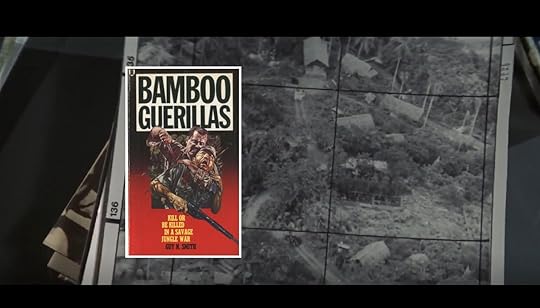
Malaya was about to fall to the Japanese, and a group of nurses had been taken prisoner by the notorious Colonel Sika. 'Jungle' Carter knew they faced sadistic torture, even a hideous death. It was up to him and his band of Chinese guerillas to rescue them from Sika's clutches - but in a hostile jungle where the heat and fever caused nearly as many deaths as the fighting itself, it would be a desperate and bloody struggle.
I was born on November 21, 1939, in the small village of Hopwas, near Tamworth, Staffordshire, England. My mother was a pre-war historical novelist (E. M. Weale) and she always encouraged me to write. I was first published at the age of 12 in The Tettenhall Observer, a local weekly newspaper. Between 1952-57 I wrote 56 stories for them, many serialized. In 1990 I collated these into a book entitled Fifty Tales from the Fifties.
My father was a dedicated bank manager and I was destined for banking from birth. I accepted it but never found it very interesting. During the early years when I was working in Birmingham, I spent most of my lunch hours in the Birmingham gun quarter. I would have loved to have served an apprenticeship in the gun trade but my father would not hear of it.
Shooting (hunting) was my first love, and all my spare time was spent in this way. In 1961 I designed and made a 12-bore shotgun, intending to follow it up with six more, but I did not have the money to do this. I still use the Guy N. Smith short-barrelled magnum. During 1960-67 I operated a small shotgun cartridge loading business but this finished when my components suppliers closed down and I could no longer obtain components at competitive prices.
My writing in those days only concerned shooting. I wrote regularly for most of the sporting magazines, interspersed with fiction for such magazines as the legendary London Mystery Selection, a quarterly anthology for which I contributed 18 stories between 1972-82.
In 1972 I launched my second hand bookselling business which eventually became Black Hill Books. Originally my intention was to concentrate on this and maybe build it up to a full-time business which would enable me to leave banking. Although we still have this business, writing came along and this proved to be the vehicle which gave me my freedom.
I wrote a horror novel for the New English Library in 1974 entitled Werewolf by Moonlight. This was followed by a couple more, but it was Night of the Crabs in 1976 which really launched me as a writer. It was a bestseller, spawning five sequels, and was followed by another 60 or so horror novels through to the mid-1990's. Amicus bought the film rights to Crabs in 1976 and this gave me the chance to leave banking and by my own place, including my shoot, on the Black Hill.
The Guy N. Smith Fan Club was formed in 1990 and still has an active membership. We hold a convention every year at my home which is always well attended.
Around this time I became Poland's best-selling author. Phantom Press published two GNS books each month, mostly with print runs of around 100,000.
I have written much, much more than just horror; crime and mystery (as Gavin Newman), and children's animal novels (as Jonathan Guy). I have written a dozen or so shooting and countryside books, a book on Writing Horror Fiction (A. & C. Black). In 1997 my first full length western novel, The Pony Riders was published by Pinnacle in the States.
With 100-plus books to my credit, I was looking for new challenges. In 1999 I formed my own publishing company and began to publish my own books. They did rather well and gave me a lot of satisfaction. We plan to publish one or two every year.
Still regretting that I had not served an apprenticeship in the gun trade, the best job of my life dropped into my lap in 1999 when I was offered the post of Gun Editor of The Countryman's Weekly, a weekly magazine which covers all field sports. This entails my writing five illustrated feature articles a week on guns, cartridges, deer stalking, big game hunting etc.
Alongside this we have expanded our mail order second hand crime fiction business, still publish a few books, and I find as much time as possible for shooting.
Jean, my wife, helps with the business. Our four children, Rowan, Tara, Gavin and Angus have all moved away from home but they visit on a regular basis.
First published back in 1977, Guy N Smith’s legendary escapade into war-sleaze entitled ‘Bamboo Guerillas’ was originally commission by Peter Haining of Mews following on from the successful release of his ‘Truckers’ novels. However, after producing the proof copy for this wildly over-the-top war novel, Guy was asked to tone down the explicit sexual violence that is the predominant thrust within the tale. Guy refused to tone down any of the work on the grounds that he had editorial direction to write such a monstrous feast of depravation. After discussions, a decision was made to release the novel under the New English Library (of which Mews is actually an off-shoot). And so the horrendous glories of this despicable novel were unleashed into the pulp market for the eager consumption of this uber-violent sleaze...
Following the all-out retreat of all the British troops in Malaya in the face of the advancing Japanese army, Colonel Hugh ‘Jungle’ Carter and Captain Cole make the decision to stay behind in the Malayan jungle to begin guerrilla warfare against the Japanese. Together with their fellow British sapper (a military engineer who lays, detects and disarms mines) named Sanders; the small band of soon to be guerrilla fighters make their way through the dense Malayan jungle to rendezvous with the ferociously renowned and feared Chinese bandit-cum-guerrilla Li Chu. Once at the Chinese guerrilla’s base camp, the British soldiers learn of a local hospital where twenty or so British and Australian female nurses were captured from by a band of the Japanese army, before the hospital was subsequently burnt to the ground. The Japanese, under the command of a depraved sadomasochist Colonel Sika, are reportedly holding the nurses (and ten other male prisoners) captive at a purposefully built prison-cum-torture camp, which is located a few miles away in the jungle.
Colonel Sika learns of Colonel Carter’s proposed scheme to rescue the nurses, when one of the Chinese scouts sent by Carter is captured by the Japanese and forced to divulge the British guerrilla’s plans. The scout, Li Wong, is sent back to Li Chu’s base camp to inform the guerrillas that they must surrender or the nurses will be killed, one for each day that they prolong their surrender.
Instead of leading an all-out attack on the war prison, Colonel Carter instead formulates an audacious plan in which, together with Li Chu and a small troupe of Chinese fighters, they surrender themselves to Colonel Sika. Whilst imprisoned in the camp, Carter plans to send a signal of some unknown making to the remaining guerrilla fighters, to attack the prison camp. However, once the soldiers are in the hands of the infamous Colonel Sika, they soon learn of the horrific cruelty that goes on behind the prison fencing. A fate that threatens to await Carter and his band of guerrilla fighters as well as the prisoners from the hospital they were trying to protect...
From the outset, Guy N Smith lays down a constant stream of anti-Japanese slander bordering on out and out racism. With numerous references to the yellow skinned enemy detailing their sadistic love for cruelty and inherent sexual deprivation, the novel’s entire perspective is a far-cry from the politically correct cries of our modern society. The further descriptive mentions of ‘the half-caste fighters’ on the guerrilla’s side, just further sets the tone for what is soon to turn out to be a steep fall into a dark pit of war-torn depravity.
When Colonel Sika is introduced into the storyline, the novel takes a further dive towards the sleazy depths that it is soon to be uncovered. A litany of torture, often of a highly sexual nature, quickly follows throughout the length of the book. Sika employs a whole range of inventive and sadistic methods in which to torture, humiliate and kill his prisoners; whilst simultaneously appealing to his perverted desires. Rape is detailed as barely traumatic at all for the victims within the storyline. Indeed, after undergoing countless nights of multiple gang-rape at the hands of the Japanese, the female nurses still desire raunchy late-night romps with the recently captured guerrillas. The blatantly sleazy and mindless sexual aspects of the novel, take its pulpy nature to new lows.
Although Colonel Carter’s plan is utterly ridiculous and nonsensical, it does allow human fodder for Colonel Sika’s torturous escapades and ultimately a truly impressive ‘break-out’ sequence. Further scenes of graphic rape and torture ensue, until finally Smith wraps the story up with a somewhat abrupt conclusion.
For the sheer level of untamed violence and depictions of sexual depravation mixed with rape and torture, ‘Bamboo Guerrillas’ is nothing short of a masterpiece of the obscene. With page upon page of mindless cruelty and unabashed racism, this novel truly is the epitome of sleazy pulp.
The novel runs for a total of 141 pages and was released under two different covers.
Guy N Smith followed up the novel with a sequel that was written, but alas, never saw the light of day with being published. A surprising two-page snippet of the Bamboo Guerillas story (with all sexual violence and torture removed) appeared in a 1976 edition of the Adventure Strip Weekly.
A couple of British soldiers will band together with a bunch of guerillas in the jungle to embark on a mission impossible to rescue nurses caught and held captive by the Japanese. The jungle is alive with hungry leeches sucking blood and mosquitoes disfiguring skin. The depraved torture is sickening. The courage of one of the nurses will save some of the prisoners with throats being stabbed and blood spurting into the jungle air. This is a difficult read with the racial and violent tones hard to tolerate. Definitely only for Guy fans.
Bamboo Guerillas is notorious. Guy N. Smith was riding high on the success of Night of the Crabs, which had been a big hit during the sweltering hot summer of 1976- but for a change of pace swaps crustaceans for castrations with Bamboo Guerillas, a book which captures all the fun and frivolity of a Japanese prisoner of war camp.
Bamboo Guerillas takes us back to the war torn Malaysia of 1941 as Colonel Hugh Carter aka ‘Jungle Carter’ leads his men deep into the jungle in order to team up with Chinese bandit Li Chu. Once Jungle Carter and his men meet Li Chu and his ragbag of Chinese and Malaysian mercenaries -the ‘bamboo guerillas’ of the title- they go about the business of liberating twenty nurses from a Japanese prisoner of war camp. One that is lorded over by the dreaded Colonel Siki, a depraved despot, who is “more dangerous than any tiger that roamed the Malaysian jungles”. On the outset Bamboo Guerillas resembles your standard World War 2 novel as Jungle Carter and fellow Brits Captain Cole and Sanders perilously hack their way through the jungle whilst smarting over the fall of Kuala Lumpur. Looks can be deceptive though and only a few chapters in sees Bamboo Guerillas transform into something you definitely wouldn’t want your grandparents reading over your shoulder. In 1977, when Bamboo Guerillas was released, I'm not sure Smith's name was as synonymous with extreme horror as it would become. So, I suppose it was still possible that people who bypassed The Sucking Pit and Night of the Crabs wouldn't have been aware of what they signed up for here. I'm curious at what point the penny would have dropped for them that with Bamboo Guerillas they were being sent up sleaze creek without a paddle. Would it have been when Carter and Cole are woken up by the sound of Sanders grunting and shaking about in his ground sheets, then fearing he has the fever instead discover that Sanders is merely beating himself off. Apparently a valuable way of keeping yourself warm in the outdoors “I learned it when I used to go mountaineering” Sanders tells the other two “and was forced to sleep out in the open, do me a favor though don't interrupt me again”. Would the penny drop moment have been when they are discussing forming an allegiance with Li Chu, despite his reputation for cannibalizing his Japanese adversaries? At which point Carter attempts to reassure the other two that “as long as he confines his liking for human flesh to the Japs, I'm not going to worry”. Or is it when we meet the gregariously sadistic Li Chu, who brags about how he and his men tortured a Japanese soldier in order to see if a Japanese penis could be stretched to the same size as other nationalities. “They will not, gentlemen, take it from me”.
Up to this point we've had masturbation, anecdotal cannibalism and anecdotal genital abuse, all before we have even met the villain of the piece. World War 2 sex maniac to end all World War 2 sex maniacs, that is Colonel Sika, who prior to his introduction in the book has been masturbating for “virtually two whole days and nights”. Sika immediately earns his reputation as a stone cold pervert by having male prisoners stripped, tied to a barbed wire fence, then forces them to get aroused in the company of one of the nurses, who has been similarly stripped bare for the occasion. “This is the woman you are going to mate with… so get yourself erect” yells one of Sika’s flunkies. Once the prisoners manage to get hard though, its curtains for them, as Japanese soldiers step in and cruelly bayonet them to death instead. Erections, or ‘protrusions’ as Smith sometimes euphemistically refers to them as, was a recurring theme in his writing and something that has also opened his books up to sniggering and ridicule over the years. Bamboo Guerillas captures him at arguably the height of his protrusion obsession. Bamboo Guerrillas might well be the most priapic book of the 1970s, you're never far away from someone’s erection in this book. It’s a characteristic that practically defines Sika who is introduced to us nursing a hard-on, caused by thinking about all the Chinese virgins he has deflowered. Sika then turns his lustful gaze and protrusion in the direction of Sonia Barnes, a dark-haired nurse that Sika insist become his sex slave and “submit to almost every technique of sex known in the Japanese nation”. A role Sonia reluctantly agrees to in the hope that it will keep herself and the other nurses alive.
Bamboo Guerrillas is riddled with below the belt insults aimed at Japanese men. What with Li Chu’s claim that not even torture can extend the Japanese manhood to the size of other nationalities, as well as Sonia’s observation that Colonel Sika’s physique was “little more than that of the average European boy in his early teens”. At times it feels like Smith was pushing the idea that Japan's involvement in World War 2 may have been motivated by penis size envy and feelings of sexual inadequacy. A theory that Smith only contradicts due to his obsession with Colonel Sika’s apparently impressive erection, which “threatened to burst its way out his trousers”. Elsewhere in the book, Sika “knew that the bulge in the front of his trousers was visible to all his men but he did not mind. It enhanced his reputation”. Based on that evidence it doesn't sound like Sika is lacking too much in that department, even if his torture techniques are suspiciously hung up on cutting other nationalities down to size. There are moments in Bamboo Guerillas when you can feel your brain trying to fight against its natural inclination to visualize what you are reading. Never more so when Chan- one of Li Chu’s men- is captured by the Japanese and ends up in Sika’s torture chamber. There Sika quite literally breaks Chan’s balls, before spending the rest of the night alternating between using Sonia as a sexual receptacle and working out more ways to destroy Chan’s genitals.
I think one of the reasons Bamboo Guerrillas can take people off guard is that with a horror, skinhead or biker paperback from that era you half-expect there to be some sexual content. Whereas a World War 2 novel set in a Japanese prisoner of war camp doesn’t exactly sound like it is going to be a non-stop orgy. When people talk about Smith’s books they tend to claim that part of their popularity was due to soft porn elements, this I would not challenge, but I don't know if that description does Smith’s books justice. On film and in photographic form it is easy to draw a line between softcore and hardcore. In print it is a little more difficult to call, but I would say that the sex in Bamboo Guerillas is closer to hardcore than softcore. Bamboo Guerillas is a very sex driven book, with the expected action part of the narrative often taking a backseat to Sika forcing male and female prisoners into performing live sex shows in front of the Japanese “you have three minutes in which to begin copulating. Any man who hasn't made it in that time will be bayoneted”. Whilst tender moments arrive when Jungle Carter deliberately allows himself and several of Li Chu’s men to be captured by the Japanese and immediately develops romantic and sexual feelings for Jenny, one of the captured nurses. I suppose you have to admire the lustful stamina of Jenny and Jungle Carter, despite the fact that she has been repeatedly raped by the Japanese, despite the fact that they are in the company of others, and despite the fact that they've been flung into a place that smells of shit and piss, they are still all over each other like a rash. “He felt her vagina it was warm and ready and there was no evidence of Japanese maltreatment”. You can always rely on Smith to put the Guy in gynecology. Jungle Carter’s only reservation about having sex with Jenny is that he has to do so in the company of non British people “he did not want to lose the respect that the guerillas had for him. If it had been an all British company it wouldn't have mattered. But these bandits were savages”.
Even though Chinese and Malaysian characters in Bamboo Guerillas are allies, the book does still peel a suspicious eye in their direction and they are consistently portrayed as more barbaric, disposable and cowardly than the British. After gunning down Japanese soldiers in the jungle, the bamboo guerillas begin gutting the bodies and impaling the heads of dead Japanese on sticks. Sickening the British, who nevertheless decide that it's better to let them have their fun, rather than play killjoy and risk a mutiny. Later on in the book, Jungle Carter encounters a hut full of Japanese soldiers raping a Chinese woman. However rather than rescue her, as he has done with the Western nurses, Carter instead ops to throw a grenade into the hut, killing all inside, on the reasoning that “she’ll probably be glad to die after what they had done to her”.
The bulk of Bamboo Guerillas’ hate though is aimed at the Japanese. Bamboo Guerillas makes ‘Men Behind the Sun’ and ‘Fist of Fury’ look like fair and even handed portrayals of Japanese people. Whenever the word ‘Japanese’ is mentioned in this book it's usually in close proximity to the word ‘bastards’. Japanese characters exist in this book purely to sexually assault women and emasculate and murder men. So despicable are the Japanese in this book that they seem to succeed in making actual Orientals feel racist towards Orientals, with even the Chinese Li Chu hurling around anti-Oriental slurs “Carter declined to remind Li Chu of his own colour”.
Indeed Smith seems to whipped himself up into such an anti Japanese state of mind whilst writing Bamboo Guerillas that it bled on over into his next book, Killer Crabs (1978). The opening of that Crab sequel initially being focused on conflict between Australian and Japanese characters over fishing rights, with bullets and racial insults being exchanged between the two. All of which bills up to a Bamboo Guerillas /Crabs crossover when the Japanese fishing ship comes under attack from the crabs. Apparently Smith did write a sequel to Bamboo Guerillas that has never been published, and I do wonder if rather than completely scrap the sequel novel he instead he incorporated a few of its ideas into Killer Crabs. Towards the end of Bamboo Guerillas the action is moving closer and closer to Australia, which is where Killer Crabs was set, so there are story connections there. Due to the fact that the sequel has never seen the light of day, Bamboo Guerillas stands as Smith’s only published war novel. Although a few of the Crabs books could, I suppose, be perceived as war novels. This seems particularly true of ‘Crabs on the Rampage’ (1981) which comes across as Smith’s ‘imaginary Nazi invasion of Britain’ novel with the Crabs making strategic attacks on the shores of Britain, and the series’ hero Cliff Davenport mostly relegated to war room brainstorming of how to second guess the crabs’ plan of attack. All of which I suppose makes King Crab, Hitler reincarnated in crustacean form.
However, I don't think Bamboo Guerillas had the same legs, or pincers, as Smith’s horror material. Two editions of Bamboo Guerillas were published, both in September 1977, and that was it. Unlike Night of the Crabs, The Sucking Pit and The Slime Beast, this one never came back around in the 1980s. As a child of the Eighties I vividly remember seeing those on bookshelves, especially at seaside resorts, but I don't ever recall seeing Bamboo Guerillas around. Either it didn't sell well originally, or it was too extreme to be republished or maybe Smith had become so synonymous with horror by then that putting a non-horror title of his back out there would have confused the public. Whatever the case Bamboo Guerillas has become one of his rarer books, these days second hand copies usually fetch in the region of £40 to £50.
I'm curious what mental image of the author you’d get from reading Bamboo Guerillas in 1977, possibly of some grizzled old World War 2 veteran using the book as a backwards gazing trip down memory lane to when he was fighting and fucking his way through the jungle. Whereas is in reality Smith was born in 1939 and was of a generation that lived through World War 2 but didn’t see active service. Overall though he does a decent job of feigning first-hand knowledge of a hellish, sweaty, leach infested jungle environment here. He does also indulge in his regular trait of offloading some of his own DNA onto the lead character. Jungle Carter, like Smith, having a background in the banking industry, and becomes Smith’s mouth piece on the subject. “Civilian life is just one long monotonous existence… I worked in a bank up until 1939. No chance to think for yourself or make decisions.” While Smith’s grievances with banking aren’t as loudly amplified here as they are in ‘Thirst’ (1980), the message of Bamboo Guerillas in that respect seems to be “better to die like a man, than live as a bank manager”. The extreme violence in Smith’s books, coupled with their perverse elements and mean spiritedness, do conjure up negative ideas about what Guy N. Smith must have been like in real life. Which, by all accounts, was very divorced from reality. Jonathan Sothcott was optioning a movie adaptation of one of Smith’s books at one point and on account of that had met and had lunch with Smith, and Sothcott told me that he was amazed that such a charming and gentle man came up with these endless splatter-fests. In his autobiography- ‘Pipe Dreams’- Smith does portray his younger self as a bit of a practical joker. He even gamely includes a famous joke about himself… that Guy N. Smith is such a good farmer because he spreads his own books on his land… and if you're prepared to include a joke comparing your work to manure in your own autobiography you must have a sense of humour. People who make fun of ‘bad’ movies and books, like to cling to the idea that the creators of the material were oblivious to how absurd and ridiculous their output was. In Smith's case though I do suspect he would have been chuckling to himself when he wrote things like “she would become a nun and enter a convent, a sanctuary from lusting erections and male selfishness”. Bamboo Guerillas is so excessive, so over-the-top that after a while the only way to relate to it is as a black comedy. Either that or a practical joke akin to the Rolling Stones’ song ‘Cocksucker Blues’… where the Stones deliberately recorded a song so raunchy and indecent that their label was unable to put it out. Only in Smith’s case, New English Library took the bait and actually published Bamboo Guerillas uncensored. It’s as if Smith was suffering from the writing equivalent of tourette's syndrome but rather than blurt out the most offensive and anti-social things he could think of, managed to get it all down on paper. A strong stomach is required for Bamboo Guerillas, this book could even be used to test how shock able you really are, but you do learn much about World War 2 from it. Such as the fact that not even torture can extend the size of a Japanese penis to the length of other nationalities, that slitting someone's throat produces a sound that “could have been made by a wild animal urinating” and that masturbation will keep you warm in the jungle. Every day is a school day when you're reading a Guy N. Smith book.
A watershed year for 1980s action fare and fawned over by both those with the nostalgia poison and that demographic believing American strength was projected through cinematic antics, 1985 produced a wide variety of silver screen fare that amazed, enthralled and baffled. Sneaking in during the dog days of summer, PRAY FOR DEATH starring Sho Kosugi took advantage of the still raging Ninja movie craze and unquenchable action thirst of audiences. Bringing his deadly skills to bear on ruthless mobsters and crooked cops, Kosugi reverts from businessman gone straight to deadly assassin, making those baddies that cross his path, as the title suggests, PRAY FOR DEATH, the quicker the better. Languishing in a prion camp in the middle of the Malayan Emergency between BAMBOO GUERILLAS and the British Empire pre 1950 and facing a daily regiment of physical abuse, a contingent of nurses is reduced to praying for death or hoping that the suicide rescue mission is coming soon...
Lost in the slipstream of the US military industrial complex drumming up support for stopping the Domino Principle in Vietnam, the British toiled through their very own jungle war over ten plus years for supremacy in the global rubber supply. Fighting largely Japanese stragglers, BAMBOO GUERILLAS seeks to give the Japanese a dose of their own treatment and see how they like it. It's January 1941, the atmosphere heavy and a storm was raging about ten miles north of Kuala Lumpur, and that's just the way Colonel Hugh carter likes it. Aka Jungle carter, this Brit's reputation preceeds him, and it would do well to clear the jungle of dangers on the way to a prison camp whose liberation is priority number one. Fatigue, wear, and the fear of death drenching these braves, they seemingly have really no idea where they're going and whom they're going to meet. On par with the worst of the worst of 70s exploitation fare, BAMBOO GUERILLAS puts up a Camp Commandant who believes he is the law out in the boonies, and whose insatiable appetite for women is only equalled by his lust for blood and torture. That, and sucking down cheroots faster than Zolo in ROMANCING THE STONE. Get the picture? Knocking heads with ruthless savages who understand little except killing, looting, and sex, Jungle Carter and his cohorts echo Neo going against THE MATRIX. They'll need Tommy guns, lots of Tommy guns.
Probably serving as blueprint for the mid 80s Nam flick MISSING IN ACTION 2: THE BEGINNING right down to the sadistic Colonel Yin and his troupe of henchmen, BAMBOO GUERILLAS adds the extra wrinkle of a heavy female presence and rampant physical abuse at the hands of their captors. Published in the late 1970s by horror auteur Guy N. Smith, BAMBOO GUERILLAS seemingly just barely escaped the alternate title of WAR AND PEACE (of ass) and surprises mainly in not being a whole lot worse in matters of violence, exploitation, and racism. With a page count below two hundred, BAMBOO GUERILLAS goes long on dropping witticisms like civvy street, life is cheap in war, and that in the jungle there are no half measures. Going THE FULL MONTY on a suicide mission to rescue a flock of wayward nurses, the plot takes a harebrained turn that'd even make THE A-TEAM teleplay scripters cringe. Leaving the reading glasses by the wetbar is probably a good idea for BAMBOO GUERILLAS, allowing readers to take the narrative with a grain of salt and be able to cheer at the eventual resolution. It's Italo-horror schlock at its best, CANNIBAL HOLOCAUST in book form; amid death, torture, abuse, mutilations and more, BAMBOO GUERILLAS is no leisurely sampan trip down the river on a sunny afternoon. Bring an oar just in case there's a need to get out and start paddling.
Sigh. I suspected this was going to be bad. But it's infamous and notorious and thus I thought I'd give it a go. Others have reviewed it in far more depth than me, and there's lots of other stuff about this book on the web, so suffice to say my suspicions proved true.
Actually, writing-wise, it's a great improvement on his werewolf trilogy I've just read, but it's still bad, Bad plotting bad characterisation, bad dialogue, bad (but slightly less bad) atmosphere and background, no suspense, and not much for the reader to cheer for.
All in all, one star just about covers it.
I seem to be on a run of bad books at the moment - I have to look back a long way to find a novel I really enjoyed. I think I owe myself a safe bet next. Anyway, Guy Smith will join Lee Child, Colleen Hoover, and a few others on the "never again" list.