This work has been selected by scholars as being culturally important, and is part of the knowledge base of civilization as we know it. This work was reproduced from the original artifact, and remains as true to the original work as possible. Therefore, you will see the original copyright references, library stamps (as most of these works have been housed in our most important libraries around the world), and other notations in the work.
This work is in the public domain in the United States of America, and possibly other nations. Within the United States, you may freely copy and distribute this work, as no entity (individual or corporate) has a copyright on the body of the work.
As a reproduction of a historical artifact, this work may contain missing or blurred pages, poor pictures, errant marks, etc. Scholars believe, and we concur, that this work is important enough to be preserved, reproduced, and made generally available to the public. We appreciate your support of the preservation process, and thank you for being an important part of keeping this knowledge alive and relevant.
Samuel Levy Bensusan (29 September 1872 – 11 December 1958) was a British author, musician, traveller, playwright, recorder of declining Essex dialects, and expert on country matters. He was born in Dulwich and died aged 86 at Hastings. He was the son of a Jewish feather merchant, Jacob Samuel Levy Bensusan (1846–1917).
PLATE I.—ELIZABETH OF FRANCE, DAUGHTER OF HENRY IV. Frontispiece (In the Louvre) The Princess is seen to great advantage in this fine portrait. The fair complexion of the sitter is remarkably preserved, the white ruff, the jewels, and the gold brocade are very cleverly handled. Another portrait of Princess Elizabeth, painted in Madrid, may now be seen in St. Petersburg.
The plates are printed by Bemrose & Sons, Ltd., Derby and London The text at the Ballantyne Press, Edinburgh
Opening lines: The name of Peter Paul Rubens is written so large in the history of European art, that all the efforts of detractors have failed to stem the tide of appreciation that flows towards it. Rubens was a great master in nearly every pictorial sense of the term; and if at times the coarseness and lack of restraint of his era were reflected upon his canvas, we must blame the sixteenth and seventeenth centuries rather than the man who worked through some of their most interesting years, and at worst was no more than a realist.
From what was originally a ca. 80-page book with 8 colour plates, we get 18 pages on Rubens' life and no illustrations. While the author is rather censorius about Rubens' inclusion of nudity in his history and mythological paintings, he does show appreciation for Rubens' skill in portraiture and his virtuosity in colours which have lasted unchanged, in comparison to many other artists such as Reynolds and Van Gogh whose canvases are often sad remnants of what was first painted. Worth reading his life details, but the book could have been much more valuable.






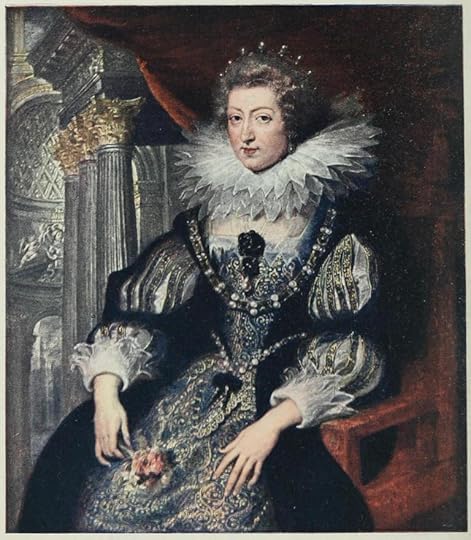 PLATE I.—ELIZABETH OF FRANCE, DAUGHTER OF HENRY IV. Frontispiece
