Khaled Abou El Fadl is a classically-trained Islamic jurist, an American lawyer and law professor, and one of the most important Islamic thinkers today. In this updated and expanded edition of The Search for Beauty in Islam, Abou El Fadl offers eye-opening and enlightening insights into the contemporary realities of the current state of Islam and the West. Through a "conference of the books," an imagined conference of Muslim intellects from centuries past, Abou El Fadl examines the ugliness that has come to plague Muslim realities and attempts to reclaim what he maintains is a core moral value in Islam-the value of beauty. Does Islamic law allow, or even call for, the gruesome acts of ugliness that have become so commonly associated with Islam today? Has Islam become a religion devoid of beauty, compassion and love?
Based on actual cases, this book tackles different issues and problems in each chapter through a post-9/11 lens, discussing such topics as marriage, divorce, parental rights, the position of women, the veil, sexual abuse, wife-beating, terrorism, bigotry, morality, law, and the role of tradition. Abou El Fadl argues that the rekindling of the forgotten value of beauty is essential for Muslims today to take back what has been lost to the fundamentalist forces that have denigrated their religion.
Dr. Khaled Abou El Fadl is the most important and influential Islamic thinker in the modern age. An accomplished Islamic jurist and scholar, he is Professor of Law at the UCLA School of Law where he teaches Islamic law, Immigration, Human Rights, International and National Security Law. Dr. Abou El Fadl previously taught Islamic law at the University of Texas at Austin Law School, Yale Law School, and Princeton University. He holds degrees from Yale University (B.A.), University of Pennsylvania Law School (J.D.) and Princeton University (M.A./Ph.D.).
A high-ranking shaykh, Dr. Abou El Fadl also received formal training in Islamic jurisprudence in Egypt and Kuwait.
Dr. Abou El Fadl is a world-renowned expert in Islamic law and an American lawyer, offering a unique and seasoned perspective on the current state of Islam and the West. He is a strong proponent of human rights and is the 2007 recipient of the University of Oslo Human Rights Award, the Lisl and Leo Eitinger Prize. He was also named a Carnegie Scholar in Islam for 2005. He serves on the Advisory Board of Middle East Watch and was previously on the Board of Directors of Human Rights Watch. He was also previously appointed by President George W. Bush as a commissioner on the US Commission on International Religious Freedom. He regularly provides expert testimony in a wide variety of cases ranging from human rights and political asylum to terrorism, national security, and international and commercial law.
Dr. Abou El Fadl is a prolific author and prominent public intellectual on Islamic law and Islam, most noted for his scholarly approach to Islam from a moral point of view. He writes extensively on universal themes of morality and humanity, and the notion of beauty as a moral value. Dr. Abou El Fadl is a staunch advocate and defender of women's rights and focuses much of his written attention on issues related to women. As the most critical and powerful voice against puritan and Wahhabi Islam today, he regularly appears on national and international television and radio including CNN, NBC, PBS, NPR, and Voice of America (broadcast throughout the Middle East). His most recent work focuses on issues of authority, terrorism, tolerance, Islam and Islamic law.
He is the author of ten books and over fifty articles on Islamic law and Islam. His recent books include: The Search for Beauty in Islam: A Conference of the Books (Rowman and Littlefield, 2006); The Great Theft: Wrestling Islam from the Extremists (HarperSanFrancisco, 2005); Islam and the Challenge of Democracy (Princeton University Press, 2004); The Place of Tolerance in Islam (Beacon Press, 2002); Conference of the Books: The Search for Beauty in Islam (University Press of America/Rowman and Littlefield, 2001); And God Knows the Soldiers: The Authoritative and Authoritarian in Islamic Discourses (UPA/Rowman and Littlefield, 2001); Speaking in God's Name: Islamic law, Authority and Women (Oneworld Press, Oxford, 2001) and Rebellion and Violence in Islamic Law (Cambridge University Press, 2001).
A friend of mine summarised it best when he called it "uncanny". The author's ability to get into your head, to blur the lines so that emotion seeps from the book into you, is uncanny.
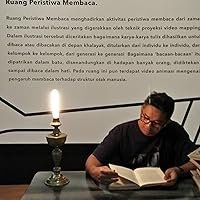
The premise of the book, which the title alludes to, is that in the author's apartment there is a conference of books where the Islamic civilisation convenes nightly. Voices of geniuses and giants long dead debate from their covers, and his role as keeper of the conference is to chronicle this until such a time that Muslims are ready to reclaim their intellectual heritage.
The book consists of 85 essays, varying in length between a page and around 15, mostly personal reflections of the author. Some of them address personal experiences, including his studies with sheikhs in Egypt, living under a totalitarian regime and the arrests and torture of numerous teachers and friends. Others deal with issues of importance to the Muslim community, particularly treatment of women, domestic violence, abuse of scripture and authority by religious leadership, islamophobia, ignorance and the dearth of serious Islamic scholarship today.
He pulls no punches in those essays which are bitter and mocking polemics against religious literalists. Others are highly technical; coming from his position as an accomplished expert in Islamic law himself he either systematically demolishes their positions on a particular issue (as he does in his book The Authoritative and the Authoritarian) or shows the ludicrous inadequacy of legalism. Sometimes the essays read like a tragic farce. Sometimes they are elating. Offence, betrayal and outrage. Sorrow. Serenity. Soaring joy. All are emotions that Khaled Abou El Fadl communicates exquisitely in his uniquely beautiful prose, and the intensity is such that it is one of the few books to have ever made me cry.
This book is quite simply a page turner. Lucid, profound and laden with insights so sharp that to read them is like experiencing a revelation. This book is a must read for every Muslim. When reading scholarly books I use a marker to highlight any passages or sentences that are pregnant with meaning. With this book, by the time I came to page 355, (the end), my marker had become dry. There can be no greater testament to this philosophical gem.
An important book in our times when everything about Islam is painted with the brush of hatred. It conveys the message repetitively that we are not seeking enough and if we are truly seeking then it will take us our whole lives but we will only get so close.
It was daunting. It was daunting to know the amount of literature produced on Islam. It was enlightening. It was enlightening to know that the Islamic history is full of great scholars who spent their entire lives in the search for knowledge. It was unsettling. It was unsettling to know that we have very strong, unwavering opinions about issues that we do not even begin to understand. Such revelations mixed with the author's command of the subject and the magnanimity of the content had the power to change a lot of things inside me. I spent a lot of time in the conference and I spent a lot of tears on the conference. I felt nostalgic for a time and place which was far far away in history. I felt vulnerable. I felt happy. I felt scared. I felt a lot of things.
The book is written in love. It is beautiful, the words are beautiful, the message is beautiful, everything about it is beautiful.
'I am a fiction constructed by the vanities of want. What a curious state of suspension that feigns existence only to evaporate like the cravings of a sigh. I have seen the Domain of truth, and I have discovered it is but a thought. The difference between a flower and a thorn, between a human and a log is in the idea. The idea is the abstraction in the mind of God, and this abstraction is the essence of being. So I inject my lungs with air and try to justify my body's redundancies. Aren't we, after all, a consciousness positioned within space, defined by belief? But my freedom is in my Divinity.
Come blessed souls, place yourself in any time or place you wish. Be a thought, a dream, a muse, a vision-it does not matter. You are my reality. Be the memory of the body you want-the words of my vanished masters, the cause of my martyred friends, the hope of my buried ancestors, the love I never found, the smiles of liberation that withered into frowns, the dignity entrenched in life but compromised by fear-be the books I read, the books I write, the conscience of the past, the heart of the future, or the lips that defines my want. In every, and all forms, you are the proof of beauty. In the shelter of the night, we will be one in the Conference, our common bond the belief that every word, although the captive of form, is a hint of Divinity.'
This book is amazing-- I like Khaled Abou El Fadl's literary style and they way he divided the book into shorter essays. I feel like it is one of those books that you have to keep on going back to and read a chapter at a time...b/c LIFE happens, and you can understand the issues that Abou el Fadl raises on different levels. I like that he was able to address some of the more controversial issues that do not necessarily get talked about within the Muslim establishment, although I do wish that he had focused a bit more on other issues as well b/c to a highly critical lens, this book could be seen as the work of an "apologist". Nevertheless, a really important piece, definitely a must-read for any interested in Islam and contemporary issues.
For those unfamiliar with Isalm, Abou El Fadl cracks open the tradition. You can see Islamic reasoning at work as he compares sources, uses the ancient writers and parses out conclusions. Read especially his deconstruction of alleged authorizations for violence against women in Islam and his defense of the tradition of women scholars. You can also feel his anguish at how much of Islam has turned its back on reason and the core belief that God commands the just and beautiful in favor of a narrow-minded fundamentalism. Christians struggling to defend against Christian fundamentalism will find an ally here.
Even a single chapter on a "fatwa on dogs" shows how real intellectual inquiry operates and how fundamentalists distort it.
And, if you love books, you will rejoice in his loving invocation of the conference of books, the collected wisdom of centuries, that swirl around him each night as he studies. It is a beautiful image, of books talking to each other over the years, and of each of us now joining that conversation as we read and think. My only complaint is that I would wish to have had more of this book: more Islamic analysis of issues.
Abou El Fadl has been accused of being a `sympathizer' of terrorists by Pipes; reading this book will show the total absurdity of that claim since his opposition of extremism is woven into his entire world view.
Must read in every sense of the word. So many treasures and moral values in this book that I feel so blessed to have learnt, I've never read anything on contemporary Islam that hit home as much as this one. Every dialogue begets a soulful reflection and every question carries the burdens of generations. It shows how we are plagued in this day and age by those who only want to learn what they think they already know, and how those who focus on the legalities and pedantics lose sight of the essence of Beauty in Islam. This book reclaimed my sense of balance and dignity and most if all, of the Beautiful.
One of the greatest books I have ever read. Eloquently refreshing perspectives on various topics, with important commentary on the state of affairs in "Contemporary Islam" - sometimes through historical lenses.
A great survey of Professors Fadl's theology. A mix of poetics, islamic legal rulings, and personal reflections that apply much of his philosophy articulated in previous books; as he gives out rulings and arbitrations to various seekers. This book will serve as a good starting point to understand what makes his Usuli institute initiative so distinct, as he revives a rationalist and kind islamic tradition.
This book is unique in so many ways, just like the writer himself, allahuma barik!
From the moment I discovered Dr. Abou El Fadl's lectures and writings, I have been in awe and a bit obsessed tbh.
Reading this book felt like taking a long walk with a very knowledgeable, wise, and comforting friend. During our walk, we talked about history, religion, philosophy, law, morality, and so much more. On top of that, I was entrusted with some of my friend's most profound ponderings and beautiful reflections.
This book is informative and spiritual, inspirational and uplifting, rational and emotional.
If you're on your own path to Search for Beauty in Islam, this book will definitely help you find the way that will lead you to Divine Beauty, In shaa Allah.
They say that what we seek often seeks us back. I came across ‘The Search for Beauty in Islam’ through a lecture on hijab. The lecturer mentioned the book in passing, and I quickly took down the name for further reading. I had no idea that I had just written the name of a book that was to become so precious to me.
This book consists of a series of essays written by Dr. Khaled Abou El Fadl, an Egyptian-American Islamic jurist and intellectual. It covers a wide range of topics in Sharia (Islamic law), and comments on issues relating to despotism, colonialism, sexism, human rights, and the upholding of values in Islamic law.
Abou El Fadl is a stunning writer, his words transcendent. The love he has for God and the Prophet Muhammad (PBUH) impregnates each of his words. He is a man who has dedicated his life to the search for knowledge and has not allowed it to make him arrogant. He boldly comments on sensitive taboos in modern Islamic society, such as domestic sexual abuse, and challenges mainstream channels of Islamic authority, shedding light on corruption and censorship.
Reading his essays makes me feel as if someone has stolen into my mind and articulated my inner-most thoughts. The shame surrounding my doubt has been lifted, and I feel more comfortable than ever saying, ‘I do not know, and I may never know for sure, but I will spend my life trying to find the answer’.
My reading has left me with a deeper love for God and an acute awareness of His justice. Sharia should reflect mercy in every way and should cater to all of God’s creations. God is beauty. Islam is beauty. But to find this beauty in an age where Muslims are not encouraged to think independently and are alienated and even persecuted for using reason, takes a conscious effort on the part of the believer.
I recommend this book for all the truth-seeker. For those who feel that the Islam of their hearts is not reflected in the rulings of religious authorities. I recommend it for the marginalized and oppressed. And I recommend it for anyone who believes wholeheartedly in a beauty they cannot grasp.
Satu, karena sepertinya terjemahan penerbit Serambi kurang enak dibaca ... (ya, saya baca edisi bahasa Indonesia). Dua, karena ini buku yang diperuntukkan untuk orang-orang yang mau berpayah-payah membacanya, bukan bagi mereka yang ingin mendapat kesimpulan pendek ringkas dari pertanyaan "apa ketentuan untuk .... (fill in the blank)?"
Prof. Fadl membayangkan setiap malam buku-buku yang ada di dalam koleksi perpustakaan pribadinya berdiskusi satu sama lain. Masalah teologis, hukum, sejarah, adab, etika, politik ... dan banyak lagi. Termasuk (dan ini yang paling membuat depresi) bahwa banyak penulis-penulis agung dari buku-buku tersebut yang berakhir di penjara atau pada kematian karena tindakan lawan politik atau lawan pemikiran yang merasa memonopoli kebenaran dan memiliki hak untuk menyingkirkan alam pemikiran pihak lain.
Satu hal saja yang akan saya tulis di sini, satu hal dari buku ini yang paling memberi pengaruh selama proses saya membacanya. Yaitu bahwa mendekati Tuhan adalah perjalanan panjang dan berat, sedangkan menggunakan Tuhan sebagai tameng dari kebodohan dan ketakutan kita adalah jalan pintas yang paling mudah. Mendekati Tuhan secara tulus dan jujur akan membawa kita kepada keraguan, kebingungan, dan ketersesatan ... proses yang membuat kita merasa lemah, tidak tahu, dan tidak berdaya. Sedangkan meminjam Tuhan untuk menutupi kebodohan kita akan membawa kita kepada "kebenaran", kemegahan dan status sebagai "suara Tuhan di muka bumi".
Siapa yang salah dan benar antara Asy'ariyah, Mutazilah, Athariyyah, Murji'ah, dan lain sebagainya? Seorang pencari akan bertekun mempelajari mereka semua dengan kejujuran di dalam hati ... seorang pembenar akan menghukumi kafir dan memancung siapapun yang berbeda dengannya.
“Books are about people, real people, through the centuries, counselling and advising other people.”
The early chapters of this book really speak to anyone who has been moved by something they read that was written centuries ago. It’s more than just transfer of knowledge, it’s that feeling of communication across time and location, as though the writer is speaking directly to you. Khaled Abou El Fadl brings this to life – using magical realism to describe the conversation he has with his books, and their authors, in the last few moments of the night before fajr prayer is due.
Sitting in his library of Islamic books, in his apartment in New Jersey, as the night gives way to the day, he finds himself ‘listening in’ to conversations between the scholars that line his bookshelves. At one point he becomes part of the discussion, talking to al-Jahiz as though the thousand years that separate them were nothing.
These opening chapters would resonate with anyone who has found their way to (or found their way back to) Islam through reading. For those who travelled this ‘book route’ and noticed themselves in deep dialogue with writers and thinkers who have long since parted this world, Abou El Fadl does a fascinating job of making real these often very meaningful relationships.
Whether you’re interested in the rest of the book or not – the author covers a huge variety of topics – it’s well worth checking out these opening chapters. They are also an interesting lesson for those who want to write themselves – in how to bring to life figures from the past, and place them firmly in the present.
He commits shirk by his words: “As individuals, we live this life seeking to build a partnership with God, and in marriage, the members of this partnership become three. God is a full partner in a marriage that is why the commencement, the pursuit, and the termination of a marriage must be conducted according to the standards of beauty suitable for a partner such as God.” (170)
So based on this Muslim writer, God (Allah) does have a partner, and he enters into partnership? Seeing this statement warns the reader that he does not write in terms Islam would accept. I am surprised other followers of Islam have not questioned his words.
On this same page, he states that Islamic marriage is a covenant six times, contradicting Islam which clearly labels the relationship as a religious contract. His intended redefining of a core area of Islam questions his motive to orient his religion for a Western audience by ignoring the contractual theme found throughout Islamic law.
In other places, he names marriage as a covenant to bring seriousness to the commitment. Yet, he mistakenly elevates the Islamic contract marriage to something similar to the Christian idea of marriage. His descriptions, in my mind, misinform the reader and creates a hybrid form of Islamic marriage.
Based on these reasons, his desire to redefine marriage as a covenant reveals a beauty that exists in Christianity but not Islam.
A spiritual journey on a fight against literary and thought oppression.
I find this author to be one of the best thinkers and philosophers alive in this generation. His ability to address and portray concepts, using references from the Quran, hadith, and scholarly works from some of the greatest Islamic thinkers throughout time is a testament to the methodology that all Muslims should be using to further their own understanding of Islam, both in an outward sense, as well as from a spiritual perspective.
The book has been written in the style of short essays, with no continuity between chapters. Thus, it is quite easy to pick it up, and go through a chapter (which often speaks about specific concepts) at one's own leisure and pace. I would highly recommend this text to all Muslims and non-Muslims alike.
This book is a painful reminder- a soft warning from hells underneath- that to reach Allah one must seek Him, and in the bewildering infinity of the assumed ways towards Him the one most beautiful must be most authentic and balanced. This book isn't just a reminder of the beauty of "lost communities of scholars" that Islam helped awaken once, it also acts as an empty paper to draw your own path in search of a lost treasure. A mirror reflecting you crystal clear, a map to draw all your intellectual maps on.
Absolutely profound and a must-read for everyone, especially all Muslims. It's a rare thing to find a scholar who reinstates your faith in humanity, intelligently criticises the state of mankind and at the same time reminds you to be better in every way. The world has a gem in the form of Khaled Abou El Fadl's lectures and writings!
A lovely, lovely book - so poetically written, and Dr. Abou El Fadl engages with pressing issues very bravely. I couldn't choose a favorite chapter if I had to!
about the ugliness of Muslim realities and tries to reclaim the core moral value of Islam: the importance of beauty. Through a “Conference of the Books”, he brings together scholars from centuries ago to discuss actual cases and hence, tackles issues such as law, divorce, marriage, sexual abuse, domestic violence, terrorism, violence, morality, the position of women, and bigotry, among many, many others.
The 85 essays are between one and fifteen pages, that are full of personal reflections, his experience with his clients as a lawyer and the voices of forgotten - or systematically marginalised - voices of the scholars. Some essays are very sarcastic, some are like a tragic farce, others are elating and some are even joyful.
In Search for Beauty in Islam is laden with beauty: not only the topics are what kept me captivated but also his writing style. I am amazed with his eloquence and the way Fadl is able to address so many problems of our Muslim community without embellishing the status quo. Tackling all these issues hit very close to home because I have asked myself a lot of these questions but never got a clear answer as Fadl gave them with this amazing book.
Collection of essays resulting from the author's wide readings, life experience, and long periods of reflection. Some are moving, some are thought provoking and others are challenging. In all cases, they show the author's appreciation for the intellectual tradition of Islam and his engaging with it.
Ini adalah salah satu buku El Fadl favorit saya. Renungan-renungannya tentang spiritualitas, Tuhan, serta Ilmu yang disajikan dalam sebuah musyawarah buku, sungguh indah.