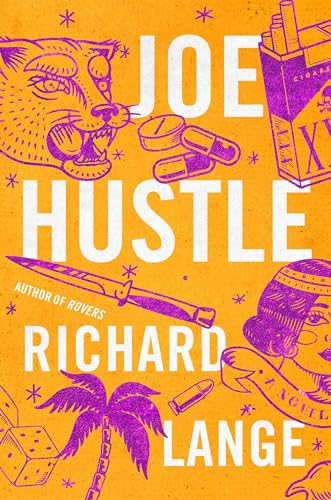
What a pleasant surprise of a book! As the title suggests, Joe Hustle a character study, and a damn good one.
Richard Lange does incredible justice to all his characters, especially the titular Joe, with straightforward, image-filled writing that allows a reader to fill in the gaps about why his characters are who they are. For example, Joe likes to see people at hardware stores because he likes to imagine the projects they’ll go on to make—details like these don’t have to do much in order to make an emotional impact and tell us that Joe values industriousness; he imagines a hopeful future, in spite of all he’s been through. Same goes for how he imagines his apartment as being like a “cell,” how the sun “gnaws” at him, how he prefers sweating to thinking, how he knows song lyrics because of all his time working in bars, how he’s determined to never steal and disrespects those who do, and how he often has to pawn off his tools but aspires to someday be the kind of person who owns his own set. If you’re reading this review, you likely have a full image of who this person is from those lines alone, but there’s so much more to unpack in this narrative. Like, I love that this story depicts Joe’s flaws without ever absolving them – he’s a classic antihero.
Lange also depicts his side characters with distinctiveness, especially the selfish screenplay writer who the audience checks in with at the end of each chapter. The story does a great job setting up Joe’s interactions with him—they start paying off by the end of chapter one.
This is my second Lange novel, after Rovers, and something I appreciate about both books is how he vividly describes environments, especially neighborhood color—in Joe Hustle, I particularly love the image of twenty speakers in a neighborhood, with each of them playing something different. Of course, much of this story takes place in a desolate, uncaring country, which ties into the themes of this story—shit happens, and the world largely doesn’t care, but people who live hand to mouth must keep plugging away regardless. I resonate quite a bit with how Lange’s storytelling reflects a cynical view of the state of America. Even after people suffer extreme personal disasters, the world keeps plugging away, demanding that everyone keep up and pay their bills. The world in this story is cruel and unfeeling, and it says so much about how Lange sees America and its institutions. Throughout the novel, I found myself wondering why Joe didn’t have more resources to draw from as a veteran. What’s absent from this story speaks almost as loudly as what’s there.
There’s so much I could say about this book. Like, the transitions between loud neighborhoods to desolate landscapes are reflected in the text itself—like how Joe and Emily go from comfortable silences to tense ones where they have nothing to say to each other. I could go on, but I really recommend that people pick this one up for themselves and experience it—at 255 pages, it’s a brisk read.