The modern world doesn't acknowledge but is nevertheless haunted by spirits-angels, demons, and saints. In our time, many yearn to break free of the prison of a flat, secular materialism, to see and to know reality as it truly is. What is this spiritual reality like? How do we engage with it well? How do we permeate everyday life with spiritual presence? In The Lord of Spirits: An Orthodox Christian Framework for the Unseen World and Spiritual Warfare, Fr. Andrew Stephen Damick provides a distillation and expansion of the material in the popular podcast The Lord of Spirits, which he co-hosts with Fr. Stephen De Young.
The Very Rev. Archpriest Andrew Stephen Damick is Chief Content Officer of Ancient Faith Ministries, former pastor (2009-2020) of St. Paul Antiochian Orthodox Church of Emmaus, Pennsylvania, and author of Arise, O God, Orthodoxy and Heterodoxy, Bearing God and An Introduction to God. He is also host of the Orthodox Engagement, Amon Sûl, Orthodoxy and Heterodoxy and Roads from Emmaus podcasts on Ancient Faith Radio, co-host with Fr. Stephen De Young of The Lord of Spirits podcast, co-host with Michael Landsman of The Areopagus podcast, and he is a frequent speaker at lectures and retreats both in parishes and in other settings.
Damick, Andrew Stephen. Lord of Spirits. I dare say we have reached the point where anyone who mentions the Nephilim will get accused of following Michael Heiser. Although I cannot prove that assertion, I have yet to see otherwise. Fr Andrew, however, makes no reference to Heiser. I did not know what to make of this lacuna at first. Was Fr Andrew, may it never be, simply using Heiser’s ideas without crediting him? The truth was far simpler: these ideas are common stock in the scholarly world. Evangelicals are simply unaware of them. While I have some reservations about how widespread these ideas are among Eastern Orthodox sources, Fr Andrew is certainly correct that they are in the earliest fathers. On one level this volume is a summary of angelology. At a much deeper level, it is a running commentary on the spiritual conflict throughout created history. General argument: if we say that Yahweh exists and the other “gods” do not, then we introduce contradictions in Scripture. God, for instance, is said to be above all gods. This would sound rather empty if the other gods were simply figures of speech. On the other hand, it sounds equally strange to say that Zeus exists. That word “exists” might be part of the problem. When a modern discusses god/God, we first ask whether this entity exists. Ancient man, by contrast, thought first in terms of god’s role or function–usually some form of rulership. “To refer to a god-as-ruler as ‘false’ is to refer to a usurper,” occupying a position that does not belong to him. When the fool “said in his heart there is no God,” he is not an atheist. He is saying no one is in charge.” Classifying the angels into nine ranks has an ancient pedigree. As is the case with any treatment of angelology, the so-called Pseudo-Dionysius takes center stage. Whether he was actually the convert of the Apostle Paul or a fifth century Syrian monk is a moot point. He reflected more on angels than any other father to that point. While I used to be critical of Ps. Dionysius on this point, I now see that his taxonomy holds up surprisingly well. Nine Ranks Cherubim. Later became a griffin in Christian art. Seraphim. A flying snake. Think of Pharaoh’s headdress. Ophanim. God’s chariot. Dominions (they resist spiritual powers) Authorities (they govern the heavenly bodies) Powers Principalities: They watch over the nations. Also called the sons of God. Connected with the 70 nations at the Tower of Babel. Archangels Angels
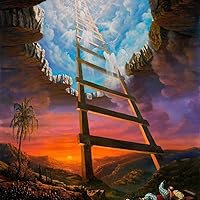
Following St John of Damascus, Damick notes an angel is in perpetual motion. For example,it cannot repent because it is incorporeal. Having a body, John says it is a noetic substance–but only in relation to us, not God. John goes on: They are circumscribed, for when they are in heaven they are not on earth, and vice-versa. Biblical Monsters Not surprisingly, talk of biblical monsters begins with talk of Leviathan, the ultimate demon of chaos. Fr Andrew ties this in with Ps. 74:13-14. God overcomes the powers of the high gods of the Canaanites. And as this imagery is ubiquitous, this language is ultimately about God defeating the demonic powers of the world. If Leviathan is the symbol of chaos, then Behemoth is the ultimate symbol of tyranny, represented by the bull. “It is dominion turned to tyranny.” Sacred Cosmology St Caedmon’s vision. Three-tiered universe. Heavens and earth. Ancient cosmology also had “the deeps,” or the underworld or abyss. Watery abyss. Surrounds the earth but also upholds it. Associated with death. Sheol and Returning to Dust. Adam is made of dust and returns to dust. Therefore, the serpent eating dust = swelling up death. This makes better sense of God’s cursing of the serpent. If all the serpent lost in the garden was the ability to walk, then he got off lightly, especially compared with his victims. On the other hand, if the serpent is something like a Seraph, and if eating dust is living in Sheol, then the curse makes good sense. Sheol is sometimes personified, as pagan cultures thought Sheol/Hades/Hel was actually a god. Indeed, by the end of the story Abaddon is a personal force. The Worship of God Jacob’s Ladder. It is the House of God, the gate of Heaven. Connotations of Tower of Babel, gate of a god. He could have very well seen a ziggurat. Giants What is the opposite of a saint? Not a demon, but a giant. This leads Fr Andrew to the most controversial part of the divine council worldview. Can angels mate with women? Genesis 6 appears to say yes. The earliest church fathers also said yes. Contemporary Jews like Josephus also said yes (Ant. 1.73). What, then, is the problem? On one level, there is no problem. If this is what the Bible and the earliest fathers taught, then this is what they taught.
But maybe something else is going on. Fr Andrew suggests that the “sons of God” were human kings who mated with women in a demonic ceremony in the presence of fallen Watchers. This makes sense of the exaggerated dimensions of some ANE beds. And while it is not clear how such a ceremony could produce giants, it does seem consistent. Nonetheless, the Hebrew clearly seems to refer to angelic beings, not human kings. In any event, it is still a much more viable reading than the Sethite thesis.
Conclusion
Fr Andrew has given us an exciting picture of the biblical world. It is a world filled with cosmic monsters, angels, demons, and heavenly saints.
The longer I've gone since reading this book, the more influential I realize it was! I realize now that the monotheistic religions of today have greatly underestimated or ignored the other spiritual beings that exist. While you may not believe they are gods, if you believe other spiritual beings exist and have powers beyond you, it changes the way you live. Recently, I heard people joke, "Yoga is the devil's work." They were Christians who believed it is your intentions that matter. However, as I researched the topic, I learned yoga could be likened to our communion, yolking you to the god Brahman. The context from this book helped me to make the decision not only to stop yoga as an exercise practice but to stop using the word yoga to refer to light stretching and mat exercise. I catch myself referring to concepts covered in this book frequently in my spiritual journey.
Father Andrew draws us a detailed picture of the spirits who inhabit the unseen world, angels and demons primarily, with a few words about the departed Saints. The status of angels in relation to saints is explained. He gives an overview of Christ's victory over the demons and death and Hades. All of this is indeed informative and inspiring. I thought the book would be a manual on Christian spiritual warfare. This is addressed in places but Fr. Andrew himself describes this work as an exposition of the framework of the spiritual war in the heavenlies as well as our part in it. Our part is explained more in detail in Lorenzo Scupoli's Unsseen Warfare, revised by St. Theophany the Recluse, and other ascetical works by Church Fathers and Mothers. This work is a fine introduction to their wisdom.
I think this book would be more useful to someone who is less familiar with the original sources and the landscape of the Ancient Near East.
I also think that this felt too…Protestant? And it was very focused on “power.” Less so articulating that disarming death (and, therefore, sin+”powers”) involves love. Real, true, vulnerable care for another. Ultimately, the podcast is more interesting and better regarding these topics and materials.
For those who enjoy the Divine Council Worldview and Ancient Near East interpretations of Holy Scripture, this work is a must read. Father Andrew expresses the theology of God’s divine council but contextualizes it in the holy tradition and phronema of the Orthodox Church.
“The story of human redemption from demons, sin, and death, from all the dark powers of evil, finds its cataclysmic, climactic height in the lowest depths of human experience. There, in Hades itself, the underworld of the dead, our Savior with His lordly might cast down our adversary, the destroyer and accuser, Satan the devil, with utter finality. Christ through His death on the Cross entered the dark underworld and smote the evil one with a blow from which he will never recover, sending the demons fleeing, routed in desperate retreat. He has scattered these proud ones in the imagination of their hearts, casting down the mighty from their thrones (Luke 1:51–52).
…in the end, this Son of Man is the Most High God, the Lord of Hosts, the God of gods, the King of kings, the Lord of lords, the Prince over all the angels, the One who presides in the divine council, the Master of all the saints. Christ Jesus, risen from the dead, has trampled down the death god by His death, smashing the gates of Hades. Entering into the darkness of the underworld, He has reached in and pulled out all its captives, bestowing His own glory upon them, for He is the Life.”
J Peterson and others do this thing where they reinterpret Biblical stories as phases in the evolution of human psychology. Very problematic.
Here’s a book that takes the claims of Genesis seriously and brings the genuine meaning of the stories to light by interpreting the symbols in the context of the ancient world from which they derive and in reference to the mythology stories they correct.
Would have scoffed at the idea that pagan myths are demonic propaganda before reading. I am throughly convinced now.
Book felt a little random in organization. Otherwise great. Unfortunately, they have 1,000 hours of podcast content with one of the greatest Biblical scholars alive, so I’ll be off of books for a little while
It's amazing how few missing pieces of the puzzle (like sacred cosmology and geography, who are the angels and their role in the biblical history of the universe, who are the Nephilim, demons, biblical monsters and pagan gods, the Harrowing of Hades) can transform one's view of the unseen and seen world. "The Lord of Spirits" podcast covers many other topics in their hundreds of hours of material, but in this particular book, fr. Andrew captures very well the essence of this framework - one in which the unseen and mythical are not just some other products of imagination, but are actually present in our world - that can re-enchant and revitalize our life in Christ, so that we can truly be on our way to becoming "sons of God, equal to the angels"
Excellent summary and expansion of the underpinnings of the Lord of Spirits podcast, but also stands on its own perfectly well. Clear and succinct introduction to an Orthodox Christian lens of reality and spiritual warfare.
I read this book as someone who is not Orthodox (I am a conservative Anglican), and not someone who has listened to the Lord of the Spirits podcast, but rather as someone who wanted to learn how the Orthodox view the spirit world and spiritual warfare. This was an excellent book in this regard, and one that all Christians, especially Protestants, should read. The author explained how Christian tradition interprets the language of the Old Testament not only as regards pagan gods, but also with angels, demons, the sea, the underworld, the heavens, and more. He also explains the spiritual undergirding of life today, and introduces the Orthodox view of theosis (becoming more like God and the angels). Some the most helpful parts included how after Babel, the various nations of the earth were led by their own demonic guardians who are the basis for pagan gods, and who were supplanted by the apostles to all nations as they brought the Gospel. I also liked where he explained how much of what we think of as pagan worship is misdirected and corrupted worship that rightly directed and understood becomes Christian worship in the Eucharist. All in all, this book is a must-read for all Christians, especially now.
I’ve been listening to this podcast for several years and have found the content fascinating and thought provoking. This book is a good backdrop to the whole project of reinforcing our appreciation for the relevance of the spiritual world in our post-industrial Western society.
To refer to a god-as-ruler as “false” thus means that he is a usurper. He’s not really in charge. To say that he “is no god” is not to say that he doesn’t exist but rather to say that he’s a pretender occupying a position that doesn’t belong to him… Since there were no atheists in the ancient world, the fool saying to himself, “There is no God” is not denying God’s existence. Rather, he is saying, “No one is in charge.” He engages in evil deeds because he thinks no one is watching over him.
Jesus says that those in whom He dwells can be called “gods” through adoption as His sons when He bestows His divinity upon them. As with angels (either obedient or fallen), that does not mean they are equal to God or should be worshiped, but it does mean that they become closely associated with Christ, who is Himself God. This bestowal of divinity from God is traditionally referred to by the Greek word theosis. [see Luke 20:36, John 10:34–36]
Through idolatry, mortals meet those [pagan gods’] needs and hope to get something back in exchange—good weather, fertility, beauty, victory in war, etc. Scripture says both that the pagan gods cannot deliver on their promises and that God does not need anything.
Throughout the Scriptures, we see that when sinful humans approach God, especially in a careless way, the contact can harm them. That is why so much of the religion of ancient Israel, and indeed of the Christian Church, is about purification, so that humans can prepare to meet God. But while that purification is absent or still in process, guardians prevent humans from accessing God’s presence, precisely to keep them safe.
From the biblical point of view, if Leviathan is the ultimate demon of chaos, then Behemoth is the ultimate demon of tyranny.
If idolatry is about satisfying human desires by making deals with a god, then God’s design is about His freely given providence for humans through communion.
We also should not reduce [men and women’s] tasks to “building” and “childbirth.” Cultivation has an almost infinite sense of application, for everything from architecture and engineering to agriculture, from philosophy and theology to storytelling. Likewise, fertility is not only about giving birth to children and raising them, but about filling all things with life and beauty.
We tend to think of sacrifice as being about giving something up or about killing. However, in the Levitical sacrifices that God commanded, and even from what we know of pagan sacrifices, the killing of animals was not ritualized, meaning that it was not considered critical to the sacrificial rite. Further, many sacrifices did not even involve animals—they also included drink, oil, grain, and cakes… Incense is a sacrifice as well, though it is not consumed; rather, it renders foul air sweet or simply makes the air more pleasing, which is part of the larger sense of sacrifice as hospitality… It was understood that worshipers were sharing a meal with their god. Across nearly every human culture throughout history, eating a meal together is the core, critical act of hospitality.
This basic ritual order—dedication, procession, division of portions, lifting up to the deity, then ritual eating by priests and worshipers separately—is found in the Orthodox Christian Divine Liturgy to this very day. Does that mean that Orthodox worship is derived from paganism? Of course it doesn’t mean that, any more than the worship of ancient Israel was derived from paganism. Both were commanded by God.
Rather than animals or cakes, Christ Himself is the one who “is offered.” He provides Himself for us, offering us His own hospitality, giving even Himself to be the one distributed—the greatest possible offering that could be made. Instead of humans feeding their gods in exchange for favors, the God-man Himself feeds us and needs nothing from us, giving Himself out of love… God has flipped the plot, so to speak, and shown what all those sacrifices of the ancient world always pointed to—that God has invited us to His own table and is giving us nothing less than Himself.
What St. Basil says applies even outside the question of reading pagan literature or other texts that have such elements in them. We can treat whatever we encounter in life with the virtues of the bee, taking what is good and leaving behind the bad. One does not even have to engage in constant apologetics against the bad. One can simply leave it alone.
Zeus should suffice for our purpose, which is to give some context for Christ’s appearance and the apostles’ mission from Him. This context is important because the world into which the gospel was first preached is a world that actually worshiped violent, incestuous, rapist demons.
In Chrysostom’s depiction, Christ enters into the mouth of the devouring dragon of death, and as it is feeling nauseated and wants to vomit, Christ rips it into pieces from the inside, not only escaping death but destroying its power forever.
If saints are infused with the holiness, light, glory, love, and power of God because of their cooperation with Him in synergistic faithfulness, then it is also possible through cooperation with demons to become as though the devil were our father, doing his works and being filled with his malice, appetites, and violence (see John 8:39, 44). It is, in a word, anti-theosis, or to coin a term for this context, demonosis.
Demons cannot harm the Lord, but they can harm us, who are beloved of the Lord. Spiritual warfare therefore consists of Christ counterattacking His enemies in response to their assault upon us. His victory is sure and He has already won. When we live in accordance with His commandments, we turn away from the works of darkness and communion with demons and toward the works of light and communion with the loving God who made us all. Every obedience to God is therefore exorcistic. Every time we pray, every time we receive the Holy Mysteries, every time we love, every time we give alms, every time we fast with devotion, every time we feed the hungry, every time we clothe the naked, every time we visit the sick and imprisoned, every time we humble ourselves—with all these faithful actions, we drive out the demons and invite into us the Holy Spirit of God… Seeing the world as it is, we therefore also become profoundly compassionate toward our fellow humans, who are not our enemies—even if they consciously have decided they are—but are actually afflicted by the demonic powers even as we are. With this compassion, we can then love them as God loves them, taking the initiative to show kindness in imitation of our Savior who died for us even while we were yet sinners (Rom. 5:8).
It’s extremely important to understand the spiritual world around us, because we, whether we can see it or not, are living in it at this very moment.
The modern world ruled by powers that be, have effectively “brainwashed” the population into thinking Reality is Myth. Combine that with the prosperity gospel using the Bible as a self help book to feel good about yourself and atheism being the main ideology running rampant in the science world and you have an entire generation of people who belief certain aspects of reality are myths.
The book is a great read that takes you through the words commonly misunderstood and misinterpreted, the gods of the nations, the inspiration for myths and how they have Truth in them, and it’s ok to read stuff outside of the Bible being you have the discernment, how and why we are fallen, and how we will replace the fallen angels and ultimately be Higher than them. The idea is that God became man so that man MIGHT become God. Theosis is a beautiful way of describing the faith to any ex new ager or anyone outside of the faith that mocks it. St. Irenaeus says:
“For by no other means could we have attained to incorruptibility and immortality unless we had been united to incorruptibility and immortality. But how could we be joined to incorruptibility and immortality, unless, first, incorruptibility and immortality had become that which we also are, so that the corruptible might be swallowed up by incorruptibility, and the mortal by immortality, that we might receive the adoption of sons?”
Salvation does not mean merely the popular understanding of going to heaven when you die, rather is means to become part of the heavenly hosts, not to become angels by nature but to become angelic by the grace of God. Not identical but equal unto the angels. We participate in Gods glory like they do and begin to function like they do.
Is this book pro-Eastern Orthodox Propaganda? Absolutely. Without question. This could (and probably should) be studied when someone wonders what propaganda means. But the book was super informative! I feel like I've learned so much about this religion, despite thinking I knew a good bit about it. The book is very thorough. I recommend this book to anyone looking to understand this religion more.
However, please note that I recommend they read this book. Do not listen to the audiobook. Father Damick sounds so. damn. pretentious (which is crazy because he doesn't in the podcast of the same name). Having listened to this book is the sole reason I'm rounding down.
Also, the use of the phrase "Pro-Demon Propaganda" took me OUT. Hearing that for the first time was easily my favorite moment in the book, despite finding like 2 quotes I actually wrote down for future use.
As an Orthodox Christian, I found "The Lord of Spirits" to be further instruction in the Holy Traditions of the church to which I converted. Father Damick writes clearly in an easy to read scholarly, well documented style about the reality of the world we live in that is in a state of war between good and evil. He traces ancient civilizations and their experiences, like ours in the 21st century. However, unlike our westernized secularly influenced lack of belief in a spiritual component in life (and death), most in our present world do not readily accept the mystery of the unseen world around us.
Personally, I gained more understanding, inspiration, and yes, commitment to the Christian Orthodox faith that I have embraced for the last twenty years. I think this book would be a valuable read for those of other Christian traditions, and definitely interesting and intriguing to those of secular belief. I would also recommend Father Damick and Father Stephen De Young's podcast by the same name which can be found on Ancient Faith Radio.
I was immediately interested in this book because I have enjoyed many episodes of the so-named podcast with Frs. Stephen Daniel and Stephen De Young. I am not an orthodox Christian (gasp! A Protestant!) but I don’t disagree with any of the theology in this book. My traditions are different but I have definitely gained an appreciation and better understanding for some of the long-held Church traditions. Regardless, ALL Christians can be enlightened and inspired by this beautiful, scholarly “framework for the unseen world and spiritual warfare.” We are reminded that, as God’s image-bearers, we have spiritual enemies who seek our destruction. But they have been DEFEATED through Christ’s sacrifice and are living in their death throes. Just before this one, I read Joel Muddamalle’s The Unseen Battle, a good complement to this book!!
What a great book! Fr. Andrew is eloquent, detailed and concise. I love that there are two footnotes already on the first page of chapter 1! I love footnotes! I love the extra little tidbits and references to outside sources.
I’ve listened to the entirety of The Lord of Spirits Podcast; many episodes several times over. This book parallels that podcast but adds another depth by delving into specific subjects just a little bit more and even expanding into further Germanic myths with text and interpretations. Super interesting.
I like Fr. Andrew’s speaking voice. It’s soothing and fun and informative. He is also a very good writer and I look forward to reading more of his books.
My hope for this book would be that it covered the most interesting things from the podcast sans jovial—but very long winded—rambling and for the most part that’s what it was. A few of the things that i really wanted to revisit from the podcast were:
1. giants and demigods 2. worship 3. the harrowing of hades, which I think about every Pascha
I wish there were a companion book that deep dived into liturgical services and texts that could help me apply a spiritual lens to my participation.
It’s not so much that I like this story that Fr Andrew outlines but I like the story I get to live, on this path away from demon-osis and towards the God of the seen and unseen.
The subtitle of this book really tells you what to expect, and this book delivers. The podcast that shares the same title as the book has been on my listening queue for over a year, finally got around to reading this book as well. The author does a great job of showing how spritual warfare and beings have been viewed by the saints of old and what moderns think about some of them as well. Great writing and a very good introduction into this kind of thinking from an orthodox perspective - recommended.
Great discussion and approach to the supernatural aspects of Christian theology. I am not Orthodox, so I do not put as much stock into some church teaching as the author, but that doesn't mean this isn't good material presented in an easy-to-follow and reasoned format.
(For another perspective with very similar results, read Heiser's supernatural material)
My favorite part was fr. Andrew reading the harrowing of hades. We western Protestant Christians are really missing out on that wonderful story of Christ’s work between his death and resurrection. But that is the case with most of this book, in fact. The perspective here really sheds new light on Who we are following when we follow Christ, as well as who our enemies are.
A great book to read in any journey of re enchanting your Christian faith.
I didn’t get too much out of the beginning of the book, nothing didn’t already know like the word God or god or even gods doesn’t just have 1 definition. Ranks of Angels was something I knew as well. If you are interested in learning about pagans of the day give this a shot, if not I’d skip.
Very informative and inspiring book detailing a fuller Christian worldview on the spirits and strange things found in the Bible we don’t seem to see today. My only real criticism is the use in some places of largely unreliable apocryphal sources such as the Gospel of Nicodemus, though this is not the majority and the book’s main thesis still stands.
This book is great for helping understand how the older world understood religion and pf course how the orthodox view the unseen world. I highly recommend this. He does a great job making this understandable for the everyday person and I enjoyed reading it and gaining understanding that I pray draws me closer to the Lord.
A good summary of the Podcast. This on Audible is a better place to send your friends than the podcast itself if you want them to get a good primer. Most people don’t have the focus to stay on the podcast for long enough to get all the jewels. Great book.
This is an excellent book for anyone who would like to understand their Orthodox Christian faith. There's a great deal of scripture cited to support positions and Father treats each topic thoroughly. Highly recommended.
This is a short but in depth summary of some of the Orthodox Church's teaching on the spiritual realm and it's impact on life and the church. Great read!