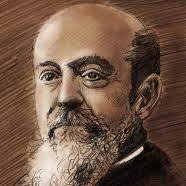
He was a founder and president of Chicago & Southern Airlines, which was merged with Delta Air Lines. He was a chairman and, later, a director of Delta.
He was educated at Princeton and the Columbia University. He wrote two books defending segregation and a biography of Theodore Roosevelt.
The bible of the segregationist movement. David Duke read the book as a teenager and credited it with changing his life. Compared to other eminent racialist texts, such as the works of Carleton Coon or J. Philippe Rushton, Carleton Putnam's Race and Reason stands out as highly readable and concise. Written as a response to the catastrophic 1954 Brown v. Board of Education decision, it eloquently defends racial separation and opposes the cult of equalitarianism. He addresses Franz Boas (who arguably had a more destructive impact on the West than Karl Marx) and many other pro-integration arguments, dismantling and demolishing them all with gentlemanly candor and incisive wit. In his own words, "The South has far more evidence, far more experience, concerning the Negro than the North. And hence it is the North that is pre-judging when it tells the South what it ought to do about the Negro problem."
This book was once required reading in high schools. So many lies have been told and are being told about the difference in the races, and there are differences. Proven scientifically. But telling the truth about race, IQ, intelligence, etc. would not fit the liberal narative. So it is basically forbidden, to the death of the white race. History, real history tells the truth about how the black race, lowest of all has been propelled to the top of society by people who know nothing about the truth.
I had no idea that cultural Marxism started this early (1930s)!!! I thought it was a recent development in American culture (I've never been to the US, I live in eastern Europe). I give the book only 4 stars because the author had an annoying manner of constructing abnormally long sentences. The book would gain a lot more readers had it been written in a different style. But then again, this is the way books on serious matters were written 50+ years ago.
A reasonable argument for racial segregation. Putnam simply says that we must see the big picture and recognize aggregate racial characteristics, and that this is on a different plane than individual relations. Both group averages and individual characteristics and merits are significant, in different senses.
I struggle to find primary sources arguing for losers in historical conflicts. These are wiped from minds by the victors. This is a great primary source giving a good 1950s case for segregation in the face of desegregation.