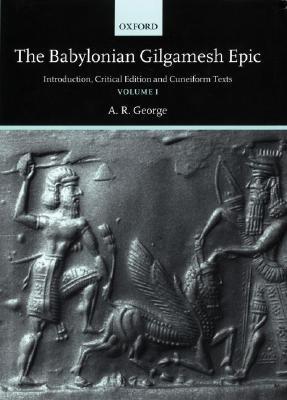
The Babylonian Gilgamesh epic is the oldest long poem in the world, with a history going back four thousand years. It tells the fascinating and moving story of Gilgamesh's heroic deeds and lonely quest for immortality. This book collects for the first time all the known sources in the original cuneiform, including many fragments never published before. The author's personal study of every available fragment has produced a definitive edition and translation, complete with comprehensive introductory chapters that place the poem and its hero in context.
Found in Sumerian , akkadian, hittite and hurrian languages
The standard Akkadian version of the Epic of Gilgamesh as we have it today was written/compiled by a Babylonian scribe named Sîn-lēqi-unninni during the Middle Babylonian Period (c. 1600 – c. 1155 BC), based on earlier Sumerian and Akkadian materials. The extent to which his version is different from earlier texts is unknown
2250-2000 Earliest Sumerian stories in the Epic of Gilgamesh
1700 old Akkadian Epic of Gilgamesh, starts with “Surpassing all other kings”
Middle e.g. Hittite***
1200-900/1300-1000 Akkadian version and younger stories in the Epic of Gilgamesh “standard version”
Also contains the Sumerian poem of Bilgames and the Netherworld (BN), known in ancient times as u4.ri.a u4.sů.rá.ri.a, “In those days, in those far-off days” vol 2
***The Babylonian Gilgameš of the mid- to late second millennium can be subdivided into the following groups: (a) Old or early Middle Babylonian texts exported to (Syria and) Anatolia in the sixteenth or fifteenth centuries: MB Boğ (fifteenth- or fourteenth-century copy) (b) Local Akkadian paraphrases: MB Boğ: (thirteenth-century copy), MB Megiddo (fifteenth- or fourteenth-century copy?), perhaps MB Ugarit (twelfth-century copy?) (c) Translations into local languages: Hittite Gilgameš, Hurrian Gilgameš (fourteenth- to thirteenth-century copies) (d) Late Middle Babylonian texts from Babylonia: MB Ur (thirteenth- or twelfth-century copy), MB Nippur,- (thirteenth-century copies?) (e) Late Middle Babylonian texts exported to Syria (and Anatolia?) in or after the Amarna period: MB Emara (twelfth-century copies) (f) One or more Middle Babylonian recensions current in Neo-Assyrian copies: Assyrian MSS e, x, y, z, Kuyunjik MSSYY and ZZ (tenth- to seventh-century copies)
There are five extant Gilgamesh stories in the form of older poems in Sumerian.[56] These probably circulated independently, rather than being in the form of a unified epic.
1) The lord to the Living One's Mountain and Ho, hurrah! correspond to the Cedar Forest episode (Standard Babylonian version tablets II–V). Gilgamesh and Enkidu travel with other men to the Forest of Cedar. There, trapped by Huwawa, Gilgamesh tricks him (with Enkidu's assistance in one of the versions) into giving up his auras, thus losing his power.
2) Hero in battle corresponds to the Bull of Heaven episode (Standard Babylonian version tablet VI) in the Akkadian version. The Bull's voracious appetite causes drought and hardship in the land while Gilgamesh feasts. Lugalbanda convinces him to face the beast and fights it alongside Enkidu.
3) The envoys of Akka has no corresponding episode in the epic, but the themes of whether to show mercy to captives, and counsel from the city elders, also occur in the Standard Babylonian version of the Humbaba story. In the poem, Uruk faces a siege from a Kish army led by King Akka, whom Gilgamesh defeats and forgives.
4) In those days, in those far-off days, otherwise known as Gilgamesh, Enkidu, and the Netherworld, is the source for the Akkadian translation included as tablet XII in the Standard Babylonian version, telling of Enkidu's journey to the Netherworld. It is also the main source of information for the Sumerian creation myth and the story of "Inanna and the Huluppu Tree".
5) The great wild bull is lying down, a poem about Gilgamesh's death, burial and consecration as a semigod, reigning and giving judgement over the dead. After dreaming of how the gods decide his fate after death, Gilgamesh takes counsel, prepares his funeral and offers gifts to the gods. Once deceased, he is buried under the Euphrates, taken off its course and later returned to it.
It seems like most of the reviews on this tab are actually about Stephen Mitchel's translation of the Gilgamesh Epic. This book by Andrew George is the Critical Edition in two volumes. Volume two contains an Akkadian version of the text. Volume one, which I'm reviewing here covers the introductory material. Andrew George has here compiled a range of essays on all manner of topics related to the Epic. First we have the literary history of the story as well as a case study of the inclusion of the anomalous tablet 12. Then there is an exploration of the name of the hero and the manifold ways of writing it alongside the various meanings suggested by modern scholars. Then the author looks at Gilgamesh in terms of being a king, a hero and a god and his historical association to the walls of Uruk. This is followed by a set of pieces on the other principal characters of the Epic like Enkidu, Humbaba and Ninsun. After this introductory section we find the texts and translations which are parallel to George's popular Penguin edition. The introductory material provides plenty of fascinating material that I've not found elsewhere. A worthwhile read for the serious Gilgamesh student who wants to take their study further and deeper.
man i don't know what to say.this is an epic tale of a man who went to the ends of the world(and underworld) for his friend it was my first time reading something of babylonian roots and i enjoyed it