An exploration of modernist women’s distinctive role in domestic and cinema arts in the context of current debates about gender and modernism.Photographs, particularly domestic photos of family and friends, taken by Virginia Woolf and Vanessa Bell form the centrepiece of this delightful book. Many rare and intimate images discovered among the archive collections of their photographs are published here for the first time and are analysed in relation to contemporary photographic and cinematic practice. Discussion of the cinema writings of Colette, H.D., Dorothy Richardson, Gertrude Stein, Virginia Woolf and Bryher and the role of the visual in Virginia Woolf’s Three Guineas also feature in Maggie Humm’s consideration of women and visual culture.This new approach to modernist visual aesthetics draws on a range of photographic, psychoanalytic and visual theory, on modernist criticism and on extensive, original archive research. The concern in the book with women’s ways of looking as well as an assessment of how gendered subjectivities are visually constructed will be crucial to rethinking modernist aesthetics.Illustrated with 45 black and white plates, including several complete pages from photo albums, from sources including Virginia Woolf’s ‘Monk’s House Albums’, the ‘Leslie Stephen Photograph Album’ and Vanessa Bell’s ‘Albums’.
Virginia Woolf and Vanessa Bell are the hook and main selling point, but this is actually a collection of essays covering a number of modernist women writers, including H.D., Colette, Dorothy Richardson, Bryher, Stein, etc. The topics traversed—ranging from the Woolfs's personal albums to Bell's photographic experimentation to early, pioneering female film criticism and more—is unceasingly fascinating, which is why I was often frustrated with how dull Humm's analysis could become. It's pretty dazzling when it sticks to original research and close reading of a wide range of material (which accounts for the four stars), but all too often comes it lapses into ponderous strings of academese, and I quickly began to skip just about everything directly dealing with psychoanalytic theory (which is why I considered docking one of those stars).
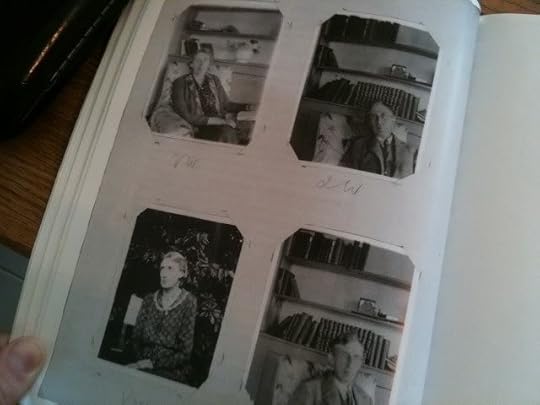
The major highlight is the consideration of the Woolfs's personal photo albums as demonstrating a number of her literary techniques in visual form. Never chronological or even topically arranged, the five albums instead are largely associative constructions and often contain multiple photographs of a single subject from different visual perspectives (echoing cubist and other innovations of modernist visual art), and sometimes "superior" versions of photos can be found hidden behind ones that are less representationally perfect but contain flaws that are more artistically interesting and/or evocative (hinting that the albums were more than just personal records) . I wish Humm had explored a bit more Leonard's admitted contribution to the albums, but overall Humm makes a convincing case that Woolf's larger aesthetic project involves her "amateur" involvement in the photographic arts just as much as her "professional" achievements as novelist, essayist, and literary figure.
There's also a nice overview of the intimate connection many female modernists had to cinema and the photographic arts in general, opening up a number of avenues of inquiry I'm already researching and/or plan to pursue further.
[One of the images Humm includes from the Woolf albums]