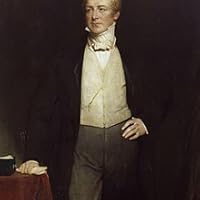
Joseph Chamberlain (1836-1914) was a towering personality in an age of political giants. Disraeli, Gladstone, Lord Salisbury, Winston Churchill and Lloyd George all flourished during the span of his career, but he was not outshone by any of them.
Possessed of enormous energy he made a profound mark on Victorian and Edwardian politics; his pugnacious, demagogic style aroused either adulation or hatred, never indifference. But he was a man of abundant contradictions as Denis Judd skilfully illuminates: the wealthy industrialist who espoused Radicalism; the luxury-loving Nonconformist who championed the downtrodden; the architect of organized Liberalism who left Gladstone and split the Liberal Party in 1886; the scornful critic of privilege and peerage who became a vital vote-winner for Lord Salisbury and the Tories; a creator of Unionism who helped to send the Unionist party to the electoral massacre of 1906; the alleged Republican who became the greatest Imperialist of his time.
In short, Joseph Chamberlain is one of those fascinating larger-than-life figures about whom the final word can never be written but who need to be frequently reassessed. In this biography, Denis Judd not only provides the best account so far of his extraordinary life but casts new light on such key issues of the time as electoral and social reform, Irish Home Rule, the Boer War and tariff reform.
'. . . the best short study of Chamberlain that has so far appeared . . .' Asa Briggs, "Guardian"
""
'. . .an excellent book, readable, clear, cool, scholarly, realistic and based on careful documentary research. . . Denis Judd's first class biography reveals as much of the truth as we are ever likely to get.' Robert Blake, "Sunday Times"
""
'Denis Judd writes easily and with humour, presenting Chamberlain through the eyes of both his critics and admirers. No significant aspect of Chamberlain's work or personality is omitted.' Julian Amery, "Sunday Telegraph"
Denis Judd was born in Northamptonshire in 1938 and educated in a village primary school before passing the 'Eleven Plus' and entering the local grammar school. He won a State Scholarship to Oxford, where he took his first degree in Modern History at Magdalen College, going on to study for a PhD at London University, on: 'A. J. Balfour and the evolution and problems of the British Empire 1874-1906.' He is a Fellow of the Royal Historical Society.
He has been Head of History, and is now Professor Emeritus of Imperial and Commonwealth History, at the London Metropolitan University. In his research, writing and broadcasting he has specialised in the British Empire and Commonwealth, especially South Africa and India. He has also written extensively on British history, on aspects of the monarchy, and among his biographies is the authorised life of the children’s author Alison Uttley.
Joseph Chamberlain (July 8, 1836–July 2, 1914) was a legendary (for his time) British Statesman who went from Radical Liberal (pioneer of social reform), to Liberal Unionist (opponent of Irish Home Rule), to Imperialist of a particularly ambitious stripe (with a grand design for the British Empire to become an Imperial Union of partially self-governing provinces united under a new Imperial Parliament).
It is in that latter phase of his career that Chamberlain’s global significance made him one of the unsung ‘Founding Fathers’ of the Federal Commonwealth of Australia. While Denis Judd’s biography only mentions in passing Chamberlain’s shepherding of the Commonwealth of Australia Constitution Act through the British House of Commons, for an Australian reader (like me) it provides a useful historical context. ‘Federation’ in Australian history is often presented as an act of self-determination for a continent previously divided by colonial borders (all British Colonies of course). However from Chamberlain’s perspective Federation was about more concretely integrating Australia into the Empire (especially hoping we would send more troops to the Boer War), and providing an example in miniature about how a Federated ‘Imperial Union’ might work.
Judd writes that ‘Ambition was as natural to Chamberlain as life itself’. Chamberlain’s political career seems to have been driven by a desire to leave a huge mark on life, although he is often judged to have been a failure as some of his most ambitious stated goals were unrealised. His best years of achievement were probably during his time as a local politician in Birmingham, where as mayor he used public and private money to construct libraries, municipal swimming pools, schools and parks. He was basically a pioneer of ‘municipal socialism’ - although he was loathe to call himself one of those. Judd argues that Chamberlain’s greatest legacy is modern organised politics itself: ‘constituency and national associations, party conferences, and party discipline’. Chamberlain’s Radical Programme of 1885 is likely the earliest true ‘Party Manifesto’.
However ‘Radical Joe’s’ ultimate ambition of Imperial Federation ended up going nowhere - for which people around the world should be grateful. Chamberlain correctly observed that the British Empire was unsustainable as a globe spanning system of domination, but his path forward would be no triumph for human equality. The self-governing parts of the Federation were going to be self-governed by white people, especially if they were going to include Australia, South Africa, Rhodesia, and Canada. It would have been an Apartheid system on an epic scale, although it does raise the interesting possibility of a global anti-Imperialist struggle conducted through the frame of civil rights (‘we are all equal citizens of the Federation’) rather than national self-determination.
Judd’s biography, published in the 1970s, is comprehensive and workmanlike making good use of private documents and archives. However you should look to more up-to-date interpretations of ‘Radical Joe’ to get the full picture of his legacy.
A brilliant biography which introduced me to this great man in a manageable and succinct way. When searching for a biography about Joseph Chamberlain, I was unsure whether to buy the larger editions, with multiple volumes, or this one, which I hoped would be readable while laying out as many details of his life as possible. This book certainly proved that I chose correctly as it reads brilliantly, rarely becoming slow, even when discussing 'boring' (not really) topics like municipal reforms and tariffs. I certainly grew to love the energy and character of this great man and the manner of his decline and subsequent death greatly saddened me. That standout quote from John Morley certainly summed this up well: "his ardent spirit should have gone to heaven in a chariot of fire not in a bath-chair".