

What do you think?
Race, Gender, and Science
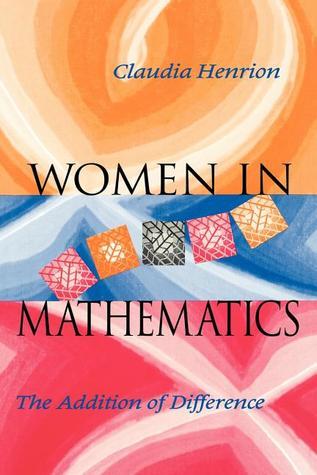
Women in Mathematics: The Addition of Difference
" . . . a wonderful addition to any mathematics teacher's professional bookshelf." ―The Mathematics Teacher
"The individual biographies themselves make for enthralling, often inspiring, reading . . . this volume should be compelling reading for women mathematics students and professionals. A fine addition to the literature on women in science . . . Highly recommended." ―Choice
". . . it makes an important contribution to scholarship on the interrelations of gender, mathematics, and culture in the U.S. in the second half of the twentieth century." ―Notices of the AMS
"Who is the audience for this book? Certainly women who are interested in studying mathematics and women already in mathematics who have become discouraged will find much to interest and help them. Faculty who teach such women would put it to good use. But it would be a loss to relegate the book to a shelf for occasional reference to an interested student or beginning mathematician. Everyone in the mathematics community in which each of Henrion's subjects struggled so hard to find a place could benefit by a thoughtful reading." ―Society for Industrial and Applied Mathematics (SIAM) News
Mathematics is often described as the purest of the sciences, the least tainted by subjective or cultural influences. Theoretically, the only requirement for a life of mathematics is mathematical ability. And yet we see very few women mathematicians. Why?
Based upon a series of ten intensive interviews with prominent women mathematicians throughout the United States, this book investigates the role of gender in the complex relationship between mathematician, the mathematical community, and mathematics itself.
"The individual biographies themselves make for enthralling, often inspiring, reading . . . this volume should be compelling reading for women mathematics students and professionals. A fine addition to the literature on women in science . . . Highly recommended." ―Choice
". . . it makes an important contribution to scholarship on the interrelations of gender, mathematics, and culture in the U.S. in the second half of the twentieth century." ―Notices of the AMS
"Who is the audience for this book? Certainly women who are interested in studying mathematics and women already in mathematics who have become discouraged will find much to interest and help them. Faculty who teach such women would put it to good use. But it would be a loss to relegate the book to a shelf for occasional reference to an interested student or beginning mathematician. Everyone in the mathematics community in which each of Henrion's subjects struggled so hard to find a place could benefit by a thoughtful reading." ―Society for Industrial and Applied Mathematics (SIAM) News
Mathematics is often described as the purest of the sciences, the least tainted by subjective or cultural influences. Theoretically, the only requirement for a life of mathematics is mathematical ability. And yet we see very few women mathematicians. Why?
Based upon a series of ten intensive interviews with prominent women mathematicians throughout the United States, this book investigates the role of gender in the complex relationship between mathematician, the mathematical community, and mathematics itself.
328 pages, Paperback
First published August 1, 1997
Ratings & Reviews
Friends & Following
Create a free account to discover what your friends think of this book!
Community Reviews
Displaying 1 - 4 of 4 reviews
February 6, 2013
This is an excellent book for anyone who is considering balancing family with a male dominated academic field to read. Though the biographies in this book are specific to struggles that women have in mathematics, many of the issues may apply to fields such as physics, computer science, and engineering.
Some of the women in this book were struggling for inclusion when they were expected to stay at home and raise children. Schools like Harvard and MIT were especially hard on women. In one scene mentioned in this book, one woman sat down in class and NO ONE sat in any of the four seats around her.
When a sign said "Men Only" for a position at another university, one woman was flattered because someone had remembered that there was an actual woman in the department.
The path that Marian Pour-El chose seemed particularly tough. She and her husband lived apart to pursue their academic paths through much of their working life, but they also had a child. Since most women stayed at home to raise children, it was very hard to find someone to help take care of her child while she pursued her academic interests and essentially being a single parent.
Many of the women hid their private lives for fear of not being taken seriously. One mathematician wore a dress to class, and people were surprised that she looked so feminine to the extent that someone asked her out. Her classmate who asked her out did not realize that she had been married for five years and was several months pregnant. She hid this fact from those around her for fear of not being considered a serious mathematician.
Mary Ellen Rudin seemed like she had the best personal life of the early female mathematicians. She raised four children and taught on a schedule that suited her. This was partly because she was not considered to be a serious mathematician. After many years and many papers, the university that employed her was shamed into raising her from lecturer to full professor. What was inspiring about her story is that she developed this community around her and inspired other female mathematicians.
The more modern mathematicians had the problem of pointing out the treatment of women in mathematics. By focusing on the feminist issues, they lost some credibility as mathematicians. And when they focused fully on the mathematics, the feminists that supported their causes felt betrayed.
The last two mathematicians covered in this book are black female mathematicians. Their struggles were different than those of other people. One of those mathematicians was rejected from Baylor because Baylor was not accepting any black students. Then, four years later, she was granted a position as a professor at Baylor.
One of these last two mathematicians had a fellowship. However, when she got to Connecticut, she couldn't find anyone who would offer her a place to live because racist practices in housing rentals were not restricted.
Some of the women in this book were struggling for inclusion when they were expected to stay at home and raise children. Schools like Harvard and MIT were especially hard on women. In one scene mentioned in this book, one woman sat down in class and NO ONE sat in any of the four seats around her.
When a sign said "Men Only" for a position at another university, one woman was flattered because someone had remembered that there was an actual woman in the department.
The path that Marian Pour-El chose seemed particularly tough. She and her husband lived apart to pursue their academic paths through much of their working life, but they also had a child. Since most women stayed at home to raise children, it was very hard to find someone to help take care of her child while she pursued her academic interests and essentially being a single parent.
Many of the women hid their private lives for fear of not being taken seriously. One mathematician wore a dress to class, and people were surprised that she looked so feminine to the extent that someone asked her out. Her classmate who asked her out did not realize that she had been married for five years and was several months pregnant. She hid this fact from those around her for fear of not being considered a serious mathematician.
Mary Ellen Rudin seemed like she had the best personal life of the early female mathematicians. She raised four children and taught on a schedule that suited her. This was partly because she was not considered to be a serious mathematician. After many years and many papers, the university that employed her was shamed into raising her from lecturer to full professor. What was inspiring about her story is that she developed this community around her and inspired other female mathematicians.
The more modern mathematicians had the problem of pointing out the treatment of women in mathematics. By focusing on the feminist issues, they lost some credibility as mathematicians. And when they focused fully on the mathematics, the feminists that supported their causes felt betrayed.
The last two mathematicians covered in this book are black female mathematicians. Their struggles were different than those of other people. One of those mathematicians was rejected from Baylor because Baylor was not accepting any black students. Then, four years later, she was granted a position as a professor at Baylor.
One of these last two mathematicians had a fellowship. However, when she got to Connecticut, she couldn't find anyone who would offer her a place to live because racist practices in housing rentals were not restricted.
June 27, 2026
A STUDY OF A NUMBER OF WOMEN MATHEMATICIANS, BUT ALSO OF MATHEMATICS ‘IDEOLOGY’
Claudia Henrion taught courses in math, education, women’s studies and the history of science at Middlebury and Dartmouth College. (She and her husband also teach Tai Chi, at a school they founded.)
She wrote in the Introduction to this 1997 book, “When I began this project, the task seemed simple: to convey the stories of women in mathematics… Since almost no literature existed on living women mathematicians, I began to do the research for this book… I interviewed a dozen prominent women around the country who represented a variety of mathematical fields, personal and professional situations, ages, geographic locations, and ethnic and racial backgrounds. Their stories were engaging, and became the basis for one part of this book. My primary goal, initially, was to encourage women considering going into mathematics, as well as those already in mathematics, by breaking down prevalent stereotypes: either that women don’t do math, or that those who do are of a particular (and often assumed to be unappealing) type. These real women’s lives… help replace stereotypes with ... an image of a multiplicity of models, so that other women feel that there is sufficient room to shape their own unique path in mathematics.” (Pg. xvii)
She continues, “I would have liked to end the book here---a positive approach to women’s underrepresentation in mathematics. The message: Since all of these women have created a niche for themselves in mathematics, other women can do the same. But the deeper I got into the material, the more I came to realize that this approach to the book was only half the work. Two interrelated questions continued to surface, and were not adequately addressed by this initial vision. First, why is it that women continue to be underrepresented in mathematics, particularly at the highest levels of accomplishment? And second, why is it that even the most successful women in mathematics, even those who have already made it by standard measures of success, often continue to feel (to varying degrees) like outsiders in the mathematics community?” (Pg. xvii-xviii)
She goes on, “These issues could not simply be explained by inequity in early schooling, or by stereotypes of women in society at large. Nor could they be reduced to the argument that women lack mathematical talent. For even women who had managed to escape the traditional expectations of womens’ roles, who clearly had a passion and a talent for mathematics, who managed to find their way into graduate programs, jobs, tenure, grants, and awards---even these women continued to face various kinds of resistance to women’s presence. It was clear … that it was not sufficient simply to supply more role models. Equally important was to look at the mathematics community itself. Are there ways in which the practices and ideology of this community create an atmosphere that prevents women from being completely accepted as full-fledged members?” (Pg. xviii)
She adds, “A variety of scholars have begun to document the particular practices that create a ‘chilly climate’ for women both in academia in general and mathematics in particular. And the women’s stories in this book contribute to a deeper understanding of how these oftentimes unconscious behaviors can have a negative impact on women. This book, however, goes beyond particular practices by trying to understand the deeper ideology that feeds them.” (Pg. xviii)
She continues, “Thus, two central goals of the book became (1) to describe central components of the ideology of the mathematics community, and (2) to look at the impact of this ideology on women. By ideology I mean the underlying beliefs, attitudes, assumptions, and expectations of the community… How… does one identify this often invisible ideology? One strategy is to listen carefully to the stories of non-traditional members of the mathematics community---in this case women mathematicians… by listening to people for whom the traditional ways do not always work, we can begin to see more clearly what assumptions are embedded in those traditions.” (Pg. xviii-xix)
She goes on, “A second strategy that I use … involves highlighting IMAGERY that is prevalent in the mathematics community both about mathematicians and mathematics. This imagery… reveals underlying beliefs, assumptions, and expectations. Moreover imagery … affects who goes into mathematics, and how mathematics is practiced; in this way imagery can also PERPETUATE tradition.” (Pg. xix)
She notes, “On an even more subtle level, one that is central to this book, ideology not only serves as a gatekeeper for who gets in, it also defines the tacit rules for those who make it inside the castle walls. It defines the culture inside the community and, as I will argue, perpetuates an atmosphere that contributes to women’s feeling marginalized…. At the same time, it is important to remember that the women in this book, and many others, have chosen to pursue mathematics because they LOVE it. They delight in mathematics itself.” (Pg. xix-xx)
This book will be of great interest to anyone studying women in mathematics.
Claudia Henrion taught courses in math, education, women’s studies and the history of science at Middlebury and Dartmouth College. (She and her husband also teach Tai Chi, at a school they founded.)
She wrote in the Introduction to this 1997 book, “When I began this project, the task seemed simple: to convey the stories of women in mathematics… Since almost no literature existed on living women mathematicians, I began to do the research for this book… I interviewed a dozen prominent women around the country who represented a variety of mathematical fields, personal and professional situations, ages, geographic locations, and ethnic and racial backgrounds. Their stories were engaging, and became the basis for one part of this book. My primary goal, initially, was to encourage women considering going into mathematics, as well as those already in mathematics, by breaking down prevalent stereotypes: either that women don’t do math, or that those who do are of a particular (and often assumed to be unappealing) type. These real women’s lives… help replace stereotypes with ... an image of a multiplicity of models, so that other women feel that there is sufficient room to shape their own unique path in mathematics.” (Pg. xvii)
She continues, “I would have liked to end the book here---a positive approach to women’s underrepresentation in mathematics. The message: Since all of these women have created a niche for themselves in mathematics, other women can do the same. But the deeper I got into the material, the more I came to realize that this approach to the book was only half the work. Two interrelated questions continued to surface, and were not adequately addressed by this initial vision. First, why is it that women continue to be underrepresented in mathematics, particularly at the highest levels of accomplishment? And second, why is it that even the most successful women in mathematics, even those who have already made it by standard measures of success, often continue to feel (to varying degrees) like outsiders in the mathematics community?” (Pg. xvii-xviii)
She goes on, “These issues could not simply be explained by inequity in early schooling, or by stereotypes of women in society at large. Nor could they be reduced to the argument that women lack mathematical talent. For even women who had managed to escape the traditional expectations of womens’ roles, who clearly had a passion and a talent for mathematics, who managed to find their way into graduate programs, jobs, tenure, grants, and awards---even these women continued to face various kinds of resistance to women’s presence. It was clear … that it was not sufficient simply to supply more role models. Equally important was to look at the mathematics community itself. Are there ways in which the practices and ideology of this community create an atmosphere that prevents women from being completely accepted as full-fledged members?” (Pg. xviii)
She adds, “A variety of scholars have begun to document the particular practices that create a ‘chilly climate’ for women both in academia in general and mathematics in particular. And the women’s stories in this book contribute to a deeper understanding of how these oftentimes unconscious behaviors can have a negative impact on women. This book, however, goes beyond particular practices by trying to understand the deeper ideology that feeds them.” (Pg. xviii)
She continues, “Thus, two central goals of the book became (1) to describe central components of the ideology of the mathematics community, and (2) to look at the impact of this ideology on women. By ideology I mean the underlying beliefs, attitudes, assumptions, and expectations of the community… How… does one identify this often invisible ideology? One strategy is to listen carefully to the stories of non-traditional members of the mathematics community---in this case women mathematicians… by listening to people for whom the traditional ways do not always work, we can begin to see more clearly what assumptions are embedded in those traditions.” (Pg. xviii-xix)
She goes on, “A second strategy that I use … involves highlighting IMAGERY that is prevalent in the mathematics community both about mathematicians and mathematics. This imagery… reveals underlying beliefs, assumptions, and expectations. Moreover imagery … affects who goes into mathematics, and how mathematics is practiced; in this way imagery can also PERPETUATE tradition.” (Pg. xix)
She notes, “On an even more subtle level, one that is central to this book, ideology not only serves as a gatekeeper for who gets in, it also defines the tacit rules for those who make it inside the castle walls. It defines the culture inside the community and, as I will argue, perpetuates an atmosphere that contributes to women’s feeling marginalized…. At the same time, it is important to remember that the women in this book, and many others, have chosen to pursue mathematics because they LOVE it. They delight in mathematics itself.” (Pg. xix-xx)
This book will be of great interest to anyone studying women in mathematics.

February 27, 2010
Excellent structure for the book - weaving individual mathematicians' biographies with larger myths about mathematicians. The last chapter was especially terrific.

August 14, 2014
This is a gender studies book, not a book about the mathematical achievements of female mathematicians. With this in mind I found if to be an insightful and still completely relevant work. This book puts forth evidence, though not incontrovertible, undermining myths about mathematics and mathematicians that limits the success of women (and in many cases men as well I am sure) from pursuing successfully, if not at all, careers in mathematics.
Displaying 1 - 4 of 4 reviews