Winner of the 2006 American Horticultural Society Book Award! "The Art of the Japanese Garden" traces the development and blending of gardening traditions, as well as the inclusion of new features as gardening reached new heights of sophistication on Japanese soil. The book features a number of the most notable gardens in Japan, including graveled courtyards, early aristocratic gardens, esoteric and paradise gardens, Zen gardens, warrior gardens, tea gardens and stroll gardens.
An impressive and informative history of Japanese gardens, both sacred and secular. Many of Japan's best gardens are covered in detail with helpful diagrams and photographs illustrating characteristic techniques and artistic devices.
The Daikakuju Temple and pond is one of the oldest pleasure gardens, constructed around 834 (Heian Period). The palace is gone, but Osawa Lake survives as the oldest known chisen style garden--designed to be enjoyed from a boat. Here is the Daikakuju Temple dragon boat on the night of the harvest moon.
Osawa Lake, Daikakuju Temple, Kyoto
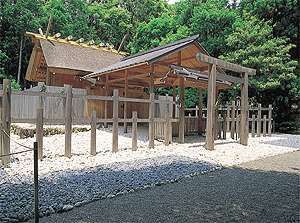
Gravel courtyards have a very ancient history in Japan, going back to prehistoric times. The pebble courtyards of the Ise Shinto shrines are the oldest that retain the ancient pattern.
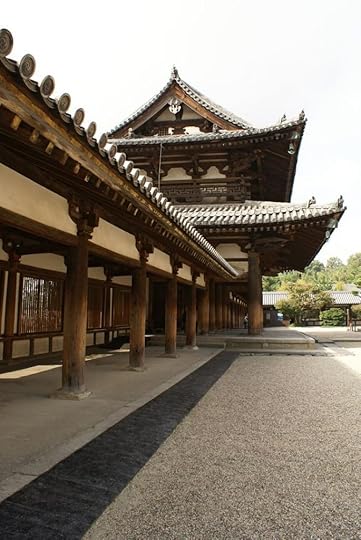
With the introduction of Buddhism, the gravel courtyard was retained as a way of delineating sacred space, but Chinese architectural elements were introduced as seen here in Horuyuji Temple, the oldest wooden building in the world, dating from 739.
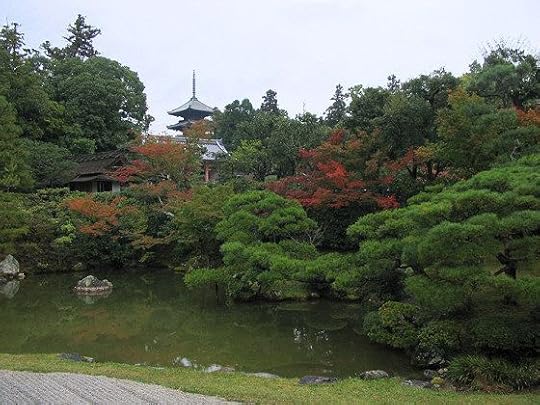
With time, the simple boating lakes evolved into elaborately constructed stroll gardens, or gardens designed for contemplation. Ponds continued to play an important artistic and symbolic role in Japanese gardens as in the beautiful Ninnaji Temple pond, dating from 888.
Note the use of the 'borrowed scenery' pagoda, as well as the careful control of tree height in the mid-depth by pruning, which makes the garden seem larger and more layered.
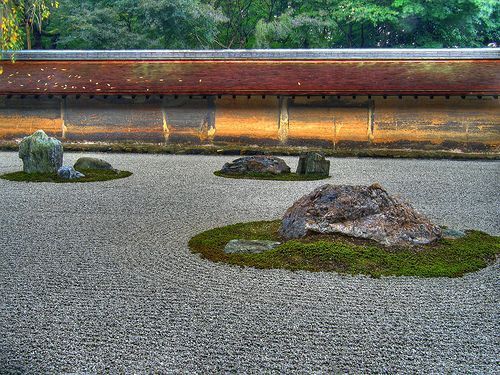
Zen Buddhism introduced to Japan many of the cultural aspects of Southern Song Dynasty art (1127-1279), particularly landscape painting. In turn, the Song Dynasty landscapes influenced the evolution of Japanese pond gardens and the contemplative karasansui stone gardens, like this masterpiece at the Ryoanji Temple, created sometime between 1499 and 1507.
The wall is of clay boiled in oil and the pattern of oil leeching out to the surface over hundreds of years is an example of the wabi-sabi aesthetic that values the patina that comes to old, well-made objects as they age.
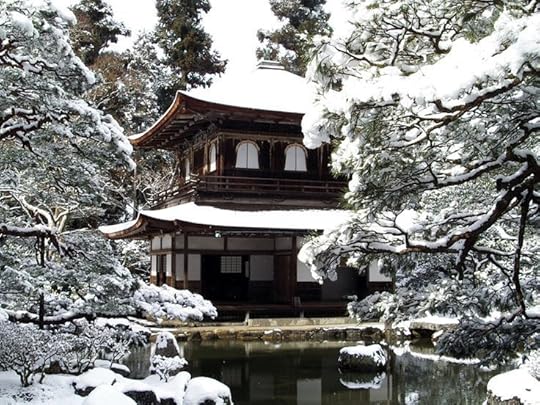
The main island of Honshu has a temperate climate with four distinct seasons and part of the art of the Japanese garden is to capture and reflect the special fleeting beauty of each season, as seen here in two views of the Silver Pavilion (c. 1482) at Ginkakuji Temple in winter and spring.
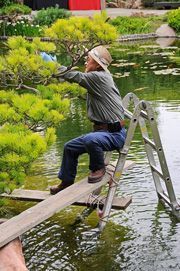
There are helpful introductory sections giving overviews on key stylistic elements, as well as information on maintenance--with photos that should discourage amateurs from lightly attempting this most labor-intensive garden style.
I've only given you a little taste of the pleasures of this garden tour. Garden lovers as well as anyone who appreciates Japanese art and architecture will find much to enjoy here. See the notes to this review for many photos of my favorite, The Adachi Museum's famous karesansui or 'Dry Landscape Garden' throughout the seasons.
I've visited a few Japanese gardens without knowing the amount of thought they put to make something look natural but designed. It's a great book to make you more aware of the details while you walk by them.
This book was a Best of the Best for the month of September, 2019, as selected by Stevo's Book Reviews on the Internet / Stevo's Nobel Ideas. You can find me at http://forums.delphiforums.com/stevo1, on my Stevo's Novel Ideas Amazon Influencer page (https://www.amazon.com/shop/stevo4747) or search for me on Google for many more reviews and recommendations.
2/3 of the book have a heavy emphasis on the history of various Japanese gardens throughout japan. I really enjoyed the first 1/3 of the book and wished it could have gone through more practical design elements but is a very good resource book for historical purposes.
This is a very delightful as well as informative book. It contains many outstanding photographs that will encourage you to create your own Asian style garden.
This book gives lots of history and detailed information about Japanese gardening. Really interesting to read - not a how to book, but a reference/inspiration book.
Personally i LOVE the book the photography is exquisite many many ideas for ones own future Japanese Garden. (thats why i got the book was the beautiful & inspiring photos) i want to have a proper garden but in the meantime i can find a ideas... a bit here or a bit there that i can start in my own existing gardens. in the mean time i can just enjoy the photos of the many beautiful gardens ************************************************
Winner of the 2006 American Horitcultural Society Book Award!
"Gardening has reached new heights of sophistication, and this book profiles a number of the most notable gardens in Japan and beyond. The goal of a Japanese garden is to suggest a landscape, to depict famous natural scenes, or to evoke a particular artistic quality or atmosphere. Graveled courtyards, early aristocratic gardens, Zen gardens, and several other elements all play key roles in these extravagant landscapes.
The Art of the Japanese Garden is a valuable resource for anyone interested in gardening, landscape design, and Japanese art and culture."
I wish I had had this book as a companion during my two-year stay in Japan as it would have provided me with a much deeper appreciation for this art form. I took it as a goal to visit a different temple on most weekends, and in all seasons, aware that each offered a different atmosphere and a had different history. I wasn't aware though that most gardens attached to these temples had been designed by tea masters as a way to offer its practitioners a place to meditate and commune with nature. Having just read "The Book of Tea", by Okakura Kakuso, made me realize that these gardens were indeed a way of showing the visitors how to practice the Zen aspects of Buddhism that the monks maintaining the gardens had long ago adopted as a form of life.
Definitely an interesting read. Lots of inspiration for anyone's pocket garden and plenty of photos and descriptions of the real deal (as in Japan's traditional gardens). Thinking of starting small: read the beginning for background and then skip to the back for ideas in residential gardens.