In this book, 35 directors champion their favorite overlooked or critically savaged gems. Among these guilty pleasures, almost-masterpieces, and undeniable classics in need of revival are unsung noirs (Murder by Contract), famous flops (Can’t Stop the Music, Joe Versus the Volcano), art films (L’ange), theatrical adaptations (The Iceman Cometh), B-movies (Killer Klowns from Outer Space), and even a few Oscar-winners (Some Came Running).
In these conversations, the filmmakers defend their choices. These films, they argue, deserve a larger audience and for their place in movie history to be reconsidered. But the conversations’ tangents, diversions, and side trips provide as much insight into the directors’ own approach to moviemaking as into the film they’re discussing. The filmmakers are the perfect hosts, often setting the tone, managing expectations, and giving advice about how you should watch each movie. They’re often brutally honest about a film’s shortcomings or the reasons why it was lost in the first place.
The Best Film You’ve Never Seen is not only a guide to some badly overlooked movies but a bold attempt to rewrite film history.
A terrific idea for a book about movies – grab 35 actual directors and ask them to promote their favourite obscurity. You’ll expect some foreign films, and low budget curiosities but there are also some big studio movies that were booted into oblivion by the nasty-tempered critics of the day, such as Sweet Charity and A Man for All Seasons.
I had already seen nine of these so I caught up with the rest except for two I couldn’t find anywhere (Arcane Sorcerer and Le Joli Mai) and two I decided to elbow (The Iceman Cometh – it’s a three and a half hour filmed play – and Institute Benjamenta – the description was enough).
I’ve said it before but I’ll say it again – you can find very nearly every film ever online these days, in good quality too, it’s remarkable.
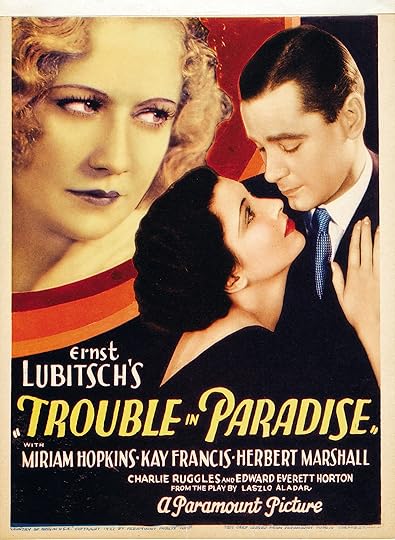
Great choices included are 10 Rillington Place (1971) – a fantastic best ever performance by Richard Attenborough as the serial murderer John Christie, a great and I think unknown British film; Trouble in Paradise (1932) – a perfect funny Lubitsh crime comedy
Murder by Contract – one of the many forgotten excellent film noirs The Swimmer – sorry to find out that this strange but wonderful Burt Lancaster movie from 1968 has been forgotten.
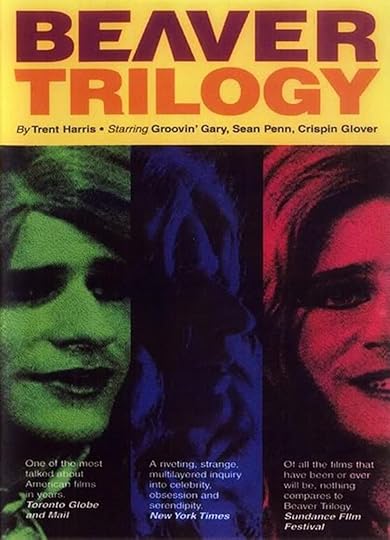
But the find of this book for me was The Beaver Trilogy, a strange concoction released in 2000 consisting of a 20 minute documentary made in 1979 and two fictionalised versions of this documentary (one starring the amazingly young Sean Penn) made in 1981 and 1985. What a tangled creation this is. The director put all this effort into these three versions of the same thing, then didn’t release it for 15 years and when you look at it you see why. I had never heard of it before. I guess the nearest thing to it is Symbiopsychotaxiplasm from 1968, which is just as bonkers as its title and just as self-reflective. Fans of The Beaver Trilogy will want to know that there is a documentary about the whole weird phenomenon called The Beaver Trilogy Part IV which I stumbled over. It’s its own rabbit hole.
However, some of these directors are crazy and have such dreadful taste. A couple of them want us to waste our time with horrible avantgarde stuff like L’Ange and Institute Benjamenta, in which masked people do obscure things very slowly in low-lit rooms and voice-overs say portentous stuff like "Past and future circle above us – now we know more, now we know less".
And some of them try to sell us obvious nonsense like Joe vs the Volcano, Blume in Love (so cringe-making that I actually ran out of cringes), Some Came Running (Frank Sinatra as a tormented guy with writer’s block – can you imagine Frank Sinatra writing the next great American novel in 1958? No!) , and Eureka (Nic Roeg, 1983, starring Gene Hackman – Nic Roeg directed two great movies, Performance and Walkabout – I never heard of Eureka before – after 20 minutes, I understood why that was…..).
And a couple of naughty directors like to offer us would-be camp classics – so we get Killer Klowns from Outer Space - apparently it’s not just a silly spoof of grade Z horror movies, apparently it’s really scary and has excellent effects – sorry Brian Herzlinger, NO it isn’t and no it doesn’t; then Jonathan Levine presents Can’t Stop the Music, the Village People musical. I guess I’m kind of glad to have seen it – the musical numbers are eyepopping, true – but the rest of it is just as horrible as everyone said in 1980 and young Steve Guttenberg gives the all time most frenzied bouncy-puppy performance which rapidly becomes quite distressing – no one has ever smiled joyously as much in one single movie.
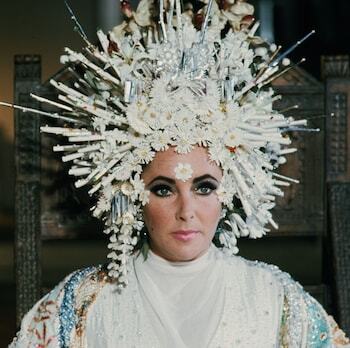
Then there was Boom! starring Liz Taylor and Richard Burton and Noel Coward on an island – Sir Noel gets to hoot like an owl and Liz gets to wear insane costumes and chew the scenery – it’s another filmed play - ghastly
So – expect the unexpected, as they say ! Something for everyone! Roll up!
They're not quite the best films I've never seen; I've actually seen fourteen out of the thirty-five. I've liked almost all of those. The fourteen are Blume in Love, Boom!, Breaking Away, F for Fake, The Homecoming, The Iceman Cometh, Killer Klowns from Outer Space (on broadcast TV), A Man for All Seasons, The Swimmer, The Trial, Trouble in Paradise, Ugetsu, Under the Volcano (on broadcast TV), and Who'll Stop the Rain.
Of the films I haven't seen, there are films here that I don't recall having even heard of (L'ange, Arcane Sorcerer, The Beaver Trilogy, Institute Benjamenta, ivansxtc, and Eureka), films I've wanted to see but haven't yet (a lot), and films that never sounded that interesting to me (Can't Stop the Music, The Super Cops, and WR: Mysteries of the Organism). I don't understand why I am not familiar with Eureka; with that director and cast, I certainly should be.
The interviews are of very different lengths. John Woo talking about Le Samouraï gets four pages; Richard Linklater talking about Some Came Running gets thirteen. Of the films I hadn't heard of, the ones I would particularly like to see now are The Beaver Trilogy and Eureka. Of the other films I haven't seen, I would like to see just about all of them.
Some random thoughts:
I can't think of many films I dislike on moral grounds, but once the main character in Blume in Love commits rape, I could no longer like or respect the character or the movie.
It is amazing that the director Arthur Hiller (who died in 2016) gets the central point of his choice, The Iceman Cometh, totally wrong. Hiller says the movie is about, "All these people who've really lost faith in themselves or their dreams and have nothing to live for and just sit in a saloon." They have not lost faith in their dreams and those dreams are what they live for. When Hickey talks them into giving up their dreams, that is when they fall into despair.
It is interesting that two of the films chosen (The Iceman Cometh and The Homecoming) were from American Film Theatre. That was a film series that lasted only two years from 1973 - 1975. The films were not photographed stage productions; they were true films (with incredible casts) that followed the scripts of the plays. These films had very limited distribution and I thought that they were mostly forgotten. Evidently I was wrong.
Killer Klowns from Outer Space either has amazing color or my television turned it into amazing color.
I am amazed that Kevin Smith chose A Man for All Seasons, not because I disagree with his choice, but because, despite its Best Picture Academy Award, this excellent flm really does seem to be forgotten.
This is a better book than Robert K. Elder's similar The Film That Changed My Life.
كتاب كويس ك ترشيح ل أفلام مختلفة .. جزء كبير منهم مشوفتهومش قبل كده ودورت عليهم علشان أشوفهم قريب 😍😍💃
الكتاب عبارة عن الكاتب بيسأل مجموعة مخرجين مش المشهورين المعتادين .. عن الفيلم المفضل اللي ممكن يرشحوه للناس مع شويه اسئله زي شاف الفيلم اول مرة امتى وأثر فيه ازاي وهكذا
If you've been going to movies for 50 years or so, loved movies, paid attention to films made around the world, you've probably seen most, if not all, of these. Thus, some entries might feel odd. But I had never even heard of Orson Welle's "F for Fake", watched it last night, and thought it great: I love the idea that fake art is still art and still to be enjoyed because isn't anything created not real anyway? I've seen "Can't Stop the Music" many times and I think it's a blast. It was criticized, oddly, for being exactly what it is: a rather silly, camp-fest musical. That was the point! If I had to mention one movie I love that I don't think many people have seen, I'll say "Romy and Michele's High School Reunion"- brilliant, bouyant, it's the high school reunion those of us who weren't so popular fantasize about attending. The cast is sensational, the laughs come fast and furious, the end is glorious. Unfortunately, the only film I could find at my library that I hadn't seen is "F for Fake'. And the one movie I'm going to buy: BOOM! Somewhere along the line, I lost my VHS copy of "Cant Stop the Music," so I'll shop for that also. Meanwhile, my VHS player is at the end of its useful life. I am sad. I have VHS tapes from the early 80s that still play fine but one scratch on a DVD and it is ruined. Oddly, I've watched the same movie on VHS (on an old-school tube TV) right beside a DVD version on a flat screen. Which is best? The tube TV is brighter, the color better. True, the details of the DVD are better and it's interesting to study all that's going on in the film's backgrounds, but as far as superiority, I think I'll choose tube TVs. Wish I still had my big ol' Sony.
Checked this out from the library, and it was a great summer book. Some of the directors are more interesting in interview than others, and some of the movies they select make for better interviews. Best read in small chunks rather than long sittings.
At 72 years of age I have loved movies all my life and have seen thousands. I wanted to read this book to perhaps find treasures that I have missed. Of the forgotten films I have seen Blume in Love, Boom!, The Chase, The Homecoming, The Honeymoon Killers, The Iceman Cometh, A Man for All Seasons ( my favorite among the suggestions ), Le Samourai, Some Came Running, Sweet Charity - ( I also liked the previous two films ), The Swimmer, 10 Rillington Place, The Trial, Trouble in Paradise, Twin Peaks: Fire Walk with Me, Ugetsu, Under the Volcano ( another favorite ), and Who'll Stop the Rain. Although of the films I have seen several have left lasting impressions - I have never forgotten Boom! or the Swimmer with Burt Lancaster though they are not among my favorite films. I found it interesting to read the filmographies of the Directors. Some of my all time favorite films were directed by the interviewees: The Last Picture show by Bogdanovich, Hoop Dreams and Stevie by Steve James, Boys Don't Cry by Kimberley Peirce, Martha Marcy May Marlene by Sean Durkin, Gods and Monsters by Bill Condon, Boyhood by Richard Linklater, The Man in the Glass Booth by Arthur Hiller, and Trainspotting and Slumdog Millionaire by Danny Boyle. You could not pay me enough to watch Killer Klowns from Outer Space. Unfortunately I did not discover any films that I feel driven to see so I was disappointed with the list but not the interviews with the directors. Kristi & Abby Tabby
So it's definitely more the sub-title than the title. I've seen 4 of the 35, and I wouldn't consider myself a hard-core film buff. Perhaps more importantly, there are two dozen or so that I hadn't even heard of before this book. So there is a hidden gem factor or a new-to-me vibe with a lot of the selections.
There's a short Introduction then 35 interviews with directors. So I'll ask the obvious question: Is Robert Elder a good interviewer? For me, the answer is 'no'. He seems quite knowledgeable about film / film history, so maybe I would appreciate him more as a critic. But too many times it seemed obvious that he'a film guy playing an interviewer. That being said, it is a tremendously readable book; perhaps because it is in an interview format.
Directors don't see movies the way the rest of us do. You probably already knew this, but this book really makes it clear. I also noticed that several of the chosen films have significant flaws. There's a good variety of films here. Though 34 of the 35 directors are men. To be fair, the majority of directors are men. But 34 to 1 still seems too lopsided. I wish I knew if female directors turned down the offer or what.
Fascinating to read how the interviewed directors were inspired by their picks for “the best film you’ve never seen.” Some are clearly influential (John Waters on the delirious camp of BOOM!; Bill Condon on SWEET CHARITY being his gay STAR WARS) while others are quite surprising (Kevin Smith, of CLERKS and MALLRATS fame, champions A MAN FOR ALL SEASONS). The insight into the selected films and those of the interviewed directors themselves never fail to engage and amuse.
As a reference list for films to seek out, it’s more of a mixed bag. I will say that I’m very intrigued about THE BEAVER TRILOGY (a triptych in which the first segment based on documentary footage is twice re-filmed as fictional pieces starring Sean Penn and Crispin Glover), THE HONEYMOON KILLERS (a cruder, campier, more disturbing counterpoint to BONNIE AND CLYDE), and JOE VERSUS THE VOLCANO (a much-maligned Tom Hanks/Meg Ryan comedy that sounds goofy and profound in equal measure), among others. I CAN say that of the films I have seen, BREAKING AWAY, SOME CAME RUNNING, and (ahem) KILLER KLOWNS FROM OUTER SPACE are well worth seeking out. A fun read.
We've got about three dozen interviews with acclaimed (and not so acclaimed) directors as they was nostalgic/philosophical on films they consider underrated and underappreciated. Half the fun of the book is seeing filmmakers tout and praise movies you really wouldn't expect them to, such as the case with Kevin Smith's chapter on, of all possible films, "A Man For All Seasons." It's also a great way to acquaint yourself with some off-the-hidden-path genre movies, like "Arcane Sorcerer" and "The Beaver Trilogy," so the book is probably worth checking out for that facet alone. It's also pretty fun listening to people try to *intellectualize* their fondness for stuff like "Can't Stop The Music" and "Killer Klowns From Outer Space," and like I even have to tell you how fantastic John Waters' dissertation "Boom!" is. There are a few boring passages here and there, but by and large it's a really enjoyable and *slightly* enlightening read, especially if you think "The Honeymoon Killers" and "Joe Vs. The Volcano" are horribly misunderstood works of art.
This was an interesting read. It’s all interview so you can just sit down and read a couple. I think that overall it gave some fun recommendations and a wide scope of directors and movies. What i think was an interesting thru line between some of the interview was dealing with the studio system, and old school censoring. This i think brings an interesting discussion to modern viewers not understanding certain work arounds or common used signaling to imply ideas that couldn’t be upfront. It, i think, brings up some loss of media literacy in a broader sense. While not the point of the book, it’s an interesting by product.
Interesting choices - both of the films and of the directors themselves - some of which are already in my queue, some of which I have added, and some that didn't really appeal to me, despite the enthusiasm of the chooser. There were several that I'd like to see at least once but are still not readily available at the end of 2025; The Swimmer is one of these, which I have been aware of for many years but have yet to track down. I intend on reading the author's previous book now as well.
Of the 35 films examined very few were forgotten or critically savaged and quite a few are among the most celebrated films ever - Trouble in Paradise, A Man for All Seasons, Ugetsu, Breaking Away, Le Samourai, F for Fake.
I think a lot of your response to this book will come down to how interested you are in, specifically, the various aspects of film making as a medium. As someone who tends to view it through a more medium-neutral interest in the crafting of stories, it was only okay.
Frank Oz on Welles' version of Kafka's The Trial. Kimberly Peirce on Mizoguchi's Ugetsu. Rian Johnson on Huston's version of Lowry's Under the Volcano. Michael Polish on the Brothers Quay's Institute Benjamenta. Some great films are discussed in these pages, and there's plenty of directorial insight into that greatness. I added about a dozen to my to-watch queue as a result of reading this book.
I found this book a little bit boring. It is a series of interviews with some famous directors that recommend a film they have seen and during the interview try to defend the idea that the movie is good. I really couldn't find anything interesting in that
I liked this little book. I borrowed it from my local library. There were some films I actually checked out after reading this book: "Killer Klowns" from Outer Space and Ugetsu. I am really glad I got to see "Ugetsu" because it was superb,l an atmospheric and moody ghost story.
Not all directors /films were that interesting. Some were very interesting. I particularly liked Kevin Smith's chapter. As a movie-lover I was surprised at how many films I hadn't seen. There a few I will track down to watch.
I only read the two entries for movies I've seen (Twin Peaks: Fire Walk with Me, and Joe Vs. the Volcano). It was ok, and there were a few interesting insights, but mostly this was too slight. I'd rather have had a more in-depth critical essay format than the casual interview style.
This is a collection of the author's interviews with 35 directors discussing why their favorite bad movie is actually good. The various interviewees typically spend appreciable time talking about their own work, which is usually the only interesting part of the interview.
I've got some new movies on my "to watch" list now. Good fun -- worth reading just to see John Waters' take on "Boom!" -- a movie starring Elizabeth Taylor and Richard Burton and based on a Tennessee Williams play (!).