The debut novel from the author of Summer at Gaglow.
Escaping gray London in 1972, a beautiful, determined mother takes her daughters, aged 5 and 7, to Morocco in search of adventure, a better life, and maybe love. Hideous Kinky follows two little English girls — the five-year-old narrator and Bea, her seven-year-old sister — as they struggle to establish some semblance of normal life on a trip to Morocco with their hippie mother, Julia. Once in Marrakech, Julia immerses herself in Sufism and her quest for personal fulfillment, while her daughters rebel — the older by trying to recreate her English life, the younger by turning her hopes for a father on a most unlikely candidate. Shocking and wonderful, Hideous Kinky is at once melancholy and hopeful. A remarkable debut novel from one of England's finest young writers, Hideous Kinky was inspired by the author's own experiences as a child. Esther Freud, daughter of the artist Lucian Freud and great-granddaughter of Sigmund Freud, lived in Marrakech for one and a half years with her older sister Bella and her mother.
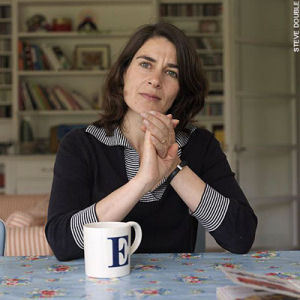
Esther Freud was born in London in 1963. As a young child she travelled through Morocco with her mother and sister, returning to England aged six where she attended a Rudolf Steiner school in Sussex.
In 1979 she moved to London to study Drama, going on to work as an actress, both in theatre and television, and forming her own company with fellow actress/writer Kitty Aldridge - The Norfolk Broads.
Her first novel Hideous Kinky, was published in 1992 and was shortlisted for the John Llewellyn Rhys Prize and made into a film starring Kate Winslet. In 1993, after the publication of her second novel, Peerless Flats, she was named by Granta as one of the Best of Young Novelists under 40.
She has since written seven novels, including The Sea House, Love Falls and Lucky Break. She also writes stories, articles and travel pieces for newspapers and magazines, and teaches creative writing, in her own local group and at the Faber Academy.
Her most recent book, Mr Mac and Me, was published in September 2014. She lives in London with her husband, the actor David Morrissey, and their three children.
Quaint & beautiful. Why Kate Winslet played the mother in the film version after doing "Titanic" is obvious... this is an attractive role. The matriarch is positively enigmatic, & the little girls are total darlings. Morocco is a land of enchantment & magic (my one day spent there was one of my most memorable experiences ever), and just like that North African country of camels, couscous, acrobats, bazaars, scorpions, winding roads, this book manages to, in a little less than 200 pgs, cast one tremendous spell.
There are so many many many many novels which are really memoirs and this is another. I guess they are all published as novels because
a) If you make up stuff in a memoir and you get found out you get nailed to a wall and crows peck out your eyes
b) People buy novels, not memoirs. A memoir screams MY LIFE IS REALLY INTERESTING WHILST YOURS FRANKLY ISN’T and a novel is like, I ain’t saying nuffin, I’m just here to cheer you up on a cold wintry evening, pull up a chair, light the light, it’s just you and me for an hour or so sugar, whaddya say?
So some time in the early 70s a hippy family jaunts off to Morocco then the dad falls out with the mum and goes back home and the mum then drags the two kids all over from Marrakesh to Algiers as she vaguely decides to be a Sufi or whatever else has flitted into her peripatetic brain that day. It’s all filtered through the alleged 5 year old girl but this is a 5 year old going on 11, I liked the voice of the narrator but it weren’t no five year old I ever met. That was more than a little bit of a stretch.
The stuff they did was more of a problem. It was just the kind of crap anyone would do. You know, buy stupid bits and bobs, eat weird meals, meet random persons and be best friends for 48 hours then catch a bus to somewhere else. Go to a bank and hope the ex hubby or rich daddy has wired some money. It was What We Did on Our Holidays. It was like The Florida Project (great recent movie) – look, kids are good at finding fun almost anywhere. Kids are great at surviving the stupidest parents, and this parent was really most aggravatingly extra-stupid.
Note for Kate Winslet fans : after Titanic, in 1998 Kate starred in the movie version of this book, so she plays a young woman wandering around trying to find spiritual enlightenment in Morocco. Immediately after she made Holy Smoke, in which she plays a young woman wandering around trying to find spiritual enlightenment in India. The way to tell them apart is that that which is merely hinted at in Hideous Kinky is fully revealed in Holy Smoke.
You have to hand it to the Freud family. They know how to have colourful lives. OK, they come from pretty historically significant stock which tends to give you a bit of a leg-up in the interesting stakes. Not many of us get to have a historically renowned thinker for a Great-Grandfather or a famous artist for a father, both of which tend to get you invited to dinner parties on the grounds that you'll be a purveyor of fine anecdotal recollections about some hidden family eccentricity or scandal.
For my part my great grandfather was a shipwright and my Dad was Director of Prosthetics and Orthotics. Admittedly this meant that there were frequently large numbers of artificial limbs in the hallway plus a great many funny-but-not-while-you're-eating style medical stories to be had but none of these are going to put me on the society A-list.
Luckily you don't need to invite Esther Freud to dinner in order to get all the crazy little insights and dark secrets from her family. She's provided many of them here in this nifty autobiographical tome about her itinerant childhood in the exotic perfumed bazaars and mystical Sufi retreats of 1970s Morocco. A delightful jolly through the sun baked alleys of a most unconventional childhood in a very British way. If this is not enough for you and you crave more Freudian family facts then you can always pick up a copy of Harpers Bazaar where sister Bella, now a renowned knit wear designer and avant garde society darling can be found discussing other elements of the family history.
So many parts of this book were breathtakingly beautiful. The insights into Morocco as a whole are amazing and I found it so interesting to see how Morocco has changed since the 1970s. We follow a young, hippie mother and her 2 children Lucy and Bea as they navigate around the capital, sleeping in different places each evening, eating different foods each day, and interacting with a whole new selection of people every week. I don't think Julia (the mother) is particularly responsible or massively bothered about the safety of her children, but sometimes you can tell that she really loves them and these moments are rather poignant as a whole. I would love to watch the Kate Winslet film now I have read the book.
I'm not sure why so many people love this book. I see no reason to celebrate a flaky mother who neglects her kids. She annoyed me in her selfishness. No, it was more than that; I hated her. The story wasn't terrible, it just really bothered me. As the book went on, it was less adventurous and more heartbreaking. I wished I could reach into the book and slap the hell out of Julia (the mother). I'm sure I'm gonna piss off a lot of people who loved the book, but I can't see the beauty in neglecting children to the point of starvation.
حصل أن شاهدت فيلما عن أم انكليزية شابة تأتي المغرب مع ابنتيها الصغيرتين بحثا عن حياة صوفية و خوض تجربة روحية، و تعيش هناك مع صغيرتيها حياة متسكعة فقيرة شاقة مليئة بالمغامرات... الفيلم كان مبهجا و ملونا بشكل ملفت، و بدت كل الصعوبات فيه مذللة كما في حكايا الجدات... الأمر الذي أثار غرابتي، فبحثت عن قصة الفيلم، فتبين أنه مقتبس من شبه سيرة ذاتية لمؤلفته إيستر فرويد، و هي روائية بريطانية، و التي تحدثت فيها عن رحلتها مع أمها و أختها للمغرب حين كانت صغيرة... فالراوية في الكتاب هي الطفلة ذات الخمس سنوات، و كل شيء يروى من وجهة نظرها... و هذا ما يفسر تلك الروح المتوثبة و المبتهجة في الفيلم... مما دفعني لقراءة الرواية علي أحظى ببهجة مضاعفة... إلا أني لم أجدها ممتعة كالفيلم، و ذلك لأنها قائمة على الوصف لكل تلك الأجواء الشرقية الملونة، و أنا كم أكره كثرة الوصف! ه أما العنوان هديوس كنكي فمعناه الحرفي شائن شاذ، لكن ليس هذا هو المقصود بالعنوان و لذلك لم أترجمه، و إنما هما كلمتان كانت تستخدمهما الفتاتان في تلك اللعبة الكلامية التي يلعبها الأخوة عادة، و لم تكونا مريدتين للمعنى و إنما للوزن الغريب حين النطق، تقول الأولى هديوس ترد الأخرى مباشرة كينكي... ثم تقومان بترديد الكلمتين طوال الوقت... و يكفي إلقاء كلمة منهما حتى ينكسر صمت بسبب خصام أو عراك و تبدآن من جديد...ه فكرة العنوان ذكية جدا، و هي تجل جميل لرابطة الأخوة، فهذه المشاكسات بمثابة شيفرة سرية بينهم، لا تبلى مع تقدم العمر و افتراق الطرق... إذ يكفي استحضارها حتى يشعر الأخوة بأن الرابطة بينهم ما زالت على ما يرام... و لذلك أنا ما زلت أحب هذه المشاكسات الكلامية المزعجة مع أخوتي
لا بأس بالرواية على أية حال... نجمتين من خمس لها... و أربع للفيلم
A strange book in many ways; her first novel I think. Labelling it a novel does not seem right as it reads much more like a travel log of Morocco and feels autobiographical. I wasn't surprised therefore to discover that Esther Freud had lived there for 2 years as a child with her mother and sister. NB. The unnamed narrator of the story is living there with her mother and elder sister. It is in many ways life observed through the eyes of children – the narrator, a wide eyed little girl and her slightly older sister, who is rather hard and very cynical. I felt that the latter had been deprived of her childhood. This has, I suspect, largely come about as a result of living with her impressionable, hippyish mother. Bea (the name of the elder sister) is in many ways the head of the family unit.
The young narrator “adopts” one of her mother's lovers, Bilal, as her father and the relationship between them is one of the best things in the book for me. Seeing him through the eyes of a little girl he is clearly very attractive to women.
The story, if it is a story, is really a series of vignettes set in Morocco with all the colours, flavours sounds, smells etc of the country. Recommended for anyone wanting a taster of that country and life there.
The title “Hideous Kinky”? read the book to find out. But don't get too excited...
Wonderful hippy memoir and very well written novel. Lucy’s voice sounds very authentic child- like, yet the subject matter is definitely for grown-ups. To see the mother, Julia, through her child’s eyes makes her struggle to cope with life and men even more poignant. Also, it beautifully evokes the look and feel of the 1970s. A must read for any writer struggling to capture a small child’s voice. I love Esther Freud use of short chapters which really sets the pace of the story. Also, the book has exactly the right length, I love it when a book finishes, and still keeps you wanting to find out more about what’s happening to Julia and her wonderful daughters Bea and Lucy.
I utterly adore this book. The vibrant, sensory descriptions of Marrakech and Morocco are delicious to read, and the relationship between the sisters is realistic. The narrator (the unnamed younger sister) looks at things sometimes naively, sometimes with a wisdom beyond her age. I found myself empathising with Bea more - I suppose because I'm an older sister too, but also because she was very much like me personality-wise (the sensible one). Sometimes characters are introduced then tantalisingly whisked away, but overall it was an incredibly moving book.
این کتاب در ایران به «مو فرفری زشت» معروف هست. نویسنده کتاب خانم استر فروید از نوادگان زیگموند فروید معروف هست. کتاب یک semi-autobiographical از سالهای کودکی نویسنده است زمانی که استر ۵ ساله به همراه مادر و خواهرش بئا که ۲ سال ازش بزرگتر هست از لندن به مراکش سفر میکنند. قصه از زبان کودک ۵ ساله روایت میشه و طنز ملیحی دارد. علت این سفر از غرب به شرق اسرارآمیز، شخصیت بی پروا و ماجراجو و شیفته صوفی گری و معنویات مادر داستان است. استر که حتی نمیدونه پدر داره یا نه؛ در مراکش بلال رو به عنو��ن پدرش انتخاب میکنه. بلالی که میتونه به تحقق رویای بندباز شدن و کار کردن در سیرک استر کمک کند. داستان شرح خاطرات آنها در مراکش هست. شاید بشه گفت که صد صفحه ی انتهایی رو یک ضرب خواندم چون اتفاقات ��یراتر بودند و کشش بیشتری داشتند. مشکلی که با متن داشتم این بود که گاهی بدون اعلام کوچکترین علامتی صحنه عوض میشد شاید بهتر بود کمی صفحه ارایی بهتر انجام میشد.
نکته ای که توجه ام رو جلب کرد این بود که با اینکه داستان از زبان کودک ۵ ساله روایت میشه اما بدون اینکه با کودک همزادپنداری کنم، کاملا در سراسر داستان از مادر خشم داشتم که اینقدر بی خیال و بی مسولیت است و قضاوتش میکردم اما هر چه جلوتر میرفتم بیشتر درک میکردم که واقعا کینه در قلب بچه ها جایی نداره و اینکه بپذیرم که اصولاً درکی از این ندارم که همزمان مادر دو بچه ی خارج ازدواج باشی و یک عالمه هوس تجربه های عجیب هم در سر داشته باشی. این تقریبا اولین ریویو من در معنای واقعی یک ریویو هست. میدونم که حتما اشکالاتی داره. امیدوارم اندکی مفید بوده باشه.
Not many adult books are written from a child’s perspective and not many of those books are good. This is. The narrator is a five year old who travels with her seven year old sister and her mother to Marrakech. It seems to be the 60s because everyone is very free. School? Not necessary. Brushing teeth? Not happening. Dentil problems due to not brushing? Oh well. Money to pay the rent? It will get here, eventually.
The narrator chronicles the sister’s journey as their mother drifts around Marrakech. It is a delightful story full of other drifters, Moroccans, and children. It’s also full of the sights and sounds of the markets and hotels of Marrakech.
Just like the narrator's mother, this book meanders along rather aimlessly. And rather than be enchanted or amused by the character of a young woman who takes her two young children to Morocco in search of 'enlightenment', I found myself becoming quite angry with her fecklessness and what I saw as neglect of her children's needs.
The writing itself is strong, but I was also quite shocked when the narrator's age is eventually revealed as four. The character of a young child is never really captured by Freud in this book.
Superb imagination and control, that's what the author exhibited in this novel. From the book's cover I learned that this had been made into a film with Kate Winslet (of the Titanic) in the lead role. I haven't seen it yet, but I think Ms. Winslet indeed fits the role of the young, hippie mother with two daughters, ages 5 and 7.
They were English. For some unclear reasons, the mother took her kids away from London and went to Morocco. The father was left in London, but it wasn't clear also if he and Ms. Winslet's character were married or if they had lived together (the kids have vague memories of him though). The father of the children would send her money on a regular basis but it was barely just enough to last until the next remittance which often was late in coming.
Why were these things unclear? Because the narrator here is the 5-year-old daughter. Unless I missed it, her name was not even mentioned, same as her mother's (who was always referred to as "Mum"). The narrator, however, called her elder sister "Bea".
How a 5-year-old look at things is definitely different from that of an adult. So it was simply marvelous that the author succeeded in keeping this as a child's wayward and undisciplined narrative and yet from the merest of clues you get from it you get to know the adult story behind the child's story.
There is love here. And loss. The mother had a Muslim lover, a good man whom the children came to love, but who couldn't earn enough so he disappeared. The kids looked for him, and talked about him, and from their childish prattle, you would feel how much they missed him. When they have no money, they would go hungry. The 5-year-old would have a stark description of this: "I am hungry". Then the reader would feel her hunger. Several times, she and her sister were placed in real danger, like when she and her mother (with her sister left behind a friend's house) were stranded, penniless, in a remote place after hitchhiking. Nighttime was fast approaching. But the child narrator was oblivious to the danger and simply told that they were tired walking pointlessly, so they sat against a wall and she closed her eyes and imagined her sister Bea in her comfortable bedroom, with her toys, maybe with some biscuits and lemonade.
A blurb says that this novel "has a delightful lightness of being"...
I thought I wouldn't like this at first, but actually it was really good. I think the title does it a real disservice because it sounds so ridiculous. Once you know what it means, it makes sense, but when you first pick up a book, the title shouldn't be so off-putting, should it?
That aside, this is a very subtle piece of writing. The child's point of view is strictly adhered to, so no interpretation of events is offered. Yet the reader is given plentiful evidence of the child's increasing distress and grief over the rootlessness and disorganisation of the life to which the mother exposes her. She is too young to be able to separate herself from her mother (as the slightly older sister is forced to do), so she has to just cling on and try to survive.
From the feminist point of view, this book is full of ironies. The mother has gone off on her own to 'find' herself, yet she is still economically dependent on men and her daughters' habit of searching for any men that they feel might rescue them is proof that this dependence is being passed on to the next generation. Their lives are lived in the suspension of waiting ... either for the father to send them money, or some one or other of their mother's male acquaintances and boyfriends to supply their material and emotional needs.
This is a fascinating exploration that manages to chart the awakening of consciousness of the late sixties/early seventies, while also showing how the economic shackles of the past prevented any real achievement of freedom for women. In the end, the children are burdened with the results of their mother's apparently impotent and futile struggle for independence.
A light, easy, possibly superficial, read that charts the life of two young children and their mother on the hippy trail in 60s Morocco. Whether you find the novel liberating or frustrating will largely depend on how you perceive the actions of the mother. While clearly a loving parent, her lifestyle leads to the children starving, begging, sleeping rough, taking narcotics and even being abandoned on the streets of Marrakech while the mother takes off on a whim to become a Sufi.
While it's interesting to read about their unusual lives, and it makes a perfect short novel to read on a long flight to Morocco, it doesn't really do much with the material. There's plenty of opportunity here for examining the characters, their motivations, the reasons behind the choices they make, and the ethics of leading the hippy life when you have two children to be responsible for, but this never really happens. There are some colourful characters, but there's little insight into the country, its people, beliefs or culture.
I really enjoyed this book and thought Freud really skilfully captured a child's voice. Other reviewers have said the characters are 2D but you are only getting a 5 year old's perspective on them, and her view would obviously only take in parts of a person and their actions & story- all the mother's boyfriends, for example, are seen only as Lucy interacted with them and you aren't shown any of the romantic side of their relationship with Julia beyond the occasional kiss. It was especially funny how she viewed the prostitutes, thinking that they just had a lot of male friends who they talked with for a long time... This one sided view encourages the reader to think more about what is taking place, and makes the story more interesting than if it was third person or from an adult's point of view, especially as there isn't a massive amount of plot but more a series of adventures. Reminded me a bit of My Family and Other Animals, so I'd recommend it to people who've read and liked that :)
As a reading experience, I'd give this 4 stars. We follow the travels of a young hippie mum and her two young daughters traipsing around 1970(-ish) Morocco.
The story is told by the four-year-old daughter, which is part of the charm of the story, but is also the book's limitation. We only get the eyewitness account of the girl and never really know what motivates the adults - and of course, the girl never understands their actions or motives either. She is basically a feather, floating along on the wind created by the adult world over which she has no control.
Overall, a fun read, and something to bring along on vacation.
An interesting book for its narrative point of view. It is the story of two children going to Morocco with their thoroughly Bohemian mother and is told from the perspective of the youngest child (aged three or four). It was fascinating because there was very little in the way of tone - defined by the IB English A1 Bible as 'the attitude of the author or narrator to their subject'. What I mean is that there was very little judgement - everything was described, but the only conclusions were directly observable ones, like that she didn't like something because it was dirty, not because it was inherently bad. And it's incredibly accurate because little kids don't judge, they just observe. They have so little experience that they think everything that happens to them is normal, regardless of how abnormal it actually is. In this case, I kept waiting for something to be judged. For example, it being set in a predominantly Muslim country, and being interspersed with descriptions of women wearing veils and things like that, I kept expecting that someone would say something disapproving, because I kept forgetting it was written from a child's point of view.
But that never arrived. After a while I thought I detected a hint of dislike for the unstable, nomadic, hand-to-mouth existence the characters were living in, but at first I thought it was just the biases of my relatively conservative upbringing rearing their ugly heads. But later events proved that it was not all of my imagination.
I didn't like it that much, really. I only read it because I'd heard it was good. But definitely an interesting exercise in narrative point of view. It's a quick read - if you're interested in literary technique at all, it would be worth reading it just for that.
It was a slow start, but once I got going, I was completely in love.
I have mad wanderlust and sometimes books like this are all I can do to keep myself from jumping on a plane. This one captured my imagination by giving the feeling of living in Morocco without a plan, practically penniless, and even as I was feeling sorry for the young girls, I wanted to be there with them.
Thankfully, the author is able to give us this story without demonizing the mother. We come to understand her a little bit better through concrete details and the girls' reaction to her. At times, she's not a very sympathetic character. She's self-absorbed and often puts her daughters at risk. That may stop some people from enjoying the novel.
My main complaint is that the narrator does not read as a 4 year old, and that's where I got hung up in the beginning. Once I gave in to the story, I was able enjoy the benefits of an adult perspective (vocabulary, clarity of thought, attention to detail), while still being relatively grounded in a child's understanding of the world.
Through the voice of a five-year-old girl, I traveled to Morocco of the 1970's. I saw beauty, and friendliness, but also cruelty, and brutality of that world (and people).
In this (untypical) background (and with a hippie mother) a kid was still a kid. It was obvious in what way Lucia and Bea profited from such childhood. Yet, there were also (sadly) failures of such growing up.
The child's point of view isn't easy to narrate. For a time, I found a bit annoying this kind of wandering, erratic narration. But at some point, I got, that it was as truthful as possible (while writing by an adult). I appreciate the reality of a child's voice.
I don't agree with many choices of (adult) characters, but I value this story.
Hideous Kinky was my first Esther Freud. I absolutely loved the child narrator in this novel. It's not all quite a child narrator. It's an adult narrator looking back through the eyes of a child and narrating her experiences. Freud is especially good with this. Her other novels also have a similar approach. The protagonist might grow up but she never stops looking back.
HK is about one golden summer that the narrator, her sister Bea and their mother, the wannabe hippie spend in Marrakesh in the 70s. I say wannabe because though she is itinerant, she is not quite into the whole thing at one level. For one, there is the question of money and for another, she is (much like the narrator) always looking back but towards her home, England. Marrakesh is the safe space for the mother to explore and experiment alternative modes of living, sexuality and spirituality. The kids meanwhile run along the length and breadth of Djemaa El Fna, the main square of the city, with, what today I would call, questionable people. It's remarkable that they are unharmed. They learn to adapt but not without any hiccups. While the two girls want a stable life, the mother is interested in a carefree one. Whatever the mother is looking for eludes her since she leaves to go back 'home' at the end of the novel taking her daughters with her.
This is my second read. It still retains the warm and happy feeling of a carefree pre-literate childhood away from organised instruction. But I notice an undercurrent of anxiety which I didn't notice before. The men in the mother's life flit in and out and the narrator gets attached to one of them, Bilal. In addition, she is wracked by anxiety that her mother will be hurt by something called the Black Hand. So she sleeps by loosely grasping her mother's throat and removes it in the morning. When she tries to slide into her mother's bed after a particularly difficult day, she hits the hard body of a man instead and is embarassed by it. There is so much to unpack here.
But I would still reread it again later. Freud has that narrative quality of showing a not-so-innocent world through the innocent eyes of a four year old. I'm reminded of A History of Insects by Yvonne Roberts which attempts a slightly more complex narrative of nine-year-old Ella in pre-partition India-Pakistan struggling to understand a grownup world.
Read because it is rich and full of the colours of Marrakesh in the 1970s, an adorable child narrator and an eventful sojourn into the author's memory.
This entire review has been hidden because of spoilers.
This book was a bit odd. It was great to see the cultural aspects - such as how blowing your nose and sneezing is 'done' differently in Morocco (or this is the sense I get in the book) but as a story it's a bit weak. I didn't really get vibrant descriptions about the land or culture or anything really which I would have liked, as the glimpses we did get were gorgeous. This story is essentially about a mother who somewhat neglects her children, actually leaving one for an unknown period of time with a friend and further drama ensues from here. And why did she leave her daughter? To go on a pilgrimage for a religion which she converted a mere couple of months prior - to me this seems questionable. At the end the mother needs to beg to get money once, however the author somewhat glamorises the affair by using a mysterious letter (using the teachings of the Qur'an) in order to persuade people to give her money. In my opinion this doesn't seem just to those real beggars who actually have no choice, and makes it seem like its an embarrassing yet successful method of paying off debts. I did enjoy reading and experiencing the relationship between the two younger children, as it's very relatable (being from the point of view of the younger sister) I just found this book a bit questionable, I felt you never really get a sense of how the mother feels, and she seems to change throughout the story. Initally she seemed very caring, sewing clothes for her children and trying to make a living while being there, but then she leaves her child and they frequently mention how hungry they are - but the author (and mother) don't seem to want to dwell on this point and just moves on.
This is the story of a mother and her two young daughters living in Morocco, told by her youngest daughter who (we find out near enough at the end of the book) is only 5! Even thought the story had an innocence and naivety, I don't think having a 5 year old narrator was the right thing here. For starters it gave her far too sophisticated voice to tell the story with and make it believable (being that she was as young as she was). It also made it hard to get a fix on exactly what was happening, where and why. So although I didn't hate the story, I was confused and it didn't sit right with me because there were too many unknown quantities (like the time period, ages of the children) for me to be able to relax into it. As to the why, it becomes apparent from the middle of the books that mummy is on a spiritual quest.
Also... I'm sure I've not ever read this before and I've not see the film. But I was always lead to believe this was autobiographical. The book itself is clearly labeled as Fiction...
An unusual story. I like the freedom of the book and the things n the market that the girls saw and the people they met (maybe I'm a hippy at heart!) and at times they seemed very happy. On the other hand there were times when I felt sorry for them when they were not happy and yearned for a normal like with normal food. It is funny how during life you pick up on words or phrases that stick with you and your family for the rest of your life, and this is where the title of the book comes from.
I like the author's writing style: very simple, subtle, poignant and funny at times. And this one had a better story than the other book I read from her (Love Falls), which ended up disappointing.
Looking at the world through the sunset in your eyes Travelling the train through clear Moroccan skies Ducks and pigs and chickens call Animal carpet wall-to-wall American ladies five-foot tall in blue
Sweeping cobwebs from the edges of my mind Had to get away to see what we could find Hope the days that lie ahead Bring us back to where they've led Listen not to what's been said to you
Would you know we're riding on the Marrakesh Express? Would you know we're riding on the Marrakesh Express? They're taking me to Marrakesh All aboard the train, all aboard the train
Written by: Graham Nash Album: CSN 2012 Released July 1969
An Author named Freud, Eshter Freud and yes from that Freud family writes a novella Hideous Kinky and we are supposed to accept that the two words were the random choice of the narrator’s 7 year old, older sister. Any Freud will tell you there are no random word choices. In this case the title is either random, or a tease. Going a step further the highly episodic book is somewhat random, except that it is never random, but it is a tease.
Esther Freud has done an exceptional job of describing a most unusual time in anyone’s life but it is on us to guess how much of this escapade is autobiography and how much fiction. The author makes a world that is real enough, this to her credit, but is it imagined or lived. This is a tease.
The basics of the plot are that the 5 year old narrator, is taken , with her 7 year old sister from some degree of comfort in England to a barely sustainable life in 1960 Marrakesh. This being the 60’s Marrakech was one of the golden pilgrimage goals for those not yet ready or able to reach the even more fabled lands of spiritual India. Mother is clearly a seeker, a pilgrim, faithful to the stereotype by have little money depending on luck, funds from home and a willingness to do menial things that could be turned into money. That she is submitting herself to this life is excusable, even romantic. Her daughters are clearly dragged into this life. Further Mom has little or no clear idea of how her children are to survive, and only occasional thoughts for their health or safety. If you were alive then, and I was, there is more sense to this than a world of helicopter parenting can imagine.
Men come and go from mom’s life. We are once confronted with the sexual aspect of her life, but no more so that a 6 year old was likely to grasp. It is on us to read between the lines. Another tease, but in context, that is on us.
What the reader is asked to enjoy are the snap shot memories of a little girl as traveler. At the grand scale, growing up is life’s grand travel adventure. But it is hard to read this as intending to be grand scale. What is unfolded for us are adventures or a world at once real and imagined. Lived by a true innocent abroad. Never without risks always with discoveries. A life at once to be wished for and to be lived at the remove of one’s comfortable reading couch. Alice down the well never had as much color, fun, flavor or variety as our narrator and her family.
Count your nappies, stand by your sister, but keep your senses open and alert.
I think the hardest thing for an author to get right is striking the balance between either giving the reader too little information or issues to explore, or too much: prescribing conclusions without leaving time or room to ponder. I can’t quite work out if Hideous Kinky suffers from a dearth of thought provoking material (i.e.- it’s dull), or is actually refreshingly free.
Let’s get this out of the way- Hideous kinky has no plot to speak of. It’s essentially about a mixed up mother of two, now split from husband, trying to escape reality in Morocco. The family is dragged about for a bit on mother’s whim with some disconnected suspense-less adventures, before the fun fades when the older daughter gets toothache, and they decide to head for home. There, rather abruptly, the book ends.
A book this short needn’t have a gripping storyline to be good, though (not least when it’s autobiographical, which, apparently, it is). The Moroccan backdrop and strange characters are possibly enough to hold a book together, provided the characters are deep enough, and the imagery is vivid. So is it?
Hideous Kinky is written as a firsthand account by a 4 year old girl, and as such, its viewpoint is candid and naïve, without the clutter of adulthood or the reflection. It is self-absorbed, but not introspective. As we follow the unnamed girl through Marrakeshi markets and Moroccan hitch-hikes, everything is told straight with child-like perception; strange experiences are explained well, but not as vivdly as you might expect. Definitely apparent is that for a five year old, Moroccan mint tea is no less an oddity than English black tea (and neither takes that much explaining). Certainly her mothers’ antics- religious fervour and ambiguous relationships with a collection of male characters - aren’t covered in any more depth than her mention of her mother applying lipstick on the top floor of a bus. It can’t however be read entirely as a 4 year old’s account- some of the insight and language is too sophisticated, which looses a bit of its authenticity.
In fact, it’s the lack of detail, as much as the information which is in the book which is intriguing. But still, I can’t help asking myself; is the mother an enigma even to herself, whose confusion and inadequacy is sub-consciously absorbed and emitted by the child narrator, or is she just a 2-D character? Are the men she liaises with deliberately monochromatic as intentional caricatures, or is it just laziness?
I gather the book is in some way a genuine personal account, which accounts for a lot. Guster once wrote-“ honesty is easy, fiction is where genius lies”. And sometimes with autobiography, the effort required in a book to make it readable isn’t bothered with, because it already should be perfect- it’s true to life. Which doesn’t make for good literature.
I can see, however, how it would inspire a worthwhile film- the mannerisms and shape of the characters which are only implicit in the book can be brought to life, and made explicit in film. It’s difficult to have quite such 2-D characters as there are in the book when they’re played by 3-D actors, which is why even though I’ll only give the book 2 out of ten, I’m still going to bother watching the film.