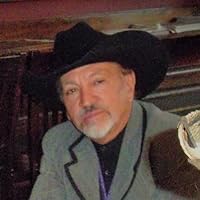
One of the most outstanding officers the U.S. Army ever produced, John Gregory Bourke (1846-1896), lied about his age to enlist in the Union Army, where he won the Medal of Honor for gallantry in action at the Battle of Stone River. He later served in the Sioux, Cheyenne, and Apache campaigns, making his fame in battle against Geronimo. Bourke was an adept and sympathetic student of Indian cultures, and he wrote several ethnological volumes that are still valuable today, along with a fine memoir, On the Border with Crook. Porter, a noted Western historian, does Bourke justice with this thorough, well-written biography, which takes in much more than one man's life.
2/8/17 - Recently a friend's post reminded me of Crook's relationship with Howard. Will add some quotes from Porter's book to this review. Bourke (Brrk) was one of Crook's primary aides. He wrote a very informative book about the General. **
To learn about Crook, allegedly the most competent of the various Indian fighting generals ... the Gray Fox, as the Apache called him, I suggest Paul Magid's two book bio of Crook. And Bourke's bio adds much, telling what is was like to work for the unconventional general.
Quoting the first four paragraphs from Paper's inside jacket cover:
"John Gregory Bourke was a U.S. Army officer who became an ethnologist, a military historian, and a prolific writer on the American West." (Could it have happened, a conversation between Bourke and author Douglas Jones would have been fascinating to hear.)
"Most of Bourke's active service was spent in the post-Civil War West. After graduation from West Point he fought in the last-stand battles with the Sioux, the Northern Cheyenne, and the Apaches. He was in General George Crook's command when it ventured deep into the rugged Sierra Madre in an all-out effort to bring out the fugitive Chiricahua Apaches."
(Watch For Me On the Mountain, one of my favorite novels, tells of Crook's Sierra Madre campaign. Watch for Me on the Mountain
"These exploits proved a watershed in Bourke's career. His many contacts with the Indians brought a growing interest in their lifeways and ceremonies. His new concerns led him to the libraries of Washington, D.C., and to the Indians' homelands in the West. As he ranged from south Texas and Mexico north through Hopi and Zuni lands to Montana and Idaho and the Rockies, he observed and made extensive field notes. The Apaches, intrigued by this strange white soldier who always seemed to be writing, began calling him 'Paper Medicine Man.' To the Sioux he was 'Ink Man.'
"Bourke began publishing his observations and quickly developed a reputation as a careful and accurate report of Indian custom and ritual. He became one of the select few military men invited to work with the U.S,. Burea of Ethnology. He also became a staunch advocate of Indians' rights in an age when they had few defenders. His open concern for them eventually crippled his career."
**
The original review :
Another excellent history published by University of Oklahoma Press. Recommended for folks who like Americana.
"Brrrk" is on my short list of historical people I'd like to have known.
Another review copied from Kirkus :
"KIRKUS REVIEW
Although almost extinct nowadays, the soldier-scientist was once a venerable figure in the US Army; men such as Bourke, the subject of this captivating biography, played a significant role in the opening of the American West through their work as explorers, cartographers, folklorists, and ethnologists. Bourke first set foot on Indian land in 1869--the same year he graduated from West Point--as part the federal government's effort to quell the Apaches. For seven years he lived by sword and gun, participating in several major Indian wars (described here in sometimes grisly detail). But by the end of the Sioux War in 1876, Bourke's attitude towards Indians had begun to change from enmity to admiration. He became an ardent student of Indian life and an advocate of Indian rights. For the next decade, he lived as a sort of rough-hewn anthropologist among different tribes, compiled an Apache vocabulary of 2500 words, witnessed the Sioux Sun Dance and the Hopi Snake Dance, and authored several books, including The Medicine Men of the Apache and Scatalogic Rites of All Nations (printed in 1913 in a German edition with a preface by Sigmund Freud). Bourke's tireless work on behalf of Indian rights seriously damaged his military career. It also makes him something of a hero in modern eyes, and elevates this readable, richly detailed biography into must-read status for students of the American West."
some quotes :
"The conversation then drifted to the late Nez Perce War ... an unjustifiable outrage upon the red men, due to our aggressive and untruthful behavior towards those poor people; and yet it will be repeated with every tribe until the whole race shall become extinct." Bourke Diary 1878
" ... 1880 ... he spent Christmas Eve with Crook at the White House ... The city of Washington created conflicting emotions in Bourke, who enjoyed the balls, musicales, theater ... Yet Washington society and prominent officials profoundly depressed him when he discovered that many persons ... were humbugs in fact, or unworthy of the high places they occupied.
"Until 1880, Bourke was usually confidently optimistic about himself and his work, but during his stay in Washington the nervous anxiety, despondency, and depression that were to afflict him for the rest of his life openly surfaced ... a darker, doubting side of Bourke became more steadily apparent after 1880 ... The very day that Bourke expressed his disillusionment, others in Washington were taking note of him, and he was about to begin a decade of literary and scientific achievement."
General Sheridan assigned Bourke to work with John Wesley Powell's newly created Bureau of Ethnology as an army anthropologist. "Sheridan instructed post commanders to give Bourke all the assistance necessary for his work."
** added 2/8/17
"Bourke also became a press agent for Crook. Some of the fiercest army battles were waged in the nation's newspapers. Prominent offices such as George Custer, Nelson Miles, Alfred Terry, O.O. Howard, Crook, and other had their newspaper supporters ... successful officer had to cultivate reporters ... Crook ... depended upon the more literate officers on his staff, especially Bourke, to either ghost-write stories or to contact appropriate correspondents."
Near this book's end, Bourke is trying to help Cherokee and Apache acquire reservation land though efforts of the initially supportive Secretary of War ... "but Bourke now detected reluctance about the Cherokee reservation in the once enthusiastic secretary.
'Something in the manner of the Secretary makes me suspect that adverse influences have been at work: I don't pretend to know but I feel that such has been the case, as General O. O. Howard will do all he can in a furtive way, to kill the proposed measure ...'"
"Bourke ... was also aware that Lieutenant Guy Howard was 'an Emissary from his 'saintly' father to urge upon the Secretary of War that some 'good' Christian (like Howard for instance) should go down to North Carolina to examine the lands to be occupied by the Apaches ... Bourke accused Crook of frivolously wasting time ... Crook, meantime, was monkeying away his time in the Big Horn Mountains, hunting elk and deer.'"
"When Crook proposed Fort Sill, Major General Howard then shifted his support to the North Carolina site. In 1886, Brigadier General Miles had wanted to send the Chiricahuas to Fort Sill; when Crook broached the same idea in 1890, Miles opposed it."
A well written biography. And a few into the end of the "time of the Indian" and the "taming" of the West. Well researched. Slow read as there's so much history here!