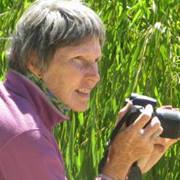
In seven works of non-fiction, especially in Birders and the universally acclaimed Birds Britannica, Mark Cocker has established himself as one of the foremost writers on nature and wilderness. In his most lyrical work to date, he has drawn together the best of his writing on wildlife, mainly taken from columns for the Guardian and Guardian Weekly.
These carefully distilled articles, over a hundred in all, illustrate some of his most enduring themes over the last twenty years - the magical dynamism of birds, as well as the subtle beauty, vast skies and wildlife riches of the Norfolk landscape. In its celebration of the natural world, the hugely varied selection also demonstrates a concern to champion the despised and neglected - rats, gulls, crows (the 'Black Beasts' of his first section) - as much as it explores some of the most charismatic creatures on Earth - penguins, whales, lions and elephants. Cocker is equally good at evoking the commonplace mysteries of garden blackbirds and thrush's song, as he is the exotic otherness of mountain gorillas or the one-horned rhinoceros.
With its attention to detail, especially the sharpness of perception and the precise use of language, the writing in A Tiger in the Sand shows qualities more usually associated with poetry than with prose.
This book is a collection of over a hundred articles taken mainly from Mark Cocker's columns in The Guardian and Guardian Weekly and spanning nearly 20 years. It's a book that could be dipped into as and when, although I happily read it right through.
The articles vary considerably in subject and location. Cocker's 'patch' is North Norfolk and he knows the area with an intimacy that must be very rare
However he does travel widely and the title of the book 'A Tiger in the Sand' comes from when he was observing wildlife in India..On the trip he was fortunate to see a tigress and two cubs but looking back he finds the experience has almost faded.
What has stuck far more vividly in his mind is nearly seeing one! His guide spots a patch of sand on a track that still bore the curved outline of a tiger as it rested - the deeper scoops where its paws had been and a brushed fan shaped area where the tail had swished back and forth. The smell of the tiger was still in the air. This tantalising glimpse of what was nearly observed felt far more meaningful than actually seeing the creature itself.
Cocker writes about the experience with far more eloquence - he's a truly wonderful nature and landscape writer. Excellent book.
A collection of short pieces from well before the nature writing boom; it was a rarity when I picked it up, but I can only imagine how the box of rejected publisher freebies at my old work must look now, if indeed it survives in physical form. Would that some of the endangered species Cocker meets here had had the same trajectory in the intervening years, eh? The advantage of the marketplace being less crowded back then is that neither Cocker nor his publisher feels any apparent need to give him a particular gimmick, and he can just...write well about nature. He knows the science - at least as it stood 15 years ago, when tortoises rather than sharks were still believed to be the oldest living individual animals, and we had yet to realise quite how fallible bat sonar could be. He's happy and thorough when it comes to close observation and research. But set against that, he sees absolutely no shame in a countryman's anthropomorphism and idiosyncratic preferences: he admires the black-backed gull, despite knowing full well it's a thug, but abhors the thrip, a position I don't in the least understand but still find oddly endearing. A big part of the charm is that, much like Attenborough, for all the exotic locations he visits he can be just as excited by the wildlife close to home which many ignore; he's especially good on the delight to be found in blackbirds, and my favourite passage in the book was about the cooing of the turtle dove, concluding by describing it as "some of the most evocative mood music of the English summer countryside and I think of it as the colour of ripening grain made audible."
I thoroughly enjoyed this book, particularly with the added seasoning of the passage of time since it was published in 2006, meaning that many of the pieces are a couple of decades old. I am hoping to get it signed by the author next week when I meet him, in the county where he grew up rather than that for which he is best known, and bang on trend conducting a farm walk on the subject of rewilding.
What struck me most is that much of my interest in wildlife and nature is of a strongly Anglocentric bent but, unlike some other authors, and perhaps because these are short pieces, I found myself gripped by his vividly described overseas adventures. His accounts of trekking through 'jungle', what he sees, what he doesn't see, and what he endures make an interesting companion to his occasional comments about the kind of fabulously produced wildlife television we can access and how reality matches up.
As others have said this is a collection of short pieces for The Guardian and others, and as such the book lacks a little cohesion because of that.
If you like Mark's work there's still plenty in here worth a look, even 17 years on. His latest work is about Swifts and was originally meant to be about Blackbirds, and you can see the gestation of the ideas in some of the pieces in here. Similarly Mark's interest in and respect for crows that led to Crow Country is clear here.
Well crafted nature writing by one of Britain's best exponents, the April Fool piece could probably have been safely discarded though.
Well I enjoyed some of these short articles and I learnt quite a lot especially about Africa and her fauna but I found many of the writings too short to be satisfying and found it rather disconnected and haphazard. I did enjoy Mark's writing and will look out for more.
Another wonderful collection of distilled articles by Mark Cocker, one of my favourite writers on nature and wilderness. The book contains over 100 articles originally published in The Guardian and Guardian Weekly during the nineties and noughties. This is a hugely varied and most enjoyable selection, the writing evincing qualities more usually associated with poetry than with prose. He covers the vast skies and wildlife riches of his home county of Norfolk along with stories of his encounters with penguins, whales, lions and elephants; blackbirds, thrushes, mountain gorillas and the one-horned rhinoceros. His attention to detail and the precise use of language is a joy. Highly recommended for lovers of nature and conservation.