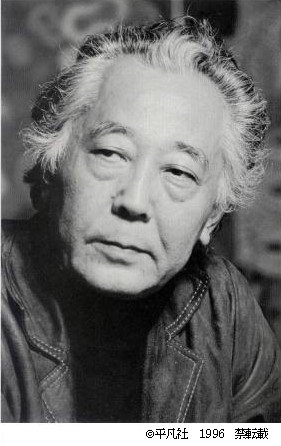
This critically acclaimed autobiography was an instant bestseller in Japan, where it has gone through more than forty printings since its first publication. Cultural critic, literary historian, novelist, poet, and physician, Kato Shuichi reconstructs his dramatic spiritual and intellectual journey from the militarist era of prewar Japan to the dynamic postwar landscapes of Japan and Europe. This fluid translation of A Sheep's Song captures Kato's unique voice and brings his insightful interpretation of modern Japan and its tumultuous relations with the outside world to English-speaking readers for the first time.
Kato describes his youthful interest in the natural sciences as well as in Japanese and Western literatures―from the Man'yoshu to Akutagawa Ryunosuke, Baudelaire, Valéry, and Proust. Turning to the rise of Japanese fascism in the late 1930s, he recalls his rebellion against the jingoistic political atmosphere of the time. The chapters on the war and its aftermath include experiences of Hiroshima shortly after the bombing and the often tragicomic encounters between the defeated Japanese nation and the American Occupation forces. Throughout, memories of his wide-ranging literary career and broad experiences in Europe as a student, traveler, and cultural observer are punctuated by his unique perspectives on the relation between imagination, art, and politics.
A postscript written especially for the English-language edition discusses the Vietnam War, the subsequent transformation of Japan, the cultures and societies of Europe, the United States, and China, and the collapse of the Soviet Union.
Shūichi Katō (加藤 周一) was a Japanese critic and author best known for his works on literature and culture. Born in Tokyo, Katō trained as a medical doctor at the University of Tokyo during World War II, specializing in haematology. The experience of living in Japan during the war and American bombing of Tokyo would shape a lifelong opposition to war, especially nuclear arms, and imperialism. It was also in this period that began to write. In the immediate postwar period, Katō joined a Japanese-American research team to assess the effects of the atomic bombing of Hiroshima. He subsequently travelled to Paris for a research fellowship at the Pasteur Institute. When he returned to Japan, he turned to writing full time. After participating in a 1958 conference of writers from Asia and Africa, he gave up practicing medicine entirely. Fluent in French, German, and English, while being deeply focused on Japanese culture and classical Chinese literature, Katō gained a reputation for examining Japan through both domestic and foreign perspectives. He served as lecturer at Yale University, professor at the Free University of Berlin and the University of British Columbia, guest professor at Ritsumeikan University (Dept. of International Relations), and curator of the Kyoto Museum for World Peace. From 1980 until his death, he wrote a widely-read column in the evening culture pages of the Asahi Shimbun in which he discussed society, culture, and international relations from a literate and resolutely leftist perspective. In 2004, he formed a group with philosopher Shunsuke Tsurumi and novelist Kenzaburō Ōe to defend the war-renouncing Article 9 of the Constitution of Japan.
The memoir of one of Japan's great 20th century literary figures, and even better liberal. Off the top of my head I cannot think of too many individuals whose basis for literary criticism is as a medical doctor trained in haematology. After the incineration of Hiroshima and Nagasaki he was part of a joint team with American doctors studying the effects of radiation. After the war he did not practice, but the humanism of the experience marked him. Well into the 21st century he was an advocate for peace.
This is the kind of memoir I respect most, a voice that is candid but not confessional. It begins with his youth and takes us up to 1960s counterculture. As a child Kato was isolated and aloof, awkward around girls. You get a very strong sense for how, psychologically, literature became vital to him even though education-wise he was trained for the upper-middle class. His deep interest in literatures foreign to Japan's originates more from curiosity than any deep affinity. His respect for French Catholicism, for instance, was an intellectual's respect. Politically, he is of the tradition that condemned the militarists actions but from some undefined humanist position the Marxists could never understand; he has too much respect for his own people, their culture and tradition, to fully adopt any internationalist stance. Though he was not one, he admires writers like Miyamoto Yuriko for her Marxism, a kind of intellectual tool that enabled her and those like her to transcend the confines of the Japanese community. They did not take the bait of Asian solidarity as a basis for war.
There are many superb, significant details that describe the period. My favorite one is where after the Emperor announces surrender, the young nurses employed in Kato's department return to work right after lunch, laughing, talking, completely unfazed. In these striking, unpoliticized figures you can see the beginnings of the creation of one of the world's greatest middle classes postwar. Another moment when Kato observes an American soldier of the occupation telling a man in a crowded train to get up so that he could give his seat to a woman. At that point everyone held in mind the image of American savagery; Kato's description of everyone's response within the car is fascinating.
He never believed in the war from the beginning. It is an important distinction that he hated the militarism for the conformity it inspires, the pathetic, irrational logic people espouse (especially literary people) based on what they are told, much more than militarism itself. He was not one to cheer the victory after Pearl Harbor. He knew it was just a matter of time before we would be seeing American planes in the air. And so, while everyone else was getting war-ready, he went to watch traditional theater in a performance house that was practically empty.
One of my favorite sections was when Kato went to live in France after the war. He read French literature, and lived a barely sustainable existence, wearing socks until they became so threadbare it would have been an embarrassment to have been spotted wearing them. One of the great surprises is to discover that Kato eventually marries a Jewish woman from Vienna - never would have guesses that. As for details on the romance and marriage, do not expect it; he is too classy a man to ruin a good thing.
As far as literature, a running theme is his cultivation of classical taste. Everyone significant in the Japanese tradition has it, even Higuchi Ichiyo who developed it in her short 25 years. It is something you cannot fake; in Kato's liberal temperament you can read how classical taste in the arts becomes the man.
Kato passed away in 2008, but as of last year there are still significant figures of the literary world who saw The Pacific War and have not forgotten it. They are in their nineties now. Figures like the poet Kaneko Tota. His words were used in the anti-remilitarization protests last year. Or the novelist turned Buddhist nun Jakucho who was active too. This memoir would probably only appeal to those who have a deep interest in Japanese literature and culture. Or those who believe in great liberals wherever they still exist.
Shuichi Kato was a giant in postwar Japanese intellectual circles, and A Sheep's Song is his autobiography, providing rare first-hand insights into this wonderful person. This is a book about a life that embodied what it is to be a thinking person in the 20th century Japan.
I only met him once, when he came to the University of Tokyo as a guest speaker. He was already about 80 back then. I forgot what he talked about (although I remember a pun he made). Still, I can vividly recall the sense of awe I felt in the presence of this great intellectual. His body was visibly aging, looking flail. However, his eyes and words were as clear and sharp as those of people half of his age.
He passed away several years later in 2008, and his death sent a shockwave. One columnist described it as "the fall of the North Star." It felt so apt. Since high school, I had diligently read his essays and books to understand how to see the world. Also, his massive History of Japanese Literature has always been my go-to guidebook whenever I wanted to learn about literary works' historical contexts.
So his death broke my heart, too. I felt a similar sadness when John Le Carré died a decade later.
Kato was an expert on Japanese culture exactly because he deeply understood the western cultures. As this book tells you, he spent his youth reading Japanese classics, eating ramen (he used the now-quaint word "Shina soba"/Chinese noodles), watching kabuki shows and occasionally entertaining sexual fantasies (a feat, considering it was before the internet!).
A Sheep's Song is not only about his life, but also how a deeply intellectual person could have been formed in that specific environment. Kato was born in 1919, went to the best schools in Japan, had a heated debate with celebrity writer Riichi Yokomitsu when he was a teenager. He also witnessed members of Hitler Youths visiting his school from Germany, and the book relates you how he felt about it.
He belonged to that unique generation that experienced the pre-war decline of Japan, then lived a grown-up life as Japan resurrected itself from the ashes of the futile battle. He was one of the doctors sent to Hiroshima to assess the damage. You get the picture of modern Japan's vicissitudes by following his palpable, exemplary footsteps.
By the way, Yukio Mishima was six years younger than Kato, and they met when they were both young. Mishima jokingly wrote how intimidating Kato and his piercing eyes, constantly silencing young Mishima. "Mr. Kato stared at me with those eyes," wrote Mishima, "and I couldn't but feel the urge to shut up."
Those investigative eyes were still there when Kato was nearing the end of his life, when I saw him in a big classroom filled with young kids. Those eyes that had threatened Mishima's ego also left a lasting impression on me. I was too young, just 18, to fully appreciate the greatness his life demonstrated.
Many beautiful and evocative sketches of Taisho and Showa Japan, interspersed with discussions of politics and intellectual matters of all sorts, and with travels to Europe. But apart from capturing the atmosphere of the times, this is also an intensely personal account, by Kato Shuichi, one of the foremost intellectuals in Japan in the twentieth century, and a sober, honest, introspective man. The discursive style throughout is admirable for its naturalness and sincerity. There is some arduous soul-searching done in the more hesitant passages, which is moving, especially when graver topics are touched upon. It isn't so much that I resonate with Kato as that I am drawn to the climates and feelings of the old Japan in his portrait, with dim, impressionistic colours and an aged hue and all that. Hope I can one day read the Japanese original to appreciate the book's poetry more fully.