

What do you think?

Wolves in the Land of Salmon
Long considered an icon of the wild, wolves capture our imagination and spark controversy. Humans are the adult wolf’s only true natural predator; its return to the old-growth forests and wild coastlines of the Pacific Northwest renews age-old questions about the value of wildlands and wildlife.
As the vivid stories unfold in this riveting and timely book, wolves emerge as smart, complex players uniquely adapted to the vast interdependent ecosystem of this stunning region. Observing them at close range, David Moskowitz explores how they live, hunt, and communicate, tracing their biology and ecology through firsthand encounters in the wildlands of the Northwest. In the process he challenges assumptions about their role and the impact of even well-meaning human interventions.
As the vivid stories unfold in this riveting and timely book, wolves emerge as smart, complex players uniquely adapted to the vast interdependent ecosystem of this stunning region. Observing them at close range, David Moskowitz explores how they live, hunt, and communicate, tracing their biology and ecology through firsthand encounters in the wildlands of the Northwest. In the process he challenges assumptions about their role and the impact of even well-meaning human interventions.
336 pages, Hardcover
First published February 26, 2013
Ratings & Reviews
Friends & Following
Create a free account to discover what your friends think of this book!
Community Reviews
Displaying 1 - 30 of 31 reviews

April 2, 2022
There is a lot to learn in this well written book about not just wolves, but also about the importance and interdependence of biodiversity in maintaining ecosystems conducive to our own existence, and the conflicting mindsets we have of such. Needless to say, the book also mentions impacts of our ignorance and greed that have and are disrupting life as we know it.
“The plight of the earth’s biological heritage in the twenty-first century and beyond will be defined by human choices and by our ability to reckon with our own nature. That we have propelled the biosphere on an unpredictable trajectory is clear, defined by the initiation of large-scale shifts in the planet’s climate, the human-caused degradation of just about every ecosystem on Earth, and the extinctions of large percentages of its existent species.” ~ David Moskowitz
This book dovetails with other meaningful ecological literature I've read, and brings to my mind a passage from William Stolzenburg's book Heart of a Lion: A Lone Cat's Walk Across America: "The murmur had been gathering from field sites and conference halls, formally surfacing in academic journals and publicized in mainstream media. Researchers from around the world were returning with disquieting reports of forests dying, coral reefs collapsing, pests and plagues irrupting. Beyond the bulldozers and the polluters and the usual cast of suspects, a more insidious factor had entered the equation. It was becoming ever more apparent that the extermination of the earth’s apex predators— the lions and wolves of the land, the great sharks and big fish of the sea, all so vehemently swept aside in humanity’s global swarming— had triggered a cascade of ecological consequences. Where the predators no longer hunted, their prey had run amok, amassing at freakish densities, crowding out competing species, denuding landscapes and seascapes as they went."
This book also brings to mind various writings about animal intelligence relative to our own self-aggrandizing perspectives. Is a critical mass of our proliferative species capable of more responsible choices in reckoning with our nature?
“The plight of the earth’s biological heritage in the twenty-first century and beyond will be defined by human choices and by our ability to reckon with our own nature. That we have propelled the biosphere on an unpredictable trajectory is clear, defined by the initiation of large-scale shifts in the planet’s climate, the human-caused degradation of just about every ecosystem on Earth, and the extinctions of large percentages of its existent species.” ~ David Moskowitz
This book dovetails with other meaningful ecological literature I've read, and brings to my mind a passage from William Stolzenburg's book Heart of a Lion: A Lone Cat's Walk Across America: "The murmur had been gathering from field sites and conference halls, formally surfacing in academic journals and publicized in mainstream media. Researchers from around the world were returning with disquieting reports of forests dying, coral reefs collapsing, pests and plagues irrupting. Beyond the bulldozers and the polluters and the usual cast of suspects, a more insidious factor had entered the equation. It was becoming ever more apparent that the extermination of the earth’s apex predators— the lions and wolves of the land, the great sharks and big fish of the sea, all so vehemently swept aside in humanity’s global swarming— had triggered a cascade of ecological consequences. Where the predators no longer hunted, their prey had run amok, amassing at freakish densities, crowding out competing species, denuding landscapes and seascapes as they went."
This book also brings to mind various writings about animal intelligence relative to our own self-aggrandizing perspectives. Is a critical mass of our proliferative species capable of more responsible choices in reckoning with our nature?

February 11, 2020
Докато в България всички хищни животни са обявени за "вреден дивеч" и не само биват обект на лов през цялата година, ами даже награди се дават за кожите им, в други държави са успели да надраснат тия грешки на растежа в дивечовъдството и опазването на дивата природа и са почнали да се усещат, че една екосистема е по-добре балансирана, когато си има поне повечето оригинални части.
Така докато по улиците ни се разхождат безбройни бездомни кучета, вълците никой сълзлив кучелюб не ги защитава с пяна на уста, защото не са толкова сладки и не гледат мило - макар да са останали съвсем малко вече. В САЩ пък нарочно ги разселват на местата, дето преди това са били изтребени, защото се оказва, че имат незаменим принос за поддържане на здрава популация елени и сърни, а от там и за цялата природа.
Wolves in the Land of Salmon има интересна информация за вълците като вид, за поведението и привичките им, както и за популацията им в различните региони на САЩ. Всичко това е примесено с личните истории на автора относно срещите му с вълци и пътуванията в търсене и наблюдения на вълци, които обаче не са особено интересни.
Така докато по улиците ни се разхождат безбройни бездомни кучета, вълците никой сълзлив кучелюб не ги защитава с пяна на уста, защото не са толкова сладки и не гледат мило - макар да са останали съвсем малко вече. В САЩ пък нарочно ги разселват на местата, дето преди това са били изтребени, защото се оказва, че имат незаменим принос за поддържане на здрава популация елени и сърни, а от там и за цялата природа.
Wolves in the Land of Salmon има интересна информация за вълците като вид, за поведението и привичките им, както и за популацията им в различните региони на САЩ. Всичко това е примесено с личните истории на автора относно срещите му с вълци и пътуванията в търсене и наблюдения на вълци, които обаче не са особено интересни.

March 3, 2013
There is only one way I can think of to describe the experience of reading this book, and that is, in a word: INCREDIBLE
Wolves in the Land of Salmon has some of the most beautiful and alluring nature photography I have ever seen in a book of this style. The photos are so clear and amazing that you get a real sense of these animals in their natural habitat.
The book opens with a personal story from the author and helps you to understand why he chose his career path and what it means to him. I found this was a nice way to make an introduction and ease into his subject matter.
While the primary focus of this book is on wolves and the salmon they use as prey items, it is also about so much more. This is an important account of the trials and fates that wolves suffer vying for food and a habitat amongst an increasingly populated human world. The author has taken the time to discuss the misconceptions of people about the species as a whole and to enlighten his readers about the direct threats from poaching, a shrinking habitat and disappearing food sources that wolves currently face.
From an ecology standpoint, this book has crucial information about many different varieties of wolves that the younger generations, in my opinion, should be aware of in order to conserve these wild animals. The passages in this book that touched me the most, were the ones about wolf conservation and understanding of the species and their needs.
I also found the photos of the wolf den sites to be particularly of interest, as I have run across them in my own travels and now understand much more about how they are utilized. The author has also included a very informative portion of the book about wolf metabolism and prey items, other than the salmon. I was not aware before reading this book that salmon was even on the menu of the wolf.
The Salmo Pack of Washington was discussed and I have been unable to locate much information on this particular group, so it was very exciting to read about them. The info on the Diamond pack was also interesting, although much easier to locate references for on the internet.
This book offers the reader a comprehensive look at wolves in many different regions and a glimpse at how they live and the adaptations they have had to make in order to survive. If you have ever been curious about where these beautiful animals originate from or what the current situation is for them, you should read this book.
I would recommend this to anyone with a love of nature, conservation, wolves or animals in general, but would highly recommend it for teachers that are in the field. I think students would benefit from the knowledge found in these pages.
I was grateful to have the opportunity to read this valuable book and share parts of it with my own children.
This review is based on a digital ARC from the publisher.
Wolves in the Land of Salmon has some of the most beautiful and alluring nature photography I have ever seen in a book of this style. The photos are so clear and amazing that you get a real sense of these animals in their natural habitat.
The book opens with a personal story from the author and helps you to understand why he chose his career path and what it means to him. I found this was a nice way to make an introduction and ease into his subject matter.
While the primary focus of this book is on wolves and the salmon they use as prey items, it is also about so much more. This is an important account of the trials and fates that wolves suffer vying for food and a habitat amongst an increasingly populated human world. The author has taken the time to discuss the misconceptions of people about the species as a whole and to enlighten his readers about the direct threats from poaching, a shrinking habitat and disappearing food sources that wolves currently face.
From an ecology standpoint, this book has crucial information about many different varieties of wolves that the younger generations, in my opinion, should be aware of in order to conserve these wild animals. The passages in this book that touched me the most, were the ones about wolf conservation and understanding of the species and their needs.
I also found the photos of the wolf den sites to be particularly of interest, as I have run across them in my own travels and now understand much more about how they are utilized. The author has also included a very informative portion of the book about wolf metabolism and prey items, other than the salmon. I was not aware before reading this book that salmon was even on the menu of the wolf.
The Salmo Pack of Washington was discussed and I have been unable to locate much information on this particular group, so it was very exciting to read about them. The info on the Diamond pack was also interesting, although much easier to locate references for on the internet.
This book offers the reader a comprehensive look at wolves in many different regions and a glimpse at how they live and the adaptations they have had to make in order to survive. If you have ever been curious about where these beautiful animals originate from or what the current situation is for them, you should read this book.
I would recommend this to anyone with a love of nature, conservation, wolves or animals in general, but would highly recommend it for teachers that are in the field. I think students would benefit from the knowledge found in these pages.
I was grateful to have the opportunity to read this valuable book and share parts of it with my own children.
This review is based on a digital ARC from the publisher.

March 15, 2013
Last month, the Washington Department of Fish & Wildlife released findings from their 2012 statewide survey of gray wolf populations, confirming “at least 51 wolves in nine wolf packs with a total of five successful breeding pairs.” This represents an astounding doubling of the number of wolves in the Evergreen State in one year.
Reports of canis lupus moving back into Cascadia have been scattered in media over the past several years. People have heard their distinctive howls from Hozomeen on the Canadian border to Teanaway, less than 100 miles east of Seattle. Their reappearance and rapid distribution have taken many by surprise, with developments happening so quickly it’s been a challenge to keep up with the latest news.
Enter Wolves in the Land of Salmon by Carnation-based naturalist, author and educator David Moskowitz. In his new book, he pulls together the many strands of wolf recovery in the Pacific Northwest—natural history, politics, landscape variables—into an invaluable compendium of up-to-date information, written in an exceedingly straightforward, scientific and balanced manner.
Moskowitz, a trained tracker sensitive to reading signs on the land, takes the reader on a journey from the perspective of the wolf, and his writing is informed by on-the-ground experiences as he seeks to better understand our new packs across varied regions including the North Cascades, Blue Mountains, Selkirks, and Columbia Highlands.
Read my interview with Moskowitz at http://www.cascadiaweekly.com/current...
April 28, 2021
3.5 stars. This book has beautiful pictures and is chock-full of information. So much so that the majesty and mystery of the wolf almost gets drowned in the information. There are a lot of anecdotes--the author clearly has a lot of first hand experience with these wonderful carnivores--but few that are really intriguing or interesting. The book does go into the complicated relationship between humanity and wolves, but doesn't end up saying anything significant about it. Not a bad book, but not a fantastic one either.

January 24, 2014
I absolutely loved this. The photos are gorgeous, and the natural history is just fascinating. I love the image of wolves roaming my coast -- I doubt they'll ever return to Lincoln City (there's just too many people) but wow, I can imagine them on the beaches.

August 4, 2013
4.5 stars. Excellent everything you want-to-know book.
Great photography included.
Highly recommend. A wonderful delight that I would recommend to people over and over again.
Great photography included.
Highly recommend. A wonderful delight that I would recommend to people over and over again.

November 23, 2016
I liked all the pictures in this book. Daniel, the author, loves wolves, and studies them, and follows them around and photographs them and this book is one compilation of the many beautiful photographs he has captured.
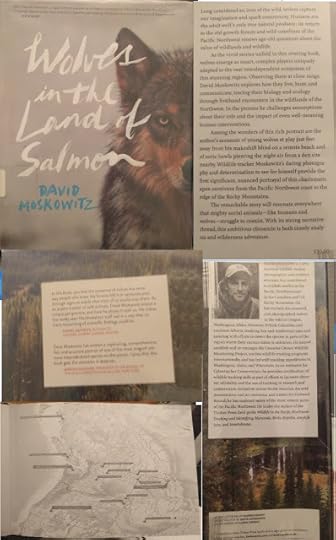
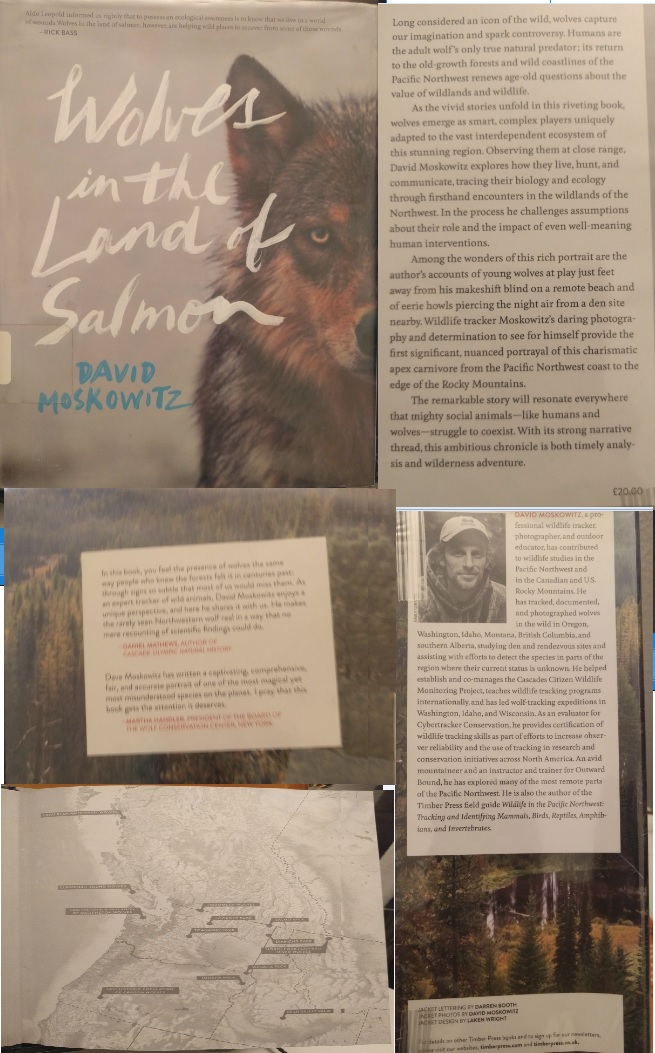
This is the cover and jacket of the bookI read. Note how beautiful the wolf eyes are. Almost human-like. Then note the author's gaze and draw your own conclusions.
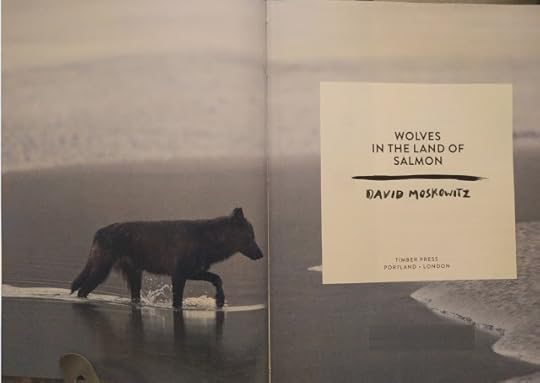
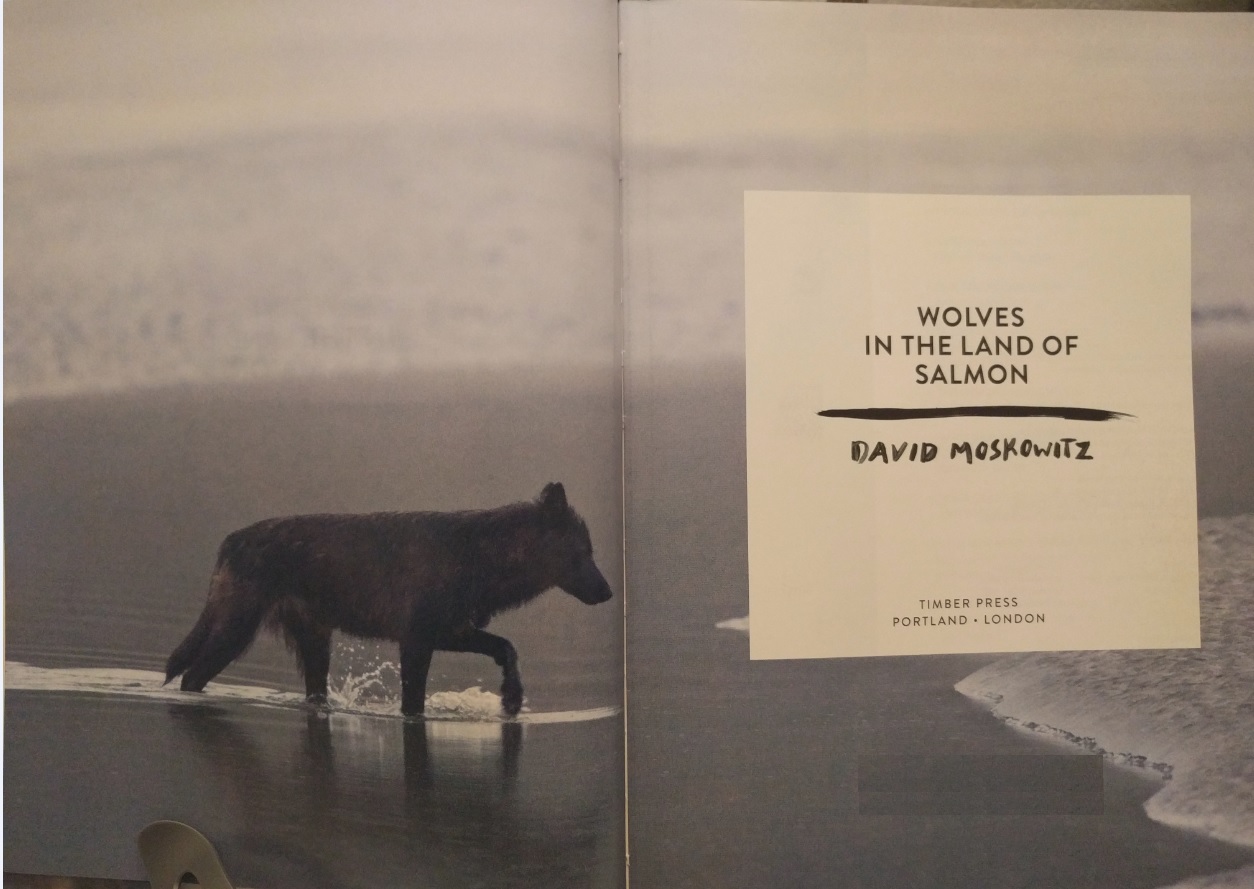
This is the picture the author picked to present his book. It is a black wolf next to a body of water, his paws going into the water, and his gaze into something beyond the camera. Probably delicious salmon.
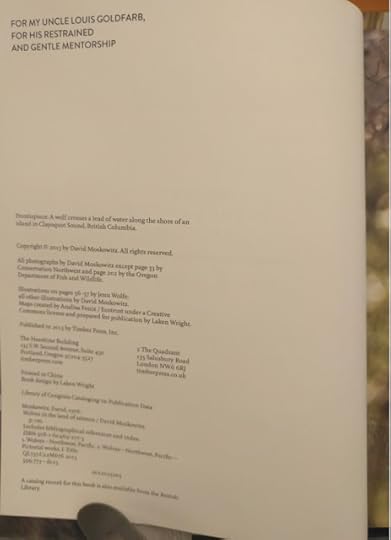
This is the editorial page and the dedicatory: for the author's uncle, who he seems to love profoundly. We also find out that this book was published in 2013.
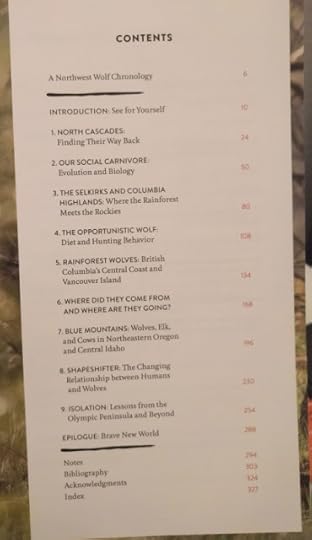
This is the table of contents of the book. It shows you how the author is going to follow the wolves all the way upstream until they are all lonely again.
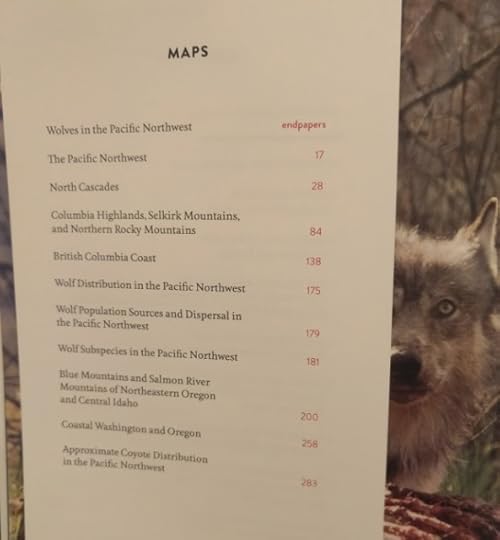
The book has a lot of maps, and there is a table of maps for the interested:
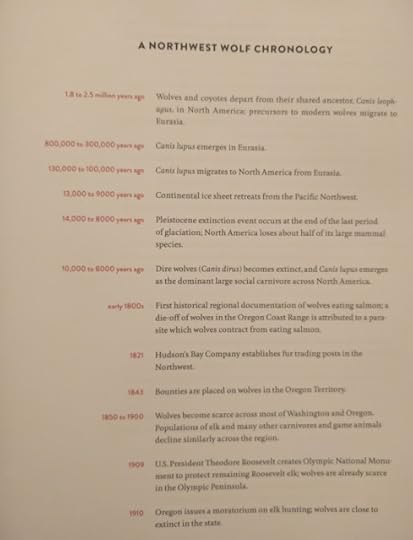
Then, a chronology of the wolve's life and evolution. It is interesting how this author really did his homework and did not just went out there with his camera to snap some mindless frames.
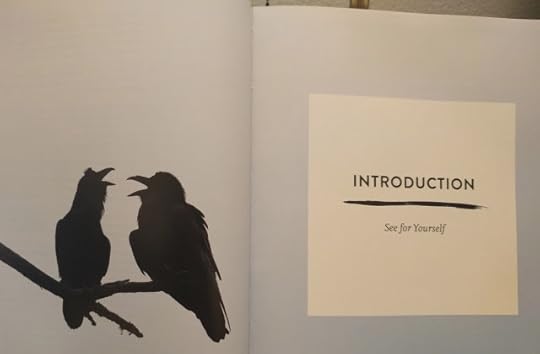
I loved the picture that accompanies the introduction. It is two crows facing each other with their mouths open, it seems as though they were talking to each other. Given that I admire crows a lot, I really like to think that they are musing important businesses here.
This is an aerial photo of a wolf-populated area that the author explored.
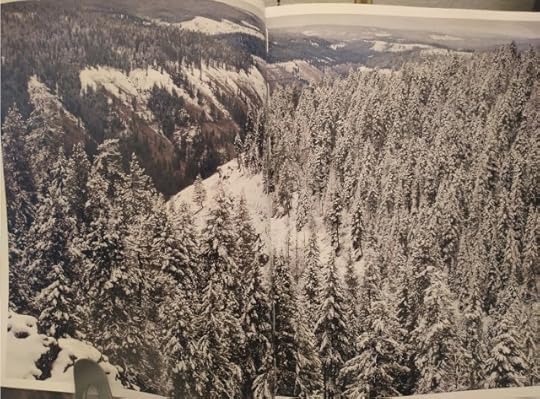
This is a breathtaking landscape. I loved the way this author was able to select the best pictures. I think he has great taste.
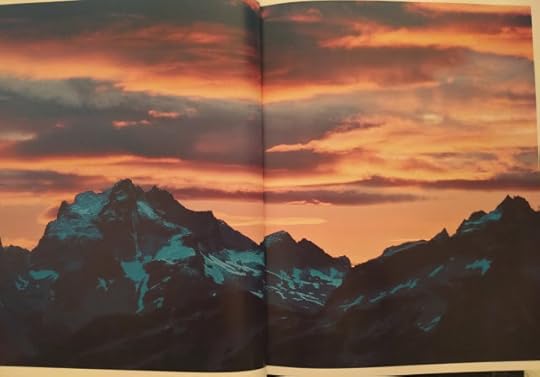
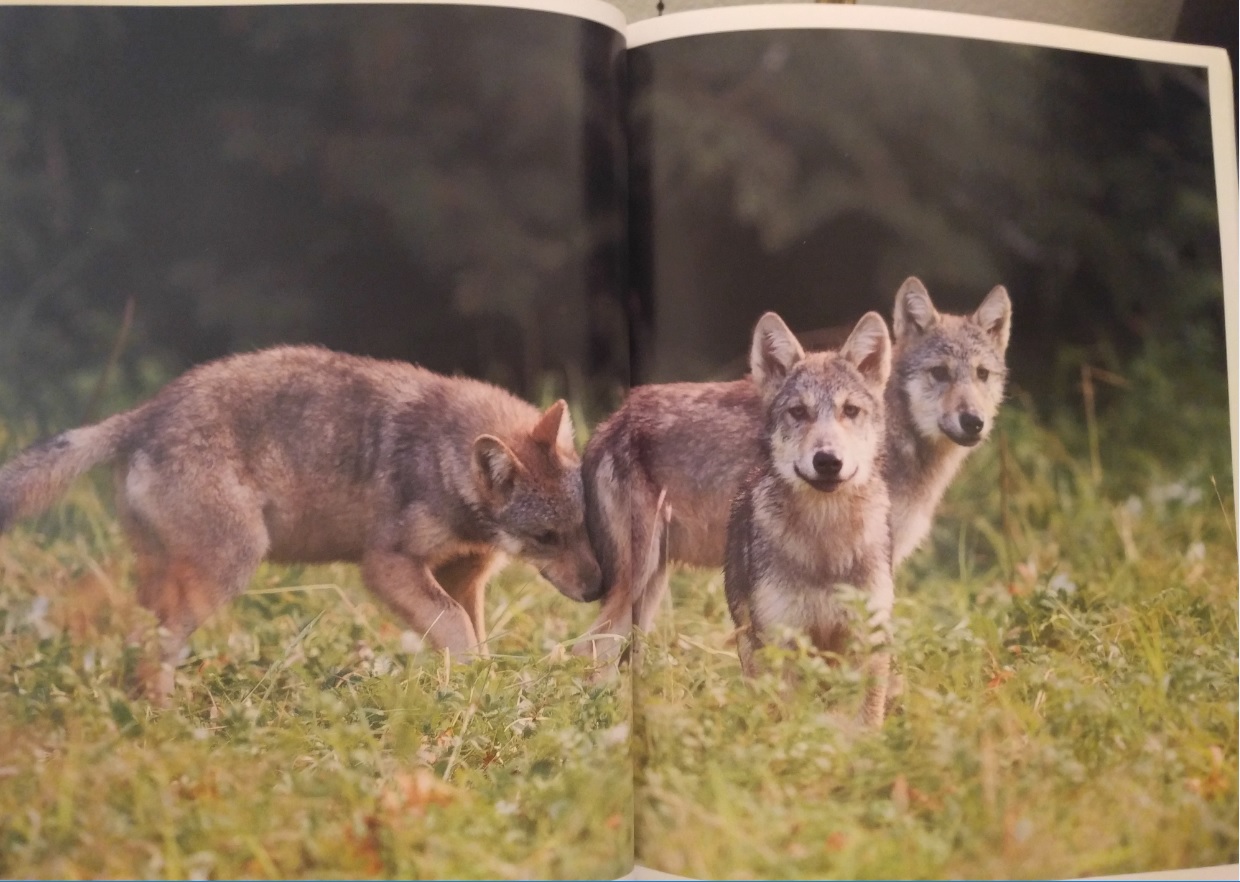
This is a beautiful set of wolves. They look so intelligent! Almost human-like.
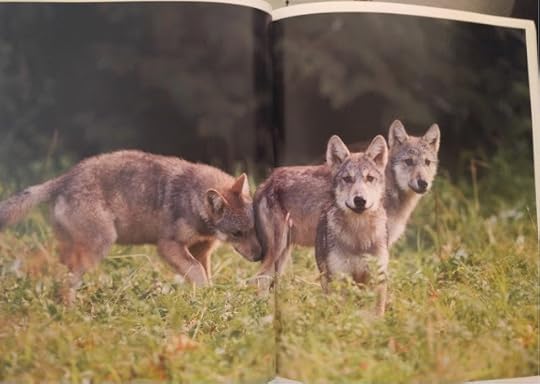
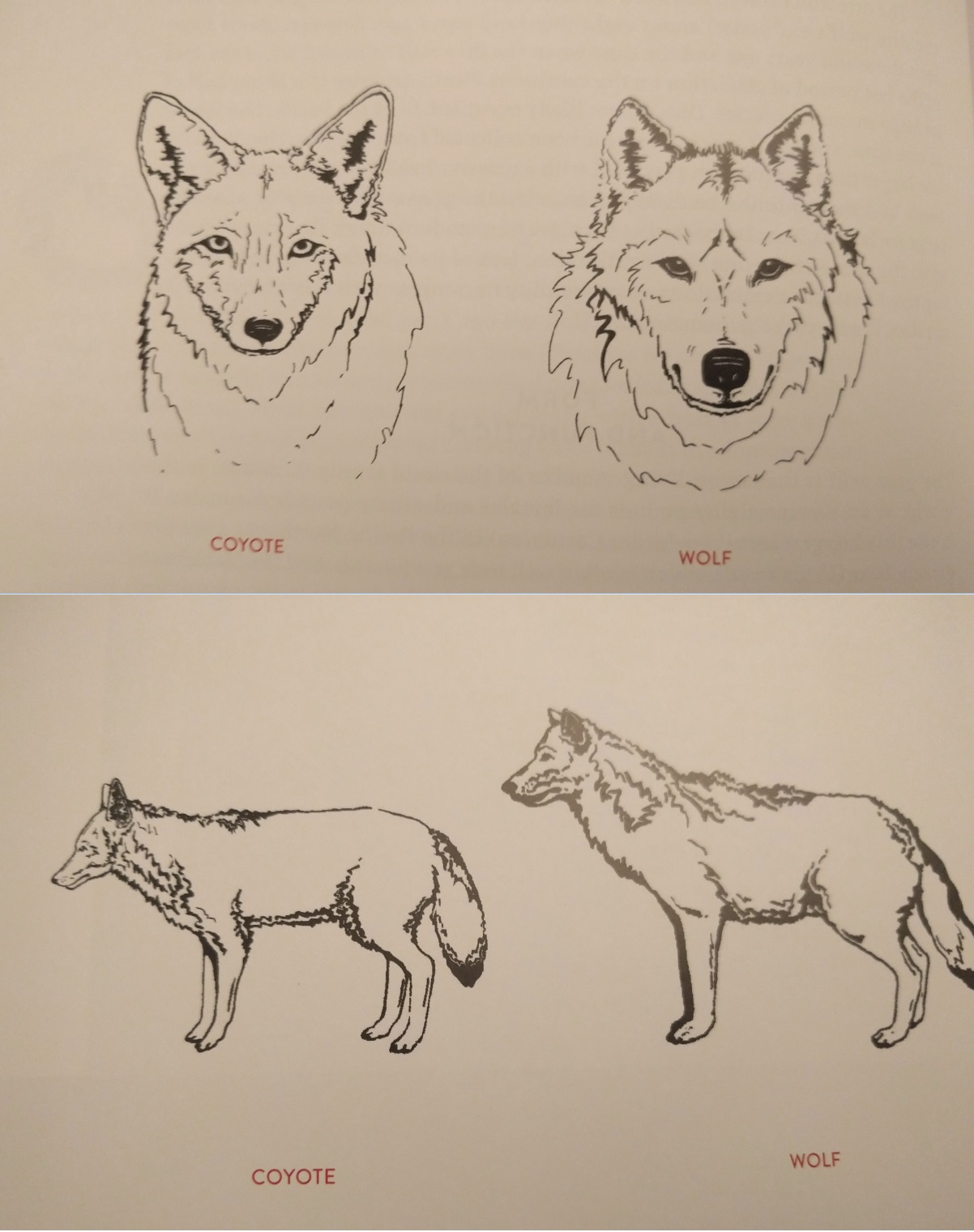
This is a diagram to help diferenciate between a coyote and a wolf. He got me here because I can't tell the difference even if I had both specimens in my room next to my bed.
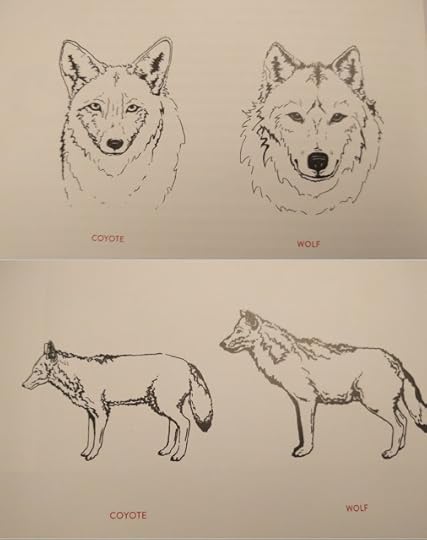
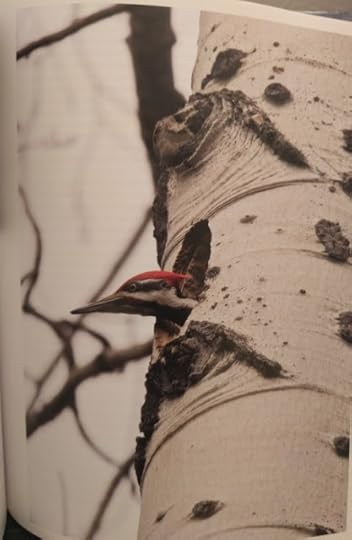
How beautiful this little bird is! Nature is beautiful in all its ways!
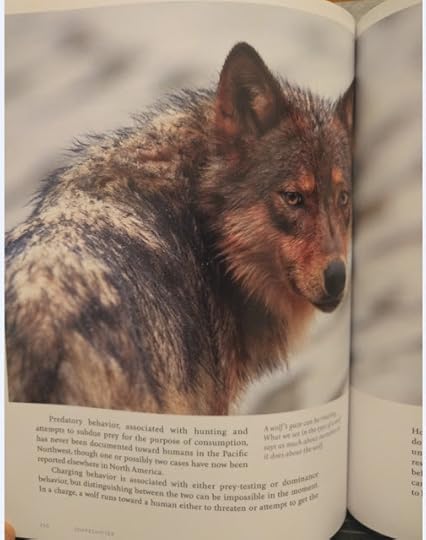
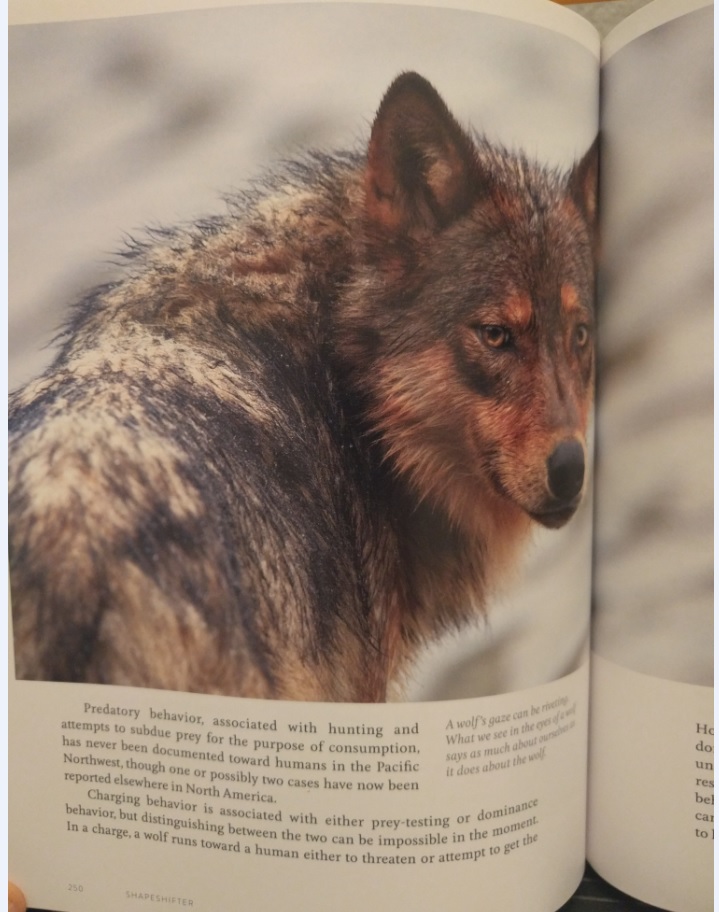
Another intelligent wolf. Look at his gaze; I would believ him if the author says that the wolf spoke shortly after the took the picture.
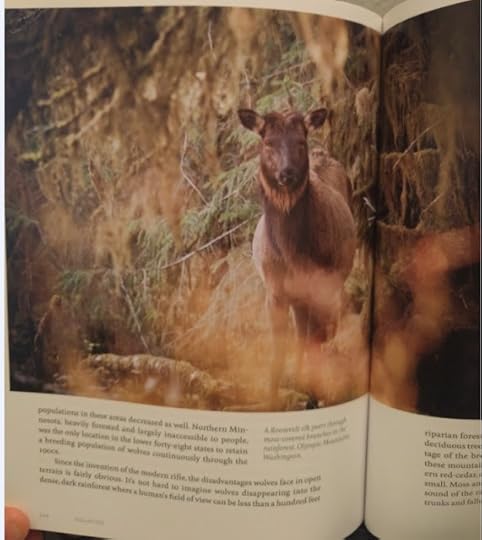
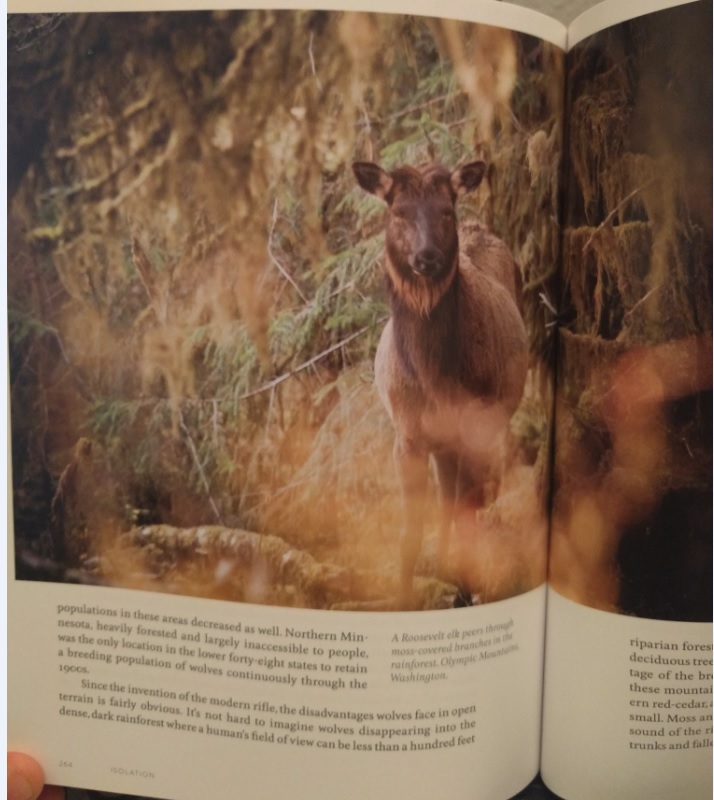
This is definitely not a wolf, as far as I can tell, but don't take my word for it!
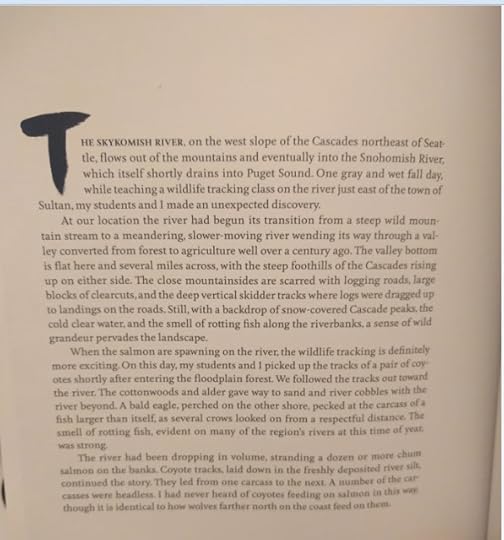
And this final two pages are the final thoughts of the author. I liked his style and his love of the topic, but the thing I liked the most were the photograps.
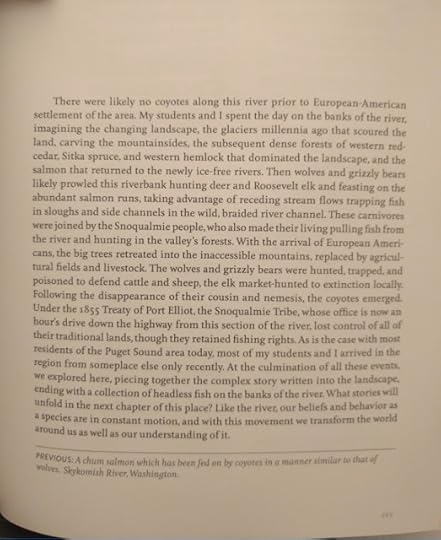
In conclusion, this is a beautiful book and I will certainly keep in on my coffee table for a while, just to brag a little bit about my knowledge about nature and wolves (LOL)
Well, I hope you liked this review. Did you know that I also have a blog? Take a look here: http://lunairereadings.blogspot.com
This is the cover and jacket of the bookI read. Note how beautiful the wolf eyes are. Almost human-like. Then note the author's gaze and draw your own conclusions.
This is the picture the author picked to present his book. It is a black wolf next to a body of water, his paws going into the water, and his gaze into something beyond the camera. Probably delicious salmon.
This is the editorial page and the dedicatory: for the author's uncle, who he seems to love profoundly. We also find out that this book was published in 2013.
This is the table of contents of the book. It shows you how the author is going to follow the wolves all the way upstream until they are all lonely again.
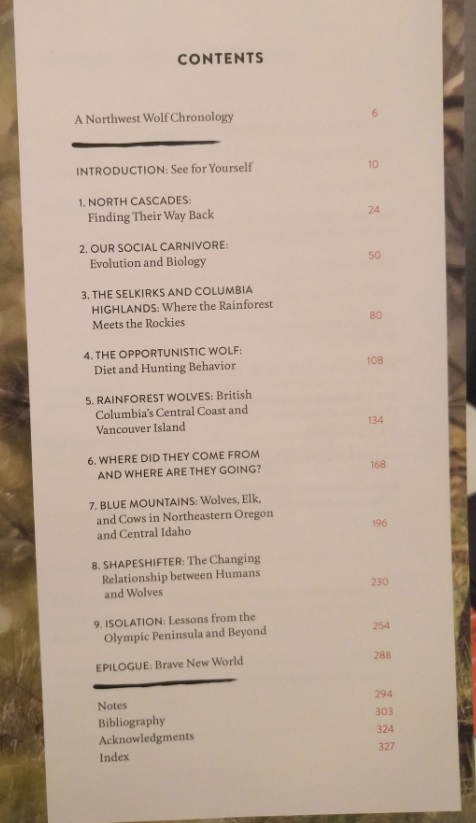
The book has a lot of maps, and there is a table of maps for the interested:
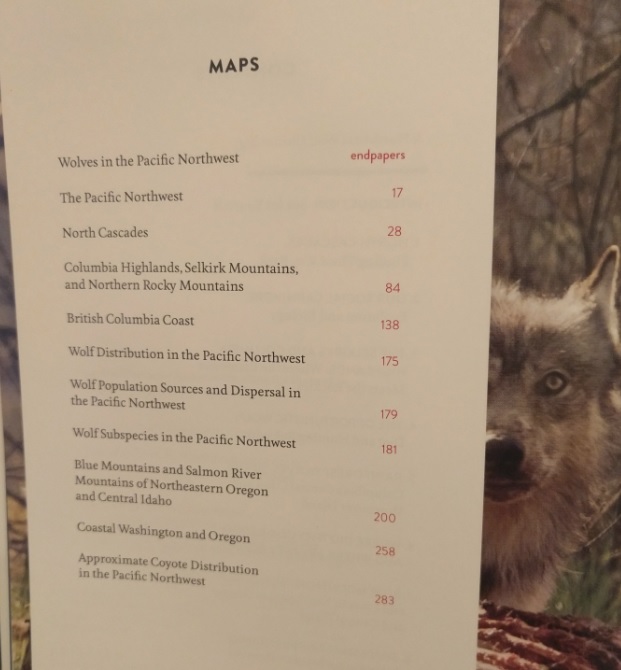
Then, a chronology of the wolve's life and evolution. It is interesting how this author really did his homework and did not just went out there with his camera to snap some mindless frames.

I loved the picture that accompanies the introduction. It is two crows facing each other with their mouths open, it seems as though they were talking to each other. Given that I admire crows a lot, I really like to think that they are musing important businesses here.

This is an aerial photo of a wolf-populated area that the author explored.
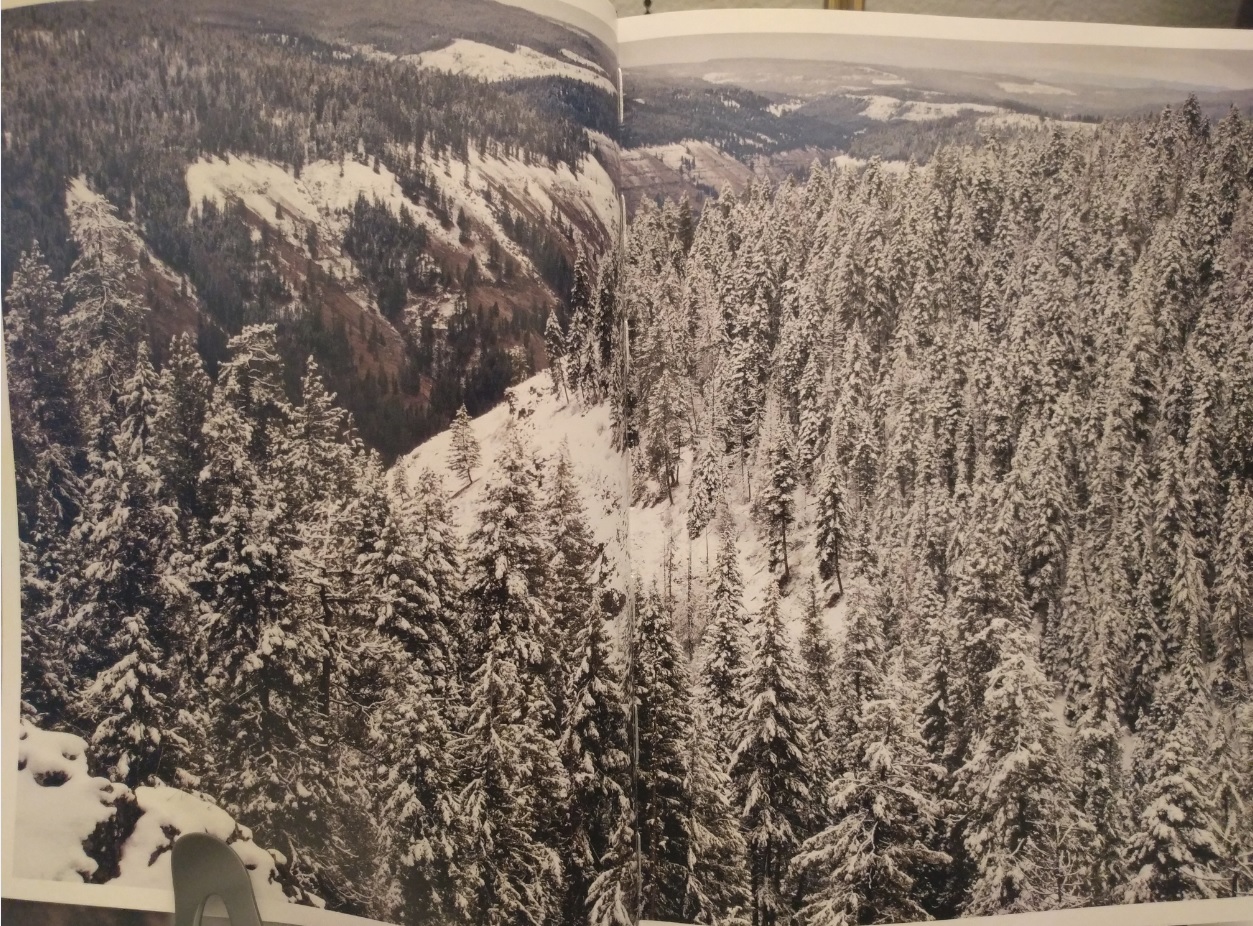
This is a breathtaking landscape. I loved the way this author was able to select the best pictures. I think he has great taste.
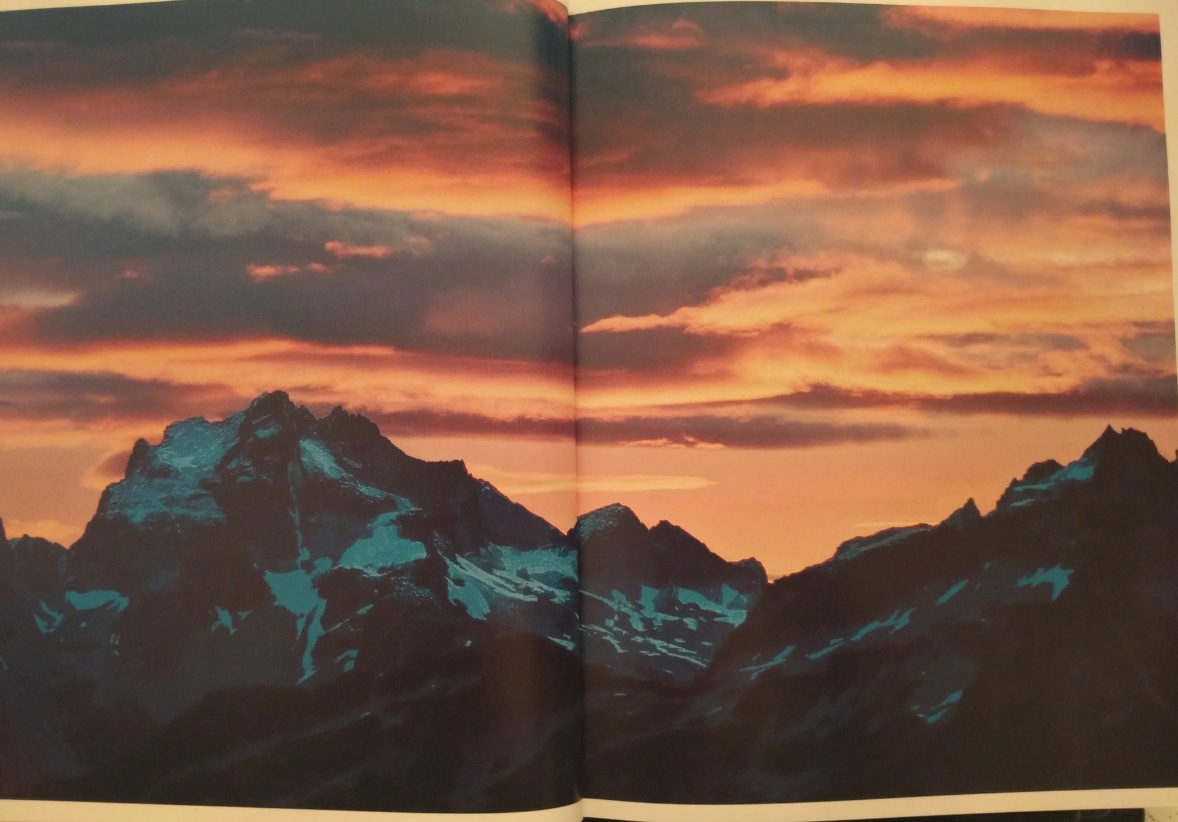
This is a beautiful set of wolves. They look so intelligent! Almost human-like.
This is a diagram to help diferenciate between a coyote and a wolf. He got me here because I can't tell the difference even if I had both specimens in my room next to my bed.
How beautiful this little bird is! Nature is beautiful in all its ways!

Another intelligent wolf. Look at his gaze; I would believ him if the author says that the wolf spoke shortly after the took the picture.
This is definitely not a wolf, as far as I can tell, but don't take my word for it!
And this final two pages are the final thoughts of the author. I liked his style and his love of the topic, but the thing I liked the most were the photograps.
In conclusion, this is a beautiful book and I will certainly keep in on my coffee table for a while, just to brag a little bit about my knowledge about nature and wolves (LOL)
Well, I hope you liked this review. Did you know that I also have a blog? Take a look here: http://lunairereadings.blogspot.com

February 9, 2019
I didn't fall in love with it like other adult animal books I've read recently because it was too information and less narrative. If felt like every thing was written out and I lost sight of the overall importance of the message and history of wolves populating this area and the need to repopulate. It went painfully step by step rather than grouping and organizing the book for the every person to understand conservation for these animals by knowing their past, understanding the present, and planning for the future but also getting to know these majestic, beautiful, and necessary creatures.
I wasn't as captivated by the style of narration and wished a bit more personality or voice from the author who clearly is passionate about the topic and wolves. Alas, I know more about wolves and other canids than I did before!
I wasn't as captivated by the style of narration and wished a bit more personality or voice from the author who clearly is passionate about the topic and wolves. Alas, I know more about wolves and other canids than I did before!

February 26, 2017
While some parts were definitely very interesting, you've pretty much read it all after the first chapter. Moskowitz keeps making the same arguments in every single chapter; at least I'm now very aware of the ecological impact wolves and humans have on their surroundings...

October 2, 2015
I wasn't sure what to expect from this book, but I did want to learn more about the issues surrounding the expanding presence of wolves in the Pacific Northwest. In the introduction, the author states: "My own passion notwithstanding, in the pages that follow it has not been my intention to convince anyone of anything about wolves, wildlands, or people...", which led me to believe that the author would attempt to be objective notwithstanding his admitted biases.
I was therefore a bit put off by his use of phrases like wolf "persecution" and citation of a study from the late 1990s in which "farmers, rural residents, and people with less formal education [are] more likely to view wolves as 'threatening, unworthy, and sometimes evil,' while younger, college educated, and urban people tended to regard them more as 'noble and admirable creatures possessing great moral and naturalistic significance.'" I didn't find the book to be as balanced as I expected after reading the introduction.
The author also tends to vilify the timber industry, yet here we have this 325 page book on nice white paper - where did that paper come from?
Although this book has important first-hand information and I tend to agree with the author's opinions on the issues he addresses, I'm quite sure the author will succeed in his intent that he won't convince anyone of anything because his views are so one-sided.
I was therefore a bit put off by his use of phrases like wolf "persecution" and citation of a study from the late 1990s in which "farmers, rural residents, and people with less formal education [are] more likely to view wolves as 'threatening, unworthy, and sometimes evil,' while younger, college educated, and urban people tended to regard them more as 'noble and admirable creatures possessing great moral and naturalistic significance.'" I didn't find the book to be as balanced as I expected after reading the introduction.
The author also tends to vilify the timber industry, yet here we have this 325 page book on nice white paper - where did that paper come from?
Although this book has important first-hand information and I tend to agree with the author's opinions on the issues he addresses, I'm quite sure the author will succeed in his intent that he won't convince anyone of anything because his views are so one-sided.

April 3, 2013
I must admit that when I first picked up this book, I thought it was a novel of a similar vein to Salmon Fishing in the Yemen. That’s not the fault of the author but of me, for choosing my books in a hurry, often based on title and/or cover art.
That’s not to say I was disappointed in the read at all – it just wasn’t quite what I was expecting.
That David Moskowitz knows a lot about wolves is a serious understatement. This book pretty much tells you everything you want to know about wolves and more. Their spread across America, their mating habits, their eating habits, the different tracks they leave…
It made for a fascinating read that was both informative and entertaining. While there was a certain amount of scientific speak in the book (as is to be expected of a book of this genre), it was by no means dry and boring. Nor did it come off as too preachy, which books of the ilk can sometimes do.
The accompanying photography is stunning and offers an insight into a world very few of us ever have the opportunity to witness firsthand.
Would have liked to see smaller ‘bite-size’ chunks of information rather than the longer paragraphs and chapters that they author favoured but that is more personal preference.
All in all a great book for anyone even remotely interested in North America’s wolf populations.
That’s not to say I was disappointed in the read at all – it just wasn’t quite what I was expecting.
That David Moskowitz knows a lot about wolves is a serious understatement. This book pretty much tells you everything you want to know about wolves and more. Their spread across America, their mating habits, their eating habits, the different tracks they leave…
It made for a fascinating read that was both informative and entertaining. While there was a certain amount of scientific speak in the book (as is to be expected of a book of this genre), it was by no means dry and boring. Nor did it come off as too preachy, which books of the ilk can sometimes do.
The accompanying photography is stunning and offers an insight into a world very few of us ever have the opportunity to witness firsthand.
Would have liked to see smaller ‘bite-size’ chunks of information rather than the longer paragraphs and chapters that they author favoured but that is more personal preference.
All in all a great book for anyone even remotely interested in North America’s wolf populations.

April 2, 2014
Stunning photographs and quality writing by the naturalist author David Moskowitz make this a must-read for anyone interested in nature, the outdoors, animal behavior, and the forests and coastlines of the Pacific Northwest and Canada. Thoroughly researched history of the region, as well as first-hand accounts of explorations in the back country and encounters with many animals including wolves, beautifully photographed and documented. Highly recommended.

November 27, 2013
In Wolves in the Land of Salmon, I enjoyed learning about the importance of wolves in the balance of the ecosystem. David Moskowitz's photos are superb, and he provides some interesting data and advice. The reading is a bit dry, so I'd recommend it more as a reference book than one to read straight through.
August 8, 2017
Enlightening and insightful look into the history of the intricate and delicate nature of these species impact on the larger ecology of the region. Demystifying many misconceptions and depicting multiple viewpoints throughout civilizations' stances on the subject of wolves including those of past and present. Extremely informative scientific research juxtaposed next to poetic field studies in which it feels like you are amongst the wolves with Moskowitz watching these majestic and misunderstood beings along with him. Stunning photographs accompany and enliven the text.
I feel much more informed after reading this and I feel a deeper connection with these creatures that once ruled the PNW along with native tribes. Very excited to see an increase in conservation and potentials of reintroduction in areas where the species has been eliminated entirely mainly due to human impact. This book made me more aware of the very delicate nature of prey and predator relationships that make up such a diverse and complex world of balance in nature.
I was turned on to the subject after a recent visit to Wolf Haven International and am happy to have picked up this book and been lead down this path of discovery.
I feel much more informed after reading this and I feel a deeper connection with these creatures that once ruled the PNW along with native tribes. Very excited to see an increase in conservation and potentials of reintroduction in areas where the species has been eliminated entirely mainly due to human impact. This book made me more aware of the very delicate nature of prey and predator relationships that make up such a diverse and complex world of balance in nature.
I was turned on to the subject after a recent visit to Wolf Haven International and am happy to have picked up this book and been lead down this path of discovery.
June 28, 2017
Following the elusive tracks of wolves, this book make you feel like in the great outdoors...
Well written, it gives a comprehensive account of the wolves social behaviors, the North America packs propagation patterns. And it analyses the the impact on the overall ecosystem due to the wolves presence.
Well written, it gives a comprehensive account of the wolves social behaviors, the North America packs propagation patterns. And it analyses the the impact on the overall ecosystem due to the wolves presence.
May 16, 2023
Really well done. It was written a decade ago, but the stories are still interesting and highly relevant. At times, it’s dry, but the author is an excellent writer and conveys technical information in an engaging way.

January 13, 2021
Wolves, we need them. . . . explained here
Open minds and change legislation
Open minds and change legislation

February 27, 2025
I do love wolves

March 24, 2020
I really enjoyed learning about the history and current situation of wolves in the Pacific Northwest of the United States and Canada. A fun read with tons of information.

February 25, 2017
This book, along with Wild Ones by Jon Mooallem, is essential reading for people curious about ecological balance, the history of the land, and ecosystems in general. While this book focuses specifically on the Pacific Northwest and the southern coast of British Columbia, the case studies and animal relationships discussed gave me new ways to think about human interactions with nature in general. Everyone sort of broadly knows that ecosystems are complex with lots of shifting factors that echo up and down the food chain, but by discussing it clearly and succinctly and with admirably less impassioned bias than the average nature writer, David Moskowitz paints a fascinating picture of how extirpation of wolves and other large predators can create as many problems in an ecosystem as it supposedly solves.
Speaking of pictures, the photos in this book are just amazing. Even if the topic doesn't interest you, though I don't know why you'd be picking up a wolf book if it didn't, it's worth it for the pictures alone. The section with paw prints of different animals was fun for me, and a nice visual aid for how the author spends his days, observing small details in the woods, interpreting the signs left behind by elusive wildlife few of us will ever see.
Speaking of pictures, the photos in this book are just amazing. Even if the topic doesn't interest you, though I don't know why you'd be picking up a wolf book if it didn't, it's worth it for the pictures alone. The section with paw prints of different animals was fun for me, and a nice visual aid for how the author spends his days, observing small details in the woods, interpreting the signs left behind by elusive wildlife few of us will ever see.
October 4, 2019
Moskowitz provides excellent insights into the dynamics of wolves in the wild. Descriptions of his forays into the wilds to observe various wolf packs are instructive and insightful.
One of the large carnivores of North America, it is distinctive in that it lives and hunts in social groups. It is virtually exclusively carnivorous, unlike mid-sized carnivores such as the coyote and fox. Their dentation is notable for the large carnassial teeth used for shearing and crushing. The wolf and coyote diverged about 1.5 million years ago. Wolves will prey on coyotes which is partially why coyotes still to open land.
While the author describes wolves on both the west and east sides of the Cascades, the west coast animals are interesting as salmon make up a significant part of their diet. These wolves often eat the head only as salmon often contain a bacterium (Neorickettssia) that is usually fatal for canines, but is concentrated in the muscle tissues and kidneys of the fish.
While wolves do not usually attack humans, they are large animals that could kill. The author provides advice on recognizing and dealing with questionable wolf behaviour. While wolf attacks on humans are known from Europe, it is now thought that in many instances the animals may have been infected by rabies. Rabies is known in North American wolves only where they live alongside Arctic foxes which carry the disease. Much like with bears, habituation to humans can result in boldness and subsequent attacks.
Moskowitz describes the effect of interactions between wolves and other animals on the ecosystem. For example, wolves tend to reduce elk populations which, when large, significantly reduce understory shrubs and plants. Similar destruction of the understory occurs when cattle graze the forest. Surprisingly, wolf predation on cattle is very light. Estimates that gross up confirmed kills to allow for uncertainty still amount to about a fifth of a percent per year. Domestic dogs kill more cattle than do wolves.
One of the large carnivores of North America, it is distinctive in that it lives and hunts in social groups. It is virtually exclusively carnivorous, unlike mid-sized carnivores such as the coyote and fox. Their dentation is notable for the large carnassial teeth used for shearing and crushing. The wolf and coyote diverged about 1.5 million years ago. Wolves will prey on coyotes which is partially why coyotes still to open land.
While the author describes wolves on both the west and east sides of the Cascades, the west coast animals are interesting as salmon make up a significant part of their diet. These wolves often eat the head only as salmon often contain a bacterium (Neorickettssia) that is usually fatal for canines, but is concentrated in the muscle tissues and kidneys of the fish.
While wolves do not usually attack humans, they are large animals that could kill. The author provides advice on recognizing and dealing with questionable wolf behaviour. While wolf attacks on humans are known from Europe, it is now thought that in many instances the animals may have been infected by rabies. Rabies is known in North American wolves only where they live alongside Arctic foxes which carry the disease. Much like with bears, habituation to humans can result in boldness and subsequent attacks.
Moskowitz describes the effect of interactions between wolves and other animals on the ecosystem. For example, wolves tend to reduce elk populations which, when large, significantly reduce understory shrubs and plants. Similar destruction of the understory occurs when cattle graze the forest. Surprisingly, wolf predation on cattle is very light. Estimates that gross up confirmed kills to allow for uncertainty still amount to about a fifth of a percent per year. Domestic dogs kill more cattle than do wolves.

July 3, 2013
Let me start out by saying wolves are my favorite animal. In addition, the Pacific Northwest is one of my favorite places. Needless to say this book was a good fit for me. That being said, I know a lot about both topics. Despite that I learned a lot of new facts.
David Moskowitz did a wonderful job with this book. It is very well written and packed with a wealth of Information. The photography is beautiful and graphically the layout was well done. I read the digital version of this book but it would make an excellent coffee table book.
I highly recommend this book for anyone with a love for wolves and the Pacific Northwest.
ARC provided by publisher via NetGalley in exchange for an honest review.
David Moskowitz did a wonderful job with this book. It is very well written and packed with a wealth of Information. The photography is beautiful and graphically the layout was well done. I read the digital version of this book but it would make an excellent coffee table book.
I highly recommend this book for anyone with a love for wolves and the Pacific Northwest.
ARC provided by publisher via NetGalley in exchange for an honest review.

March 15, 2013
Not the type of book I usually read, but it was sent to me by the publisher as a nominee for the Pacific Northwest Booksellers Association Awards for 2013. As a committee member, I get to read all the great books local authors are putting out this year and this one was awesome! It really opened my eyes to the history of wolves in the Olympic Peninsula and the wolves who are currently trying to come back from the brink of extinction in the PNW.
May 20, 2014
This book was more dense than I expected, the chapters were structured around data and graphs and population numbers and migration patterns. But the photos were beautiful the facts were laid out in a way that made it all digestible. Removing the myth about wolves and focusing on several packs in the Northwest gave the book a very personal feel that also addressed issues that wolves are facing. It's an approachable way to learn more about wolves and the human stake in their survival.
April 14, 2013
Aside from a few chapters that seemed to end really abruptly, I loved this book. Required reading for residents of the Northwest, a crucial description of the crucial role that apex predators such as wolves play in an ecosystem.
September 20, 2014
I wouldn't have read this jf it hadn't been for the library book club. While it read somewhat like a text and was repetitive in parts, it was fascinating to learn about the surviving wolves in Washington state.
January 27, 2013
This is one I need to re-read when I can take more time with it.

July 15, 2013
Really interesting reading for academic and general interest. Highly recommended.
Displaying 1 - 30 of 31 reviews