Summary:
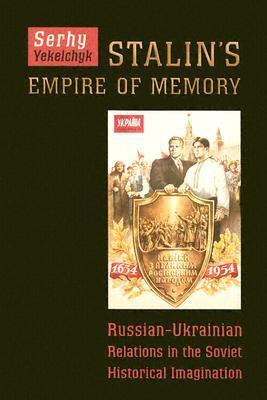
In his book, Yekelchyk moves past the question of whether the Soviet Union was a nation-braker or a nation-maker and instead asks "how interaction among Moscow ideologues, local bureaucrats, non-Russian intellectuals and their audiences had shaped national identities within the USSR." He notes that although the shift from proletarian internationalism to (Russocentric) nationalism is well-documented, very little attention has been paid to the way it was undertaken in non-Russian republics. Focusing on Ukraine, Yekelchyk shows that Stalinist Ukrainian culture was not only created by policy-makers in the Kremlin, but produced through the interaction of local bureaucrats (who had some room for ideological maneuvering and exploited it) and intellectuals with Moscow. Using recently declassified archival documents, Yekelchyk shows how the Ukrainian historical narrative was re-conceptualized as a national, and not class history during late 1930s, and how the relationship of the Russian and Ukrainian peoples originally portrayed as a "lesser evil" was made out into a "great friendship" of an older and a younger brother.
Yekelchyk doesn't buy the idea of total constructedness of nations, and posits instead that "nations are always imagined through the concrete social and cultural practices of their given societies," supporting this contention by the evidence that Ukrainian audiences were able to choose the message they wanted to receive from the cultural canon propagated from above. Not only could the state not control individual interpretations of historical narratives, it could also not suppress the existing memories of the population, or its confusion over the internal tensions in the narrative (and "confusing signals from Moscow" is a recurring theme of this book). In place of a coherent and convincing historical narrative, it was coercion that held Stalin's empire of memory together.
Comments/Critique:
Yekelchyk claims to "draw on the insights of post-colonial theory to interpret Soviet national ideology as an imperial discourse," but perhaps he could have engaged this literature more directly, since I don't think it was necessary to read Chatterjee to show that "an empire allows for articulation of ethnic difference." It is also not clear how literature on collective memory can be applied to an authoritarian state, and Yekelchyk notes this problem, but still attempts to make conclusions about what the Ukrainian people really thought. (On the other hand, the idea that we will never know what they thought is depressing; so maybe kudos for trying?)
I was also unsure about author's reasons for the structure of the book; it is unclear why the chapters are organized in the way that they are, and much of the author's analysis seems repetitive.
He also seems to be missing Moscow intellectuals - did they not write Ukrainian histories? How did their narratives fit into the picture?
In her review, Devlin notes that perhaps Yekelchyk overemphasized the autonomy of the Ukrainian intellectuals, and in light of Yekelchyk's ultimate conclusion (coercion instead of coherence) the critique makes sense. Had the intellectuals really enjoyed autonomy, would they not have been able to create a convincing narrative for their people? Alternatively, had they abused their autonomy, would they not have been silenced? And if so, what kind of autonomy was it?
Kozlov asks a possibly unanswerable question of how self-conscious the Ukrainian intellectuals were in their interpretations of the past: "to what extent [was] the survival of autonomous historical agendas... the fruit of anyone's deliberate effort as opposed to an unpremeditated carryover of cultural tradition"?