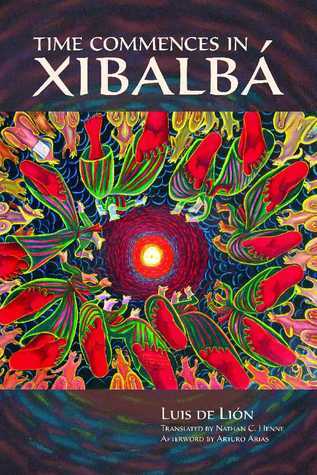
It is as if the violently erotic echoes of colonialism and indigeneity push forth so forcefully that they cause a deafness; a stunting of time, sound, and movement, and what the reader is left with is a space where indigenous people live but do not necessarily exist. We are presented with a space where indigenous life takes place, but beneath the shadow of a frenzied death force.
In my opinion, the language, imagery, and structure of this book make it a masterpiece. The author refuses to conform. Maybe it's because he has seen so much conformity and its results that he dares not proliferate any of it himself. Excerpts like this serve as evidence:
“You remember that for a good while there you would visit her when she was alone; that you would frequent the cofradía house where she was; that you would say you were just going because you needed to pray for a miracle; that you would take her flowers, candles of different kinds; that you had declared your love for her in silence; that you wished she would answer you; that, back at your house, you dreamed about her, naked in your bed; that you felt her, heard her start to pant, and then cum; that you would taste her and, not even thinking about whether she was a virgin or a mother or a whore, but thinking she was a white woman, a Ladina, a woman from the other side, from that other race, the race you wanted to become a part of by way of your wealth, by way of the whiteness of your house, of your soul; and despite the Indian-ness of your face, your Mongolian spot, and your hair. You remember, one time, you said that with her you would have a child: a brother of the mother of the invader of these lands, a divine mestizo, even though later he would deny you were his father. Remember: that, because you knew a union between you and her was impossible—what with the wood and all—, you searched in the city for a relative of hers who would love you; that you sought out many of them; that you told them you had land, money, a nice house in your town; remember that they all rejected you, that they wouldn’t even look at you, that only the ones in the cantinas would so much as listen to you, but that even they called you: ¡Indian!; and that was when you chose this one, who will talk to you; who will listen to you, who loved you and who could still love you again; this one, who is an Indian, but at least she has the name and the nickname of the one you worshipped; this one, but you didn’t choose her to be your woman but to be your servant (80-81).”
One interesting aspect of this book is that the analysis at the end is almost as fulfilling as the text itself. This is not only because the analysis provided some cohesion, but also because it offered cultural, historical, and literary context that untangles and fills in the body of understanding for the disorienting tale.
In an odd coincidence, as I read parts of the analysis at the end, I learned that Time Commences in Xibalba exists within the intertextual universe of the Popol Wuj (Popol Vuh). The coincidence lay in the fact that I had started reading the Popol Vuh shortly before Luis de Lion’s masterpiece, and I only noticed the connection as I began hearing the name and concept of Xibalba reverberate between the braided reading experience. What a compliment it was to read them at the same time. Although I couldn't make the connection beyond the name of Xibalba, the scholars who explained the link later on did so astutely, which added to the story’s richness upon reflection.
The overall reading experience was great because of the rich prose, the story's uniqueness and complexity, and the scholarly effort to explain the book's context. This reading was also special because it was my first venture into modern Guatemalan literature. Something especially special as I delve into the culture of my maternal grandmother's side.