Jump to ratings and reviews
Rate this book

Comics Sketchbooks: The Private Worlds of Today's Most Creative Talents

Rate this book
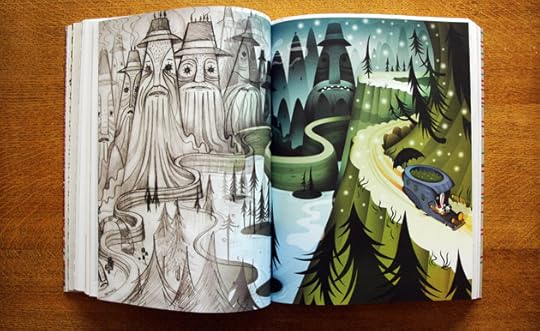
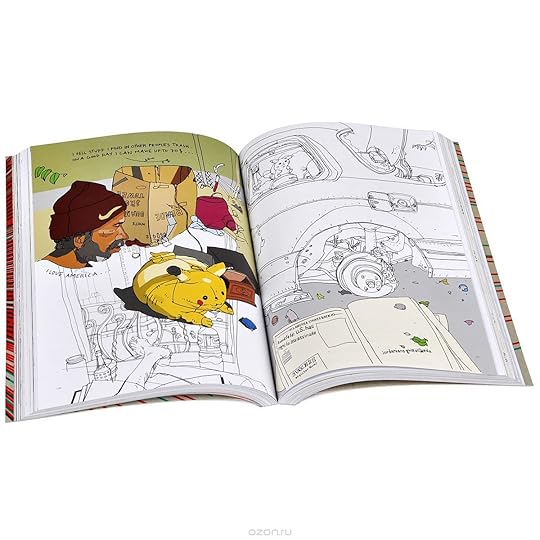
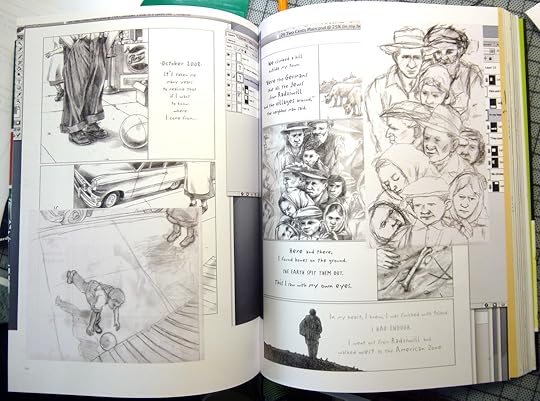
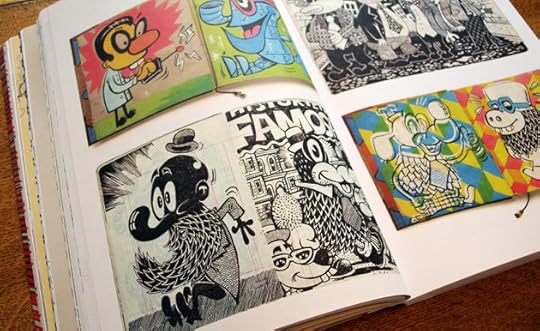
From cartoons to graphic novels, from humor to superheroes, comics are the worlds most popular form of illustration. And, as in all forms of illustration, artists and designers experiment with visual ideas, image-and-word play, narrative sequencing, and stylistic flourishes through sketching. What we rarely see is the creative thinking--the doodling--that leads to fully formed visual ideas and stories.

Comics Sketchbooks presents the private notebooks of eighty-two of the world's most inventive, innovative, and successful artists alongside new talents and emerging illustrators. The artists have been selected by the world's leading critic and most knowledgeable source in the field of graphic design and illustration, Steven Heller, who has had personal access to some of the most private and unseen material. Although there have been several comic-book compilations over the years, none has the visual excitement, insight, and mind-blowing creativity--and fun--of this one.

352 pages, Paperback

First published January 1, 2012

2 people are currently reading
149 people want to read

About the author

Steven Heller

326 books206 followers
Steven Heller writes a monthly column on graphic design books for The New York Times Book Review and is co-chair of MFA Design at the School of Visual Arts. He has written more than 100 books on graphic design, illustration and political art, including Paul Rand, Merz to Emigre and Beyond: Avant Garde Magazine Design of the Twentieth Century, Design Literacy: Understanding Graphic Design Second Edition, Handwritten: Expressive Lettering in the Digital Age, Graphic Design History, Citizen Designer, Seymour Chwast: The Left Handed Designer, The Push Pin Graphic: Twenty Five Years of Design and Illustration, Stylepedia: A Guide to Graphic Design Mannerisms, Quirks, and Conceits, The Anatomy of Design: Uncovering the Influences and Inspirations in Modern Graphic Design. He edits VOICE: The AIGA Online Journal of Graphic Design, and writes for Baseline, Design Observer, Eye, Grafik, I.D., Metropolis, Print, and Step. Steven is the recipient of the Art Directors Club Special Educators Award, the AIGA Medal for Lifetime Achievement, and the School of Visual Arts' Masters Series Award.

Ratings & Reviews

What do you think?
Rate this book

Friends & Following

Create a free account to discover what your friends think of this book!

Community Reviews

5 stars
13 (25%)
4 stars
21 (41%)
3 stars
13 (25%)
2 stars
4 (7%)
1 star
0 (0%)
Displaying 1 - 12 of 12 reviews
Profile Image for Althea J..
363 reviews30 followers
December 10, 2015
This was an interesting collection of artists. I was expecting to get a behind the scenes to the process of some of my favorite comic book artists. It wasn't that exactly.

The only 2 big names from mainstream big-two comics were David Mazzucchelli (just a 2-page spread, but Asterios Polyp fans will appreciate some noodling of art from that book in the bottom right corner) and Jim Steranko.


David Mazzucchelli


Jim Steranko

There were a variety of styles, nationalities (lots of European artists, especially French), and professions from which these artists represented (graphic designers, cartoonists, animators, sequential art creators). There were a bunch of folks representing underground comics and a bunch of writer/artists of more independent graphic novels (aka not superheroes) whose work I've been wanting to check out: Ruta Modan (Exit Wounds), Josh Neufeld (A.D.: New Orleans After the Deluge), Vanessa Davis (Make Me a Woman) and Lauren Redniss (whose Radioactive: Marie and Pierre Curie, A Tale of Love and Fallout I adored!).


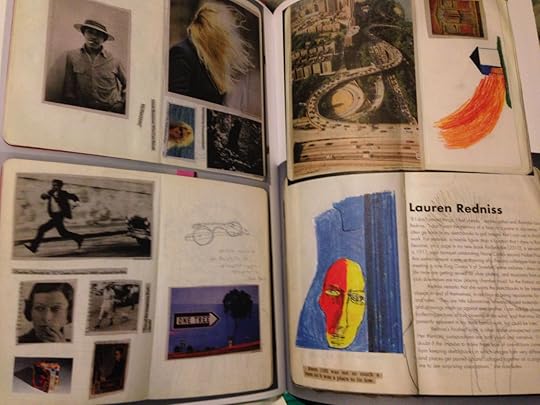
Each featured artist shared a few words about their process and the role sketchbooks play in that process. For example, Lauren Redniss uses hers to record things she sees. She explained how sometimes she'll go back to her sketchbooks to pull images she can use in finished work. "For instance, a marble figure atop a fountain that I drew in Rome became, on a page in my new book Radioactive, a servant at a 1911 royal banquet celebrating Marie Curie's second Nobel Prize... a drawing of a Parsons colleague from a faculty meeting is now King Gustav V of Sweden, some radishes I drew as a still life once are getting served on silver platters, and musicians from a jazz club downtown are now playing chamber music for the historic occasion."


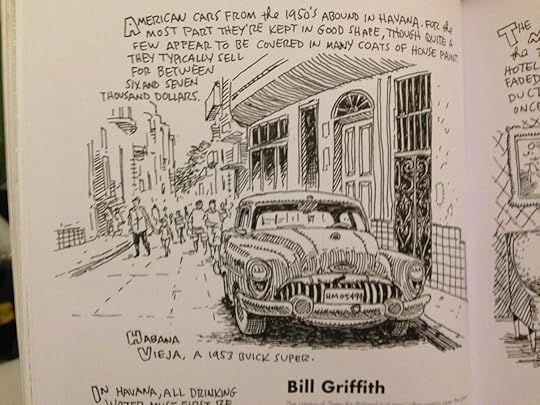
It was interesting to hear about how some artists will use their sketchbooks to record the people and places they encounter. Like Bill Griffith who, when sketching, "never thinks of an end purpose beyond capturing what he is seeing and thinking about," capturing the actual dialogue as he heard it.


Or Russ Braun (aka Java Monk) who sees his sketchbooks as "a playground to work out ideas, create characters, and simply a convenient place to practice becoming a better draftsman."


I love this insight into Braun's process:
He developed a sense of sequential storytelling by drawing the same character a number of times, answering a different question each time: "'What would happen next?' or, even more basically, 'What would he look like from this angle?'...characters just came to life and dictated their own stories."
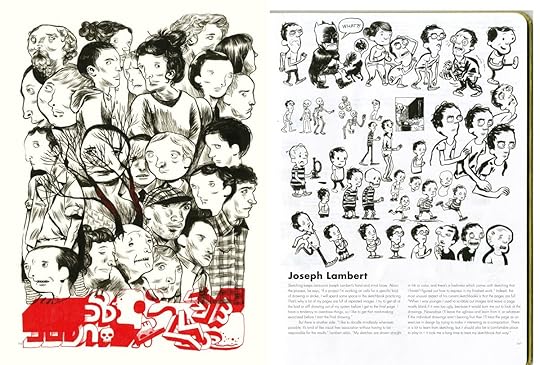
Joseph Lambert sketches to keep his hand and mind loose. "I try to get all of the bad or stiff drawing out of my system before I get to the final page."


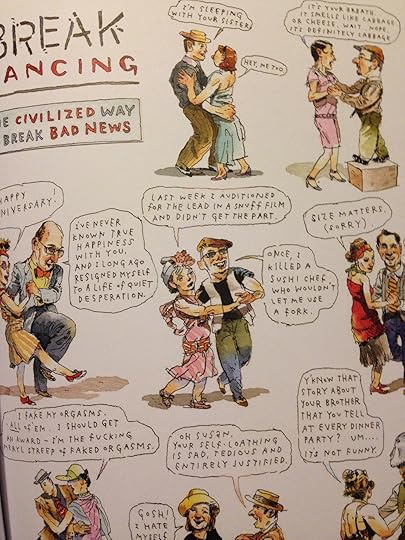
I enjoyed how John Cuneo worked out ideas for strips, along with his own mishigas within the sketchbook space.


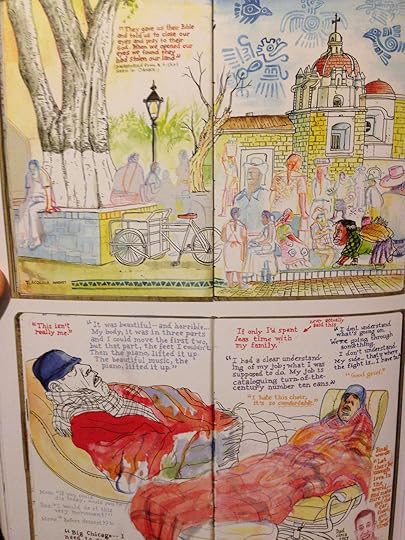
And I loved the composition and coloring of the sketchwork by Peter Kuper, which he notes, has evolved into "unplanned murals with images from different locations and different times merging into a whole."


Some of the sketchbook art collected here appears more finished than others. Like Manuel Gomez Burns who sees his sketchbook as an art object.


Or this gorgeous work by Nathan Jurevicius:


Though some artists mention the tools they use, or that digital tools have influenced their sketching process, there's not much real discussion of these topics. It's more of a collection of a few sketchbook pages and a short blurb for each artist. Perfect as a library book.

Here's some more examples...


Olivier Kugler


Martin Lemelman


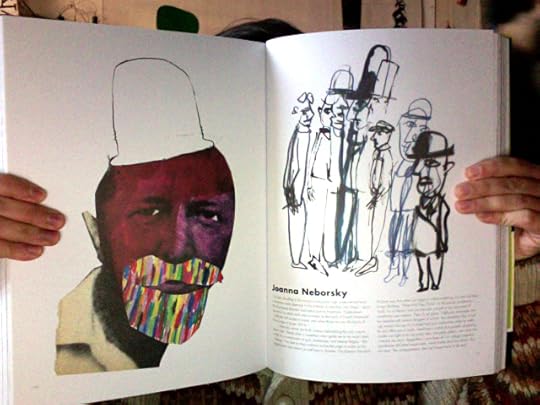
Joanna Neborsky


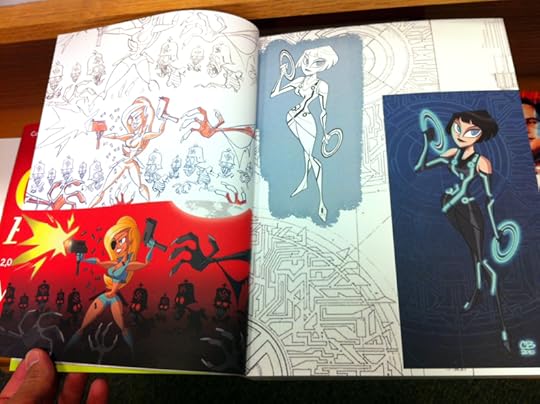
Chris Battle

SIDEBAR...
If you enjoy sketchbooks and are on Tumblr, a MUST-follow is http://mitografia.tumblr.com/ Kenneth Rocafort's blog where he posts a daily sketchbook pic ---- he's frickin amazing!!
Profile Image for Eleanor Rigg.
58 reviews
June 12, 2025
Nicely designed book full of a diverse range of sequential artists' sketchbooks. Heller's narrative descriptions are entertaining and concise, not taking away from the artist being displayed.

Time to pick up my own sketchbook.

Key quotes:

Pg 79 (Kim Deitch)- "[working on large individual sheets] sometimes Deitch will deliberately put his characters in situations that don't seem to fit into a story 'just to get to know a character better, or simply to get used to drawing certain characters.

pg 160- Peter Kuper: "When I travel [sketchbooks] serve as a document of the trip and a way to absorb the flavor of the different places I've visited." [...] His sketches have gotten him food, gotten him out of some close scrapes, gotten him through closed doors, and entertained and interpreted for him when he couldn't speak a word of the language.'

pg 177- Étienne Lécroart: "it is the text that I use for my research. I even describe the picture in words, as I write faster than I draw. If I can do without drawing, I pass [...] These sketches are not done to be shown."

195- Patrick McHale: "sketches are missing the story - they're missing the perspective. When you make something for an audience, you have to guide them [...] My sketches are a jumble of stuff all over the place. It's like a dog without a leash."

pg 212- Rutu Modan- "Sketchbooks are for everything I do [...] I do not have a separate planner. In the sketchbook I sketch, I write meetings, phone numbers, grocery lists, ideas for stories and quotes from strangers I eavesdropped on the bus.

Also David Mazzuchelli's point that one can get discover new interests simply by immersing oneself in different environments, nature, situations etc (pg 210).

pg 216- Saxton Moore: "The first image has the most soul in it."

pg 225- Joanna Neborsky: "Marshall Arisman says that when you begin to make something, you start out deep in ego (thinking, 'What Will They Think?', or the always problematic 'Look, I'm a Genius' until you discover yourself in the rarer state of unselfconscious creation. Then it's just gravy. [...] Sketching is a kind of purposeful wandering."

pg 245- Bill Plympton: "I believe that once an artist begins to rely on an old style and keeps repeating it, his career is done. The excitement for me is the search for a more bizarre and interesting vision."

pg 288- Mark Allen Stamaty: "if you want to be a writer, write [...] it's also an effort to evolve my work, to explore my unconscious, which is, I believe, an essential source of originality and creativity, an effort to discover something new from within [...] it allows [ideas] to come out and [...] resonate with others. [...] if I could explain it, I wouldn't have painted it."

pg 292- Jim Steranko: I treat all [creative assignments] as puzzles to be solved using three tools: imagination, intelligence and integrity."
Profile Image for Ryan.
1,283 reviews12 followers
October 3, 2012
Recommended to anyone interested in or currently using a sketchbook to help open up your creativity and improve technique. The editor managed to gather together some authors that I really enjoy, but he does take one big misstep. While it is kind of nice to see some artists show their finished art alongside their sketches, some artists chose to only include finished or nearly finished stuff. In some of the artist intros, the editor flat out tells you that some of the artists don't even keep a sketchbook. That's fine if what he is including are preliminary sketches for finished pieces. But instead, some of what we get is ready for publication or in the third or fourth step of the creative process. Just because an image has not yet been Photoshopped doesn't make it a sketch. Anyway, about three quarters of the stuff in this book is fun and a helpful insight into how many professionals work which makes it worth my time.
Profile Image for Jamil.
636 reviews59 followers
November 21, 2012
I dunno, maybe it's me, but I expected more shots of actual sketchbooks, sketches in the context of the sketchbook page, not just isolated drawings. I love to see how artists organize their thinking on the page. I wanted deeper process stuff. & I wish there was more than a couple pages from artists like Mazzucchelli and Panter.
8 reviews
November 10, 2018
Tons of art and artists I love and discovered a few that I will be exploring. Was surprised to see animators featured in here. It's great, I expected nothing more than raw and unfinished work and that's exactly what I got. I also learned a few tricks for my sketchbooking sessions.
Prepare to have google when reading it, you'll find even more goodies.
Profile Image for Ambrose Miles.
610 reviews17 followers
December 11, 2024
Is this a 4 or a 5? I vacillated between numbers until I thought, what the heck, these sketchbooks are or aren’t, grade the book accordingly. Alright 4 1/2. There a few really good ones. I have my favorites. I also have my own.
.
Profile Image for Parka.
797 reviews479 followers
November 16, 2012

(More pictures on my blog)


This large 352-page paperback reminded me instantly of an earlier book called Graphic: Inside the Sketchbooks of the World's Great Graphic Designers. It's also not a coincident that the author is the same Steven Heller.

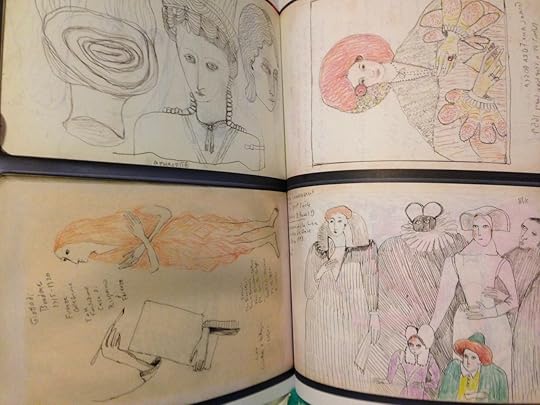
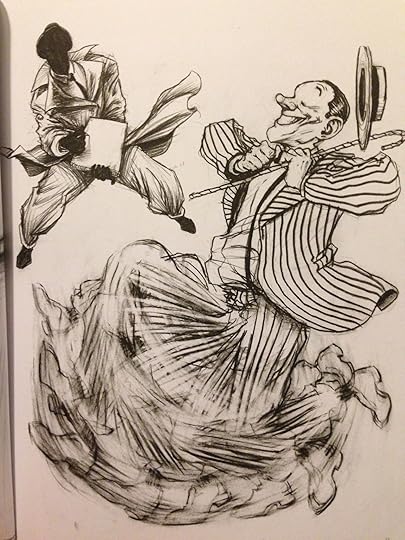
Comics Sketchbooks features the sketchbook pages of 82 artists. There are comic artists like Jim Steranko, animator Bill Plympton, illustrator Peter de Seve, political cartoonist Ann Telnaes, underground comic artist Robert Crumb and more.

Those are some of the artists I recognise so it's fun to discover a new bunch of them, each with a short profile provided.

A peek at their private sketches reveals the other side of these artists. The sketches show us what they think of and draw while they are unguarded. There are sketches of people on subways, comic ideas, doodles, some literally from dreams and a lot of other weird things. The sketches are rough, some are unfinished, and they all represent some random thought. The artists' hands are like mind seismographs.

The artists' websites are included at the back of the book.

It's a nice visual book for the adventurous reader to dive into.
Profile Image for Gemma Correll.
Author 76 books1,069 followers
December 25, 2012
There are some great artists in this book but there's a lot of finished work included, rather than actual sketchbook drawings... Could have done with the inclusion of more artists who use the sketchbook as a musing/ brainstorming tool- someone like Tom Gauld, maybe. I'd liked to have seen more evidence of the thought processes behind the artists' works.
Profile Image for Jo Bennie.
489 reviews30 followers
November 30, 2014
A hefty coffee table book packed with the studies and notes on sketchbooks from 82 of the foremost comic book artists working in the field today. It is a generous work, artists showing how the pristine work that we read in their comics comes to the page. And it is inspiring, showing how different artists work their way from idea to finished product.
Profile Image for Jennifer.
429 reviews15 followers
November 19, 2016
I love seeing other artist sketchbooks so this was a great book for seeing rough work, but too much finished work to have sketchbook in the title I thought. Still worth a read to see how people work and develop their ideas tho.
Profile Image for George.
35 reviews5 followers
February 13, 2013
You won't like all of this book, but you will love some of it. Browse to find an artist or two that you like.
83 reviews2 followers
December 15, 2016
Me regalaron el libro y esta bastante bien editado y con una muestra muy variopinta de autores.
Displaying 1 - 12 of 12 reviews

Can't find what you're looking for?

Get help and learn more about the design.