In this debut collection, Eyes, Stones, Elana Bell brings her heritage as the granddaughter of Holocaust survivors to consider the difficult question of the Israeli-Palestinian conflict.
The poems invoke characters inexorably linked to the land of Israel and Palestine. There is Zosha, a sharp-witted survivor whose burning hope for a Jewish homeland helps her endure the atrocities of the Holocaust. And there is Amal, a Palestinian whose family has worked their land for over one hundred years—through Turkish, British, Jordanian, and now Israeli rule. Other poems—inspired by interviews conducted by the poet in Israel, the Palestinian territories, and America—examine Jewish and Arab relationships to the land as biblical home, Zionist dream, modern state, and occupied territory.
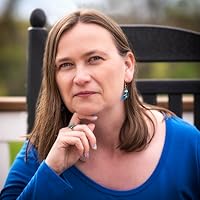
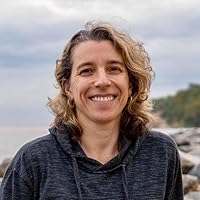
Born in Venice Beach, California, Elana Bell received a bachelor of arts from Sarah Lawrence College in 1999. She returned to Sarah Lawrence for graduate study and received an MFA in Creative Writing in 2008.
Her manuscript, Eyes, Stones, was selected by Fanny Howe as the winner of the 2011 Walt Whitman Award.
She is the recipient of grants and fellowships from the Jerome Foundation, the Edward Albee Foundation, and the Drisha Institute.
Bell has conducted poetry workshops for educators, women in prison, teenagers across the country and abroad, as well as for the Arab Jewish Peace Organization.
What do you think of when you think of the Israeli/Palestinian conflict? What words and phrases spring to mind? For me; suicide bomber, endless peace process, war of a thousand cuts, settlements, colonization. These are words of frustration and deep-seated pain.
So it makes sense that the poems in Eyes, Stones often prove frustrating and opaque; for such is their subject. And for a novice at poetry, there were several poems (perhaps 1 in 4) where I had nothing to grab onto; no sense of tone, setting or subject. I liked the poems best when they were the most straightforward and the least poem-like (such as an anecdote about Arafat's life and a list of real-life Palestinian and Israeli names shaped into a wall.)
At the advice of a book-club friend, I started reading out loud and that helped me find tone and rhythm. Also, the final pages feature historical citations for several poems that help explain their subject, though I didn't find these until I finished my first read-through.
This collection is recommended if you're experienced with free-verse and want to be challenged, but not ideal if you haven't read any poetry since college (as was my case.)
Eyes, Stones by Elana Bell, winner of the Walt Whitman Award, is a debut collection with two voices — two sides of the Palestinian-Israeli struggle — that demonstrates not only the pride of Palestinians, but also the pride of Israelis in their home. The initial poem, “The Dream,” (which could be a preface to the following three sections) establishes the somber tone for the book, but it also cautions that choices must be made in dreams even as they must be made when awake. A sentiment that is echoed again in “Notes from the Broken Notebook (part one): “cover your mouth, you’ll still inhale the gas/dance in the shadow of the concrete wall/tell yourself the tiles are not bones/even in a dream you must still make choices.” Bell is careful in her choice of language, but she does not shy away from the tumultuous moments in the region’s history, including the role of Arafat.
There is a great juxtaposition in the poem “Refugee,” which is about Ramla in 1948, between the new inhabitants of the house and the ones who have left. The refugees are entering the house with hope, a feeling of belonging and settlement on their minds, but there is this observance of what has come before — the quick ejection of the former residents, leaving the cupboards full and a few cans rolling on the floor. It is just one illustration of how something can symbolize hope and a new beginning to one person, but be the symbol of loss and an ending for another — much like the foreclosure can be for two different families.
Deeply moving poems on Israel, Palestine, and its two peoples. Astonishingly lyrical. Bell demonstrates mastery of a wide range of free verse forms. Hard to believe this is her first book. Highly recommended.
Smartly written. Voices feel authentic and haunting. The Palestinian-Israeli conflict can seem far away from my personal reality and experience, and I realize this luxury and privilege. This book is better than a history book or informative article about the conflict. Bell illustrates the emotions behind it, proving how remarkable empathy can be. EYES, STONES proves how devastating and beautiful it is to be alive.
In "Eyes, Stones," Elana Bell strives to invert assumptions and build on very distant and distinct understandings of the Palestinian-Israeli conflict. Bell explores how the tragedies of both peoples inform and create current identities. The memories of refugees from Europe and by Palestinians hangs over the collection in informs both personas in the poems: Zosha and Amal. The contrast leads to a sensitive portrayal that attempts to be fair to the experience of both sides.
Israel from Both Sides: A Study in Pride and Humility
Elana Bell has, in this collection of poems EYES, STONES, captured the essential feelings of the people of Israel and Palestine. There are interminable arguments and dissertations and wars on who belongs in this area of the world – is Israel the God given home of the Jews or is it a created haven after the Holocaust as a refuge and sense of home for Jews who have been misplaced for centuries or is it the land where Palestinians have lived and known as home for an equal amount of time? To whom does the land belong and how do the people of the region view Israel? Elana Bell, a writer of poetry who has conducted poetry workshops for educators, women in prison, and high school students in Israel, Palestine and through out New York City, has as sensitive insight to the ongoing argument and the associated dichotomy of feelings as anyone writing today. Her poems alternate between the Jewish Israeli and the Palestinian voice and the result is rapturously beautiful and sensitive.
NAMING THE LAND Because we named the land in blood and ink and everything held by the land to our use we named – dirty with the name -
Because we bought this land when ash became sky and the smell of burning drifted
Because my grandmother dreamed it instead of eating death and now trees grow over graves
Because the ruined promise because two pounds of shrapnel drawn form Noam’s back because Salim’s house forced open like a jaw a bag of pita scattered where the kitchen was
Because we can survive in any soil because until the end of the world we will scratch out the name
VISITING AUSCHWITZ what scrap of bread what glance from a slop-drunk SS what rage raised the rusted shovel struck it on the starving ground until the whistle ended day what muscle corded in the thighs not buckling to the bed of lice of bloody flux what propped her up when her bowels release the spoiled cabbage soup and she couldn’t hold her dead-weight head what switched the names so she was not called what scarf smuggled from the storage hull a shred so she could wipe herself what song muffled in the dark what glint willed her breath what saw her and said live
Toward the end of this powerful collection Elana Bell writes in a retrospective fashion a work that ties much of her book together:
LETTER TO BROOKLYN When I come home to you, I’ll watch the Super Bowl. I’ll buy waterproof boots if it rains and sheepskin gloves for my cold hands. I’ll eat organic greens and make love on Saturday afternoon when no one is in a rush. I’ll listen to jazz in a tight-packed club with red lipstick on to tease the man behind the bar. I’ll sigh about the candidates for president – it’s all hot air – but clench a secret hope, so secret I’m not even sure it’s there. And at night, after a glass of wine and the internet, I will sleep on clean cotton sheets – In my dreams there’s a knock on the wind. Someone drags me from my feast and paints a mask of open sky over my eyes, then ropes my wrists and ties me to a tree. I twist but I can’t fly. And no one comes to save me.
Poets such as Elana Bell offer us a plain on which to examine a long unanswered puzzle and in doing so she brings so many political and sociological insights that we almost forget to notice what a brilliant poet she is.
This book is powered by inversions, by questioning from underneath, from "the other side," from different moments in history. Lines like "There are no windows from which I do not see the city burning" (from "Kishinev") and "I could have given anything away after that" and poem titles such as "There are things this poem would rather not say" and "What Else God Wanted" bring into light what we might call the otherwise unsaid or unacknowledged. They are surprising because of their unexpected perspective (as if the invisible, rather than the visible) and moving because, most of the time, they are so clearly filling out a larger idea or perspective, rather than poking holes in it -- pointing to a larger completeness, or a broader question, rather than a narrow view we may have seen as whole.
I especially admire the places in this collection where these inversions make for a kind of admission, or raw honesty. It is easy enough to "poetify" conflict, I think -- the horrors of reality already contain drama and figures it would be difficult to make up. So what Bell does in poems like "Naming Our Dead" and "Notes from the Broken Notebook" (to name only two) is significant: she raises and leaves questions and uses forms like the ghazal and even lines arranged alphabetically that do not attempt to resolve the situations and problems they present.
Sometimes I don't know enough about the history or historical figures at the heart of these poems to fully comprehend them, but still I feel I "get them". I wonder what I might make of the order and balance of the poems if I knew more about the history of Zionism or the rise of Arafat. Are there undercurrents in the book I'm not aware of without this knowledge? I should read about it. That's up to me. I'd be interested in reading more about the history of the Israeli-Palestinian conflict and then returning to this book.
Small note: I love the epigraphs from Darwish. Makes me want to find a copy of a Darwish collection.
This collection is a heartbreaking work of true art in its own rite. This is a book that everyone should read. Poets, artists, performers, lovers of poetry, and those dedicated to bringing about peace in the middle east should all read this book. So, too, should Palestinians and Jews alike, no matter their political stance, because this is a book crafted to inspire and bring about peace. This is a book meant to open eyes, minds, and hearts, and I, like Elana Bell, hope that this is a book that will change the world. In its newest incarnation as a performance piece, Eyes, Stones has the ability to speak to new and greater audiences, and with my whole heart I look forward to seeing this work reach the far corners of the earth.
Innovative look into the Israeli-Palestinian conflict. Some really excellent poems here (particularly in book 2); use of concrete poetry (Naming our Dead) and persona poem really pull this book together in a collection of poems that must be read together. Feels like a book of poems rather than a series of independents. Somber tone throughout but enriching read.
If you're into poetry about the Middle East that blends two very distinct position into one compelling collection, then Elana Bell's winner of the 2011 Walt Whitman prize is for you.
Interesting lyrics examining/giving voice to the Israeli-Palestinian crisis. The project is ambitious, though I don't know how successful, ultimately, all the poems are or the book as a whole.
4/5 beautifully written. some of them went over my head, and not all of them resonated with me, but many did, and they just made me think. my understanding of the Palestine-Israel conflict is extremely limited, and i come from it from a more distant perspective: one of extreme privilege and geographic distance. seeing the way the author deals with the complexity is interesting and intimate as well. this book is wonderful.
some of my favorites:
- The Dig - Oranges - Kishinev - What Else God Wanted - Homeland: A Fable - Flags - Language in the Mouth of the Enemy - Letter to Brooklyn
one of my favorite poems:
"Her laugh like ankle bells, returning from the well, a vessel balanced on her head. Or squeezing milk from our goats. At night when she unbraided and brushed my hair, her hands were like birds and I imagined the lightness of owning nothing. I wanted to wear her laugh like skin, I wanted to flood her eyes— I sent my husband in." —Sarah
Bell breathes into other lives and perspectives. The lyric she’s recorded is their audible exhales. I think it’s important to locate that experience, because the stories she shares are deep tragedies perpetuated though systemic conflict/violence. They are firmly acknowledged, yet somehow, she is able to create a kind of freedom there.
“I am from a people who move, / who crossed sea and desert and city / with stone monuments, with clocks, with palaces / on foot, on skeleton trains, through barracks / with iron bunks, aching for a place we could stay.”
So much of Elana's writing is about naming--people, the land, the city, the dead. I love this! As she says, "if you have no language you have nothing." I love the history she brings into her work. She speaks of God--speaks to God, about God, questions God, curses God, pleads with God. So many poems I love in this book: "How I Got My Name," 'Naming the Land," "Refugee," "Tomorrow in Apricots," "Prophecy: Intifada," "Kishinev," "Sarah," 'Visiting Auschwitz," "Language in the Mouth of the Enemy," "Letter to Brooklyn." I highly ecommend!
A collection of poems told from different perspectives in relation to survival, the Holocaust, identity, and the Palestine/Israel conflict.
from Naming the Land: "Because my grandmother dreamed it / instead of eating dirt / and now new trees / grow over the graves"
from Oranges: "What city? We were a few houses, / a street rutted out, clouded / by orchards. That smell / strangled everything. / The scent of oranges and no other / sweetness could come in."
from On a Hilltop at the Nassar Farm: "This for Amal, whose name means hope, / who thinks of each tree she's planted like a child, / whose family has lived in the same place / for a hundred years, and when I say place / I mean this exact patch of land / where her father was born, and his father, / so that the shoots he planted before her birth / now sweep over her head."