Jump to ratings and reviews
Rate this book

King of the Badgers

Rate this book
Spine creased, page edges tanned. Shipped from the U.K. All orders received before 3pm sent that weekday.

448 pages, Paperback

First published March 1, 2011

32 people are currently reading
739 people want to read

About the author

Philip Hensher

41 books111 followers
Hensher was born in South London, although he spent the majority of his childhood and adolescence in Sheffield, attending Tapton School.[2] He did his undergraduate degree at Lady Margaret Hall, Oxford before attending Cambridge, where he was awarded a PhD for work on 18th century painting and satire. Early in his career he worked as a clerk in the House of Commons, from which he was fired over the content of an interview he gave to a gay magazine.[1] He has published a number of novels, is a regular contributor, columnist and book reviewer for newspapers and weeklies such as The Guardian, The Spectator , The Mail on Sunday and The Independent.
The Bedroom of the Mister’s Wife (1999) brings together 14 of his stories, including ‘Dead Languages’, which A. S. Byatt selected for her Oxford Book of English Short Stories (1998), making Hensher the youngest author included in the anthology.http://literature.britishcouncil.org/...
Since 2005 he has taught creative writing at the University of Exeter. He has edited new editions of numerous classic works of English Literature, such as those by Charles Dickens and Nancy Mitford, and Hensher served as a judge for the Booker Prize. From 2013 he will hold the post of Professor of Creative Writing at Bath Spa University.[3]
Since 2000, Philip Hensher has been listed as one of the 100 most influential LGBT people in Britain,[4] and in 2003 as one of Granta's twenty Best of Young British Novelists.[1]
In 2008, Hensher's semi-autobiographical novel The Northern Clemency was shortlisted for the Man Booker Prize. In 2012, Hensher won first prize -German Travel Writers Award, and is shortlisted for the Green Carnation Prize. He also won the Stonewall Prize for the Journalist of the Year in 2007 and The Somerset Maugham Award for his novel Kitchen Venom in 1996. He wrote the libretto for Thomas Adès' 1995 opera Powder Her Face. This has been his only musical collaboration to date.
His early writings have been characterized as having an "ironic, knowing distance from their characters" and "icily precise skewerings of pretension and hypocrisy"[1] His historical novel The Mulberry Empire "echos with the rhythm and language of folk tales" while "play[ing] games" with narrative forms.[1]
He is married to Zaved Mahmood, a human rights lawyer at the United Nations.

You can find out more about Philip on his author page at 4th Estate Books: http://www.4thestate.co.uk/author/phi...

Ratings & Reviews

What do you think?
Rate this book

Friends & Following

Create a free account to discover what your friends think of this book!

Community Reviews

5 stars
106 (13%)
4 stars
286 (36%)
3 stars
234 (29%)
2 stars
111 (14%)
1 star
44 (5%)
Displaying 1 - 30 of 124 reviews
Profile Image for Richard.
Author 6 books89 followers
May 29, 2012
Picturesque Hinmouth lies on an estuary in the southwest of England, and is close to Barnstaple University. These are obvious stand-ins for Exmouth/ Exeter and the University of Exeter (where Philip Hensher teaches English), and he surveys the lay of the social land with an intimate, brilliantly detailed eye. What happens to the snobs, yobs, busy-bodies, have-nots and ne'er-do-wells of Hinmouth and its suburban hinterland when a little girl goes missing and her unappealing family's story doesn't add up? In setting this going, Hensher writes with a darkly comic flourish - and a wicked precision about the modern English niceties - that makes you think of Jane Austen. By page 100, though, it seems to me, two different things have started to go wrong.

Technically, what goes wrong is that Hensher introduces too many characters, makes their interconnections too vague and episodic, and in general connects scenes and themes as if he has heard of Impressionism but not seen it. To put it another way: every scene without exception is a good draft scene, but a good editor would have killed two-thirds of the darlings. Sure, this is not the sort of book in which every sentence should be a cog in the plot. But (for instance) why does the author think we should care about Mauro? (Here? In this book?)

The bigger problem is harder to articulate, and defend as a cogent criticism, but perhaps I can explain to some people what I mean when I say this: I kept being reminded of why I so strongly dislike almost everything Martin Amis has ever written, regardless of how well-written it is. It's a question of moral atmosphere, I suppose. The laughter in Austen is light, even when mordant, and always compassionate. The laughter here seems colored by a cheap, shallow, depressingly clever-schoolboyish cynicism. You can identify strongly, as I do, with Hensher's evident anger that England has been turned into a sort of open prison ruled by meekly-accepted "authorities." (The current Pry Minister, David Cameron, is as witless a fool about these aspects of national life as was his predecessor. David and Tony, may you burn in hell, naked and surrounded by security cameras.) But it is hard to avoid the sense that Hensher thinks these problems - plus the crime, the death of manners, the snobbery and shabbiness and everything else - are to be recorded only with bitter laughter, since after all we (or the characters) deserve it. (It's striking that he seems to exhibit real sympathy for one gay couple, one elderly widow, and almost no one else.)

Both problems contribute to the book's fatal slackness of rhythm - its surprising (in the end, despite all the good bits) dreariness.
Profile Image for David.
865 reviews1,667 followers
February 10, 2012
I bought and read this last November, as a kind of antidote to Julian Barnes's "The Sense of an Ending". The thin gruel of that effort, with its dull, forgettable main protagonist left me with an appetite for a real story, with characters that would actually engage the reader's interest. And yes, stretching this tortured metaphor a little farther, Hensher's book satisfied my craving - it's a hearty beef stew (or maybe a bouillabaisse), with a large cast of characters, satisfyingly complex plotting, written with a kind of malicious affection.

The book is set in the fictional seaside town of Hanfield, a kind of smug, upper-middle class enclave. The story opens with the abduction of a child in broad daylight; the subsequent investigation and media frenzy shatters the complacency of locals. As the story progresses, Hensher digs below the surface, exposing the foibles of his characters with a certain malicious glee, but also with affection. The development is more tightly controlled than in the somewhat undisciplined "Northern Clemency", and the writing is excellent.

A good story, well told. I enjoyed it very much.
Profile Image for Bettie.
9,976 reviews5 followers
March 6, 2014


Dedication:


To
The
Gang:
bertie
and J.B.
and Sam
and Rita
and Ralf
and Julia
and Yusef
anf Jimmy
and renaud
and Richard
and Alan again
and Lapin again
and Professor A
and Dickie Heat-Hot
and not forgetting Nix (Hi Nicola!)
and Mrs Blaikie (with love from Rufus)
and Herbert who said it's all quite laconic once
but especially and always and once more for my husband
and really just to say to all of them and probably some others too
What
Fun
It's
All
Been.


[GR does not allow 'center' command, so I have to point out that this dedication forms an aeroplane outline]

Opening:

BOOK ONE
NOTHING TO HIDE

That bowler-hatted major, his face is twitching,
He's been in captivity too long.
He needs a new war and a tank in the desert.
The fat legs of the typists are getting ready
For the boys and the babies. At the back of my mind
An ant stands up and defies a steam-roller.

GAVIN EWART, 'Serious Matters'

Last year, at the hot end of spring, in the small town of Hanmouth on the Hain estuary, a rowing boat floated in the middle of the muddy stream.


Bookmark is Piazza Navona sent through from Hayes - thankee.


Every mother's nightmare: "XX hasn't come back from the shop."

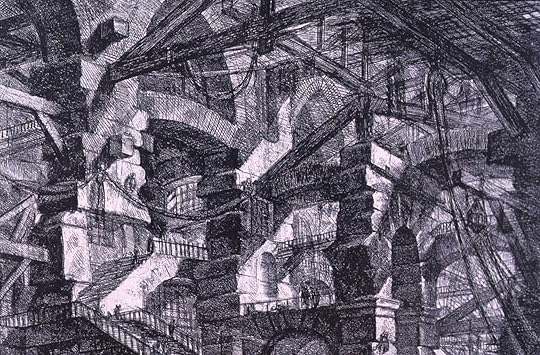
P. 34 ...greasy steps and iron escalators of the Underground, diagonal, hung and groaningly floating over great unspecified voids, like public transport envisaged in a nightmare by Piranesi.


P.64 'Kitty, libraries aren't for reading books anymore,' Sam said, 'They've given them all away. It's nothing but DVDs and computer terminals nowadays.


Literary references alluded to:

Thomas Hardy
The Royal Hunt of the Sun
Nazi Literature in the Americas
The Makioka Sisters
Kubla Khan
Hay Fever
Oedipus Tyrannus
The Cherry Orchard
Parliament of Birds
Sylvia Plath
Virginia Woolf

Love the writing style but not this tale; so I would read another Hensher as long as it isn't such a boring storyline.

Profile Image for David Gee.
Author 5 books10 followers
July 7, 2012
After his Sheffield saga THE NORTHERN CLEMENCY, Philip Hensher relocates to a small select township on the Bristol Channel with KING OF THE BADGERS (where does he get these weird titles from?). I'm sure many readers will take a guess at where Hanmouth is meant to be.

The book begins with the disappearance of an 8-year-old girl from the council estate on the outskirts. The case seems to fizzle out until a surprise discovery much later in the story. What Hensher concentrates on is giving a picture of the criss-crossing lives of the middle-class retirees and shop-keepers on the best street in town. Some of these are people one would be happy to have as neighbours; others are not. There are several busybodies, including the obnoxious organizer of Neighbourhood Watch (Hanmouth is heavily watched by CCTV). One couple are living way beyond their means.

Blessed are the cheese-makers! The gay proprietor of the cheese-shop and his chum host an orgy for their "Bear" friends which the author describes in choreographic rather than pornographic detail. One of the guests, the visiting son of neighbours, is a sad fat queen with a hopeless crush on a hunky Italian who's sponging off him shamelessly.

This is a big sprawling novel that often wanders into James Joyce/Virginia Woolf 'stream of consciousness' writing that I would have preferred to see less of. It's at its best as a kind of rustic soap opera, a literary street scene like a Breugel or Lowry painting brought to life. 'All human life is there.' Didn't that use to be the motto of a Sunday newspaper? I wonder what happened to it!
Profile Image for Larraine.
1,057 reviews14 followers
November 18, 2011
To say that "King of the Badgers" is a strange book, is putting it mildly. I learned about the book by accident while reading the status of one of my favorite authors. She said that Hensher had made a disparaging statement about "thrillers." I guess it's a matter of taste. I like a good crime novel myself, but I do like to indulge in good literature also.


This book was strange but so well-written, I couldn't put it down. Hensher doesn't like all of the CCTV cameras that are all over Britain. I confess I wouldn't like them either although I must admit that if you are in a crime-ridden area or a large city, you might feel safer.


The book starts out with the kidnapping of a little girl. However, you really don't have a whole lot of empathy for the little girl (who is totally unappealing) or the slatternly mother or awful stepfather. She lives in a working class suburb of a small Devon town that has become very upscale in the last few years. It is on the water, there are lovely little fishermens' cottages now transformed into upscale residences, new flats that have obstructed the views of previous inhabitants, upscale shopping including a cheese shop run by a gay man named Sam and his partner, Harry, also known as "Lord-What-A-Waste."

I don't think Henshaw likes anyone. He has equal disdain for the working class, the middle class and the upper class it seems. We meet the creepy head of the neighborhood watch, appropriately named John Calvin. In addition there is the Brigadier and Billa, an elderly couple, Miranda (she's a marvel) and Kenyon, her husband. Miranda runs the monthly book club with an iron hand. No light reading here when Miranda has anything to do with it. She teaches English literature at a second rate college and is thrilled to have one non-white student.

Kenyon is a Dept of the Treasury employee on indefinite loan to an Aids in Africa project. He spends most of his time in London and one day of that workweek in the arms of his lover who happens to be the father of Miranda's one non-white student. Miranda and Kenyon have a teenage daughter who still plays with dolls that have names like "Child Pornographer" and "Slightly Jewish."

Harry (Lord-What-A-Waste) and Sam consider themselves husband and husband although they do get together with the Bears, a group of bearded and mostly overweight gay men. With the help of drugs and alcohol they have a private orgy every few months.

Catherine & Alec are a retired couple who moved to the town after visiting Alec's former secretary and her husband who live in a nearby town. They buy one of the flats that obstruct other people's views. Their son, David, is visiting. He is fat, unstylish and gay and is bringing along an Italian gigolo named Mauro, passing him off as his boyfriend.

Catherine invites some of the neighbors to meet her son and his "partner." The neighbors come more out of obligation, but find they are having a nice time after all. Winding its' way through the book - a lot in the beginning, then a little at the end - is the missing child. This is one of those somewhat dry but witty books. At the very beginning, the author describes a bee hive: "It looked like a miniature tongue and groove New England lunatic asylum." How can you not want to read more?

Profile Image for Andrew Rumbles.
24 reviews10 followers
October 24, 2012
Hanmouth, Devon is an English village where the town’s inhabitants are happily living their daily lives. In the interests of civic safety they have agreed to install CCTV. As the story unfolds we also see their lives from the inside and all is not what it always appears to be. Why is Sylvie making collages out of penises cut from magazines? Why is the Brigadier’s wife always so chipper? What makes the new couple in town think they will fit in? Will their son enjoy his visit and who is his new friend? Do Miranda and Kenyon know each other, let alone their crazy daughter, Heidi? And why do the people on the neighbouring council estate have to call their suburb Hanmouth, when it quite obviously really isn’t? And pervading the novel throughout is Mr John Calvin’s insistence that Neighbourhood Watch keeps authorising more cameras. A mix of motivations and intentions all slowly build to create a quirky picture of what really is going on.
The biggest surprise to me was the in your face gay sex party that is hosted for the Bears by local cheese shop owner, Sam and his boy friend Harry or “Lord what a waste”. It does circumspectly take place behind the tightly closed curtains. Throughout the novel one character remains distinctly unknown. She is young China, a girl from the other Hanmouth who disappears and even the CCTV footage doesn’t seem able to help.
This is a slow moving, beautifully written novel. Enjoy it for its language and what it does and doesn’t tell you. Its journey may be more enjoyable for you than its destination.

Reviewed by Andrew Rumbles Andrew@gayexpress.co.nz; http://andrewtalksbooks.blogspot.co.nz
112 reviews1 follower
November 17, 2012
I absolutely loved this book. I like everything Hensher has written but I enjoyed this book probably the most. He is a snob but his snobbery is a scattergun affair - no-one is safe - the smug, the rich, the poor, the dull and the eccentric all get a sharp seeing to before he marches on to have a go at someone else.
The story is about a town, which is on the face of it, a perfect English seaside town but literally no-one is as they seem. I particularly like the way the writer is quite savage with a character initially but then explores their vulnerability slowly and much more sympathetically so that by the end, you have grown, if not exactly to like them, to at least care for them.
The gay sex scene was a bit of an experience but proof of how good his writing is that I almost felt like I was there.
I've read several sniffy reviews of his book, which I find interesting as I feel his sharp observations aren't quite right for the literary world as I think, in some part, he's mocking them too...
A definite great read....
Profile Image for Catherine Davison.
344 reviews9 followers
August 20, 2018
There’s already a really good review on GR by a reader called David, so I’m just going to redirect folk to his review rather than trying to write my own because David has expressed pretty much everything I thought about this brilliant book. ( ‘Brilliant’ being one of the terms the American boy adopted in his attempts to be more British!). I loved this book and I too thought it read like a contemporary 19th Century novel with its big panoramic cast and the small but interesting events unfolding in their small village of Hanmouth.
Profile Image for Jess O’Riley.
28 reviews
December 1, 2025
Kind of innane but actually I loved that felt like the characters were really well developed and it was quite poignant maybe best book I’ve read all year?
Profile Image for Felice.
250 reviews82 followers
November 14, 2011
The new novel by Philip Hensher, King of the Badgers, is an ambitious state of the nation novel. It is a sometimes entertaining, sometimes horrifying dissection of a community. It satirizes, illuminates and exposes current manners and mindsets in Great Britain.

Taking apart middle class snobbery and pretensions is not a new endeavor for Hensher. In a terrific earlier novel, The NorthernClemency he did the same thing on a much smaller scale and in a historical context. The distance that history provides gives a writer the luxury of faux hindsight. Hensher doesn’t get that gift in King of the Badgers. His world in this new novel is contemporary and he works hard to keep it relevant.


Hensher uses a missing child from the wrong side of the tracks as the catalyst to peel away the picture postcard pretty of the seaside town of Hanmouth. The missing child isn’t from one of the many sanitized into respectability families. Eight year old China O’Connor and her patchwork family are residents of the public housing that the more comfortable citizens of Hanmouth do not acknowledge as part of their town. China’s mother is a woman with many children, all from different fathers. When your last name is Rockefeller or Vanderbilt in some social circles this method of breeding would be considered acceptable but when you live in Hanmouth and your last name is O’Connor this type of parent makes you trash.
Do not for a minute think that this book is a mystery novel. Despite the kidnapping of China and its effect on all of the characters in the novel this is no detective story. Poor China gets the ball rolling but even a missing child cannot break through the self absorption of these people.


The mighty of Hanmouth see China’s disappearance as a vindication of their desires for more protection from…from everything really. One of the sad truths of the novel is the characters desires to be accepted and at the same time be free to express all the behaviors that they fear will label them as unacceptable.


The bigger canvas of King of the Badgers allows Hensher to impress us with his skills in manipulating a large cast of characters. It also provides a broader menu of pretensions to penetrate. He is certainly up to the task. Each of the many characters has a complete story and a role to play in this cross section of life lived in the proverbial nice place to live. However the book is not a revelation a minute soap opera. There is a slightly documentary tone to the novel that juxtaposes nicely with the humorous elements of the book as it reinforces the honesty of Hensler’s portrait.

P.S. That cover? What the heck? Who was on crack the day that was selected? Believe it or not it looks even worse in person. It looks like a cover you would find on a local historical society cookbook. Painful.
Profile Image for Paul.
1,023 reviews41 followers
October 7, 2011
Here's what I had to say about an earlier Philip Henscher novel, The Northern Clemency: "One of the more engaging novels I've read recently, what appears at first glance to be a gentle, modest story about middle-class British family life reveals itself to be a multi-generational saga spanning two decades; in short, a novel about everything that's important, told with penetrating insight, brutal honesty, and wry humor."

King of the Badgers is anything but gentle. It stretches the concept of "family life" to its limits. The story unfolds over a span of months rather than decades. It's not about anything terribly important. But as in The Northern Clemency, Henscher's penetrating insight, brutal honesty, and wry humor infuse every page.

Using the abduction of an eight-year-old girl from a nearby housing project as the unifying event, Hensher takes us behind the closed doors of families in the fictional Devon town of Hanmouth, where we meet the solidly respectable, the financially desperate, the social climbers, the community trouble-makers, the bohemian rebels, and the gay couple who host orgies. Among them are the good-hearted, the true and false friends, the schemers, the men and women with secret lives. Lurking around the edges are thieves, grifters ... and worse.

Hensher mixes narrative styles, going from third-person observer to omniscient narrator, but he does it so deftly I might not have even noticed (if he hadn't titled one of his chapters The Omniscient Narrator Speaks, that is).

King of the Badgers is a blast. Reading it is a giddy experience. I got caught up in the tabloid excitement of the little girl's abduction and the perfidy of her trailer-trash family (and the far more sinister events that follow), I couldn't tear myself away from the lives and secrets of the good citizens of Hanmouth. I was surprised that I was not at all put off by the flamboyantly homosexual couple and their lurid orgy. I laughed out loud when Spencer, to the horror of all, put his hand down Mauro's pants at Catherine and Alec's housewarming party. I was surprised when my heart warmed to Hettie, an awkward teenaged girl whose dolls have secret names like Child Pornography and Slightly Jewish, who becomes the moral center of the story. I was happy when things began to look up for Kenyon and Miranda. I won't forget any of these people ... they became, for a brief while, part of my own life. Such is the richness of Philip Henscher's writing.

Rich stuff, great fun, filling. I loved it.


Profile Image for Gerhard.
1,320 reviews896 followers
October 5, 2014
This novel is one of those guilty pleasures one is reluctant to admitting how much you enjoyed it, as Philip Hensher spares no sacred cows, pieties, scruples or morals in this often grotesque and lurid, but extremely funny, skewering of middle-class society. Even the reader has his or her pretensions examined ruthlessly at one point ... and found to be sorely wanting, of course, as is everyone else under Hensher’s ferociously intelligent gaze.

In the fictional English town of Hanmouth, on the Bristol Channel, a young girl by the name of China goes missing, presumably kidnapped. That her family is from the wrong side of the tracks, so to speak, is cause for much grievance among the upstanding citizens of Hanmouth proper, as the sadly unwarranted event gives undue publicity to the less than savoury aspects of this semi-rural idyll.

However, Hensher is little interested in solving the mystery of China’s disappearance, and simply uses this as a pretext to delve behind the curtains and closed doors of Hanmouth, to peer into its darkest nooks, crannies, desires, fears and hopes.

The irony of this, of course, is that the book is ostensibly about the invasion of privacy and the encroachment on human rights, as the stick-in-the-ass John Calvin of the local Neighbourhood Watch launches a one-horse campaign to increase the number of surveillance cameras in Hanmouth (‘If you are not doing anything wrong you will not be afraid to be caught out’, is the overall motto of this Big Brother benevolence).

Perhaps the highlight of the book is a bravua sequence contrasting a dinner party at one family, while a few houses down the local bears (fat, hairy and happy gay men) are getting down and dirty.

What I loved is that the book ends on such a sweetly domesticated note between the two lead gay characters, Sam and Lord What A Waste Harry, that the reader is totally wrong-footed by Hensher’s loving adoration for this doting couple, symbol of the true love, friendship and fealty that a proper community should be built upon.
Profile Image for Kelly Robinson.
31 reviews4 followers
October 5, 2012
Badger writes a cutting social commentary in his latest novel, King of the Badgers, about a small picturesque village in Southwest England, Hanmouth, and its inhabitants. While the story revolves around the townspeople during the disappearance of a small girl from the public housing in the outskirts of town, this is not a mystery. Rather, the girl's disappearance acts as a tool for Hensher to dissect the lives of the townspeople - all of whom have great faults - whether it is the selfishness and drug addiction of the girl's parents, the homosexual affairs of the upper-middle class inhabitants, or all around deviant behavior. I greatly enjoyed this book, but it is true as other reviewers have observed that there are no really likeable characters, and this is more about social commentary than plot. There are many dark scenes, but there is also a fantastic dry humor to this story. The second half of the book does contain a few homoerotic scenes and I would caution those who may find this offensive to choose a different read. Although I found Hensher's take on small-town life to be fascinating, I did not give the book five stars because the storyline occasionally detoured into long tangents that could have made the same point in fewer lines and kept the pace more consistent throughout the book. I received this book free through goodreads firstreads, but I will definitely be checking out Hensher's other work. All in all this was a fascinating book for anyone who enjoys reading fictionalized accounts on society's ills.
Profile Image for Felicity.
289 reviews33 followers
June 8, 2011
Phillip Hensher has done it again, although (thank goodness) in around two to three hundred less pages than last time (not that I didn't mind all the pages last time, but I do appreciate his economy this time around).
Once I started this book, I bunkered down for the weekend with a steady supply of peppermint tea and plenty of delicious baked goods. Curling up with this book was time to treasure.

The novel opens with the story of a missing eight-year old girl, China, in the town of Hanmouth (somewhere in England...my geography is really off). From then on, the novel unfolds (it's a bit like mandarin segments), with the story chopping and changing at a very sedate pace between the perspectives of lives of other residents in the town. China's story is a jumping-off point, not the focal point, and so what we see as the narrative unfolds are different events, told from different perspectives, giving the reader a sense of the varying ways in which people are effected by what seems to be the "same" event.

The novel claims to be about the increasing power of state surveillance (or, at least that's what the blurb says), but that's only one of the issues that Hensher explores. It's Hensher's attention to the details of everyday life; his careful focus on the interactions between people; and his refusal to shy away from life's uncomfortable and disquieting moments that all combine to make this novel so compelling.


Profile Image for Richard Moss.
478 reviews10 followers
June 17, 2016
I am a big fan of Philip Hensher's work, but initially I found King of the Badgers hard going.

For the first hundred pages or so, he seems to have almost complete contempt for his characters. This is a social satire of a small English town, so you'd expect some tang of acid, but this was initially too unforgiving.

Although mostly we are in middle class fictional Devon town of Handsmouth, there is a focus in the first section on a family from a poor satellite estate who's eight-year-old daughter has gone missing. Hensher struggles though I think to properly characterise that family, and avoid cliche.

Hensher is a fine writer, but in the opening sections there was also a tendency to overwrite - a showiness that distracted rather than complemented the plot.

I only began to engage with the book when we reached the build-up to the orge that forms one of the centrepieces of the book. It's wonderfully written, and at last some of the characters begin to leap off the page.

Once some of the large cast began to feel real rather than caricatured, I was drawn in and really enjoyed the final half of the novel.

Hensher uses life in Handsmouth to explore Englishness; the balance between a private and public life; and loneliness in an intelligent and interesting way.

It should also be said that the book is very funny throughout. But I felt it needed the heart and empathy that does eventually appear to lift it beyond satire. In the end after a shaky start, Hensher won me over.
Profile Image for Simon.
168 reviews34 followers
November 26, 2011
Though the book is ostensibly about a child abduction, Hensher's main theme in King of the Badgers is the distinction between public and private. This isn't, however, a simple screed about the proliferation of security cameras and the culture of surveillance in modern Britain. Instead, Hensher does a brilliant job of showing you the complicated interplay between his characters' public and private lives, between their inner thoughts and their outer performances, between their selves and their roles, and all the time he's drawing his readers' attention to the power of the omniscient narrator, able to see and hear all, and go everywhere. It's a striking trick, but the book is not tricksy, not at all. In fact, the best part of the book, for me, was his ability to portray even minor characters so fully and memorably. He's got a great ear for dialogue, and unlike other books I've read recently, where every character speaks with the same exact voice (Ondaatje!), Hensher uses different dialects and registers to bring a whole range of English "types" to life. The skewering he gives his bourgeois town-dwellers and academics, in particular, is really great, biting and satirical but never mean, exactly. I loved this book, and can't wait to read more of his work.
Profile Image for Sherry Chiger.
Author 3 books11 followers
November 10, 2012
If you cannot enjoy a book without liking or empathizing with the main characters, give King of the Badgers a miss. Few of the characters (and there are many) are people you'd willingly hang out with; more than a few you'd go out of your way to avoid. Along the same lines, if you prefer a more conventional structure to your novels, you probably won't like this one. The books starts out as is it's about a young girl's disappearance, but then the story line is all but dropped--though we do at least find out what happens to the girl at the end, almost as an afterthought. Perhaps that lack of empathy, of concern for the the fate of a vulnerable person, is one of the themes of the book and is why the overall tone is cold and bloodless.

The writing is, for the most part, lovely, and there are a few unexpected touches of human warmth. And having lived in Barnstaple, the North Devon market town near the fictional town that's the setting for King of the Badgers, I enjoyed the descriptions of the area. But those descriptions and the sparks of genuine feeling sprinkled throughout the otherwise chilliness of the book only made me wish that King of the Badgers had much more warmth and much less tundra.
Profile Image for Jennifer .
253 reviews8 followers
October 28, 2011
Like many a 19th-century British novel, King of the Badgers opens with a detailed description of a town, in this case Hanmouth, a pretty coastal spot near the Bristol Channel. That all-seeing narrator's eye sees quite a bit more, actually, than the closed-circuit security cameras that a public safety committee has arranged to scan the picturesque streets. On the one hand, King of the Badgers is a classic story of a crime that takes place amid a varied cast of Hanmouth residents. On the other, it is a sharp-tongued commentary on the meaning of privacy and security. Not that any library patrons have asked me to recommend a contemporary read-alike for Trollope's "Barchester Towers," but if they did, this is the book I'd hand them (with fair warning that the goings on at the gay sex club meetings would certainly shock the Hanmouth public safety committee). I love Hensher's fiction, and I don't understand why he isn't more widely read.
Profile Image for Cate.
242 reviews8 followers
December 2, 2011
This is a good & thought provoking book. Set in a small town in Devon where a young girl goes missing from a nearby Council Estate. The disappearance of the child is not the focus of the story but provides a backdrop to some excellent character studies as the town goes about it's business with this event swirling around in the background - much like real life. Great writing with some quite poignant interactions between characters and some quite confronting ones. Teenager Hettie with her creepy doll collection is almost worth a story in her own right! The other background theme is the mysterious John Calvin, driver of the Neighbourhood Watch scheme and fixated on security cameras which represent the increasing incursion of the authorities into the private domain. I'd totally recommend having a read of this.
765 reviews7 followers
August 7, 2011
I loved this book. One review of it said that it set out to skewer almost every facet of British life, to which I’d respond, “You say that like it’s a bad thing!”
It was delicious, full of ordinarily eccentric and eccentrically ordinary characters, not many of them nice, many of them nasty, and almost all of them with something to hide.
Few of the characters were endearing, but they were people I wanted to believe actually exist behind the lace curtains of your average British town or village. Even Stanley the dog. And it’s always the sign of a good book when you turn the final page and wish you could find out what happens next. In this Audible edition, the narrator is brilliant - I particularly loved the rising inflection used for the young characters.
Profile Image for Shawn.
711 reviews18 followers
January 23, 2015
Wonderfully written, especially the conversations, but so much less a novel than "The Northern Clemency." The title is something of a mystery, although I'm sure the explanation in the Washington Post's review is correct: "The title “King of the Badgers” comes from a 1965 children’s book by J.P. Martin, “Uncle Cleans Up,” that offers the same distinctly British kind of satire: savage, with a soupcon of tenderness. (In the kind of pun that Hensher favors, “badger” is also slang for a cruel person. Hensher, as creator of this particular cast of characters, cannot be accused of being touchy-feely.)" I think I'll have to read "Uncle Cleans Up" to find out just what the significance is.
Profile Image for ❤Marie Gentilcore.
878 reviews42 followers
October 28, 2012
This was my first win from Goodreads First Reads. I was very excited to start it. It's the story of residents in a small town called Hanmouth and takes place when a little girl goes missing. I enjoyed the characters. The writer did a good job making each character feel real and I felt like I knew what it would be like to live in Hanmouth. I would have rated the book higher except that it took a while to get into the writer's rhythm. I also thought there were a lot of characters to get to know, almost too many. I also think the middle portion of the book was too long and if it had been shortened it would have improved the overall flow of the book.
Profile Image for Almira.
672 reviews2 followers
Read
November 3, 2011
Well, I didn't really finish the book.

Although the review sounded very interesting, the writing was very esoteric, which normally would not bother me, however, it was just too involved with too many things occuring with too many folks, that keeping track of everyone was just extremely difficult.
Also, the implied violence seemed to center around a young girl from a family of some "means"; the child that goes missing comes from a family of lesser "means", on the afternoon the disappearance, the mom is over at a friend's smoking "spliff".

I gave up at either Chapter 11 or 12.
339 reviews
May 3, 2012
An interesting look at contemporary English society - the tyranny of silence and issues of privacy. By examining stereotypes, he author manages to convey that while we are increasingly observed, there is just as much that we still don't know about our communities - and where do we say that enough is enough. What appears to start as a crime thriller/mystery veers quickly off into a social commentary, with the crime's resolution not really being pivotal to the denouement at all. Very few of the characters were likeable, but all were identifiable. Recommended.
Profile Image for Beth.
42 reviews
July 19, 2016
I really wanted to like this book because I had loved (& lent out) 'Northern Clemency' very much, but I really hated it. Philip Henscher has s very readable style, but the snide and mocking way he describes his characters is so unpleasant, it makes the book almost unreadable. The characters are all extreme stereotypes with every character conniving & lying to each other, with the exception of Billa (who is herself a stereotype of an old-fashioned but liberal woman). Deeply unpleasant book that I am so glad to have finished!
36 reviews
August 25, 2011
This novel begins with the story of a missing 8-yr old girl, China. I kind of expected the book to continue with this theme. However, it focused on the loves and lives of the other residents in the British town of Hanmouth just referring to the missing girl from time to time.

Most of the residents appeared to have something to hide and there seemed to be a lot of gay love happening! It took a while to get into, but just got better and better.

Profile Image for Catherine Siemann.
1,198 reviews39 followers
August 22, 2012
Centering around the kidnapping of a young girl from a council estate on the outskirts of a picturesque Devon village, this novel deals with issues of class, gender, and belonging. Hensher excels at creating characters and drawing us into their lives; the novel suffers somewhat from jumping from set to set of characters, not returning to resolve certain plotlines.
1,168 reviews15 followers
July 22, 2012
Always entertaining, this book reads more like a few weeks of a soap opera (Ambridge-sur-mer with bigger and more explicit roles for Adam and Ian). It is true that's couple of the major plots are resolved, but so much is left hanging that I feel I should tune in for next week's episode. This would be no bad thing, it's great fun.
Profile Image for Kris Fernandez-Everett.
352 reviews3 followers
October 6, 2011
I enjoyed the book, even if the ending a bit weak and the John Calvin character more than a little heavy handed... All in all, a very interesting, black comedic take on life under the watchful eye of CCTV Big Brother...
Profile Image for Susan.
1,191 reviews15 followers
October 25, 2011
Liked this a lot; biting wit and sarcasm reminded me of Evelyn Waugh. This was a close examination of the class system in the U.K. and was critical of certain laws violating individual privacy rights. Better than "The Northern Clemency" in my opinion...
Displaying 1 - 30 of 124 reviews

Can't find what you're looking for?

Get help and learn more about the design.