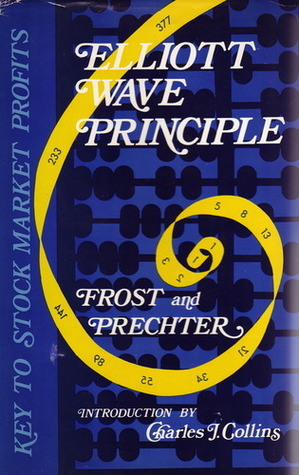
Das Wellenprinzip wurde in den 30er und 40er Jahren von Ralph Nelson Elliot entwickelt. Es beruht auf der Beobachtung, da� sich die Finanzm�rkte in bestimmten Zyklen bewegen, d.h. da� die Preisbewegungen am Aktienmarkt erkennbaren Mustern folgen und sich in sog. Wellen unterteilen lassen. Damit ist das Elliot Wellenprinzip ein wichtiges Instrumentarium zur Analyse und Prognose des Kursverhaltens am Aktienmarkt. Elliotts Theorie geriet mit der Zeit in Vergessenheit, bis Prechter 1978 dieser Theorie zu neuer Popularit�t verhalf. Insbesondere in den USA hat die Elliot Wellenanalyse seither Kultstatus erlangt. The Elliott Wave Principle ist ein Investmentklassiker, der mit jeder Neuauflage das Wellenprinzip weiterentwickelt und verfeinert hat. Diese Jubil�umsausgabe zum 20. Geburtstag der Erstausgabe macht deutlich, da� alle Prognosen der Autoren eingetreten sind. So haben Prechter und Frost nicht nur in der Krisezeit der 70er Jahre eine Hausse f�r die 80er korrekt vorhergesagt, sondern ebenso den Crash gegen Ende der 80er.
"The stock market is not a random, formless mess reacting to current news events but a remarkably precise recording of the formal structure of the progress of man" (page 113). Rather, it unfolds in waves, and "when presented clearly, the basic tenets of the Wave Principle are easy to learn and apply" (authors' note).
Authors Frost and Prechter certainly deliver on their second point, presenting clearly and in concise chapters: the broad concept; guidelines to wave formation; the historical and mathematical background; ratio analysis and Fibonacci time sequences (a most interesting section); long term waves (Millennium waves, grand super cycles etc.); stocks and commodities; and finally a critique of other approaches such as Dow theory, Kondratieff waves, technical analysis, random walk, and news driven and economics driven theories. For those less technically inclined, there are helpful suggestions to skip certain sections and chapters, but it's all here, in a neat package with ample charts and clear writing.
The authors are careful to note that the Elliot Wave theory is not a predictive tool, but rather it helps investors' relative convictions that the next market moves will be upwards or downwards, and by how much.
Because the book was originally written more than 30 years ago, the contemporary charts and examples are now dated, but the forecasts of then still distant market behaviour ("investor mass psychology should reach manic proportions", with a a Kondratieff wave inspired crash around the Millennium!) are surprisingly prescient and very interesting. Like Hyman Minsky's economic predictions made around the same time (1985), Frost and Prechter also foresaw worldwide banking failures and economic collapse at the market's peak.
Unfortunately the excellent writing is undercut by a fatal flaw -- there seems to be little evidence to support the work. For example, the authors note that the theory works for both stocks and commodities, but they examine index levels and ratios while ignoring dividend policies and rates for stocks, an important component of an investor's total return. They ignore indices other than the Dow and S&P500 (the NASDAQ was not yet in existence, and it's not clear if the theory applies to non-US indices), and they ignore the impact of foreign exchange on both domestic stocks and on commodities. The proof is best summed up in the book's final line, "As long as the market fulfills expectations, we can assume we're still on track." The proof is in the application of the theory.
Sweeping statements to support theories also lack empirical backing. For example, introducing the 50-60 year cycle of Kondratieff waves, the authors cite similar waves in Israelite and Mayan civilizations, but the brief reference leaves readers wondering whether these two civilization actually had such cycles, and if so, why those civilizations and not others. Didn't Kondratieff visit China or France?
Compared to the excellent and theoretically robust work by Minsky on the behaviour of markets and economies (driven by human nature, but unpredictable and unstable) and even the more straightforward but well documented work of Jeremy Siegel (Stocks for the Long Run) or Dimson et al (Triumph of the Optimists) for the upwards trajectory of stocks in the long run, this work is very weak. At best it demonstrates a correlation, not cause and effect ("a precise recording of the history of man?") but even the apparent correlations appear only when one zooms in or out to make a particular pattern appear. The data is mined with precision and thankfully, as few actually follow it, with little environmental impact.
In a concluding irony given their dismissal of fundamental analysis, the authors try to confirm their theory of patterns by noting the relative valuations of the market at different times (undervalued or overvalued). Most analysts would start with the fundamental and skip the charts. Those who are Elliot Wave adherents will undoubtedly have read this book already and enjoyed it. Those interested in this particular segment of markets history or in technical analysis can read this book, but it will be of little interest or use to the average investor.
تحلیل تکنیکال میگه صرفا از رو تغییرات قیمت با احتمال خوبی میشه تغییرات قیمتی آینده رو پیشبینی کرد. امواج الیوت یکی از معروفترین روشهای تحلیل تکنیکال هستند و منم برای آشنایی بیشتر با این روش این کتاب رو خوندم. این ایده و حول و حوشش با بقیه اجزای مدل ذهنی من نمیخوند، ولی خب ببینیم چه میشود. مخصوصا که در این کتاب حتی اشاره به امواج خورشیدی و ردپای فیبوناچی در بخشهای زیادی از طبیعت و اینا هم میشه(:
خلاصه اگه بخوایین با امواج الیوت آشنا بشین این کتاب به نوعی خدای این موضوعه.
This book gave detailed introductions to some of the more theoretical technical analysis. I would say I am neither a skeptic nor am I a diehard Elliottician. I do, however, believe in the mass psychology aspect of technical trading. I frequently trade patterns such as Triangles, Diagonals, Wedges, Trendline breakouts, Double Bottom breakdowns etc and Fibonacci Retracement for entering and exiting of trades. They are not the Holy Grail of technical trading however, they do sometimes increase the odds. Perhaps, 61.8% of the time it does worked in your favour. Hence, this book is a decent introductory book for technical traders.
I struggled through this book. This book was so hard to understand and grasp.
I started reading this book excited to learn about Elliott Wave Principle. In the first few chapters, the books starts off stating "if you are not an analyst skip through these chapters and go to chapter 3". I decided I'll read through everything word for word. Which ended up being figures, numbers and historical data which I found hard to piece together and irrelevant most of the time.
Now that I have finished this book, I can't seem to recall any techniques or any patterns to look for, or anything in general!?
Great primer for Wave Principle. Very simply explains the key concepts of Wave Theory but also gives insight as to the psychology that underpins the movements. This to me is the most useful information in the book; in order to anticipate and trade the market well you must be in tune with the emotions that certain movements are likely to produce in the average chart-viewer. A great quick read that can help mold/shape one's eye for the market.
A crucial note is that applying these principles to a 5 minute or even one or four hour charts will rinse you quickly. EW is a great tool for forecasting macro market conditions but on lower timeframes, though you can often see 3/5 wave patterns emerging, given that the market spends ~80% of the time in rangebound chop, those minor patterns you see are often micro patterns of a larger corrective cycle and very very easy to get chopped out of if you are using exclusively EW.
Elliotts are best used as a point of confluence with trades that you are considering taking based on other ideas. I personally trade mostly price action principles and will use EW as a way to forecast longer term trades or to determine if the trades that I am interested in taking are with or against trend (especially when a trend reversal is possibly underway) and how much time I may hae to be in the market before the next wave should hit. A much better book/principle to guide investments than to guide trades. But still very interesting. I am fascinated by the psychology of trading in particular, and this has some great insights to that end.
Very concentrated book about the EW theory. As it was written a while ago , the examples sometimes are hard to read. Nevertheless a must read for someone interested in Elliot Wave theory. I really liked that all rules and guidelines are presented at the end of chapter 2, so I could print them and keep as a reference.
it is definitely not a book for beginners as you might quickly get lost in lots of rules and guidelines. Keep slow pace at reading. Most pages needs to be reread multiple times to really sink in.
What’s in the book? Basics Obviously, this book starts by setting out the basics of the theory. You will discover that according to Elliott, financial markets are governed by a simple principle: stock prices always consist of an impulsive phase followed by a corrective phase. The impulsive phase consists of 5 waves: 3 impulsive waves and 2 corrective waves. The corrective phase consists of 3 waves: 2 corrective waves and 1 impulsive wave.
You will also learn that each wave has particular characteristics and is very recognizable. Each wave also has a name to identify it. For example, there is wave 1, wave 2, wave A, wave E…
Patterns This book presents all the patterns associated with the theory. You will discover zigzags, triangles, and flats. You will see their characteristics, how to distinguish them, and also how to predict them.
Principles The principle of alternation, the principle of scale and cyclic… All the principles of the theory are presented and explained. You will be surprised to find out that according to these principles, Elliott Waves have been present for hundreds of years.
Fibonacci About halfway through the book, there is a small aside to introduce you to the golden ratio and explain how it applies to Elliott Wave Theory. You will read that in fact the golden ratio is found absolutely everywhere and that stock prices are no exception to the rule.
Practical application You will also learn that in practice, Elliott Wave Theory is not really used to forecast the market (because no one can predict the market), but it is used to give context to your investment and trading decisions. It can also give you a significant edge if you wish to implement Elliott Waves in your trading.
My thoughts I think it’s a good book. It is sometimes a bit technical but overall everything is understandable if you put some effort into reading. A small drawback: examples are given to understand the theory explained in the book, but they are not always very clear and are not current since the book is at least 30 years old.
However, there is a lot of information in this book. Once you finish it, you feel like you haven’t retained anything because of the mass of information. That’s why I would have liked to have a quick summary of the characteristics of each wave and pattern at the end. I strongly recommend taking notes while reading so that you can make your own summary of the theory at the end of the book, as the information is scattered all over the place so it is difficult to understand if you don’t summarise the book properly.
Who should read it? I think every investor or trader should read it as it presents some very interesting ideas that are still relevant today. Even if you are not a technical analysis specialist and do not want to push Elliott Wave analysis very far, having some knowledge about it can always be useful to improve your decisions.
This book is central to understanding the fundamental Elliot Wave concepts of stock market behavior, which is driven by social mood. Elliot found value in market activity through the analysis of patterns or "waves." The waves extend and contract rotating through periods of advances and declines. Author, Robert Prechter stunningly delineates Elliott's unique research and simultaneously expands upon the original underlying hypothesis to develop the Elliott wave analysis which led him to start Elliott Wave International, the premier technical analysis firm which publishes The Elliott Wave Theorist.
Hedge fund manager billionaire Paul Tudor Jones considers this book as one of the authoritative manuals for trading and asset management.
I really wanted to get into Elliott waves, but all the information I got from this book is that 5-3 principle (googled in 1m) and that Fibonacci rules (lol, as usual). I really couldn't connect to the relevant full-bodied picture of all those pieces of information. Well, for the overview of the principle it could be ok, but I expected more practical info (I would expand the Practice chapter with different clear examples) Also, my problem could be with the poor quality of translation. Perhaps, it's time to observe the waves themself for personal insights.
After chapter 4 you don’t really need to read the book. The most useful information is between chapters 1-2 with 3 not being necessary and 4 being an application of chapter 3.
Really chapter 3 could have been condensed and then combined with chapter 4.
If you want to learn Elliott Wave this is a great book to start but it really didn’t need to be so long. I’d say read and re read chapters 1-2 and then 4 if you use Fibonacci ratios already or skip it if not.
I would have preferred more visual examples but overall a great book to call principles.
This is the standard book for understanding and in-depth study of the Elliott Wave Theory. With its more than adequate explanations, comprehensive guidelines, and numerous examples, that's no surprise.
This book cleared most, if not all, of my queries and curiosities of Elliott Wave Principle. And not only that, it provides a clear, structured view of the rules to rigidly follow and guidelines to consider in virtually any possible scenario in wave count.
In the name of a right that does not exist within the laws of nature, man has forced acceptance of paper that represents nothing but cost everything, he has bought, spent & promised at an exponential rate, creating in the process the greatest debt pyramid in the history of the world, refusing to acknowledge that these debts must ultimately be paid in one form or another.
This book is essential to who want to learn and apply Elliott wave theory on stock, commodities, and forex markets. You will find it difficult to grasp in you are not familiar with this theory but with reading and some experience in stock markets, you begin to make good background which will enhance with time. I use this theory to market and yes it is work.
The best book to understand the market’s fluctuations by far. Elliott is a genius, and his ideas should be studied more in economics universities. This book helped me, to understand the markets wave theory, and with that beat the market many times with good entry and exit points. A must read for every trader.
This was the second book I read on Forex, it was probably not the best choice for someone just beginning. Even though I knew very little on the subject, I found this very interesting. It was an investment I don’t regret, glad I made the purchase.
it's not suggest to amateurs or normal mind because has several layers for understanding deep concept of the Elliot patterns but if you understand Elliot wave patterns you will understand 90% technical analyzes
برای دانستن و شروع موج شماری این کتاب خوبه. به نظرم این سبک اصلا پایه و اساس مناسبی نداره و وقتی روی چارت میرید میبینید که چقدر تحلیل ها میتونن متناقض باشند. به نظرم افراد بعد از این کتاب و کتاب میرزایی بروند سراغ سبک نئو ویو . اونجا حداقل سعی میکنه با گذاشتن قوانین مختلف اوضاع رو بهبود بده
Legt duidelijk uit hoe markten zich in golven bewegen en welke regels daarbij horen. Theorie in het boek is ooit wat ingewikkeld. Echter staan er genoeg voorbeelden in en is het natuurlijk een kwestie van oefening baart kunst.
PRIORITY: MED | PHASE 5 | CAT: Technical | Wave counts, Fibonacci relationships, degree labeling. Controversial but widely used by institutional technicians. Read after full technical foundation is in place.