Jump to ratings and reviews
Rate this book

Women and the History of Philosophy

Rate this book
(P)rovides lucid, incisive, fully accessible feminist discussions of key figures in the history of Western philosophy. Indispensable for introducing undergraduates to gender issues in the history of philosophy. -- Susan Bordo

158 pages, Paperback

First published January 1, 1992

1 person is currently reading
42 people want to read

About the author

Nancy Tuana

22 books7 followers

Ratings & Reviews

What do you think?
Rate this book

Friends & Following

Create a free account to discover what your friends think of this book!

Community Reviews

5 stars
5 (18%)
4 stars
11 (40%)
3 stars
8 (29%)
2 stars
1 (3%)
1 star
2 (7%)
Displaying 1 - 4 of 4 reviews
Profile Image for Emily.
21 reviews
Read
March 17, 2017
I read this book for the first half of a class on Philosophy of Feminism. It's a good overview of the major western canon of philosophers as seen thorough a feminist perspective, and overall I thought the conclusions were very good; it certainly gave me a lot to think about in regards to our own culture's underlying perspectives. The only thing I would caution against is part of Tuana's argument against Plato as a feminist; she says that in the Republic Plato claims that women are inferior to men in all things. The Greek here is mistranslated - it refers only to physical weakness, not including inferiority of the soul. Plato places women in the guardian class as equals. That being said, according to Plato their role in reproduction would still have hindered them from fully developing their reasoning skills, so the rest of Tuana's conclusion holds.

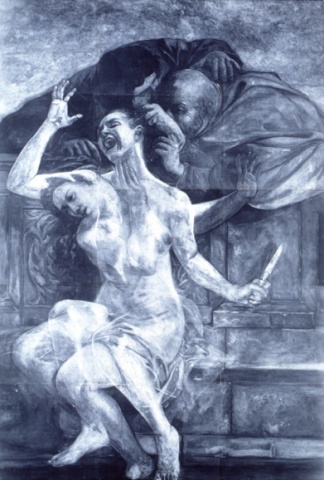
As a side note, the painting of Susanna and the Elders (painted by Artemisia Gentileschi) at the beginning of chapter one has an interesting history - "Susanna and The Elders was painted near the time that a charge of rape was brought to court by Gentileschi’s father, also a painter, on her behalf. The seven-month trial produced evidence of sexual harassment and rape of the 19-year-old artist by her teacher, Agostino Tassi, a member of her father’s artistic circle. Similarly, in the bible story, Susanna declines the sexual advances of two elder men in her community. Shamed by her refusal, they determine to ruin her reputation rather than their own. In the end, conflicting court testimony by the men proves her innocence." The underpainting of the artwork, revealed through x-ray, shows a Susanna "anguished but defiant", wielding a knife (Artemisia's own weapon of self-defense), the cords of her neck exposed.


Not necessary to understanding the philosophy, but an interesting piece of history nonetheless.
234 reviews14 followers
December 19, 2024
A good book. Occasionally a little outdated with its notion of ‘feminine virtues’ due to the 21st century acceptance that all masculine-feminine distinctions are socially constructed and to be moved beyond. But Tuana does acknowledge this and hints at it, despite still being at a slight level of essentialism which I was uncomfortable with.

Her analysis of the western philosophical canon was excellent. The middle chapters on each canonical philosopher were some of the best and clearest critiques of philosophical thought I’ve read. The book is unique in that it would be enjoyed and appreciated by both late high school students and academic experts. It’s in clear language but at a level which is rigorous and of interest to all levels of expertise.

Overall a very engaging book, though I must say I took more from the core chapters than the intro/conclusion, likely because these were aimed at readers living in a different era and social context with different immediate political concerns and discourse.
Profile Image for Lauren.
25 reviews4 followers
October 5, 2020
In the years since I read this in college, I’ve found myself wanting to reference it many times. So I finally went back and did a re-read. This is a really great examination of several key philosophers’ work, and how their writing excludes women from rationally, morality, and political authority—often in ways that undercut the very foundations of the writers’ stated beliefs. The exercise here: can you read philosophy as a woman, when philosophers state that you’re incapable of such an endeavor? What other flaws will we uncover when we do?

Displaying 1 - 4 of 4 reviews

Can't find what you're looking for?

Get help and learn more about the design.