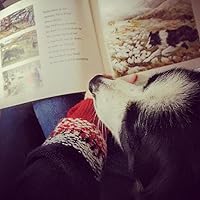
This is a book to read before you go on holiday, and a book to take with you on holiday. It will help you to find, and to name, some of the interesting animals and plants you will find on the seashore - animals and plants you will find nowhere else in the town or country.
Now we shift gear - from the world of electronics and radio to that of rockets and space exploration to this a wander along the British coast.
Now for me our summer holidays was a trip to the east coast - we had family there and years of history so much so that even to this day it feels like a home away from home.
One of the many draws for me was the coast - you could go to the popular sands where families from all over the country would congregate and my did i have some fun to a few miles away where you had the place to yourself and maybe the odd metal detector fanatic.
It was these times the books of nature and seashore wildlife would come in to their own when running up and down the beaches was replaced with looking in rock pools and exploring dunes, I can almost smell the sea as I flip through the pages.
I am rather glad that this book was not around when I was a young lad frolicking in the Irish Sea at Blackpool. If it had been, I might not have spent so much time in the water for I would probably have been worrying what I might encounter, things that, without the knowledge in this book, did not worry me one little bit. Of course, they shouldn't worry me now but, being of a little squeamish nature, I might have thought twice about dipping my toe in the water - and that would have been a pity for I would have missed an awful lot of fun!
As I always state about Ladybird books, they are written by expert authors who know their subject well and Nancy Scott follows this tradition admirably, thoroughly detailing all the crustaceans one is likely to encounter on the seashore and in the sea as well as a short section outlining some of the birds that inhabit the area. And Jill Payne complements the text with some superb illustrations.
We learn that the seashore is the home ground of more animals than any other part of the countryside for many of the empty shells that we see were once the covering of an animal with a soft body that needed a tough shell for protection. There are bivalves, such as the Cockle, which are so called because they live inside two shells hinged together, and univalves, which, when under water and alive, move over the sea bed, rocks and seaweed on one large, fleshy foot! Ugh!
The Razor Shell also has one large fleshy foot with which it pushes downwards, grips the sand and then pulls its long shell down after it. The Scallop has many eyes, which can only be seen when its shells are open, and each one of them has a well-developed focusing lens, a retina and nerve fibres.
There are a variety of types of Periwinkle. Small, Rough, Common and Flat, with the last named being the prettiest of them all, and they all inhabit areas where there is a predominance of seaweed. Also hiding under the covering of long seaweed fronds is the Common Whelk, which is sometimes called a Buckie. And those large ball-shaped spongy-looking objects that we used to see on the shore are a batch of the Common Whelk's egg cases, which are by then empty because the baby whelks have hatched out in the sea.
There is plenty of information on such as Cowries, which on tropical seashores grow larger than one's hand, Tellins, the thin shells of which there is an abundance on Blackpool sands, Barnacles and Limpets, the latter often peeping out when they think there is nobody around, and Mussels, which never move away from home as they anchor themselves to pier piles and rocks with a silken thread, called byssus, secreted from a special gland in their foot.
We also learn about Shrimps, Lug Worms, Thong Weed, Sand Gobys, crabs, star fish, Sea Urchins and many more plus birds such as the Oyster Catcher, the Turnstone, so called because it does actually turn stones over, and the Herring Gull.
It all makes for fascinating reading but I now know why I do not like eating any kind of shell fish!