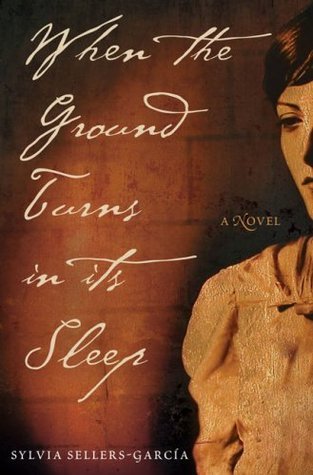
The award-winning debut novel that ?brings to mind the atmosphere and tension of Gabriel García Márquez.?( Katharine Weber, author of The Little Women )
Nítido Amán knows he was born in Guatemala, but he doesn?t know why his family left. Raised in the States by his immigrant parents, they never talked about it. When Nítido loses his father to Alzheimer?s disease, his despondent mother grows increasingly silent and Nítido realizes that his links to the past are disappearing.
Seeking answers, Nítido travels to Guatemala against his mother?s wishes. Upon his arrival in the small town of Río Roto, he is mistaken for the new priest, and decides to play the part. From his parishioners, he catches tantalizing and frightening glimpses of the buried history he?s aching to know. In a place shrouded in secrets, Nítido is at once determined and frightened to unearth the unnamed horrors it has seen.
With her elegant, hypnotic prose, this marks Sellers- García?s arrival as a distinctive new voice in fiction.
Sylvia Sellers-García was born in Boston and grew up in the United States and Central America. A graduate of Brown University and former Marshall Scholar at Oxford, she has interned at Harper’s and worked at The New Yorker. She is currently a PhD candidate in Latin American History at the University of California, Berkeley.
Since I have lived in and written extensively about Guatemala, I approached Sylvia Sellers-García’s debut novel with great interest—and it did not disappoint. WHEN THE GROUND TURNS IN ITS SLEEP richly evokes the characters, atmosphere, and tragic history of its setting. The premise of the native son returning to a country that he doesn’t know is given an unexpected and original twist when Nítido decides to play along with the deception that he is Río Roto’s (English translation—Broken River) new priest. We might wonder how he has the audacity to pull this off, but we discover that he’s not new to deception. A brush with plagiarism in college has dead-ended his career in the States, so that by the time he arrives in Guatemala, his bridges back home in the US are pretty much burned. Persevering rather cluelessly through enigmatic silences and psychosomatic illnesses in the confessional and elsewhere, he finally hears several conflicting versions of the events ten years earlier that tore Río Roto and Naranjo and its citizens apart.
While I could have lived without the device of the narrator addressing his dead father throughout the book in passages that I found somewhat jarring and tedious, the overall structure of the novel piecing together the patchwork of history served it well. Sellers-García treats her subject with the historian’s understanding of the complexity of history as well as the poet’s voice. I particularly admire how well she is able to evoke Guatemala’s particular strangeness without exoticizing or turning it into a travelogue.
Like the main character Nitido, I too was born in a foreign country, raised in the States, returned to my country of birth as an adult to work and learn and struggle with the language. But in my case I was totally aware of my shortcomings and on the alert for any cultural mis-steps I might make. Nitido bumbles all over Guatemala ethically, linguistically and seems never to have a clue or any morals. I was so flabbergasted with the liberties this character took in his host country, and so bored by the tone and volume of the contents of the dead father's journals that I got taken by surprise the two or three times anything ever happened with this plot. I'm not a fan of Sylvia Sellers-Garcia.
This books makes me feel like a failure, but my time is too precious to waste on a book. I usually try to read at least up to page 50 before I quit, but this book, this book is so boring, that I'm quitting before page 20.
It won awards and I picked it up for $4.99, but if the book is dismally boring, it's definitely not a bargain. I also hate giving less than 3 stars, but I really have to be honest with myself with this book.
The main character Nitido Aman, born in Guatemala , raised in America. Has no memories of his childhood before the age of 5. His parents never talk about where they came from and why they left. He builds a story of his, life based on books he has read about Guatemala and stories he has heard from others . When his father dies he goes to Rio Roto Guatemala to find his real history. It was hard liking him at first as I didn’t feel he was an honorable man, he made too many excuses for his weak character. Through his experiences in the town and the people he meets he changes . Interesting book , violence and superstition,history and “illness” , make this book a story of a culture many will have trouble understanding.
When the Ground Turns in Its Sleep follows the experience of Nitido Aman in provincial Guatemala where he was born but had never returned until his father’s death. Drawn back to his country of origin, Nitido portrays a diasporic angst in desiring to return to the homeland and the issues of reconciling the self once doing so. Sylvia Sellers-Garcia’s book When the Ground Turns in Its Sleep explores the concepts of diaspora, the problems of translation and an epidemic violence found within cultures both familiar and foreign.
Much of the novel looks into the idea of invention and its ties with plagiarism. Sellers-Garcia’s book warns of the dangers of an invented history and how real events can be related in truthful ways. The author punctures the text of her own book with continuous reminders to beware the voice of a narrator and even the most earnest translator. Though her cautioning is subtle, it is residual; the reader is left questioning the role media plays in shaping and exploring civilization of past and present.
Much of When the Ground Turns in Its Sleep serves as a “necessary haunting”. Nitido encounters a splintered village, neighbors hating neighbors, families torn apart. Sellers-Garcia invokes the ramifications of warfare, colonization and violence.
Towards the end of the novel Nitido questions, “Who is the barbarian, I asked, when two people do not understand each other?” (Sellers-Garcia 309). He recognizes the problem of communicating through different languages, places on the globe and in the mind but he leaves the book with the belief of articulating the self as a bridge to true connection. He is left an orphan; through losing his parents and in feeling the division of selves via personal history and identity. Sylvia Sellers-Garcia leaves Nitido in a cemetery sharing names, bridging experiences and learning how to do so, finally.
This entire review has been hidden because of spoilers.
“On the mountain in places like Naranjo, it's completely different. The ground turns in its sleep, stretches, and comes awake after dark.” This books tells the story of Nítido Amán a young Guatemalan man who was born in Guatemala but raised in the United States and who's parents would never talk to him of their life in Guatemala. Frustrated after his father dies, and his mother is settled in a new home, Nitido decides to return to Guatemala in search of his roots, and to piece together the little he knows of his life there. He ends up going to a small town, where he thinks they were from and he ends up staying under false pretenses, hoping to find out about his family history. Beautifully told, with wonderful descriptions and dialog, I was drawn into the story immediately.
We get to know the lives of the many people who will welcome and eventually help Nítido unravel his story. Told in the years that followed a very tumultuous time in the history of Guatemala. This book brings us some mystery and the want of having a connection to a place and people.
A well-researched, compelling story of a young man who returns to a remote Guatemala village in search of his roots and his parent's roots, and to confront the country's violent past. He's mistaken for the local priest, but plays along for a good long while. He is met by silence, things that still cannot be spoken but are neither forgotten. Sellers-Garcia does a good job portraying what that feels like, when a whole town has been traumatized. The book is a bit too philosophical in parts, more concern with ideas than the sensual, bodily world, but the story moves along and picks up some speed toward the middle and end. The writing is sparse and matter-of-fact. The most touching part to me was how important it was for the townsfolk to have the names of their dead recorded and read out loud during mass, so they wouldn't be forgotten. Likewise, this book does its part in bringing the near genocide in Guatemala to a wider audience, in an interesting, approachable way.
Because I have such a keen interest in Guatemala and wanted to understand more about the civil war that took place after I lived there, I bought this book. The story had great potential but I am sorry to say that I just didn't enjoy it. I lived among the Mayan indians and to me, it didn't capture any of my memories. I read it more than 3/4 through and then thought, what is the point? I Put it on my night table thinking I would get back to it. I seem to have this belief that once I start a book it is a crime to not finish it. But, you know what, today when I was cleaning my room I decided I am finished. There is nothing inherently wrong with the book, it just didn't meet my expectations.
No, I am NOT willing to sell/swap my autographed copy!! And congratulations to Sylvia for writing such an evocative book. It really does bring to life a place that to me is very foreign. And there's something very mysterious about the book - even with all the narratives laid out in front of me, I still wonder what makes the characters connect to (and misunderstand) one another. Another way to say it is that the book does a great job of capturing the ambiguity of personal histories and the weight that a constructed narrative can place upon one's life, while still being legible and enjoyable as a story. Anyway, a great read and a pretty amazing first novel, on top of that.
My main interest in reading this book was mainly to get a glimpse into the everyday life of a small village in Guatemala, and not so much for the story itself. I did find some insights into daily life, and some sad reminders of Guatemala's tragic and violent past.
As for the story itself, it was working so hard to be philosophical and atmospheric that I found it tiring to sort through random tangents and ramblings to find the plot. I also did not find the main character terribly sympathetic; he seemed untrustworthy to himself, and therefore, to me.
Not a bad book, but I wouldn't have read it if it weren't set in Guatemala.
It was slow going, but I finished. It was a good story-line that was, at times, puzzling, tedious, and over nuanced. The author spends much time evaluating the pose or tone or facial feature of one speaker without drawing any conclusions or speculating. I felt that it was left to the reader to draw many conclusions that later proved incorrect. I felt that for a man to be so curious about his heritage as to up-root himself and live in a foreign environment, while admitting that as a youth he displayed no curiousity and asked no questions of his parents as peculiar.
It was wonderful to read a fiction situated in Guatemala with themes of memories, silences and a community's resilience.
Nitido has traveled to Río Roto to learn more about his late father's hometown and feel a sense of his roots and resolution to his parents' silent history that led to their migration to Oregon.
With mysterious characters, and taking the role of a priest, Nitido will have to walk through many challenges to meet his fate and to understand the painful decisions made by his parents.
This would be a great book if you could fully suspend your disbelief. If a man came to a town and pretended to be a priest, holding confession and praying for the deceased, he'd either be killed or imprisoned when it came out that he was a fraud.
It was interesting to read about the culture of the people in the town where he resided-- where words were so carefully chosen and many things were left unspoken.
The book dragged on in some spots and in other chapters the action raced across the page. If I read it again I think I'd take notes.
Set in the United States and Guatemala, this book traces a man's quest to discover his family's history.
From the publisher: "In elegant, hypnotic prose, Sylvia Sellers-Garcia delivers a story of divergent cultures and divided identities, of conflicts between generations and civilizations, of mourning, and finally, of healing."
I enjoy reading books set in Guatemala. This was a sad story full of painful secrets. The main character Nitido goes to Guatemala to try to discover his roots. He is mistaken for a priest but goes along with the error. It seems everyone has secrets. The answers are a long time coming but I was immersed in the characters lives all the way.
Nitido returns to his native Guatemala after growing up in the U.S. in order to learn more about his heritage. Through a series of misunderstandings, he is assumed to be the village's new priest. As the book unfolds, he discovers much about his identity, personally and culturally, as well as the nature of memory, secrets, and healing.
This book dramatizes the experience of immigration from Guatemala during the civil war (approx 1980-2000). It's really well-written, though it has a lot of characters and the intrigue of the story was kind of hard to follow. The best thing about it was that it made you think about language, and memory, and travel, in new ways. It brings a faraway place (Guatemala) very close.
I've been reading a lot of books by Latin American authors and with those settings. I hadn't read anything about Guatemala and had high hopes for this book based on some reviews. Unfortunately, it just didn't come through for me. Although there was a mystery in the town, I found the story dull and the writing overdone.
This was a fascinating story, but it had a lot of plot holes (this may have been done on purpose to help set the atmosphere of secrecy/confusion/communication issues ), which in the end left me confused and a little disappointed. I saw it on the shelf at the library and picked it up on a whim, which I haven't done for a while.
I liked how the narrator of this book was having a conversation with his deceased father throughout the book, as he discovered who he and his father were in Guatamala. It's an easy read, covering some serious topics, and interesting.
I didn't make it through this one before I had to return it to the library. I was initially swept up and intrigued by the mystery and atmosphere of the story. But I started to get the feeling that nothing would be resolved so I got frustrated. I guess I'll never know.
Lovely evocation of a highland Guatemalan village, its tragic past and its unsettled present as seen by a young man returning from the US to his birthplace in search of information about his mother and father's early life. Compelling.
I really enjoyed reading this book. It wove an interesting tale, while allowing you to peek into the life of an adult, born in Guatemala, but raised in the U.S. There is an air of mystery, as Nitido discovers who he is, both as a person and as a Guatemalan.
I found it difficult to concentrate while reading this book as the writer moved back and forth between time periods and peoples. The story itself was disconcerting, having to do with guerilla warfare in Guatemala. I discovered how ignorant I was/am regarding this...
It wasn't an amazing page-turner, but this story about a Guatemalan-American returning to the country he left at 3 years to discover his past is well-written and has a couple of surprises.