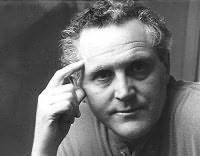
'An exhilarating mixture of the violent and the profane, some of it obscure, a good deal of it surprising ... A collection full of such energy, humour and sheer brazen originality ... Dibdin has rendered crime fiction an enormous service and, in the process, done a great deal to redefine the genre' Independent on Sunday
Michael Dibdin was born in 1947. He went to school in Northern Ireland, and later to Sussex University and the University of Alberta in Canada. He lived in Seattle. After completing his first novel, The Last Sherlock Holmes Story, in 1978, he spent four years in Italy teaching English at the University of Perugia. His second novel, A Rich Full Death, was published in 1986. It was followed by Ratking in 1988, which won the Gold Dagger Award for the Best Crime Novel of the year and introduced us to his Italian detective - Inspector Aurelio Zen.
Dibdin was married three times, most recently to the novelist K. K. Beck. His death in 2007 followed a short illness.
For a book written in 1993 it gave me a good insight into one side of crime writing both through fiction and non fiction examples of male authors.
There are some recognisable names and stories such as Edgar Allen Poe, Oscar Wilde, James Joyce and Bertolt Brecht along with many other authors and stories that I'm glad to have come across.
As an aspiring writer I was intrigued to read this book, although many of the stories I found to be repetitive and only iterated through a male narrator.
Some stories caught my eye like of course the scene provided from 'The Pictures of Dorian Gray' and, 'The Tell Tale Heart', as well as others I had never read before such as 'Under the Knife' by Isaac B. Singer and 'The Lady in the Lake' by Raymond Chandler.
The edits and comments by Michael Dibdin before each part of the book were detailed and insightful. I'll mostly be keeping the book for his words and suggestions.
I would be interested to see another version of this book updated to include different types of crime writers as so many more have become known through the years.
Some of this anthology proves to be short extracts - the moment of killing over a few pages, say, which makes it quite depressing with little or no character development. While a lot of authors are cited in the contents, many turn out to be providing only a paragraph, say from Joyce. There's a poem from T.S. Eliot, who lists a Cluedo-like assortment and says by the end nothing shall have happened - the action occurring with the murder, all else being follow-up. More modern authors often provide more than one murder or a serious assault on the amateur sleuth, beyond what used to occur in the cosy drawing-room setting of denouements. Hemingway gives a few pages of talk in a diner. Language of the time is used which wouldn't be acceptable today. The editor has included almost all male writers, five or six female names among the list. First published 1993. I think he could have tried harder.