Sir Henry Rider Haggard, KBE was an English writer of adventure novels set in exotic locations, predominantly Africa, and the creator of the Lost World literary genre. His stories, situated at the lighter end of the scale of Victorian literature, continue to be popular and influential. He was also involved in agricultural reform and improvement in the British Empire.
His breakout novel was King Solomon's Mines (1885), which was to be the first in a series telling of the multitudinous adventures of its protagonist, Allan Quatermain.
Haggard was made a Knight Bachelor in 1912 and a Knight Commander of the Order of the British Empire in 1919. He stood unsuccessfully for Parliament as a Conservative candidate for the Eastern division of Norfolk in 1895. The locality of Rider, British Columbia, was named in his memory.
Continuing my very gradual project of reading every* one of H. Rider Haggard's books in publication** order.
This one is a bit different -- as per the title, it's a non-fiction book recounting a trip he took in 1900, going first to Italy, then to Cyprus, and then to what was then Palestine.
Which, at that point, was actually quite the undertaking! What with taking a train to catch a ship across the English Channel, then another train across the Alps into Italy, thence by ship to Cyprus and thence by another ship to Beyrout [sic] and then on to Tyre, Sidon, and other points of call, and eventually Nazareth and Jerusalem, at that point mostly on horseback, before taking ship back home.
And it does make for interesting reading, for the most part -- Haggard is ever good at providing historical context (at least, as it was understood at the time) and capturing some of the sense of the various places he visits.
Having said which, Haggard was, in fact, a relatively middle- to upper-class Victorian gentleman traveling through foreign lands, and he has some definite Thoughts about how things are being run by the Italians or the Turks (many of the places he traveled were, at the time, part of the Ottoman Empire).
And while he's naturally visiting many historical sites in the course of his travels, and giving bits of their history in the retelling, when he gets to Jerusalem in particular, be prepared to spend a lot of time as he weighs whether or not some particular spot was or was not the actual site of the Annunciation or the Crucifixion, often with some fairly dismissive-to-hostile comments about the Jews or Moslems who oversee various sites. (He's also not a big fan of Russian pilgrims or, at one point, the large pack of American tourists in whose wake he finds himself traveling.)
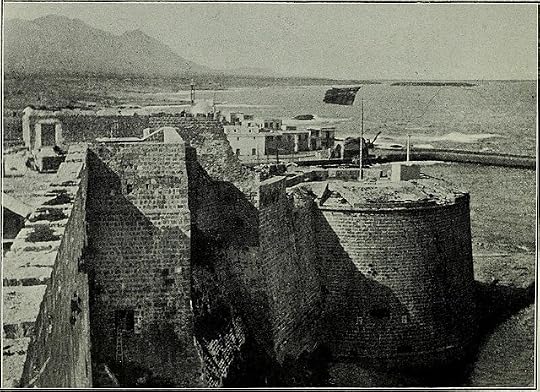
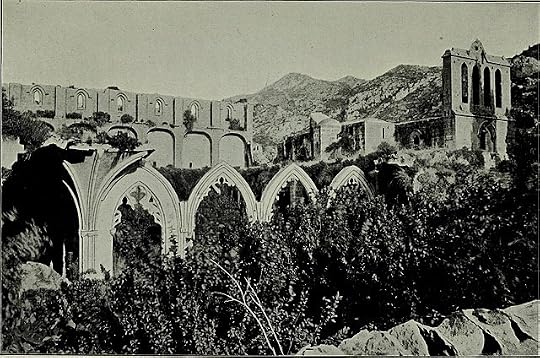
So: Caveat lector, but I did find it interesting reading regardless. My chief regret is that the eBook edition I was reading didn't include any of the many photographs found in the original publication.
*At least, every one of his books as found in a giant Collected Works I bought for my Kindle for about $0.99 some years ago
** as listed in the aforementioned giant Collected Works
In A Winter Pilgrimage in Palestine, Italy, and the island of Cyprus, accomplished in the year 1900, Haggard describes his travels to Italy, Cyprus, Palestine and ends his trip at Jerusalem.
This book is an absolute delight to read even with the apparent stereotypes associated with colonialism, yet what sets him apart from other colonialist writers is the degree of empathy and sympathy towards the locals and the way of portraying them. He had an eye for interesting things, thus making his book noteworthy and entertaining even today.
The part devoted to Cyprus is describing his pilgrimage around the island trying to find the remnants of times of old.
“No travellers visit this lovely and most interesting isle, in ancient days the garden of the whole Mediterranean […].
He took the time to know the locals and observe their everyday life, he interacted with them when possible and either was fascinated or was humored by them. While describing the local Wedding Ceremony: “Also, and this was the strangest part of the ceremony, the two wreaths that I have described were taken from the silver basket and set respectively upon the brow of the bridegroom and the veil, where it did not sit at all well, giving her in fact, a bacchanalian air. [..] Indeed this part of the service, however deeply symbolical it may be, undoubtedly had a comic side.”
“And so farewell to Cyprus the bounteous and the beautiful.”
Нельзя просто взять и промолчать, не написав ни строчки о предпринятом в 1900 году паломничестве. Отправился Хаггард через Италию и острова Средиземноморья в сторону священной палестинской земли, где его интересовало всё то, к чему и поныне стремятся паломники, то есть в Иерусалим. Будучи склонным подмечать сельскохозяйственные особенности местности — этому Райдер и придавал больше всего значения. Получилось не паломничество с целью приблизиться к древним святыням христианской религии, а нечто из сферы культурного просвещения. Хаггард разумно замечал, как мало смысла в прикосновении к тому, что прежде уже было не раз разрушено и возведено заново, ничего по себе не оставив, кроме воспоминаний.
H. Rider Haggard, author of adventure stories (probably the most famous being "King Solomon's Mines"), wrote this nonfiction account of a pilgrimage around the winter of 1899-1900 from England through Italy and the Mediterranean to the Holy Land. Haggard was a Christian, and has many of the biases of his time (which tend toward a degree of anti-Semitism against Arabs and Jews both, even when broadly tolerant in general), but this account is fascinating for the view of the geographic regions at the turn of the last century - it was really fun to read, though I don't share many of Haggard's opinions and views.