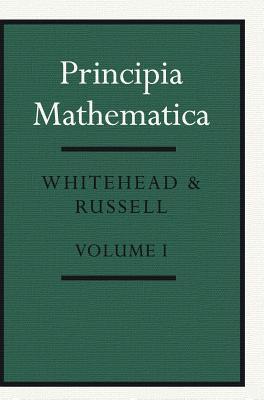
There exists a rare breed of intellectual undertaking so audacious, so staggeringly meticulous, that it does not merely document knowledge—it constructs the very architecture of thought itself. Bertrand Russell and Alfred North Whitehead’s Principia Mathematica is not a book; it is the blueprint of rationality, the attempt to reduce all of mathematics to logic with a precision so exacting it verges on the divine.
To turn these pages is to witness the deconstruction of arithmetic at a molecular level—to see the integers themselves, those seemingly indivisible building blocks of numerical reality, reduced to the raw machinery of symbolic logic. Before Principia Mathematica, numbers were taken as axiomatic; after it, they were proven into existence. The simple equation 1 + 1 = 2 is not assumed—it is constructed across 362 pages of relentless, diamond-hard logical scaffolding.
This is not a work meant to be read; it is meant to be endured and interrogated. Each theorem, each lemma, each proof unfolds with a rigor so suffocating that comprehension feels less like an intellectual exercise and more like an act of mental alpinism, scaling the Everest of pure logic with nothing but the raw muscle of human reason.
Yet, buried beneath its cold, precise, almost alien notation, Principia Mathematica is also a philosophical monolith. It raises terrifying questions: Is mathematics truly universal, or is it a construct of our symbolic systems? Can logic ever fully describe reality, or does it collapse under the weight of its own incompleteness? It is no coincidence that this work, so confident in its quest to ground all of mathematics in logic, would be indirectly dismantled by Kurt Gödel, who proved that any sufficiently complex formal system will contain truths that cannot be proven within itself. In this way, Principia Mathematica becomes an intellectual tragedy—a monument to human ambition that was both triumphant and doomed.
This book is a crucible. To engage with it is to press against the very limits of human cognition, to see the world as an elegant lattice of inference and deduction, to glimpse, for a fleeting moment, the pure and terrifying machinery of mathematical truth. It is not an easy read, nor a book that will offer quick revelations. But for those who are drawn to the deepest questions of logic, mathematics, and the very nature of truth itself, Principia Mathematica remains one of the most significant intellectual achievements in history.