Jump to ratings and reviews
Rate this book

Expletives Deleted

Rate this book
WITH AN INTRODUCTION BY MICHAEL MOORCOCK

Angela Carter was one of the most important and influential writers of our time: a novelist of extraordinary power and a searching critic and essayist.This selection of her writing, which she made herself, covers more than a decade of her thought and ranges over a diversity of subjects giving a true measure of the wide focus of her interests: the brothers Grimm; William Burroughs; food writing, Elizbaeth David; British writing: American writing; sexuality, from Josephine Baker to the history of the corset; and appreciations of the work of Joyce and Christina Stead.

240 pages, Paperback

First published January 1, 1992

20 people are currently reading
626 people want to read

About the author

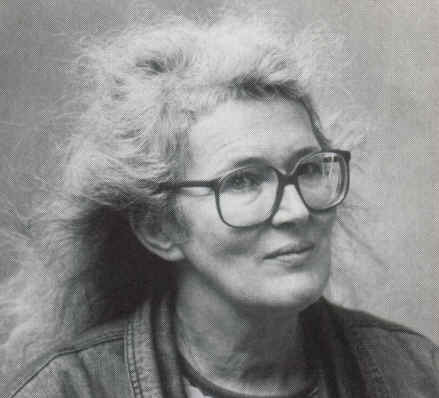
Angela Carter

212 books3,731 followers
Born Angela Olive Stalker in Eastbourne, in 1940, Carter was evacuated as a child to live in Yorkshire with her maternal grandmother. As a teenager she battled anorexia. She began work as a journalist on the Croydon Advertiser, following in the footsteps of her father. Carter attended the University of Bristol where she studied English literature.

She married twice, first in 1960 to Paul Carter. They divorced after twelve years. In 1969 Angela Carter used the proceeds of her Somerset Maugham Award to leave her husband and relocate for two years to Tokyo, Japan, where she claims in Nothing Sacred (1982) that she "learnt what it is to be a woman and became radicalised." She wrote about her experiences there in articles for New Society and a collection of short stories, Fireworks: Nine Profane Pieces (1974), and evidence of her experiences in Japan can also be seen in The Infernal Desire Machines of Doctor Hoffman (1972). She was there at the same time as Roland Barthes, who published his experiences in Empire of Signs (1970).

She then explored the United States, Asia, and Europe, helped by her fluency in French and German. She spent much of the late 1970s and 1980s as a writer in residence at universities, including the University of Sheffield, Brown University, the University of Adelaide, and the University of East Anglia. In 1977 Carter married Mark Pearce, with whom she had one son.

As well as being a prolific writer of fiction, Carter contributed many articles to The Guardian, The Independent and New Statesman, collected in Shaking a Leg. She adapted a number of her short stories for radio and wrote two original radio dramas on Richard Dadd and Ronald Firbank. Two of her fictions have been adapted for the silver screen: The Company of Wolves (1984) and The Magic Toyshop (1987). She was actively involved in both film adaptations, her screenplays are published in the collected dramatic writings, The Curious Room, together with her radio scripts, a libretto for an opera of Virginia Wolf's Orlando, an unproduced screenplay entitled The Christchurch Murders (based on the same true story as Peter Jackson's Heavenly Creatures) and other works. These neglected works, as well as her controversial television documentary, The Holy Family Album, are discussed in Charlotte Crofts' book, Anagrams of Desire (2003).

At the time of her death, Carter was embarking on a sequel to Charlotte Brontë's Jane Eyre based on the later life of Jane's stepdaughter, Adèle Varens. However, only a synopsis survives.

Her novel Nights at the Circus won the 1984 James Tait Black Memorial Prize for literature.

Angela Carter died aged 51 in 1992 at her home in London after developing lung cancer. Her obituary published in The Observer said, "She was the opposite of parochial. Nothing, for her, was outside the pale: she wanted to know about everything and everyone, and every place and every word. She relished life and language hugely, and reveled in the diverse."

Ratings & Reviews

What do you think?
Rate this book

Friends & Following

Create a free account to discover what your friends think of this book!

Community Reviews

5 stars
59 (25%)
4 stars
97 (41%)
3 stars
64 (27%)
2 stars
12 (5%)
1 star
2 (<1%)
Displaying 1 - 30 of 33 reviews
Profile Image for Jess.
381 reviews410 followers
August 26, 2019
'She may stand as some sort of metaphor for the idea of the artist... as perpetual adolescent, with the adolescent's painful sense of his own uniqueness when alone and his own inadequacy when in company.'

What I would give to sit down and have a chat with Angela Carter. We could recall with tender embarrassment those fangirling episodes regarding Jane Eyre or we could just hate on the Bloomsburies all day. If she suffered with as foul a mouth as I do, it certainly does not show in her lively and authoritative - though always diplomatic - essays and reviews. I could use some of that self-control now and then.

For the last fifteen-odd years, [I have] been writing book reviews and then conscientiously blue-pencilling out [my] first gut reactions - ‘bloody awful’, ‘fucking dire’ - in order to give a more balanced and objective overview.

But… the essays are niche. Nor are they particularly accessible. And yet, Carter’s energy and enthusiasm is infectious, and one can’t help but engage with her insightful thoughts on obscure, forgotten literature and elitist cookery. Let’s put it this way: she’s witty enough to make even ‘The History and Social Influence of the Potato’ enjoyable. If that doesn’t sell you, then I don’t know what will.

Perhaps not for the uninitiated, but perfect for Carter aficionados.
Profile Image for Lee Foust.
Author 11 books214 followers
July 21, 2022
This is a fabulous collection of carter's book reviews and the odd article about literature that some journal or other paid her to pen. It's, I guess, Carter light, in a way, but I loved her take on some books I love and I also enjoyed reading her take on some books I've skipped or just never heard of and now have on my list to find and read. As always, she's a pip!
Profile Image for Ellie-Jean Royden.
52 reviews13 followers
June 1, 2021
Even though much of what Carter references I hadn’t read, her vision and ideas made this irrelevant. Her wit and clarity makes her criticisms a delight to read, and I feel inspired to read many of the texts she praises. I enjoyed also the few pieces of correspondance that we’re included alongside her point of view, nuancing her ideas and providing alternate perspectives.
Profile Image for Kate Reeve-Edwards.
5 reviews1 follower
April 5, 2019
The downside of essay collections is that one feels a need to read every essay in chronological order, like a novel. In the case of this collection, I wish I had dipped in and out of it, prioritising reading the essay titles that sprang out at me. However, this is perhaps my fault as a controlling reader, not the book's nor the authors. Not every essay was relevant to me, and not every essay was meant to be. Although, I do find the sheer amount of reviews of fairly obscure books and folklore an odd choice. It was hard to access the critique of a novel I had never read nor heard of. I believe that there should be enormous amounts of critical analysis on as much literature as possible, I did think it odd placing it in such a book; I say, leave that to Jstor or online journals, and give us more of the meaty, unspecific stuff. I was fired up and nourished by so many of the essays that weren't reviews, or if they were, were not too specific that I couldn't access the writing without reading the work. The essay on the cultural significance of the potato was particularly intellectually nutritious, and was just the historical roughage I was craving. The essay on Jane Eyre was similarly enjoyable, with a large dollop of Carter's outrageous sensuality distributed throughout. My favorite essay by far, perhaps because of the relevance to my life as an Agent Provocateur girl, was one titled 'Fashion and Fetishism'. The opening paragraph delightfully announces: 'women, as a whole, are not silly and. when they do things that, at first glance, may seem to be silly, like wearing extremely tight-fitting corsets, or tottering along in stiletto-heeled shoes [...]these voluntary self-mutilations are a paradoxical expression of sexual deviance and gender self-esteem.' It felt like someone was finally sticking up for me, and that I finally had a way of explaining my 'silly' decisions. Safe to say, I sent an image of that opening paragraph to all of my similarly 'silly' and 'image preoccupied' friends. I intend to memorise it and eloquently repeat it next time a family friends mother asks me 'why are you wearing those silly shoes?'
Profile Image for Suzanne Jefferies.
Author 23 books23 followers
January 24, 2021
Fine dining after weeks of fast food.

Carter’s essay on a variety of topics, as well as reviews of books I certainly haven’t read (some), and certainly won’t after reading her analysis, is a window into a novelist who is also deeply enamoured of narrative critique. Erudite, her reviews transcend, the “I really loved this...”

Her obvious fascination with folklore, fairy tales, and oral storytelling histories are evident in her choice of reading matter (and in her own works), and the knowledge she brings to bear on her subject is a delight. The essay on Jane Eyre had me reaching for my own copies of JE, Wide Sargasso Sea and Rebecca to bear closer scrutiny. And I’ll be hunting down the Arabic Cinderella, which I didn’t realise existed, but bearing in mind collective unconscious wild-ways, should have known. Food in Vogue is particularly entertaining considering the subsequent boom in amateur home-cooking fascination that’s sprouted many an Insta wannabe domestic goddess.

I really loved this...
Profile Image for David.
666 reviews12 followers
September 2, 2024
I'm not a huge fan of Angela Carter, I find her prose too obscure on occasions. I never made it past 100 pages of "Nights at the Circus" (weird and fantastical) but "The Magic Toyshop" (full of lightness and wit) was much better. I loved the stage adaptation of "Wise Children" but avoided the book. However a search for some non fiction took me to this collection of (mostly book) reviews chosen by the author. I thought I might find some interesting fiction. In her introduction, she tells us "we were the only family in our class at school who didn't have a television set". Her parents were far more interested in books. She also says "I like to write about writers who give me pleasure. Pleasure has always had a bad press in Britain. I'm all for pleasure. I wish there was more of it around".

TELL ME A STORY
The thirty five book reviews have all been published in newspapers and other publications. Here are my notes on just a few. Reading the first five obscure books, I wondered what I had let myself in for. But then number six was a review of "Once in Europa" by John Berger published in the Washington Post in 1989. Her opening page is a glorious evocation of the changes to the countryside: "the final divorce of human beings from the land" caused by its deruralisation.

A couple of reviews of books by William Burroughs then out of the blue J.G. Ballard's "Empire of the Sun" published in Time Out in 1984. We get a marvelous background of the author especially his weird sci fi stuff such as "Crash" and "High Rise" (both of which made fine movies). Burroughs was born in China and lived in Shanghai as a child and this was the basis for his biggest novel. Burroughs also live in Lunghua Camp where his young hero finds himself. An incredible review of a book that is "a rich, complex, heartrending novel".

TOMATO WOMAN
"An Omelette and a Glass of Wine" (by Elizabeth David) and other dishes (by other writers) . All in various publications. An odd sort of review. But what was most interesting were the letters in response: "A puritanical contempt for decently prepared food".

"The History and Social Influence of the Potato" by Redcliffe Salaman in London Review of Books 1986. Carter tells us "potato eating is also a history of poverty". It's history in the UK was interesting, of course the Irish famine gets a mention, but so does Max Miller!

"Food in Vogue: Six Decades of Cooking and Entertaining" edited by Barbara Tims in New Society May 1977. Something more than a cookery book, these recipes are more "food as an aspect of style".
But why "read as the concretisation of a consensus wish fulfillment fantasy about the nature of stylish living". This is Carter at her most obscure. I have no idea what she is talking about.

"English Bread and Yeast Cookery" by Elizabeth David in New Society 1987. Over four pages our reviewer considers the types of bread now available and their benefits or otherwise. She harps on about "the soft bland and flabby" white loaf.

"Honey from the Weed" by Patience Gray in London Review of Books 1987. "Part recipes, part travel book, part self-revelation, part art-object". " A book replete with recondite erudition and assembled on the principle of free association". WHY AM I READING THIS STUFF!

HOME
"The Buddha of Suburbia" by Hanif Kureishi in The Guardian 1990. A farce, a three part tv series and now a play. Carter reveals it is "continually tasty, interesting and full of glee". Lots of interesting characters with humour everywhere. His very first novel is wonderful, funny and all heart. No wonder Emma Rice has chosen this as her latest production, hopefully in London soon.

Some other reviews of no interest to me.

AMERIKA
"A Night at the Moves" by Robert Coover in The Guardian 1987. A collection of twelve stories with cinema as their guide. A Western, a comedy, a romance, a weekly serial, some shorts, a cartoon, a musical interlude and a travelogue. Maybe a book to look out for?

"Hollywood". A summary of the Classical Hollywood Cinema, Film Styles to 1960 and others.

LA PETITE DIFFERENCE
"Charlotte Bronte: Jane Eyre". This is Carter's introduction for a re-issue of the book by Virago in 1990. This, for me, was by far the most interesting piece in the whole book, just about worth persevering to find this near the end. "The emotional intelligence of the writer, and the exceptional sophistication of her heart" shows how she loves this book, even if it is "one of the oddest novels ever written". Whilst Carter agrees it is "wild, wonderful, thrilling", it is also "angry, sexy, a little crazy". We get a potted history of the Bronte's, and much about Charlotte's upbringing. On to Rochester and St John Rivers, she calls them different kinds of sadists. But although the book "veers towards trash" Carter loves it as a conundrum.


Profile Image for Tori.
1,122 reviews104 followers
December 15, 2022
I seldom write in my books, but something about the way Angela Carter was writing about other people's writing made me want to write around her writing...

My scattered thoughts:
I don't know if this print run had a page missing or if it was just my copy, but my table of contents cut off about halfway through, right after "Elizabeth David: English Bread and Yeast Cookery". Fitting, because that was perhaps the last piece in the book that I fully enjoyed... it kicked off with some navel-gazey puttering from Carter that included the statement that "I used to feel so womanly when I was baking my filthy bread." And it had this gem of a section on Virginia Woolf near the end: "Although otherwise an indifferent cook, Virginia could certainly knock you up a lovely cottage loaf. You bet. This strikes me as just the sort of pretentiously frivolous and dilettantish thing a Bloomsbury would be good at -- knowing how to do one, just one, fatuously complicated kitchen thing and doing that one thing well enough to put the cook's nose out of joint."

The Tomato Woman section was definitely the one I enjoyed the most. How could I not love a section that kicks off with a cheeky epigraph from Claude Levi-Strauss? ("To eat is to fuck.")

The absolute best part (in the Tomato Woman section, of course): at the end of "An Omelette and a Glass of Wine and Other Dishes" there are three pieces of "interesting correspondence" absolutely demolishing Angela Carter for her self-righteous takedown of Alice Waters. They call out Carter's "puritanical contempt for decently prepared food" and her "difficult to follow" argument against Waters's enjoyment of food/foodie identity. Something about these letters being presented as "interesting" without any further context tickled me. Like she almost wanted to admit they were right? Or she thought they were hilariously wrong? Or were they added after her death, by the "friend" who edited the selected writings? (Scare quotes around friend because what kind of friend would include those rebuttals after Carter no longer had the ability to snark back?) It also tickled me that the piece immediately after "An Omelette and a Glass of Wine and Other Dishes" was a piece where she lovingly described the history of the potato. As counter-evidence to those three correspondences? To show she'd taken their criticism to heart and spent the next two years learning to really appreciate potatoes the way a foodie should? To prove that she didn't hate food/food-writers, just the way Alice Waters positioned herself as a "foodie"?

Less thrillingly, Iaian Sinclair's response to what Angela Carter wrote about Downriver was included at the end of that piece. He does take issue with some of the points she makes, but he's much less confrontational and the response is therefore much less fun to read. And it wasn't in the Tomato Woman section, so I'd already lost interest.

This tiny book took me a decade to get through. I was really enjoying it at first! (Relishing it! Comparing Carter to Borges!) But then I put it aside and the Contents disappeared and so did my interest.
Profile Image for Malcolm Walker.
139 reviews
February 16, 2021
With every book of essays it should say at the start that there is no right order to what the reader should find interesting and there is no necessity to read all of the book in the order in which the essays are placed in it. A book of essays is an ala carte menu that the reader reads for the delight of the menu itself, never mind what it is a menu of. In this instance the menu is of other books that author of the menu has reviewed for the Times Literary Supplement, and the reviews are rich in language and enthusiasm. Where they tend toward the amusingly verbose they do appeal to my teenage self who longed for humour and erudition when there seemed so little of either about. In other words these reviews will appeal to the teenage language snob in anyone. Is this a good thing? That depends how much your inner teenage snob needs to be entertained, such selves don't go away and do need to be given some room to breath and in adults the teen literary snob is a sub part of us we can stop before it attempts to take over. Don't worry if you only read half this book, and skip the reviews of books by authors you have no feel for (Michael Moorcock was one author I have a blind spot about). Whether it is the language of the review, or the name of the author, or the sheer sensuousness of book cultures past (this book ends at 1991) compared with how dull the present day book culture seems, read, stop, enjoy the break, and pick up again from where you want. I got my copy of this book from my local public library.
125 reviews
March 8, 2024
Writing about John Berger, Carter says; “But his culminating assertion is that the elimination of the peasantry is the final act in the destruction of the experiential reservoir of the past, so that it can no longer be part of the totality of the present. This destruction Berger sees as the ‘historic role of capitalism itself, a role unforeseen by Adam Smith or Marx’.” Although it was, at times, hard for me to read about so many books that I had not read, and by authors that I had not read, Angela Carter’s wonderful ability to be both philosophical and kick-arse funny kept me interested. As a speaker of Cymraeg, I particularly enjoyed her summing up of James Joyce’s writing: “The name of Dublin, Baile Atha Cliath, in Irish so dignified and remotely foreign, turns, when Anglicised, into the almost comically accessible Ballyattaclee: the English knew how to make the languages of the ethnic minorities of the British Isles ridiculous.” She says this about James Joyce: “He is, I think, already pondering a magisterial project: that of buggering the English language, the ultimate revenge of the colonised.” How well I recall failing to help English car drivers to find a town they wanted to drive to. ‘But aren’t you local?’ they would ask, having shown zero effort to pronounce the name of the town even remotely correctly.
Profile Image for Meg.
11 reviews2 followers
July 25, 2023
I wanted 'The Bloody Chamber' anthology or other short stories by Carter and the bookstore only had this collection of her various essays and lit reviews, so I figured I would give it a try ANYWAY. Just as an exploration of her voice as an author. Odd to experience because I had honestly little to no familiarity with any of the texts she was speaking about but I put a few aside to read later on the basis of what Mrs. Carter thought of them and enjoyed the rest of the essays anyway. She seems like a woman it would have been very fun to have lunch with.

I'm sorry I'm not putting star ratings at the top of these but they are mostly for my own records and honestly it feels kind of gauche, doesn't it?
Profile Image for David Allison.
266 reviews5 followers
April 12, 2019
A collection of non-fiction writing that is carefully curated to make an argument for the sort of fiction its author values - in this case, something post(/pre)-literary, something genuinely pleasurable but yet ugly enough to illuminate something about the world that produces and consumes it.

Some phrases repeat across reviews ("All life is here") but its the broader themes that grow louder as they echo.
48 reviews
March 5, 2024
A real pleasure. And also good plane reading. Had no idea AC wrote reviews and essay-like things til now, so thanks to Flora for this. Not an unchallenging writer, keeps you on your toes. Great range of subjects and writing analysed. Made me wish very much that she was still here and I could continue to follow her views beyond 1990. A real loss.
Profile Image for Lisa.
377 reviews21 followers
June 8, 2018
Loved the chapters on Ballard, Berger, Louise Erdrich and Elizabeth David. Very clever, erudite amazingly well read writer and this book has prompted me to look for other Carter books. Enjoying these English writers at the moment.
Profile Image for Ely.
1,435 reviews114 followers
December 4, 2020
I definitely would have enjoyed this more if I'd actually read or even heard of the books she was reviewing, but it's still Angela Carter and she's just incredible. The piece in here on Jane Eyre was amazing and definitely made me want to read it.
Profile Image for Guenter.
232 reviews
February 1, 2021
Some good reviews/quotes (e.g. "Truth is always stranger than fiction, because the human imagination is finite while the world is not..." but pales in comparison to her great stuff (check out The Bloody Chamber).
Profile Image for Kremena.
35 reviews
September 8, 2023
Not so impressed by Carter's collection of journalism, but she's one of my top 5 favourite authors, so I couldn't miss this small book.
Her thoughts on gender, status, death, religion, food, etc. are fascinating as usual, a genuine innovator.
Profile Image for Rivse.
30 reviews
December 16, 2024
Though this collection of literary journalism from Carter’s last decade has a strong whiff of the eighties and the slightly musty aroma in places of bygone literary preoccupations and controversies (the writers reviewed are also for the most part white), it’s difficult to think of a writer these days who can bring so much offhand erudition, intellectual energy, and stylistic brio to a review, or combine in so winning a manner righteous scorn when it’s called for and yet generosity and even-handedness: even at her most withering, Carter is somehow never mean-spirited. Carter is also on the side of women, even those she dislikes (like Virginia Woolf), a refreshing trait; she’s not about to trade in that womanly solidarity to score a few points with the top literary boys of her day, as we’ve seen some do recently. The standout essays here are careful appraisals of Jane Eyre, Christina Stead, and Walter de la Mare, though some of the most pleasurable, like the group on food, appear to have been tossed off very quickly under a deadline with brazen confidence, cheek, and wit to spare.
276 reviews
Read
December 26, 2019
2.5/5 but for the essay in Jane Eyre and some of the cooking ones, I found this boring and/or I didn’t understand it at all
Profile Image for Marijke.
61 reviews4 followers
October 8, 2020
Well-written essays. Nothing more, nothing less.
Profile Image for Sam.
14 reviews
July 1, 2021
One of the greatest to do it - and one of the best food writers
Profile Image for Jess.
306 reviews12 followers
September 12, 2021
I love angela carter though it was a little weird reading reviews and essays for books i had never heard of i now have an expanded reading list.
Profile Image for Janet.
19 reviews
October 6, 2022
The review of Christina Stead’s work alone upended how I read fiction. ‘Nuf said.
1,704 reviews4 followers
April 2, 2025
really loved hearing her voice each morning and entertaining her thoughts...look forward to reading much more of her work.
Profile Image for Ronan Doyle.
Author 4 books20 followers
February 23, 2021
Wish I'd come to Angela Carter years ago: this is my kind of criticism, crisp and cutting and very, very funny. Woe betide any bad writer asking her to suffer their foolishness. That caustic wit's just half the making of a good critic, however, and her ability to truly sell every work she adores is where this tome really delivers.
Profile Image for Gardy (Elisa G).
358 reviews113 followers
August 18, 2011
Recuperato per la curiosità di leggere il breve articolo dedicato a Jane Eyre (di cui la Carter stava stendendo un seguito dedicato ad Adele quando morì di cancro), sono stata intrattenuta e annoiata dal libro, a seconda del saggio letto.
Essendo una raccolta di articoli che, con alcune eccezioni, è dedicata a libri abbastanza conosciuti ma spesso riferiti all'area geografica prettamente inglese, alcuni capitoli annoiano perchè non si conosce la materia prima di cui la Carter parla. Per quanto il suo stile sia accattivamente e la sua prosa convincente (anche se un tantino sostenuta), specie nella prima parte annoia. Consiglierei il libro ai fan di questa Oriana Fallaci inglese o a chi è interessato allo spunto "culinario" suggerito dal titolo scelto da Fazi editore, in realtà presente solo nella parte centrale del libro, a mio parere la migliore. Ottima l'idea dell'editore italiano di incorporare a fine volume i titoli dell'edizione nostrana dei libri presi in esame dall'autrice, ma il libro presenta qualche svista e refuso di troppo per andare oltre le due stelline.
Profile Image for Jeanne Thornton.
Author 11 books270 followers
December 5, 2014
I was getting sour on Angela Carter, but turns out it was only EARLY Angela Carter! I'm a sucker for cool mean British book reviews, and these deliver--not just in a goofy "Consumer Reports" way, but showing the way Carter's enthusiasms and interests intersect and feed off of one another: Borges, Christina Stead, storytelling, folktales, hating on Bloomsburies, Japan. The Paul Theroux "My Secret History" review is perfect, and IIRC it's the only really negative review besides the cookbook reviews--which are honestly kind of a heavy slog, esp. if you bear no grudge against Elizabeth David--and it's refreshing to see a collection of reviews by an openly Mean Person that doesn't Make A Meal of taking down trash books. I like that; it is aspirational. I like a lot of this, not least the clear injunction to read Christina Stead now. If you don't just basically like sitting down to read a lot of book reviews, your time is maybe more productively spent elsewhere, I think, but if you do, this is good stuff.
Profile Image for Pamster.
419 reviews32 followers
October 7, 2010
A collection of book reviews she wrote for Guardian, London Review of Books, and other places. Loved some of them. Some don't mention the book in question until the last para. Which is awesome. Great how much she loves Louise Erdrich, awesome piece on Jane Eyre, waaay ahead of her time with a 1988 essay appreciating Gilbert Hernandez (an intro for his book), and really made me want to read Christina Stead.
Profile Image for Elly.
1,054 reviews67 followers
April 11, 2016
I think I would have enjoyed this more if it had been essays rather than reviews; but I still love Angela Carter and I love the insight into her reading. As well as her piece on Jane Eyre which was fascinating.
Displaying 1 - 30 of 33 reviews

Can't find what you're looking for?

Get help and learn more about the design.