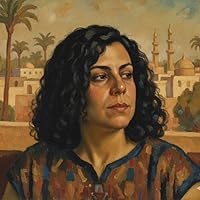
The popular culture of pre-revolution Egypt did more than entertain―it created a nation. Songs, jokes, and satire, comedic sketches, plays, and poetry, all provided an opportunity for discussion and debate about national identity and an outlet for resistance to British and elite authority. This book examines how, from the 1870s until the eve of the 1919 revolution, popular media and culture provided ordinary Egyptians with a framework to construct and negotiate a modern national identity. Ordinary Egyptians shifts the typical focus of study away from the intellectual elite to understand the rapid politicization of the growing literate middle classes and brings the semi-literate and illiterate urban masses more fully into the historical narrative. It introduces the concept of "media-capitalism," which expands the analysis of nationalism beyond print alone to incorporate audiovisual and performance media. It was through these various media that a collective camaraderie crossing class lines was formed and, as this book uncovers, an Egyptian national identity emerged.
Ziad Fahmy is a Professor of Modern Middle East History at the department of Near Eastern studies. Professor Fahmy received his History Ph.D. in 2007 from the University of Arizona, where his dissertation “Popularizing Egyptian Nationalism” was awarded the Malcolm H. Kerr Dissertation Award (2008) from the Middle East Studies Association.
Professor Fahmy is the author of Street Sounds: Listening to Everyday Life in Modern Egypt (Stanford University Press, 2020-Forthcoming); and Ordinary Egyptians: Creating the Modern Nation through Popular Culture (Stanford University Press, 2011).
He is currently writing his third book, tentatively titled, Broadcasting Identity: Radio and the Making of Modern Egypt, 1925-1952. His articles have appeared in Comparative Studies in Society and History, the International Journal of Middle East Studies, History Compass, and in Comparative Studies of South Asia, Africa and the Middle East. His research has been supported by the Fulbright-Hays Commission, the National Endowment for the Humanities, and the American Research Center in Egypt.
Really interesting book about the development of an Egyptian national identity under British colonialism, in the decades leading up to the 1919 Revolution. Fahmi looks at how Egyptian nationalism developed through popular culture, specifically cultural productions that used colloquial Egyptian Arabic as opposed to fusha. Most scholars of Egyptian nationalism take a top-down approach, seeing nationalism as being constructed by the elites and European-educated upper class, like Taha Husayn and other intellectuals. However, Fahmi argues that it's impossible for Egyptian nationalism to have only formed with this group's work. For one reason, their work was in fusha, and 93% of Egyptians were illiterate at the time. So instead, Fahmi looks at plays, songs, satirical cartoons, and colloquial Egyptian newspapers to show that they were more widely accessible and consumed, and that they played a major role in constructing a sense of Egyptian national identity.
I enjoyed skimming through this book, and the author includes some Egyptian jokes and satire from the time to show his point (apparently Egyptians were notoriously funny, even back then lol). Idk I found myself laughing out loud at some 100-year old anti-colonial Egyptian jokes LOL
Ordinary Egyptians, as the title suggests, focuses on the impact public left on the cultural landscape of Egypt under the British from 1970s until the Revolution of 1919. Ziad Fahmy explores people’s struggle for independence through the lens of mass culture that burst onto the political scene with the advent of communication technology and the expansion of railroad system across Egypt in late 1800s. The book provides short sketches of political history before engaging the development from a cultural perspective. In 1870s, Khedive Ismai’l furthered the expansion of the economic infrastructure that Mohammad Ali initiated in the wake of the Napoleonic invasion of Egypt around the turn of the century. Overexpansion, however, generated massive debts and led to an economic breakdown. Britain occupied the country in order to collect its debts. The intended temporary occupation, however, lingered into the 20th century, incurring public resentment. The Egyptian cash crop economy that the Khedives built led to mass migrations to Cairo and Alexandria, which turned into centers of opposition to British rule. Fahmy’s contribution rests with demonstrating people’s expressions of opposition through mass media. He charts the evolution of Egyptian identity in this short period by investigating the content of the mass media, which relied increasingly on Cairene dialect to connect with its illiterate audience. This monograph provides a great analysis of mass culture in the early phases of Egyptian nationalism. Its approach helps highlight the role of ordinary people in shaping Egyptian identity. According to the author, ordinary people’s impact on the process of identity formation weighed as much as elite’s, if not more. Egyptian identity formed through people’s ample use of new mass media that turned into counterhegemonic tools in their hands. Thus, despite the restrictions put in place by the British and the Egyptian elite, the “emergent media capitalist system – combining print, sound, and performance media – allowed for an increasing number of Egyptians to more fully participate in a variety of expanding public spheres.” Popular songs, pamphlets, cartoons, vaudeville theaters, and coffee shop discussions, and etc. all furthered the nationalist cause in the direction of Egypt’s independence, with outcomes not always controlled or desired by the elite. Fearing the growth of a vulgar mass culture that gained currency through Cairene dialect, the elite, launched a foray against as a preposterous phenomenon. The elite ultimately went with the current since the market economy forcefully propelled the engine of mass media cultural production. This book depicts a vivid picture of the social and cultural landscape of Egypt and serves as a great example of a cultural study that gives agency to the general people rather than the elite who capitalize on their struggle.
الملاحظ انه مجرد انتشار الطباعة انتشرت معها المجلات الفكاهية للسخرية من الحاكم كان مجموع تلك المجلات يتعدي 160مجلة تقريبا بتكلم في نهاية القرن 19 سعادتك :)