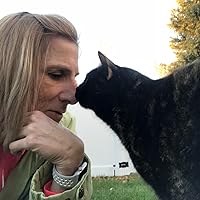
Timothy Murphy is a major American poet who lives on the Great Plains. A fascinating and complicated man and a child of the northern prairie, he writes deceptively simple poetry. Murphy has been a grain and hog farmer and, like Wallace Stevens, an insurance salesman, but the twin joys of his life are poetry and hunting. This double book, Mortal Stakes and Faint Thunder , is the first of several volumes of his poetry to be published by the Dakota Institute Press. Murphy’s poetry explores faith, family, spirituality, death, farming, friendship, love, and sexuality, yet it is profoundly rooted in place—the Red River watershed in North Dakota and western Minnesota. He tries to make sense of the wide sweep of the northern plains, to explore how place shapes poetry and how poetry shapes one’s experience of place. Murphy is an unpretentious man with a fabulous poetic pedigree. He studied with Robert Penn Warren at Yale, who passed him on to Richard Wilbur with a note saying, “Because he’s the best man we’ve got.” Murphy likens his poetry to the work of Robert Frost, and, like Frost, he prefers to work in rhyme.
Timothy Murphy was an American poet and businessman. Murphy studied at Yale University under Robert Penn Warren, graduating (B.A.) as Scholar of the House in Poetry in 1972. Murphy returned to Minnesota, and subsequently became involved in several farming and manufacturing enterprises in North Dakota, experiences which are reflected in his later writing.
Librarians note: There is more than one author in the Goodreads database with this name.
I was frankly drawn to Timothy Murphy by some of his autobiographical poetry in which he leaves a record of the winding path of his desire and hope. He was abused, raped as a boy by another male, lost his childhood faith, embraced the homosexual lifestyle and a partner, came to the point of despair and suicide, was providentially rescued, and turned back to faith and chaste, non-democratic adherence to the Lordship of Christ. He is immersed in the landscape and in the joyful companionship of hunting with his dogs. The landscape and his body are not just deracinated, empty stages for his existential, expressive individual emotion-machy, but are integrated and out of them his praise rises. The editor of this volume Clay S. Jenkinson is right to note the importance of the poem "Cold Front"- it shows the state of affairs between him and his longtime partner Alan Sullivan- a feeling of bankruptcy and despair in Murphy. Murphy noted of the volume in which it appeared, Mortal Stakes, that it was "the work of some hard years before the drinking nearly killed me on September 14, 2007. It's a pretty black collection of poems, alleviated only by the joy of my hunting and the first glimmerings of hope through faith." Jenkinson, it seems to me, reveals a skepticism and condescension when he asks if Murphy's faith, "abandoned early, recollected late," will hold up, but notes that Murphy, at the time of his writing, had shown sufficient "militancy" (not exactly a flattering word) to prove that the drama of his newly recovered faith was "not yet out of the second inning." Jenkinson further reveals a condescension in his diagnosis of Murphy's turn to faith as an "identity confusion", noting what he deems a "dysfunction between the voice of the land, 'legible as a Bible for the blind,' and the dominionism of the Judeo-Christian tradition." But Murphy's translation of the land into praise seems just what the doctor ordered. He seems to me to have entered seer territory by escaping the vain categories of the age, and his life witnesses to and busts beyond the drivel which passes as wisdom about democracy's sexuality, and the ersatz, sexual identity political categorizations that strut their meaningless fury on the stage at present. He's seems to lift at times beyond the modern to the eternal. Murphy seems to have proven Jenkinson's skepticism wrong by the course of his subsequent life until he died. His poem "Agape" is a powerful synopsis of the course of his faith and its loss and recovery, and it appears to have been divinely inspired through a repeated dream, as Murphy noted about the poem's genesis. Pope John Paul II's words at the end of the poem remind me of Jesus' reply to the Grand Inquisitor in Fyodor Dostoyevsky's story that goes by that name which appeared in The Brothers Karamazov. We would interrogate God with our half baked notions and inquisitions, but it is us that need Him and us that He loves with supreme love. No matter how we deconstruct a godless secularity, nothing supplies the meaning without God. "Confessiones 10.27.38" is another place where Murphy shines his faith, taking Augustine's confession of faith and making it his own. Is it true love of poetry to focus on the poet's life and not the poetry? The wise see something of God's poetry and even how He shapes through faith those who love Him into His own poem. So I'm a little shameless in my delight in the story of Murphy's redemption and regeneration as it violates the sham authority of ersatz pronouncements and commonplaces on sexuality and identitarian doctrine, on the immutability and imperviousness of desire to reason.
The problem with most of the MFA type of poetry you read is that the poet doesn't really have that much to say. No one will ever think that about Murphy. Some like his style, some don't, but this guy has been around the block a few times, observantly, and been knocked down a few times, too. Murphy is an honest poet, and he is most honest when he doesn't tell everything.
"I'm essentially a confessional poet". A line in the forward of the book (written by Clay Jenkinson) is an apt summation of this book of poetry. Murphy is a North Dakotan with a passion for hunting and his dog and the beauty of North Dakota. Murphy's writing is clear and touching. This is the first book of poetry that I have read front to back. I am so glad this came across my radar.