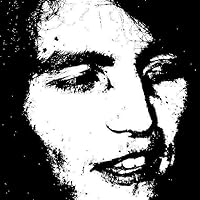
Adam Lindsay Gordon (1833-1870) was an Australian poet, jockey and politician. His most sustained effort, the "Rhyme of Joyous Garde", has some glorious stanzas, and on it and some 20 other poems Gordon's fame may be allowed to rest.
Adam Lindsay Gordon was an Australian poet, jockey and politician, born in the Azores. The son of an English army captain, Gordon went to school in Cheltenham, before leaving for Australia shortly before his 20th birthday. A dreamy athlete, Gordon preferred horse riding and quoting lengthy reams of Greek and Latin poetry to any kind of hard work.
In Australia, Gordon spent some time in the South Australian police force and then as a member of parliament, but wasn't well suited to either task. He made his fame as a horse rider, winning countless derbies and becoming known for his carefree, risky approach to riding. Always poetically inclined, Gordon had published several pieces in popular South Australian magazines, and finally had his first book publication - "Ashtaroth: A Dramatic Lyric" - in 1867. This was quickly followed by "Sea Spray and Smoke Drift" (1867). Neither of the works sold very well, from initial print runs of 500 each.
That year, Gordon moved with his wife and infant daughter to Ballarat, Victoria. When their daughter died aged 11 months, Gordon began to sink into a depression from which he would never fully recover. Moving to Melbourne, where he lived near Brighton Beach, Gordon became involved with the Yorick Club, a group of bohemian young writers which included future celebrities Marcus Clarke and Henry Kendall. However, faced with money troubles, the young poet found himself deeper and deeper in debt, prone to mood swings, and hanging all of his hopes on a potential large inheritance he was expecting from his ancestral Scotland.
In June 1870, Gordon received the news that he would not inherit the Scottish estate, due to some problems in the line of inheritance. On the 23rd of that month, he published his final volume, "Bush Ballads and Galloping Rhymes". In mounting debt and suffering depression, Gordon walked home that night aware that this volume would probably also not sell very well, and it certainly wouldn't make him famous, or solve his money troubles.
The following morning, he kissed his wife goodbye, and walked down to Sandringham Beach, where he shot himself in the head. Gordon was memorialised in verse, and a statue was erected near Melbourne's Parliament House in his honour. He is the only Australian poet to be commemorated with a bust in Westminster Abbey. (Both of these memorials were installed many years later, on the centenary of his birth, as part of a public campaign.)
Utterly fantastic. A few poems about hunting and horsemanship were largely lost on me (though still interesting, for sure), but some of the rest have to be among the best verse I've ever read. I'd already encountered a couple of them over the years - such as Unshriven which has long been one of my favourite poems - but the "dramatic lyric" Ashtaroth at the end of the book was certainly another highlight.
The only explanation I can think of for this collection's poor score here is that the others who have left ratings were forced to read it for school or some such. That seems to be a good way to turn students off an author for life, haha.