

What do you think?
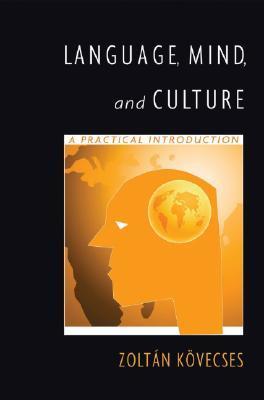
Language, Mind, and Culture: A Practical Introduction
How do we make sense of our experience? In order to understand how we construct meaning, the varied and complex relationships among language, mind, and culture need to be understood. While cognitive linguists typically study the cognitive aspects of language, and linguistic anthropologists typically study language and culture, Language, Mind, and Culture is the first book to combine all three and provide an account of meaning-making in language and culture by examining the many cognitive operations in this process.
In addition to providing a comprehensive theory of how we can account for meaning making, Language, Mind, and Culture is a textbook for anyone interested in the fascinating issues surrounding the relationship between language, mind, and culture. Further, the book is also a "practical" most of the chapters include exercises that help the student understand the theoretical issues. No prior knowledge of linguistics is assumed, and the material is accessible and useful to students in a variety of other disciplines, such as anthropology, English, sociology, philosophy, psychology, communication, rhetoric, and others.
Language, Mind, and Culture helps us make sense of not only linguistic meaning but also of some of the important personal and social issues we encounter in our lives as members of particular cultures and as human beings.
In addition to providing a comprehensive theory of how we can account for meaning making, Language, Mind, and Culture is a textbook for anyone interested in the fascinating issues surrounding the relationship between language, mind, and culture. Further, the book is also a "practical" most of the chapters include exercises that help the student understand the theoretical issues. No prior knowledge of linguistics is assumed, and the material is accessible and useful to students in a variety of other disciplines, such as anthropology, English, sociology, philosophy, psychology, communication, rhetoric, and others.
Language, Mind, and Culture helps us make sense of not only linguistic meaning but also of some of the important personal and social issues we encounter in our lives as members of particular cultures and as human beings.
- GenresLinguisticsNonfiction
397 pages, Paperback
First published January 1, 2006
Ratings & Reviews
Friends & Following
Create a free account to discover what your friends think of this book!
Community Reviews
Displaying 1 - 2 of 2 reviews

June 7, 2026
Nie jestem pewien, czy ta recenzja będzie sprawiedliwa, bo czytałem polskie wydanie i moje doświadczenie może być tutaj zakrzywione. Nie wiem, czy kiedyś widziałem tak niedbale przetłumaczoną i wolną od jakiejkolwiek korekty książkę. Pada tutaj chyba rekord literówek (to książka lingwistyczna, przypominam), a słowo "twiejądre" zamiast "twierdzenie" pada tak często, że zacząłem się zastanawiać, czy to nie prawdziwe słowo zanim zorientowałem się, że kluczem jest wymienne używanie morfemów rdzeń i jądro. Wiele gier słownych umyka kwadratowemu tłumaczeniu, co jest szczególnie słabe biorąc pod uwagę, że jednak no mamy do czynienia z książką o znaczeniu, języku i poznaniu.
Jeśli chodzi o samą zawartość książki, to jeśli chcielibyście zachęcić swoich studentów/uczniów/dzieci do wgłębienia się w lingwistykę kognitywną, to to jest dobry start. Autor w bardzo przystępny sposób wprowadza w temat kategorii, ram interpretacyjnych, metonimii, metafor, operacji konstruujących czy amalgamatów pojęciowych. Każdy rozdział kończą ćwiczenia, żeby sprawdzić zrozumienie tego, co się właśnie przeczytało, więc podręcznik może być np fajną podstawą do kursu z lingwistyki kognitywnej. Dwa najdłuższe rozdziały (Znaczenie a myślenie, Poznanie i gramatyka) trochę się dłużą i zabijają trochę przyjemność z czytania, ale resztę z czystym sercem polecam, z uwzględnieniem, że będziecie przeklinać polskie tłumaczenie.
Jeśli chodzi o samą zawartość książki, to jeśli chcielibyście zachęcić swoich studentów/uczniów/dzieci do wgłębienia się w lingwistykę kognitywną, to to jest dobry start. Autor w bardzo przystępny sposób wprowadza w temat kategorii, ram interpretacyjnych, metonimii, metafor, operacji konstruujących czy amalgamatów pojęciowych. Każdy rozdział kończą ćwiczenia, żeby sprawdzić zrozumienie tego, co się właśnie przeczytało, więc podręcznik może być np fajną podstawą do kursu z lingwistyki kognitywnej. Dwa najdłuższe rozdziały (Znaczenie a myślenie, Poznanie i gramatyka) trochę się dłużą i zabijają trochę przyjemność z czytania, ale resztę z czystym sercem polecam, z uwzględnieniem, że będziecie przeklinać polskie tłumaczenie.
Read
July 18, 2014306.44 K884 2006
Displaying 1 - 2 of 2 reviews