One of the most powerful and compelling spiritual books ever written. Expounding on the theme, "What doth it profit a man if he gain the whole world and suffer the loss of his own soul". St. Alphonsus dwells repeatedly on the Four Last Things: Death, Judgment, Heaven and Hell. Relentlessly, he brings the reader to considering his own eternal destiny. No one can read these sermons without being profoundly moved. Impr. 437 pgs, PB
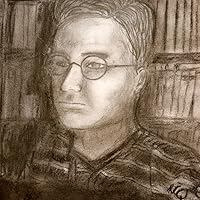
Saint Alfonso María de Liguori, CSsR (1696–1787), was an Italian Catholic bishop, spiritual writer, composer, musician, artist, poet, lawyer, scholastic philosopher, and theologian.
He founded the Congregation of the Most Holy Redeemer (the Redemptorists). In 1762 he was appointed Bishop of Sant'Agata dei Goti. A prolific writer, he published nine editions of his "Moral Theology" in his lifetime, in addition to other devotional and ascetic works and letters. Among his best known works are "The Glories of Mary" and "The Way of the Cross", the latter still used in parishes during Lenten devotions.
He was canonized in 1839 by Pope Gregory XVI and proclaimed a Doctor of the Church by Pope Pius IX in 1871. One of the most widely read Catholic authors, he is the patron saint of confessors.
Not for the faint of heart! This one took me a bit longer than I wanted, but for good reason. These sermons are not for the scrupulous and often had me meditating on St. Aplhonsus words for days or weeks sometimes. St. Alphonsus Liguori, ora pro nobis!
Ligouri preached his homilies for the ordinary man which makes them very easy to read and understand. Prepare to be convicted, over and over, but also prepare to receive practical helps to overcome concupiscence and to please God. Reading one of these homilies every Sunday for the rest of my life would be a step in the right direction.
A very interesting read. It is true the St. Alphonsus repeatedly goes back to the last things - death, judgement, heaven and hell. But Alphonsus delivery style certainly needs some modernizing. I would love to see more homilies focusing on this subject matter with a more modern, fresh delivert approach.
Sermons for All the Sundays in the Year - Alfonso María de Liguori
When we compare the sermons of Alfonso María de Liguori with contemporary evangelical and 'Novus Ordo' sermons we immediately realize that there are great differences. The greatest difference would be the subject of Hell and eternal condemnation. Where contemporary preachers often completely avoid the subject of hell Alfonso María de Liguori speaks about hell ALL THE TIME! Contemporary sermons are often preached to give the member of the church a better feeling. Saint Alfonso de Liguori preaches to shock his audience. He wants the members of the church to realize that hell and eternal salvation are not sure, even for the believer. He warns them again and again of hell.
The sermon written for the first sunday of lent ends with the words: "If, after this sermon, you do not firmly resolve to give yourself to God, I weep over you, and regard you as lost"
Preachers who preach like this nowadays are in danger of being banished from the pulpit. It is not a popular message in a society that teaches that 'everything is ok'. That you are free to believe whatever you want as long as you don't bother anybody. That there are many roads that lead to heaven or to nowhere at all!
Even though I do not agree that believers are in danger of losing their salvation I loved this book very much and it has greatly strengthened my faith!
So far my favorite collection of sermons ~ St. Alphonsus has a warm, reasonable pastoral style and I just love. I think I can see why Frs. Nikolaus von Diessbach, SJ & Bruno Lanteri, OMV (two of my heroes/sources of inspiration in my work with Amicizia Cristiana USA) liked him so much. His emphasis on the great mercy and love of God for sinners encourages hope and reconciliation to flower in the hearts of so many.
This is a great book for spiritual reading. Each short chapter is so dense that I would recommend working through the chapter at your own pace, possibly over the whole week leading up to the given Sunday. Most times just one section of a chapter was enough for meditation and reflection in one sitting. Most of the Sundays do not line up with the Novus Ordo calendar but really any chapter will be edifying at any time. If you attend the TLM then it's a bonus to have these reflections align with the Sunday readings.