I laid my papers down upon the broad mahogany counter, and exchanged greetings with the tall frock-coated reception clerk who came smiling towards me. "I should like a single room on the third floor east, about the middle corridor," I said. "Can you manage that for me? 317 I had last time." He shook his head at once. "I am very sorry, Mr. Courage," he said, "but all the rooms in that corridor are engaged. We will give you one on the second floor at the same price." I was about to close with his offer, when, with a word of excuse, he hurried away to intercept some one who was passing through the hall. A junior clerk took his place, and consulted the plan for a moment doubtfully.
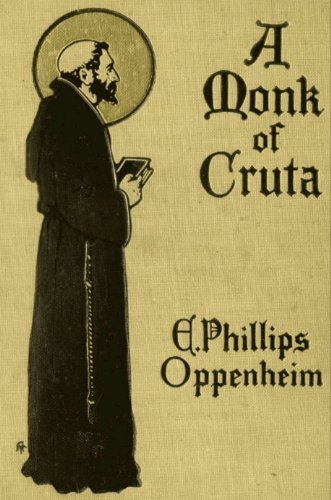
Edward Phillips Oppenheim was an English novelist, primarily known for his suspense fiction.
He was born in Leicester, the son of a leather merchant, and after attending Wyggeston Grammar School he worked in his father's business for almost 20 years, beginning there at a young age. He continued working in the business, even though he was a successful novelist, until he was 40 at which point he sold the business.
He wrote his first book 'Expiation' in 1887 and in 1898 he published 'The Mysterious Mr Sabin', which he described as "The first of my long series of stories dealing with that shadowy and mysterious world of diplomacy." Thereafter he became a prolific writer and by 1900 he had had 14 novels published.
While on a business trip to the United States in 1890 he met and married Elise Clara Hopkins of Boston and, on return to England, they lived in Evington, Leicestershire until the First World War,and had one daughter. His wife remained faithful to him throughout his life despite his frequent and highly publicised affairs, which often took place abroad and aboard his luxury yacht.
During World War I Oppenheim worked for the Ministry of Information while continuing to write his suspenseful novels.
He featured on the cover of 'Time' magazine on 12 September 1927 and he was the self-styled 'Prince of Storytellers', a title used by Robert standish for his biography of the author.
His literary success enabled him to buy a villa in France and a yacht, spending his winters in France where he regularly entertained more than 250 people at his lavish parties and where he was a well-known figure in high society.
He later purchased a house, Le Vanquiédor in St. Peter Port, in Guernsey. He lost access to the house during the Second World War when Germany occupied the Channel Islands but later regained it.
He wrote 116 novels, mainly of the suspense and international intrigue type, but including romances, comedies, and parables of everyday life, and 39 volumes of short stories, all of which earned him vast sums of money. He also wrote five novels under the pseudonymn Anthony Partridge and a volume of autobiography, 'The Pool of Memory' in 1939.
He is generally regarded as the earliest writer of spy fiction as we know it today, and invented the 'Rogue Male' school of adventure thrillers that was later exploited by John Buchan and Geoffrey Household.
Undoubtedly his most renowned work was 'The Great Impersonation' (1920), which was filmed three times, the last time as a strong piece of wartime propaganda in 1942. In that novel the plot hinges around two very similar looking gentlemen, one from Britain and the other from Germany, in the early part of the 20th century. Overall more than 30 of his works were made into films.
Perhaps his most enduring creation is the character of General Besserley, the protagonist of 'General Besserley's Puzzle Box' and 'General Besserley's New Puzzle Box'.
Much of his work possesses a unique escapist charm, featuring protagonists who delight in Epicurean meals, surroundings of intense luxury, and the relaxed pursuit of criminal practice, on either side of the law.
J. Hardross Courage, gentleman, amateur sportsman and magistrate, armed with little more than 'a thoroughly British indignation', becomes embroiled in the dangerous world of international espionage when a hunted man bursts uninvited into his hotel room one night.
Of course there's a woman involved, Adele Van Hoyt, an adventuress of uncertain allegiances. The man calls himself Leslie Guest, the holder of a great secret that could prevent the outbreak of war in Europe. Hardross falls for the woman and assists the man, but he will have to give up his life of privileged ease along the way.
There was so much wrong with this slapdash, feather-brained adventure story that I hardly know where to start. Firstly, the plotting was shoddy in the extreme, e.g. at one point a character who seemingly died was resurrected via 'suspended animation', a miraculous occurrence not even deemed worthy of an explanation.
Secondly, the characters, though the fate of the world hung on their actions, gave the impression that they couldn't organize a piss-up in Octoberfest as they mindlessly went about their business.
In addition, Hardross went all gooey-eyed over Adele to a cringe worthy degree, and Adele in turn transformed from the 'bold' American lady we first saw into a simpering simpleton at the drop of a hat.
And yet, I kind of enjoyed it. The reasons for that were threefold, not entirely convincing either on reflection, but here goes:
1) I do find a certain guilty pleasure in reading these creaky old spy thrillers from a more innocent age. In the best bits, you can imagine a young Alfred Hitchcock rearing himself on this kind of dross before going on to make so much more of the ordinary man caught up in the extraordinary situation, the MacGuffin plot devices, the suave or innocuous bad guys etc
2) The presence of a malevolent Japanese spaniel named Nagaski, who took an unfathomable dislike to the hero and turned out to offer the only real threat to him throughout.
3) Thirdly, and lamest of all, the fact that the writer was born and lived in Leicester, not far from where I live, so I felt disposed towards him from the outset.
Enjoyed the trek down “what usta be” and the plot was interesting, as well. A plot from a master of the genre. Tom Weiss’ narration was clear and easily understood. Recommended for history, fiction, and mystery fans.
Mr Hardross Courage is a young sportsman, and a member of the landed gentry, in London for a county cricket match at Lords. He is staying at the Cosmopolitan Hotel. In the middle if the night he is awoken by the desperate cry of Mr Leslie Guest who is trying to escape two attackers. Courage tries to help Guest but is attacked himself and Guest is abducted. Before being knocked out, Courage smells a distinctive violet perfume. The next day he encounters the same smell worn by Miss Adele von Reinhart, a beautiful young American heiress. Which side is she on? Who is Mr Guest, and what has happened to him.
In the decade before the first World War, Oppenheim and others wrote novels which tried to warn the English public of the devious plotting by Germany against England and France. Erskine Childers "Riddle of the Sands" is probably the most famous of these (see page 265), but Oppenheim wrote several, of which this is one of the best. The story ranges across England and America, and includes some comic portraits of the wives of American millionaires plotting to gain the titles of French nobility. 1908
Sir Hardross Courage (great name, right?) is an upper class British cricketer whose life gets turned upside down after a chance encounter with a spy named Guest, who has uncovered a secret that could decide the fate of England. As Guest feels that his death is impending and as Courage doesn't want to stand idly by while his country might be in grave danger he consents to Guests passing the secret on to him. Thus he immerses himself in a world of international conspiracies, where danger lurks around every corner and where, perchance, he meets the woman of his dreams; an American spy who may or may not be on his side. Exciting stuff!
I adore Oppenheim. His stories are thrilling, mysterious, glamorous, romantic and generally great fun. I particularly enjoy his use of exclamation marks. To give an example:
"Nothing, perhaps, could more completely illustrate the effect his words and appearance had upon me than the fact that I accepted his extraordinary statement without any instinct of disbelief!"
and my personal favourite:
"Nothing in their appearance suggested in the least the midnight assassin!"
You can't help getting excited when you read sentences like these.
Вначале, несмотря на активное развитие событий, было скучно. К концу стало интересно - когда перестали после каждого абзаца говорить, что это секрет о нем нельзя говорить. Занятный роман с политическим подтекстом - я не очень сильна в истории, но думаю, что вымысел чистой воды. Вначале даже герой был менее симпатичный. Наверное, для внутреннего развития книга ничего не дает, но в качестве занятия времени и небольшой тренировки английского вполне пригодна.
This entire review has been hidden because of spoilers.
Great spy story of the tortured love lives of spies constantly forced to choose their country over their loves. I believe they fake a spies death so he can get away from the life, if memory serves.
I enjoy E. Phillips Oppenheim's writing style. His characters are dynamic and realistic for the time that they are written. This is kind of a mystery thriller, or spy-type story. I was impressed with the way he introduced some of the situations in the book. There was one plot that the protagonist became aware of that was reminiscent of the Bilderberger group. Another plot followed the same recipe that Hitler used to invade several countries where he would send in termites and torpedoes. The idea according to Gollomb (1939), Hitler would send people across the borders of countries he was to invade who would spy on the economic powers of the areas and stockpile things like uniforms, supplies, and weapons. Then the Torpedoes would be sent in and they would attack the socioeconomic pillars of the society and Germans would flood the borders and don the stockpiled uniforms and pick up the weapons and the country in question would thus be invaded. Much like America is being invaded by foreign powers right now.
I found this book to be true to form for realism, and considering it was written prior to WWI, I was impressed by the insight Oppenheim seemed to have regarding what might come to pass. For me this book proved to be a page turner. I wanted to know what would come next and how the characters would react and interact to situations and events that the author created. In the pages one might also find an unlikely romance unfold. I would recommend this story to people who love classics, mystery, thrillers, spy novels, and anything that is dated. I might also recommend his story to the average patriot who might be interested in how a government might turn a blind eye to things that might actually cause them harm, (American government. wink, wink).
Reference: Gollomb, J. (1939). Armies of Spies. New Macmillan Books.
If you are looking for a pre-WWI thriller that captures the mood of the time, this is it. The villains are the Germans. The hero is a young Brit from a good family who stumbles into the situation and saves the Nation with a little help from his relatives in the government. All the Germans wear thick glasses and (horror!) their suits are badly tailored. One of the main characters is a beautiful young woman; of course the hero falls in love with her and she falls in love with him. The plot is mostly implausible to the point of silliness. One of the characters switches sides for reasons that are not clear. There are trips to fancy estates that seem to be there to show off a lifestyle that could be called ocean liner-setting or whatever you would call jet-setting before the invention of airplanes with covered cockpits. The one good thread in the plot involves a dying man who may or may not be dead.
1908. In Secret J. Hardross Courage, a man who's been skimming the surface of life's experiences, gets involved in an international conspiracy. Credulous as he is, it takes him a while to realize it, but when he does the action picks up, and England is once again safe from Germany. For a while at least.
The narrative seemed a little forced. I was mildly annoyed that the great secret was kept entirely from me for most of the book and when revealed didn't quite match the buildup it was given. It would have had more impact if I could have placed myself in the proper pre-WWI frame of mind.
But, the story does grab you and pull you in. I loved all of the characters, and rooted for them til the end. Will be reading everything I can locate by this author!