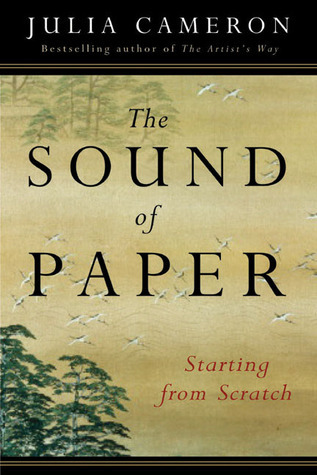
A thought-provoking study of the creative process by the author of The Artist's Way presents a series of exercises designed to help readers develop a continuing process of renewal that enhances the power to infuse one's art with an informed knowledge of the soul and offers a spiritual path to help readers create the best work of their lives.
Julia Cameron has been an active artist for more than thirty years, with fifteen books (including bestsellers The Artist's Way, Walking In This World and The Right to Write) and countless television, film, and theater scripts to her credit. Writing since the age of 18, Cameron has a long list of screenplay and teleplay credits to her name, including an episode of Miami Vice, and Elvis and the Beauty Queen, which starred Don Johnson. She was a writer on such movies as Taxi Driver, New York, New York, and The Last Waltz. She wrote, produced, and directed the award-winning independent feature film, God's Will, which premiered at the Chicago International Film Festival, and was selected by the London Film Festival, the Munich International Film Festival, and Women in Film Festival, among others. In addition to making film, Cameron has taught film at such diverse places as Chicago Filmmakers, Northwestern University, and Columbia College. Her profound teachings on unlocking creativity and living from the creative center have inspired countless artists to unleash their full potential.
I don't know if I'm the only one feeling this way, but most of the time, I pick a book to read based on my mood. There are some books that have been abandoned for years in my bookshelf, simply because I don't feel like reading them, yet.
Thus, it’s kind of frustrating when you have to spend about 30 minutes walking back and forth between the high shelves in the library, because you don't know what kind of book that you want to read.
I’m really when I found this book, "The Sound of Paper", next to a book titled "The Tao of Jung" that I initially picked.
The Sound of Paper is a book about an artist’s way in finding source of inspiration through spiritual approach. It contains short essays about finding and befriending the sources of inspiration needed by an artist, be it a writer, composer, actor, or painter. At the end of every pieces were a simple task to do by the reader, but unlike those you usually find in how-to books, the tasks were, to quote from the writer’s words, modest and gentle. They don’t force you to actually achieve or produce something, rather, they guide you through a silent journey of finding the inspiration in you.
I really like this book for that particular two reasons; modest, and gentle.
It is as if you can feel that all the essays in it were written with a gentle heart. They are like a good friend, full of understanding and willing to walk slowly with you after a tiring day, or simply sit with you in silence. Their mere existence is meaningful. Their small and seems to be unimportant talks are meaningful.
I feel I can relate so much to the essays. All essays in this book were started with a description of the season and the situation surrounding the writer; the sight of the city skyline, the brown leaves, the dry season in California, the sandstorm, the blooming colors of spring. I really love the way she uses nature as her source of inspiration. She shows that if you pay a little attention, every details in the nature is meaningful.
For people who are into writing, this book really helps, not in the way other books on writing do. There are some tasks and applicative stuff like the morning pages (which turn out to be very famous). It’s less technical. It goes deeper and further beyond finding out what to write and how to write it. Reading the essays in this book, I was feeling as if Julia Cameron herself was walking me through her silent journey from spring to summer in California, trying to decipher the meaning of every little details in nature and turn them into inspiration.
I like the spiritual approach used in this book. It says that it would be better to think of art as something that has there around you, rather than something you need to create. It would be better to think of art as a divine message and you are the channel. It makes you more humble, and surprisingly, more sensitive and open to sources of inspiration around you.
Conveyed in gentle manner and in the nuance of serenity, this book actually tells a strong message. That a creative work, just like other type of work, requires works that are being done consistently. That aloneness and serenity you think you need to be able to produce creative work, is actually not that difficult to be found. They’re not always in the form of solitude or a long hours brainstorm or daydreaming. Sometimes, they are part of your busy everyday life; while you were waiting for the doctor appointment, while you were waiting for the cake to be fully baked, in the middle of writing a report for your daily job, of when you’re sitting at the bus shelter with crowds of people around you.
To me, it simply says: no excuse. I’ve written about it on on my blog too. No excuse about lack of time, lack of space, lack of inspiration, or incondusive environment. When you constantly find yourself feeling suffocated of having so many things to write, then you must write. Inspirationare everywhere. And creative is a process. And art, flows through you. You, yourself, are the fertile soil of inspiration.
The Sound of Paper is not the kind of book that you can finish at one go. It's the kind of book that you read slowly, page by page. It's the kind of book that makes you stop in the middle to simply take a deep breath and look around, trying to absorb the meaning you find in the sentences.
This is a book containing several small essays about the grounded, successful creative life. Most of them begin with a description of her surroundings, either in NYC or Taos, and then shows how our writing (or painting, or sculpture, etc.) lives exist in the same way. For example: lightning bolts split a tree in its path down the middle, just how a creative bolt of inspiration can take us over and burn us out if we are not careful.
Three issues that would normally irk me: 1. Because of the essay format, I feel that there is a large amount of repetition. Not to mention a lot of repetition of the same lessons I have learned from reading her other works: The Artist's Way, The Vein of Gold, The Right to Write, and The Writing Diet: Write Yourself Right-Size, if I'm not forgetting any. For example: How many times do we need to be told that Taos is hot and there is a drought? That Halloween is a unique and favorite holiday for the residents? 2. There is also many mentions of being inspired by her God, or of a spiritual force larger than ourselves influencing our creativity. 3. Some of it is really cheesy. Sometimes there are lots of rainbows in Taos. She saw one that ended at her house, and asked herself what was worthy as a pot of gold? The answer: Creativity.
However; these two things don't annoy me as much as if I didn't believe in the effectiveness in her method and the validity of her teachings. The first, the repetition, doesn't annoy me because I feel as though it's an example of how she writes for herself, as though it's an example of her practicing what she preaches even in her own writing. And since I've read so many of her other books, which let's face it are all a bit repetitive, why did I even start this one? Because maybe I need even more, maybe I need a baseball bat to the head to ignite my own creative sparks, and to be able to put the effort and the will towards my own writing, even if it's only for me, only for my journal. For the desire to actually write in a meaningful and successful way, whether success means my own well-being or external accomplishments. Reading her work I feel as though I have a friend, who may be well-meaning and slightly cheesy, standing by me saying you can do this if only you begin, if you just get over your ego and your fear of failure who knows what you could accomplish?
As to the religion, I feel that she is not pushy at all that you should believe in the same god that she does, but as a force that you have to acknowledge that you are not alone. Whether you are looked over by a powerful god, or some sort of spiritual force, or even just banishing your ego to let your creativity flow, you have to let yourself do whatever it is you want to create, and not let anything internal or external stop you from trying or telling you you are not worth it and failure is imminent.
I think that the cheesiness of it comes from an almost impossible message to translate. So while I could just roll my eyes and smirk, I'd rather try and understand what she's saying and how to put her lessons into effect in my own creative life.
I love reading inspirational creative missives and Cameron's lessons are valuable and worthy of my time and effort. It's as if every so often I need a pick me up, a friend telling me I can do something big even if it never leaves the "bottom drawer." Reading her books continually push me gently into trying and trying again and trying harder. They help me put my life in what could somehow resemble order, and to be more rounded and open to new experiences and to channel those experiences into my own art. Now off to do my Morning Pages! (Even if it is 4 in the afternoon!)
de ja vu? ... or could it be that I'm reading too much Cameron? Now in this volume she's not only repeating what she said in The Right to Write (and I use that example because this book is written along the same lines) but she is actually repeating what she said a few pages previously: "I spend ... months in New York and ... months in Taos" we hear at least 3-4 times in consecutive essays. Another example is her dogs, her friends - and I'm relieved to note that the names she mentions really seem to be people and not just names for the sake of an example. And by repetition: If you're not writing/are blocked, could it be that you're not doing your Morning Pages, the Artist Date or weekly walk??! I don't mean to be mean - her work is inspiring, but it seems that once you've read one of her books, you've read them all (and met all her friends - including Natalie Goldberg) and been to Taos for the essays and New York for the rest!
I don't know if this book is great or if it was great for me right now. In any case, "The Sound of Paper" delivered just what I needed, when I needed it: encouragement, understanding, and tangible tools to get me inspired and writing.
* In order to make art, we must first make an artful life, a life rich enough and diverse enough to give us fuel. * At bottom, cynicism is a cheap and shoddy response to a life we are afraid to love because it might, for a time, be painful.
Both quotes by Julia Cameron in The Sound Of Paper
Found the book at BookSale Farmers Plaza for P175. I’m currently reading it. But taking my sweet time to finish. Because it’s just too rich to be taken in one sitting (unlike potato-chip novels which were made for 12-hour plane or bus rides).
And just like the book that made Julia Cameron famous (The Artist’s Way), this one is a set of bite-sized reflections on life, love, and creativity, but written with a more tender tone, and from a wiser perspective. A wonderful read that never fails to fill you with hope.
BOOK EXCERPT:
I don’t know why it is that we fail to talk about art in terms of humble diligence. So much of making a career as an artist consists of the small strokes, the willingness to show up and try on a daily basis. So much of being good at something consists of being practiced at something so that the sudden gusts of a deadline blowing into your workspace doesn’t turn you into a terrorist, wild-haired and wild-eyed, unable to muster muscle and nerve enough to simply stick to the page. As artists, we can make our work daily and doable enough that we give it its daily measure of time and consistency. We can “show up” for our artist, and if we do, when we call on it, our artist will show up for us.
Fans of Cameron's will be delighted by her new offering. The best-selling author of The Artist's Way delves once again into her methods of dealing with writing. Cameron loves to introduce the spiritual into her book, which is great if you're inclined to her mostly Christian beliefs. I think her books would be far more powerful if she used simple psychology instead.
The Sound of Paper is essentially about Writer's Block. Why does it happen and how do you nurture yourself and find a way out. This is great and it will make her pots more money. However, I've found as a writing coach, author and interviewer of writers that this condition rarely exists. Laziness is the main culprit, fear the second. If one really odes suffer from Writer's Block, one needs to see a therapist and find out what the problem is. And then get on with writing your book.
The Sound of Paper offers simple, common sense solutions to dealing with this block. I don't think it would unblock a real problem, but it's a sweet book for any writer to glance at now and again for a little inspiration.
Reading Cameron is like having a writing coach at your elbow. She continually offers encouragement, but that's not the only reason to read her. She also conveys what it is like to nurture and live the artist's life, how it is different from other kinds of pursuits, and some pitfalls to avoid. She provides exercises after every chapter to explore one's own psyche, to bring up from the subconscious level ideas and new directions to explore. The setting of this particular book, a very dry summer in Taos, figures prominently in Cameron's ruminations here, as a creative "drought" is something all artists have to face and work through. She uses seasons and weather conditions as a metaphor for the difficulties and joys of bringing forth one's art. She also conveys a little of what it is like to live in Taos with its high population of artists.
I'd have given this 3 stars if I hadn't already read it: The Artist's Way is basically the same book. If you liked that, you'll like this; if you haven't read that, I liked this one better, though only marginally. Comforting words for the struggling/blocked artist or one who creates in a vacuum, but a little too touchy-feely in general for my tastes.
I never quite finish any of her books. The "self help" theme sounds familiar from book to book. And while repetitive and slightly dull at times, there are definite points made that most artists need to hear or be reminded of. I go back to her books and read a few chapters here and there, but have never been enthralled or excited enough to read an entire one all the way through.
Started off good, but quickly got repetitive. Core ideas referred to letting God take care of artblock, but is not too useful to me as I'm not a believer.
I got this from the library and read it straight through, and this is not the way to best enjoy this book. Its purpose is to inspire artists, especially writers. To that end, it’s a collection of essays, as small and pointed as sermons. It should be kept on the shelf and drawn down as needed, to refresh the spirit, to deepen a commitment to the artistic process.
The beginning of each essay is a small journal entry, with lovely descriptions of the weather and landscapes in Taos, where Julia Cameron spends each summer. We are shown drought, thunderstorms, soft rains, new growth. Within a few paragraphs, this leads into a description of some aspect of an artist’s life – creative drought, the need for encouragement, ways to pace yourself, the importance of self-nurturing. Illustrations from the lives of other artists punctuate this advice.
It’s heavily influenced by AA, and leans on faith on a higher Creative Power, so it might not be for everyone. And it keeps coming back to the tools that Cameron wrote about in her earlier books: Morning Pages, Artist’s Dates, the Walk. She also has little exercises after every piece, and these seemed a bit forced and unnecessary to me.
But all in all, I found it a worthy book, full of good advice and perspectives. It addresses many of the psychological and social pitfalls that come from creating art, and looks at some ways to address these problems. It could move any weary, discouraged, or blocked artist back onto the path.
I'm surprised by the high rating of this book. I would recommend that if you're "starting from scratch" and need creative inspiration, read Nick Bantok's "The Trickster's Hat."
I love Julia Cameron, but found this book to be boring and repetitive at best. Each chapter comes with a list of writing prompts, but it was frequently the same prompt written repeatedly. In my opinion, the prompts in this book are useless and will not nurture creativity.
Cameron encourages writers to keep writing, regardless of writing blocks, and despite their inner critic. I think this book stands as a fine example of her doing just that. Each chapter felt like a repeat of the chapter before it and she frequently gave the same information she had stated in previous chapters or referred to the same writer friends.
That being said, here are a couple of quotes that I liked:
"All artists suffer times of creative doubt -- and drought. The bogeyman of fear and self-criticism, the knife blade of perfectionism, looms close to each of us. Blocks cannot be eliminated, but their ability to effectively block us can be."
"Because our emotional weather is so capricious, we must learn to let it pass without acting destructively on its invitations."
"It is worth thinking of our inner censor as our inner saboteur. If we are bent on the successful accomplishment of our dreams, our censor is bent on keeping us small and dreamless. But we are not small and dreamless. We are large, we are powerful, we are resilient."
"When we are building a life from scratch, we must dig a little. We must be like that hen scratching the soil: What goodness is hidden here, just below the surface? We must ask. We ask that question by putting pen to page." (Julia Cameron)
Itulah yang disarankan oleh Julia Cameron melalui bab-bab singkat dalam buku ini: untuk menuliskan berbagai hal — hampir di setiap akhir bab ada "prompt" menulis yang berbeda-beda — untuk menemukan kembali diri dan, terutama, kreativitas kita. Pada dasarnya buku ini memang tentang kreativitas yang ditujukan bagi pembaca yang menyukai sekaligus menggeluti dunia seni — menulis, melukis, dan sebagainya.
Dalam setiap bab, secara kronologis Julia Cameron mendeskripsikan apa yang terjadi dan apa yang disaksikannya di dua kota berbeda tempatnya menjalani hidupnya — New York dan Taos (New Mexico), kemudian menjadikannya sebagai metafora akan apa yang dialami oleh orang-orang yang berkesenian (misalnya, menunggu waktu yang 'tepat' untuk mulai berkarya, mengalami 'musim kering' alias kehabisan ide, merasa tidak percaya diri akan karya sendiri, dan masih banyak lagi lainnya).
"Creativity lies in the doing and not in the done. ..." Saya rasa inilah inti buku ini. Bahwa kreativitas dalam berkesenian merupakan suatu proses yang sifatnya "ongoing". Apa pun 'musim' yang kita lewati, tetaplah berkarya. Entah karya tersebut 'jelek' atau bagus, yang penting tetap terus berkarya. Tidak ada kewajiban untuk kita harus selalu membuat "masterpiece", kita hanya harus tetap konsisten berkarya.
The reason that I came across this book was that someone shared one of Julia Cameron's exercises in a blog that I read, and I found it intriguing.
The Sound of Paper is not just about writing. It is about artistry of any kind. In this book, the reader will find a number of brief "essays," each followed by an exercise that begins with "Try this." A lot of the exercises involve making lists. I like lists, so I found them both interesting and helpful. The essays are all less than three pages, making them quick and easy reads. Most of them begin with an exquisite description of the setting surrounding the author at the time, many of them being in Taos, New Mexico.
The settings include beautiful mountains, but they also include such things as desolate drought conditions and smoke from out-of-control fires. And each setting is then brought into a circumstance or condition in which artists might find themselves.
I learned a lot about myself from reading this book, not all of it good. I learned a lot about being an artist. I'm still debating whether I truly am an "artist," but I think I am. I believe that my inner "artist" has been stifled for a long time, and am planning to draw him (or her) back out.
This book could easily be read as a sort of "devotional" book. It's not about God or the Bible, but Julia believes in God and references the Bible a number of times. But it's set up in those short essays/exercises that could be done one a day, or, perhaps one in several days, depending on how long it takes to get through the exercises.
I'm keeping this book on my shelf, because I believe it would be worth going back to, from time to time.
I've waited so long to finally read this book. It's been out for years but I simply wasn't able to get a copy till I found it for $4 at a used bookstore. It was a lucky find too because it was NOT in the self help section like it should have been but in the fiction section. These are essays of her creative life so it's far from fiction. I'm in a hard spot in my life and I feel like I'm starting from scratch again. Which is the subheading of this book. It's wonderful to read and do (there are some creative exercises to get you unblocked) I am very familiar with her works and have done her first book The Artist's Way, which I highly recommend. I had recently gave away the books I had because I have done them all at least twice and thought this should go out to help other people now, and I really needed the shelf space. This one I might keep for awhile. The Sound of Paper just inspires me to write but it doesn't always talk about writing, it talks about creating in whatever your fashion is. I think anybody having tough times in their life would love this book. It's really for me, the most helpful book you can possibly have.
I really haven't finished this book. It will take a long time to finish, but I have completed some of the writing exercises at the beginning of the book and have looked through others. This is a book of self-reflective writing prompt ideas on themes such as Courage, Compassion, Taming Time, Seasons, Local Color, Trust, and many many more. Julia Cameron writes 2-3 pages on each theme, then provides a prompt for the reader to write on that same theme. I have seen many many books on writing to prompts, but this one is so much better. Her lead-ins to each prompt set the tone for writing. The themes and prompts do not have to be completed in any order and there are so many. With a 312 page book, there are approximately 70 maybe? I didn't take the time to count them all and they are not listed in a Table of Contents. Julia Cameron is the author of "The Artist's Way" and many other titles which have been around for a long time. This book is just a little taste of what she has to offer.
I am taking my time with this one---- Probably will take a full semester. ----------------------------------------------------------------- The author wrote an episode (Junk Love) for Miami Vice in 1985 In the "Teachability" chapter. she talks about Containment .
"If the first rule of magic is containment, knowing when not o and how not to to talk about a project ----"
"The artist's soul thrives on adventure. Many adventures require us to muster the courage to be a beginner." , giving her personal examples she asks the student to list five things you would love to do if you didn't have to do them perfectly -----"
It feels graciously like a healing activity/project.
1) If I didn't have to do it perfectly, I would try __________________________ 2) 3) 4) 5)
"All artists go through seasons of joy and seasons of rootless restlessness and doubt." Her book, Seeking Wisdom. is also very good.
This book is from 2004 and it aims more directly to the point than her best-seller "The artist's way". Here she doesn’t talk so much about pseudo-artist guidance, provide religion/spiritual thoughts or focus on self-help cliches.
It starts with the main advice she provides in all her books (at least the three I read): morning pages, artist dates and walks. They are common-sense wisdom probably, but at least for me it is useful to be reminded of these things from time to time: giving us enough time to write, to explore, to think, to feel instead of just rushing from one place to the other, checking our to-do list.
To be honest, I skipped most of the chapter's content and went directly to the activities. I found them quite interesting and probably will do many of them as part of my self discovery and development to continue growing as a human being.
So here's the thing, I've read The Artist's Way, and going into this I actually had no idea it was by the same author. That fact was quickly revealed to me as she essentially repeats many of the ideas and practices that she mentions in The Artist's Way. Not only that, but the book was quite repetitive even within itself.
Split into many little essays that seem taken straight from her Morning Pages, we are told over and over again how the artist must work through a block, or practice every day, or treat their inner child to refill the well of creativity. And like, it's all nice information, but to have it said over and over and over is unnecessary.
Don't get me wrong, reading this has me feeling renewed in my mission to create, but this could have been accomplished with one or two essays; I didn't need a whole book.
This was a hard one to rate. I really liked it. I think it has the potential to be extremely helpful and worth reading. There is inspiration and advice to be had.
That being said, Julia Cameron is strict about things being her way. Except when she isn't. And thinks you are a vessel for the Great Creator to merely flow through. Except when you have to put in. years of hard work.
It's contradictory, and often preachy at worst, but like a beloved aunt's and successful mentor at its best.
I think it's one where you need to form your own opinion on it.
Now was the perfect time for me to read this book again. Julia Cameron’s essays on the work of writing, written from her New York apartment and then her house in Taos, not only inspired me to return to Morning Pages in my journal, but to also take a look at the partial manuscripts I set aside 15 years ago, when I had to give up freelance writing for a “real” job. With guidance from The Sound of Paper, I’ve settled into a new and much-needed daily routine, and I can see a return to writing stories as something I will be doing in the days ahead.
Essays and musings on creativity and Cameron's time in New Mexico, followed by prompts/exercises for reflection and writing. Could be used over weeks and months or daily. Foundations are her Morning Pages, Artist Dates, and Walks. Surprises for me (though good chance appeared in her other books I read, but I overlooked) were several essays on leaning on God/Spirit for inspiration (pun intended) and working through blocks. Perhaps written for writers, but could be applied to any arts, including the art of living.
I love all of Julia Cameron's books, even if most of them read the same way. This one felt like an ode to the writer's personal journey of living life and finding quiet moments to write. I love her descriptions of life in Taos; living both there and in New York brings out different sides of her interests and personality, and she captures them all beautifully while tying in valuable insights on the art of being a creator. A should-read for writers and artists.
I found this book rather repetitive in its essays and prompts. And yet, i read every single word. It was validating. Healing. Encouraging. It reminded me its ok if something turns out less than …. At least youve tried and likely learned something in the process and can move on to the next. Im reminded of the importance of doing something in my creative field daily …. Even if its reading a book or watching a youtube. Well worth the time.
Julia Cameron is one of my favorite writers on creativity and writing. This is a great book for inspiration and encouragement. It's on my reference shelf for writing, and I enjoy using the journaling prompts. It helps with reflecting on the writing process, opening up to the creative spirit, and freeing oneself to be more authentic. I've enjoyed all of Julia Cameron's books on crafts, but this one is exceptional!
I would highly recommend this book to anyone who is dreaming about becoming an artist, but too afraid to work towards this dream. I liked the small tasks and advice by the end of each chapter. It will stimulate a deep thinking centered around you and your artist part. I think you should also read her other books "The Artist's Way" and "The Artist's Way workbook" for a full experience. Enjoy!