

What do you think?
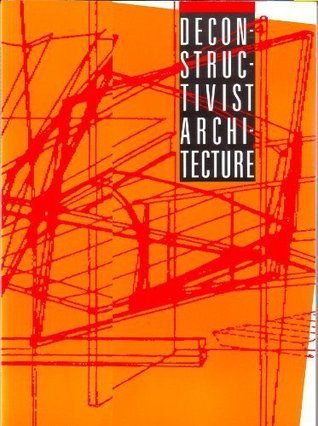
Deconstructivist Architecture
Rear cover "This book presents a radical architecture, exemplified by the recent work of seven architects. Illustrated are projects for Santa Monica, Berlin, Rotterdam, Frankfurt, Hong Kong, Paris, Hamburg, and Vienna, by Frank O. Gehry, Daniel Libeskind, Rem Koolhaas, Peter Eisenman, Zaha M. Hadid, Bernard Tschumi, and the firm of Coop Himmelblau. 104 pages, 153 illustrations."
- GenresArchitecture
Paperback
First published November 1, 1988
About the author
Philip Johnson
225 books7 followersPhilip Cortelyou Johnson (July 8, 1906 – January 25, 2005) was an influential American architect.
In 1930, he founded the Department of Architecture and Design at the Museum of Modern Art in New York City. In 1978 he was awarded an American Institute of Architects Gold Medal and in 1979 the first Pritzker Architecture Prize. He was a student at the Harvard Graduate School of Design. Johnson was gay, and has been called "the best-known openly gay architect in America." In 1961 he was elected into the National Academy of Design as an Associate member and became a full Academician in 1963.
In 1930, he founded the Department of Architecture and Design at the Museum of Modern Art in New York City. In 1978 he was awarded an American Institute of Architects Gold Medal and in 1979 the first Pritzker Architecture Prize. He was a student at the Harvard Graduate School of Design. Johnson was gay, and has been called "the best-known openly gay architect in America." In 1961 he was elected into the National Academy of Design as an Associate member and became a full Academician in 1963.
Ratings & Reviews
Friends & Following
Create a free account to discover what your friends think of this book!
Community Reviews
Displaying 1 - 1 of 1 review

September 29, 2025
"Los modernos argumentan que la forma seguía a la función; en la arquitectura deconstructivista, las formas son alteradas primero y solo entonces dotadas de un programa funcional"
La forma no sigue a la función sino que la función a la deformación.
La forma no sigue a la función sino que la función a la deformación.
Displaying 1 - 1 of 1 review