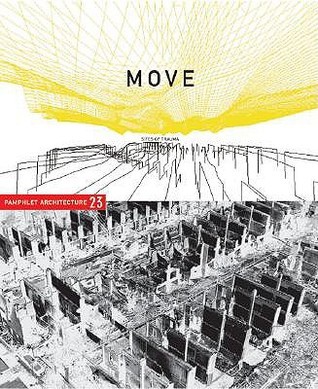
Founded in 1978 by architect Steven Holl and bookseller William Stout in an attempt to skirt the editorial control of the reigning architectural magazine culture, Pamphlet Architecture has been disrupting the status-quo ever since. This series of small experimental volumes has introduced important ideas and spurred much-needed debate among students and practitioners alike. Pamphlet Architecture 23 carries on this tradition with a book selected in an open competition. Johanna Saleh Dickson's entry was chosen from over seventy submissions received from architects, academics, and students from across the nation and around the world. Her pamphlet investigates the events of May 13, 1985, when a bomb was dropped by police on a Philadelphia row house in order to evacuate its residents-members of the radical organization MOVE. The fire that ensued killed 11 MOVE members and destroyed an entire city block. Tainted by these traumatic events, the reconstructed house located on the site has stood unoccupied for nearly two decades. Dickson proposes an architectural treatment that might facilitate and promote healing within the affected community. A call for ideas for Pamphlet 24 has already gone out. A winner will be selected in September of this year and the next innovative project will be published in spring of 2003.
The problems prevalent in this specific treatment of the MOVE bombing, which is undoubtedly a site of complex trauma, seems to overshadow the intent toward benefaction impressed upon the reader through such a choice scope. In other words, an analysis of the events in Philadelphia, on May 13, 1985, that assentingly lends its treatment to trauma responsiveness with a focus on communal recovery presupposes a humane treatment of the emotional architecture surrounding the events. A reader may expect this pamphlet to be such a case, yet read through reveals the ways it fails to do so on various key points. It is not the sociological lens but the failure to accurately utilize the sociological lens which falters and further treatment likewise bears the aberrations of such error in the output.
The first is a highly negligent sociological and journalistic error; namely, the specialized framing of MOVE as the inexcusable aggressors from the onset of the text, while offering no commentary on their ideology outside of critique. The quotes of MOVE members are cited through third bodies and the citation bank is lax at best while a majority of its content consists of sources diametrically opposed to MOVE’s stances, or otherwise responsible for aspects of their location to the very trauma which is the focus of the text.
This first error is bound up with a second error which is journalistic integrity. The text takes every opportunity to lay casual rhetoric critiquing MOVE while teaching almost nothing about them. Where this becomes more disingenuous than historical in practice is when the text claims to not be doing such a thing, even going as far as to litter the sections with various quotes on the importance of neutrality, while typically failing to do so just a few words before or after.
Another error is one of misplaced purpose. Because the text is aiming toward an architectural approach to trauma response, it germanely and ironically misses the human emotional architecture on which such a purpose depends. And this may sound precarious, as one would expect the intention of such a choice scope to account for this very problem, and yet the text does not read as though this is the case.
This is not to disagree with the claim of the importance of architecture in social memory and recovery, but rather that they fail to follow their own moral clarity which is preached pedagogically. Following the rhetoric appears to lead a reader toward a vengeful exclusion of the MOVE members from deserving access to that sense of recovery impressed in the texts intention, if not outright blaming them for the trauma outright, while juxtaposing throughout how MOVE are nonetheless central to the communally experienced events and claiming to aim toward communal recovery of a complex and integrated traumatic event.
The cloudy tour through MOVE’s history leading to the events in 1985 culminate with a terminating premise that it is too late to recover from the trauma of the event through architectural-based trauma recovery initiatives, as so much time as passed without these initiatives in place, and the text pivots to what can be done, in the now, to memorialize 9/11 ethically.
Here, the text takes some bizarre but nonetheless interesting turns. The article attempts to recover a sense of undertaking a legitimate, qualitative sociological analysis by alluding to disasters in the late 19th century that displaced Americans, the failures in the government response, and the reciprocal handicap on trauma recovery, and relating this historical knowledge to the topic at hand - MOVE. In shifting to the contemporary, and making 9/11 the dharma of the day, there bleeds an emphasis on a sense of duty and an opportunity to enact such through making the correct memorialization choices, in the here and now, that cater to complexity and lend toward collective memory and healing. The text, written in 2002, was before the freedom toward was erected and, given data from response to the Vietnam memorial and other such architectural statements, there is an opportunity to learn from our past and present helpful ideas toward an endeavor like a architectural memorial.
This contemporary marketplace of ideas presented is not in itself harmful, but it has its symptomatic defects when the intention of the text (to communally heal from the trauma by memorializing the site of trauma) is considered. For one, the text ridicules the Philadelphia municipal government for its attempt to bury the history of this event as it were, while simultaneously dehumanizing not only MOVE but the nameless neighbors they feign to champion at MOVE’s expense. What’s more, they subsequently claim that the chance to heal those directly affected by MOVE directly preceding the events in 1985 has passed. This is, in perhaps all ways, undeniable. The text even utilizes its suggestion that Philadelphia’s municipal government was in no small sense responsible for this stagnation effect and eventual failure. The text, if nothing else, mourns this defeat.
The issue, therefore, is that this defeatism subverts the expectation of the text as a humane treatment of trauma with intent forward recovery, if recovery is impossible, and this is then then is compounded with the flatness of the victims and perpetrators portrayed. Furthermore, the premise that the time for recover has passed juxtaposes the, therefore obliquely contradictory, suggestions for would-be MOVE bombing memorial architecture - suggestions which take up the entire latter half of the text and read as objectively offensive. It is therefore unsurprising that these suggestions take on the same clinical, sterile character as the failed treatment of the content.
The later half of the text are diagrams of these architectural designs suggestions. It is at this point the text reads like a plug for an architectural student thesis project (which it is) claiming to represent those affected while invisibilizing them and exposing the authors as providing nothing more than neoliberal drivel, embarking on their own project of narrative control, and the obviousness of their being starkly removed from the issues being discussed.