

What do you think?

The Soviet Withdrawal from Afghanistan
Nearly ten years of bloodshed and political turmoil have followed the Soviet invasion of Afghanistan in 1979. Soviet occupation not only proved a major trauma for the people of Afghanistan; invasion ended at a stroke the growth in superpower detente that had characterized the late 1970s; and back home in the Soviet Union the effects of escalating military costs and over 13,000 young military casualties have been felt at every level of society. The decision to withdraw combat forces under the provisions of the Geneva Accords of April 1988 is one of the most dramatic developments in the international system since the end of the Second World War. Unable to overcome fierce insurgent Mujahideen resistance, the new Soviet leadership under General Secretary Gorbachev has opted to cut its military losses under a veil of UN diplomacy. The effects of this decision will be felt not only in Afghanistan but in the Soviet Union, in Southeast Asia, and in the wider world. This book is designed to explore the background to the decision to withdraw and its broader implications. The authors, all established specialists, examine the Geneva Accords; the future for post-withdrawal Afghanistan; and the impact of withdrawal on regional states, Soviet foreign and domestic policies, the Soviet armed forces, Sino-Soviet relations, and world politics. They write from diverse disciplinary perspectives while bringing together a shared sensitivity to the issues that complicate the Afghan question.
188 pages, Paperback
First published April 6, 1989
About the author
Amin Saikal
34 books12 followersAmin Saikal is Distinguished Professor of Political Science, Public Policy Fellow, and Director of the Centre for Arab and Islamic Studies (the Middle East and Central Asia) at the Australian National University. He is the author of The Rise and Fall of the Shah (Princeton) and Modern Afghanistan. He lives in Canberra.
Ratings & Reviews
Friends & Following
Create a free account to discover what your friends think of this book!
Community Reviews
Displaying 1 - 2 of 2 reviews

November 1, 2011
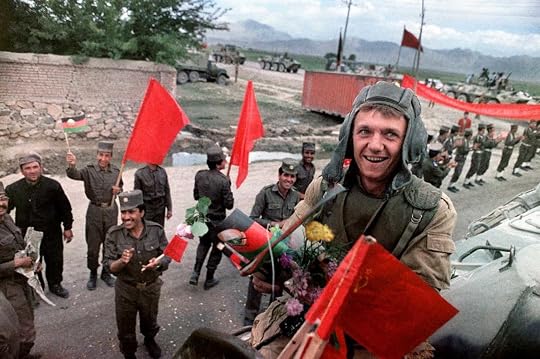
This was a brief but multilayered analysis of the Soviet withdrawal from Afghanistan. This was a collection of political commentary/lectures from several academic figures from the 1989 timeframe. Various topics were discussed about broader points of political, social, and cultural ramifications due to the war. Other specific information covered the regional/neighboring country effects of the war, internal/external refugees, death tolls, and rehabilitation efforts in the wake of their withdrawal.
The essays hit also on the internal domestic effects in the Soviet Union especially in the Islamic states, analysis of the war from a military standpoint to change readiness and rewrite warfighting doctrine, and post-war effects with Soviet international counterparts.
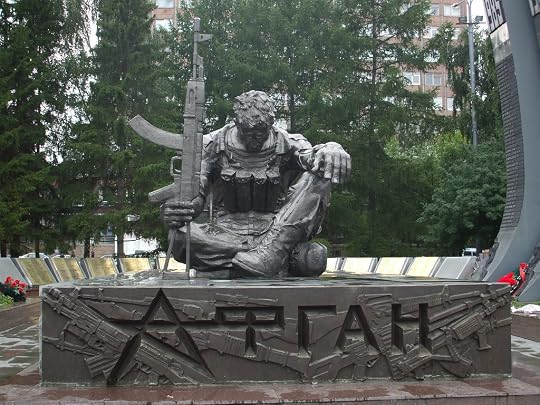
Combat against Muslim freedom-fighters among a largely hostile population turned out to be different from the war their fathers had fought against the Germans and the war for which their whole education and conditioning had prepared them for. On top of this, for many years they had felt forgotten and neglected by their country: they were rarely mentioned in the official media because the Soviet leaders wanted to downplay the role of the USSR's so-called 'limited contingent' for political reasons, both domestic and international.
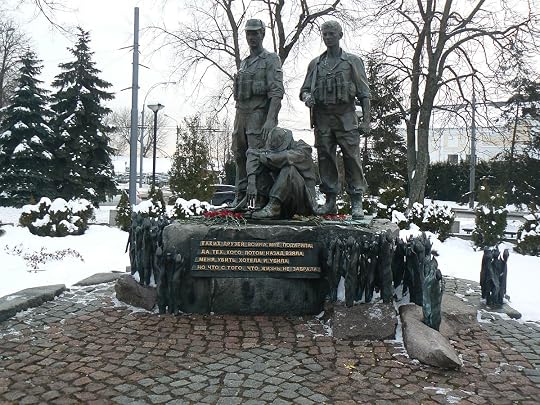
When Soviet conscripts who had served in Afghanistan were demobilised they often had difficulties with jobs, housing and medical care, and their efforts to secure redress were commonly met with indifference and hostility by the local authorities. pgs. 76-7
The information was dry but very informative from a scholarly standpoint. I would recommend this someone who wants a more thorough look at the withdrawal from Afghanistan. Thanks!

November 1, 2018
Amin Saikal is fantastic, but the quality varies widely afterwards...
I hated William Maley's paper, and thought his comparison of Auschwitz to the Soviet Occupation was very poor, and in bad taste.
Leslie Holmes is an obvious idiot, and should not have been included. His paper is surface, unresearched and starts off with the wildly incorrect claim than the Chinese-Soviet border of 6000 km is the longest land border between two states -- correct is Canada-USA at 9000 km
I hated William Maley's paper, and thought his comparison of Auschwitz to the Soviet Occupation was very poor, and in bad taste.
Leslie Holmes is an obvious idiot, and should not have been included. His paper is surface, unresearched and starts off with the wildly incorrect claim than the Chinese-Soviet border of 6000 km is the longest land border between two states -- correct is Canada-USA at 9000 km
Displaying 1 - 2 of 2 reviews